
 Aahana Swrup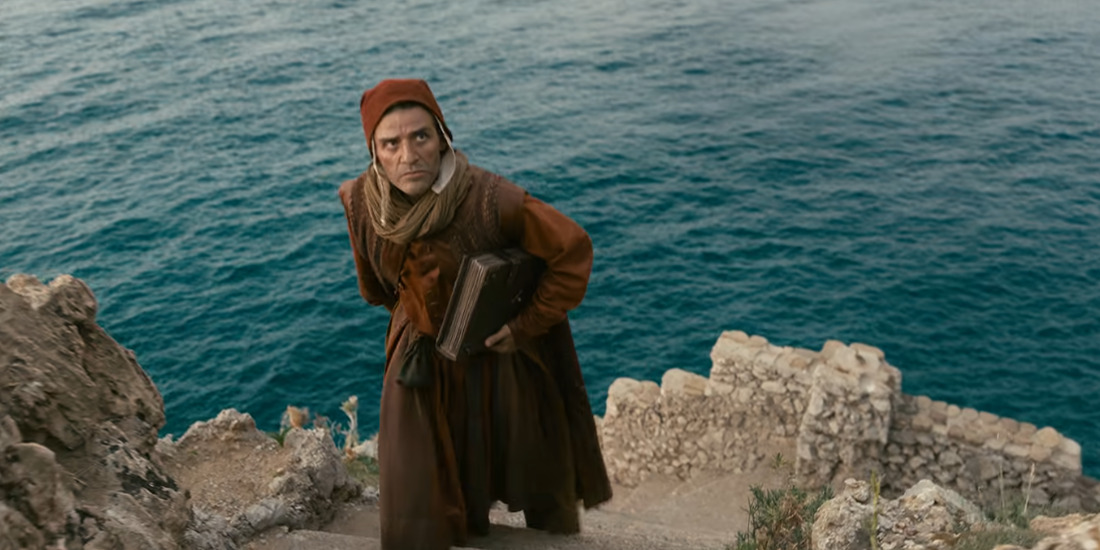
Directed by Julian Schnabel, ‘In the Hands of Dante’ is a story about two artists separated by time and united by their twin pursuits after the same poem. For Dante Alighieri, alive in the 1300s in Florence, Italy, this chase is of a more artistic nature as he tries to tap into something mystical in an effort to put pen to paper. On the other hand, Nick Tosches, a writer of the 21st century, who also happens to be an admirer of Dante’s work, seeks out the original manuscript of ‘Divine Comedy,’ written by the renowned Italian poet.
The manuscript, discovered in the depths of a Vatican library, is the only known physical remnant of Dante’s handwriting. When the priceless item pops up on a New York gangster’s radar, Nick finds himself employed to verify the authenticity of the artifact. Naturally, it doesn’t take long for the writer to covet the manuscript for himself, thus sending him down a dangerous path. The film blends the lives of two writers, bound by a thread that transcends time and space.
In the Hand of Dante Partially Employs the Story of Dante Alighieri’s Real Life
While the story of ‘In the Hand of Dante’ is a departure from reality, the authors themselves are not. The story charts a fictitious tale but, in doing so, draws on real-life history, events, and people. As a result, while the large majority of the work remains devoid of historical realism and accuracy, certain aspects of it retain an opposite connection to the past. For the film, this connection stems from Dante Alighieri, the Italian poet, and his poem ‘Divine Comedy.’ Director Julian Schnabel and his co-writer, Louise Kugelberg, penned the project’s screenplay as an on-screen adaptation of the eponymous novel by Nick Tosches, published in 2002.
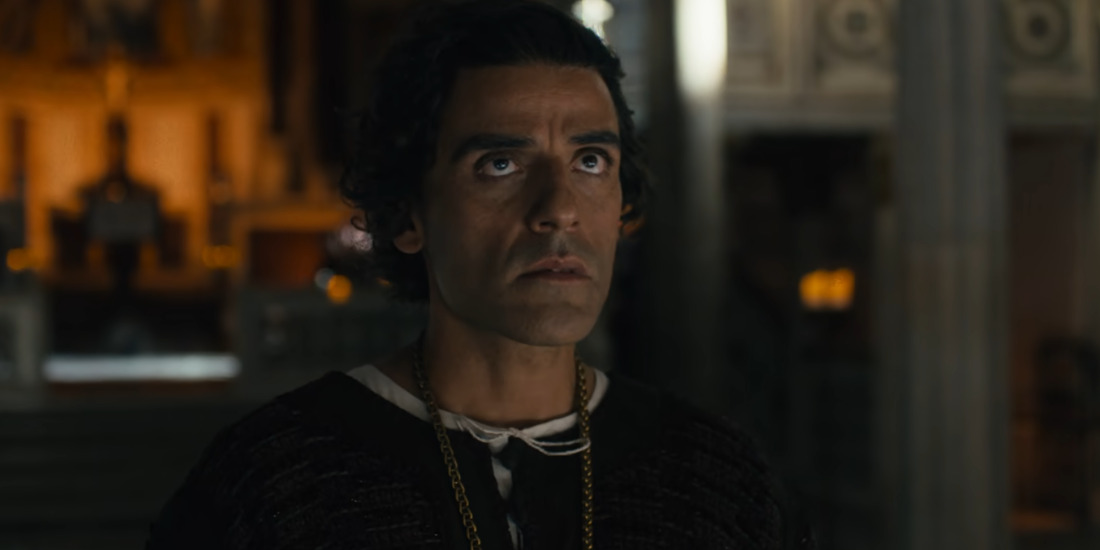
The author himself had always retained a unique fascination and fixation on Dante and harbored a desire to write a book about the Italian poet. Eventually, Tosches decided to achieve this by writing a story, blending in the narrative of the poet from the Middle Ages with a story of a writer from the 21st century. This tale, interwoven across 700 years between two kindred artists, ended up becoming ‘In the Hand of Dante.’ Notably, in order to pen this novel, the author had to embark on a long and arduous journey ripe with research and historical consultancy. Tosches wanted to ensure that he captured the beats of Dante’s life authentically and with as little fictionalization as possible.
In fact, reportedly, Tosches’ research compelled him to delve into the learnings of languages, including medieval Latin and Hebrew. Thus, the story’s foray into the life of Dante Alighieri largely remains true to historical fact. From his young love with Beatrice, the subject of many of his poems, to his marriage with Gemma, who never became an evident muse for his work, the story incorporates various realistic and historically sound elements. For the most part, the only divergences or fictionalizations that emerge stem from the thematic and philosophical aspects of the narrative. Yet, this commitment to history is only confined to one aspect of ‘In the Hand of Dante.’ While Tosches’ book, and subsequently the film, digs into history for the storyline centering around Dante, the same cannot be said for the other protagonist, Nick.
Nick Tosches’ Self-Insert Storyline in In the Hand of Dante is Mostly Fiction
‘In the Hand of Dante’ revolves around two distinct storylines. While the one involving Dante Alighieri has a more direct basis in reality, the other narrative, centering around writer Nick Tosches, is fictitious in nature. For the book, the author created a self-insert character of himself, maintaining relative biographical accuracy for the protagonist’s foundation. However, the events that happen to the self-referential version of Nick Tosches have no tangible roots in real life. The actual author, though a fan of Dante, was never consulted by a New York mafia as an authenticator for the original manuscript of ‘Divine Comedy.’ In fact, such a manuscript, or most of the criminal gangsters that the fictionalized Nick entangles himself with, don’t exist in real life.
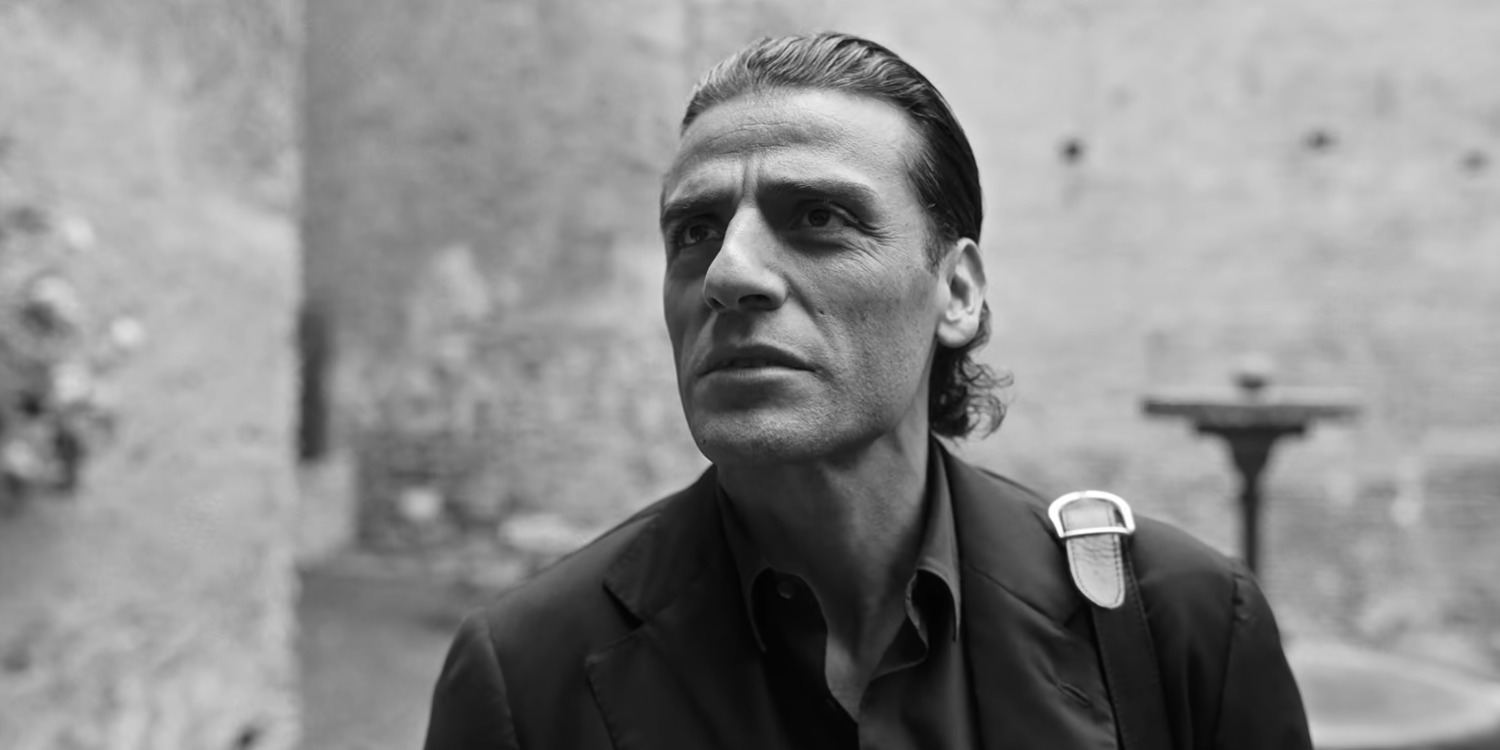
In 2002, Tosches discussed the decision to add this meta element to his novel in a conversation with Identity Theory. The author shared, “(No) In the instance of this particular book (In the Hand of Dante), I realized as I got down to actually writing it that so many of the feelings the first person character was going to express were my own that it should be in the first person and not the third. It just seemed more natural. Of course, then there is that blurred line between what is actually real and what is semi-real and what is absolute fiction or a lie.” Julian Schnabel’s adaptation, which came about after the filmmaker discovered Tosches’ book at the recommendation of actor Johnny Depp, doesn’t stray from this fictionalized self-referential aspect of the novel. As a result, in remaining faithful to the author’s novel, it similarly adapts the fictionalized version of his literary counterpart and his connection with Dante Alighieri.
Read More: Where Was In the Hand of Dante Filmed?


You must be logged in to post a comment.