
 Aahana Swrup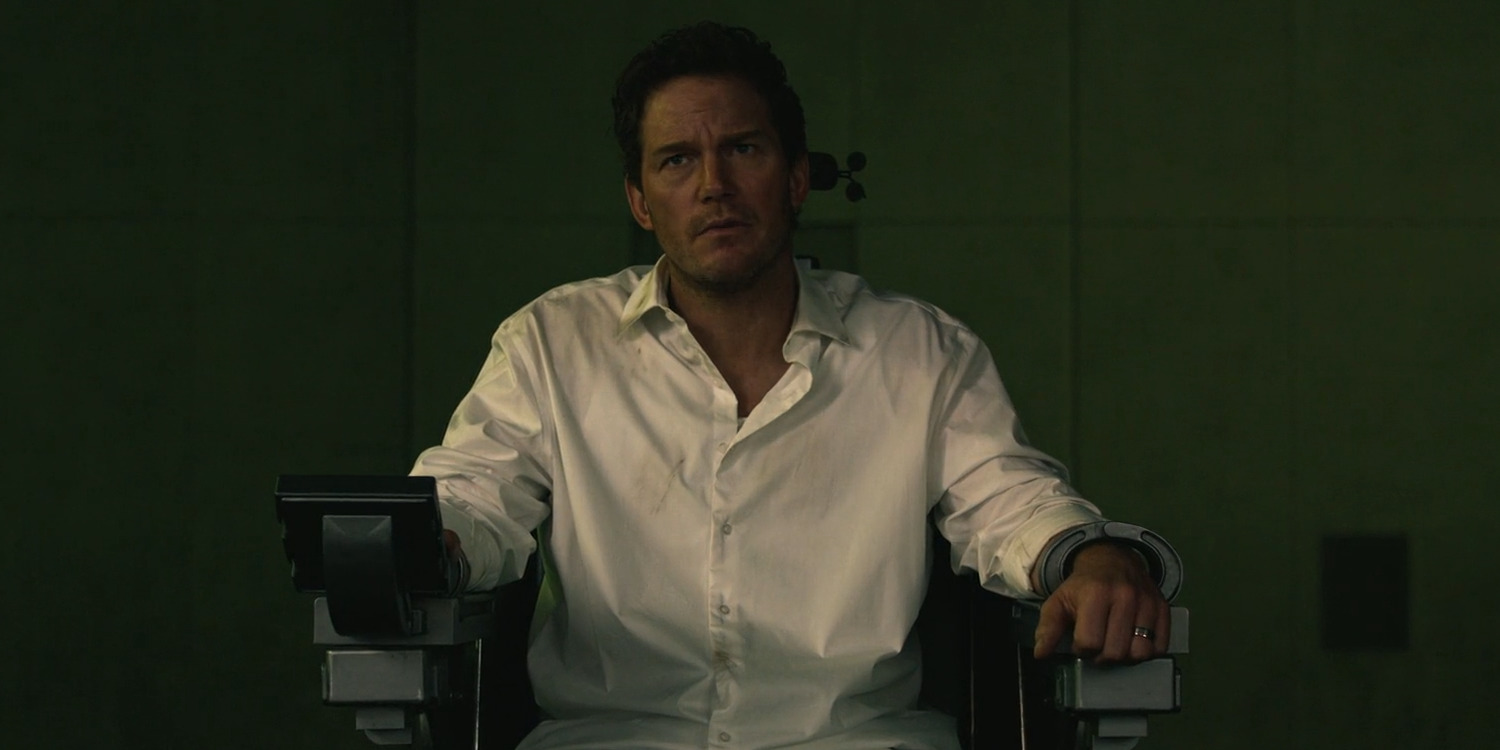
Prime Video’s legal thriller movie ‘Mercy’ pitches a distressing premise where an individual’s fight to prove their innocence comes with a ticking clock and a startling lack of humanity. Chris Raven is a detective who is the prime suspect in his wife, Nicole’s, murder. As a result, hours after the crime, he is brought to the Court Mercy Program, in front of AI Judge Maddox. The program has been fed all the background information, cloud footage, and more to be able to make logical conclusions about the case. However, in order to convince the AI that he isn’t guilty, Chris only has ninety minutes on the clock before the chair that he’s strapped to executes him on the spot. With a blackout memory and all the evidence stacked up against him, the detective’s chances of survival remain low. Yet, thanks to Maddox’s relentless and unfeeling pursuit of the truth, the facts of the case cannot remain in the dark for long. SPOILERS AHEAD!
Mercy Plot Synopsis
Years into the future, the judicial system has changed to include an AI judge, jury, and executioner into the mix. The program, Mercy Court, allows the suspects 90 minutes to use its resources to prove their innocence. If they fail to do so, they’re executed once the timer runs out. After the success of its first run on a murder case belonging to Detective Chris Raven, the program becomes a legitimate and reliable resource. However, by case #19, something unexpected happens: Chris finds himself strapped in front of the AI as the prime suspect. His wife, Nicole, has just been murdered, with security footage putting the detective at the scene of the crime hours before the body’s discovery.

Worse yet, Chris himself has no recollection of anything that happened after his visit on account of getting blackout drunk at a bar. Thus, when the trial begins, Maddox already deems him around 97% guilty. The first few minutes of the investigation that follows don’t tip the scales in his favor either. Ever since the death of his partner, Ray, who died in the line of duty, the detective has been struggling with guilt and alcoholism. This made him prone to bursts of violence and aggression. Things were so bad that his own daughter was at times scared of him, and his wife was considering a divorce. In the past few months, his possible relapse has been driving the majority of the conflict between the couple.
As it turns out, Chris has been hiding his slide back into alcohol dependence for almost a year. He had also been hiding the truth about his relapse from everyone, including his sponsor, Bob. On the morning of Nicole’s murder, it was this exact conflict that brought him to Nicole’s door, angered and dangerous. The fact that he keeps this a secret from Maddox worsens his perception of guilt. Furthermore, his marriage with Nicole was perpetually on the rocks to the point where he had suspected her of having an affair. When he tries to look for a secret lover as a potential suspect, only for that lead to be defunct, he appears all the more guilty.

Nonetheless, Chris remains insistent that he couldn’t have possibly committed the crime of passion. However, halfway through the trial, he has an epiphanic gut instinct that tells him to look further into Nicole’s personal life. As a result, he learns about a possible medicinal drug theft that has been unraveling in the harbor. While he continues pursuing these leads, employing the help of his police friends, like his new partner Jaq, through phone calls and Maddox’s interference, the AI still remains doubtful about the possibility of his innocence. Though his theories remain worth exploring, they lack logical arguments and rely too much on emotions and instincts. As such, though Madddox’s guilt perception meter sways, it remains stuck above 90%. That is, until Chris finally manages to find the smoking gun.
Mercy Ending: Is Chris Innocent? Did He Kill Nicole?
The film centers around the potential innocence or guilt of the protagonist, Chris Raven. At first glance, the case seems straightforward enough. Chris is a detective who struggles with alcoholism and has been prone to violent behavior. After 20 years of partnership, his marriage with Nicole had soured to the point where the latter was considering leaving him for good. On the morning of her murder, Nicole was visited by an angered Chris, who had forced his way into the house before leaving a short while later. The only other person who entered the house after him was his daughter, Britt, who found her dying mother. Meanwhile, in the time since his departure from Nicole’s house and his arrest, Chris had visited a bar and assaulted multiple police officers under the influence.
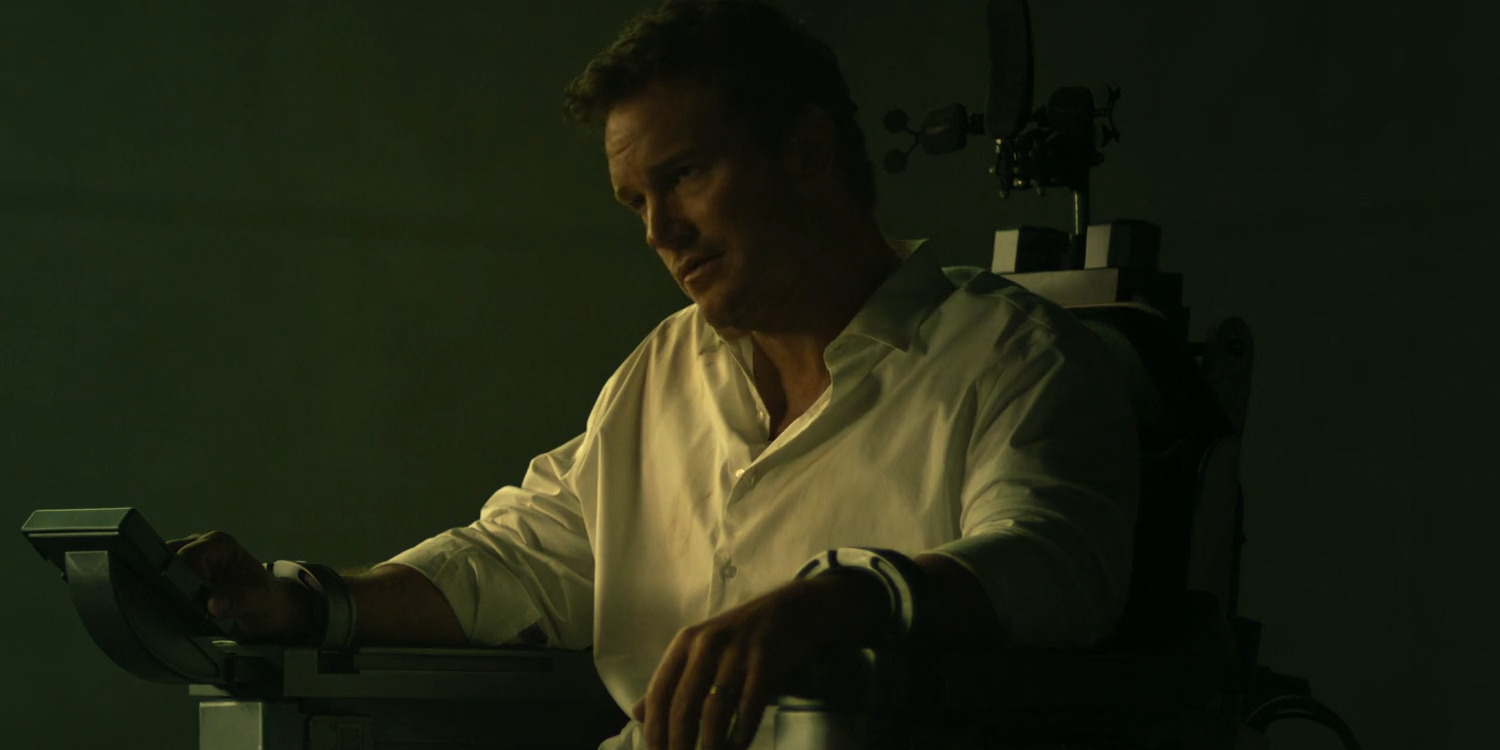
Naturally, all of this paints Chris in the worst light and makes him the number one suspect in what seems to be an open-and-shut case. Nonetheless, the suspect himself stubbornly refuses to accept the possibility that he might have murdered his wife. Yet, the fact of the matter remains: his wild trip to the bar has left him with no recollection of the day. Therefore, the detective himself remains as in the dark about the real facts of the murder as Maddox, and subsequently, the audience. Initially, his police instincts and connections in the department help him follow a few dead-end leads. However, his last lead, centering around the theft happening in Nicole’s workplace, finally unlocks the bigger picture. As it turns out, the case was never about the murder victim to begin with. Instead, the real killer has been purposefully trying to frame Chris for the murder and get him in front of Mercy Court as a twisted way to exact revenge on him.
Who is the Real Murderer? Why Did They Kill Nicole?
Initially, when following the hunch about Vikings Shipping, Chris suspects Holt, one of Nicole’s coworkers, to be the real murderer. His prevailing theory remains that his wife must have been killed in a cover-up attempt. Nonetheless, the reality proves to be much more shocking. The pieces only begin to fall into place when Maddox and Chris discover a previously unknown fact about Rob, his AA sponsor. As it turns out, Rob Nelson is actually Robert Webb, the big brother of David. The two brothers grew up in foster care, but their lives took different turns after Rob was adopted by the Nelsons. As a result, his connection to Davis was able to fly under the radar for so long. The latter is actually an intrinsic figure in the history of the Mercy Court.

David Webb was the first criminal caught and executed using the Mercy Court program. Street camera footage and a database-backed algorithm convicted him of the death of a woman. When he failed to prove his innocence against Maddox, he was perceived as guilty and executed. Nonetheless, while everyone else accepted Mercy Court’s ruling, his brother, Rob, refused to concede his innocence. For the same reason, out of anger and spite, he came up with a plan to put the arresting officer, Chris Raven, in the same shoes as his brother. After their paths coincidentally crossed at an alcoholics anonymous meeting, the vengeful brother perfectly inserted himself into the detective’s life.
Afterward, Rob orchestrated the perfect crime. Using a barbecue event as an excuse, he managed to get into the Ravens’ house and hide away in the basement without suspicion. The next day, he waited for Chris to show up, and once the detective left, he killed Nicole from inside the house. As a result, he was able to dodge suspicion as a possible killer while framing the husband as the ideal suspect. Yet, his revenge scheme doesn’t simply end there. Over the course of the past few months, he has been hoarding a substance called UG, which is used to make bombs. While Chris’ trial unravels, he kidnaps Britt from her grandparents’ house and drives a truck filled with a bomb to the Mercy Court Headquarters with the intention of blowing up the entire system.
Was Rob’s Brother Innocent?
David Webb’s conviction becomes a landmark case in the inclusion of AI in the legal justice system. Beyond even just collaborating with artificial intelligence, Mercy Court moves the full responsibility of judgment and execution entirely to Maddox, a non-human intelligence program. However, Rob argues that the system has been flawed from day one and had indeed misjudged his brother’s character. Once he drives his lethal truck into the headquarters building, Maddox distracts him by allowing him to make his case about his brother’s innocence. Although this is only a ploy to allow Chris enough time to make a move for Rob’s detonation button, the information that he reveals during this time ends up becoming incredibly significant.
As it turns out, David was in contact with his brother on the night that the murder took place. After years of separation, the two found each other again two years before the events of the film. After the other’s solitary adoption, David’s life spiraled in unfavorable ways, leaving him without a home and struggling with perpetual addiction. As a result, when Rob finds him, he tries to find a way to help him get back on his feet and leaves him with some money and a phone in the meantime. Consequently, David had been able to contact him on the night when the woman was murdered. The phone call is a perfect alibi proving his innocence. However, this was overlooked in the investigation despite Rob’s attempts to highlight it as key evidence.
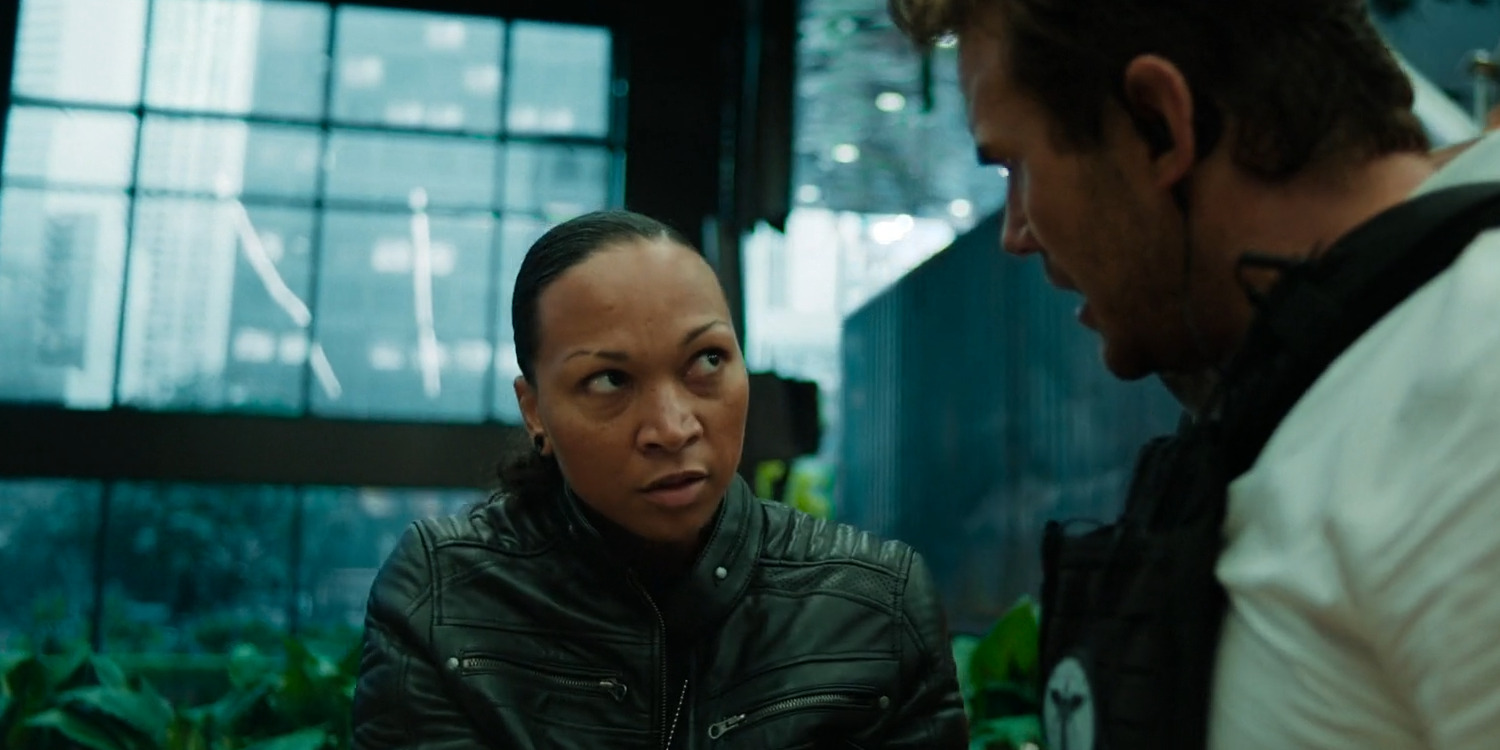
This wasn’t a grave mistake but a calculated sabotage by Jaq, Chris’ partner. Jaq has been a champion of Mercy Court from the very beginning. Therefore, she wanted to see it succeed above all else. However, instead of rooting for it to find justice, she wanted the system to be quick and efficient. For the same reason, she set David up for failure to showcase the swift prowess of the new AI system. Unlike Chris, the latter lacks the experience or the right resources, notably friends in law enforcement, who can help him solve the crime in his allocated 90 minutes. Therefore, he unsurprisingly ends up taking the fall for the crime and pays for it with his life.

Once the truth about the case comes out in the open, by Jaq’s own admission, Court Mercy and the other detectives finally understand the full picture. In the end, David is posthumously proven innocent, and Jaq is arrested for her crime. However, the question of what happens to Mercy Court, the actual entity that executed an innocent man, remains open-ended. The narrative doesn’t reveal whether or not the AI program is shut down, rounding its storyline with the message that both machine and human are prone to mistakes. Notably, the elephant in the room goes unmentioned that if a lawyer had been involved in this process, David’s life could’ve been saved.
Read More: A Knight of the Seven Kingdoms Finale Recap and Ending Explained


You must be logged in to post a comment.