
 Gautam Anand
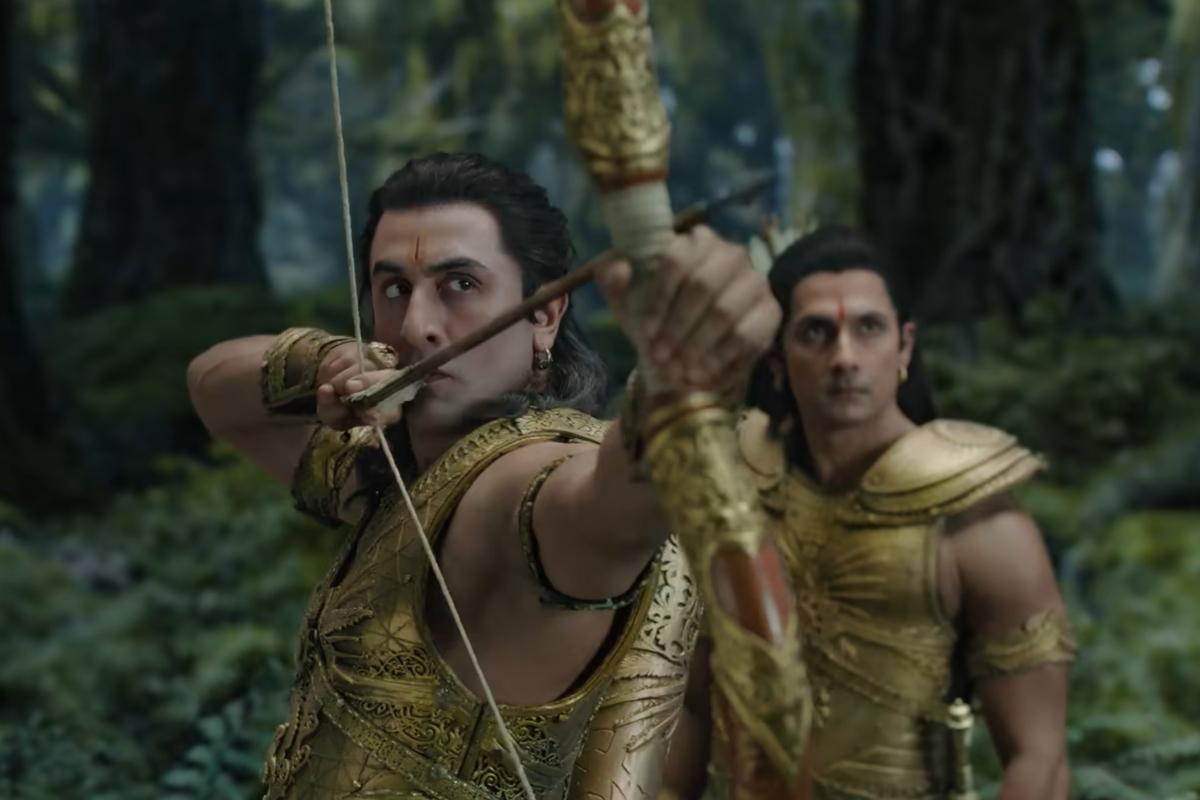
Movies in which VFX plays a central role broadly fall into two categories: those where the story dictates the spectacle (think Christopher Nolan’s films), and those where the spectacle dictates the story (think the Avatar films). It doesn’t take long to realize that Ramayana: Part 1 belongs to the latter. And that, to be honest, isn’t necessarily a bad thing. The story of the Ramayana is well known. Revisiting it without a fresh cinematic perspective would hardly justify a production of this scale. But a familiar story still needs a strong screenplay; visual effects, however expensive, can only carry it so far. Watching the first half, I began to fear that the filmmaker’s focus on VFX had stripped the movie of its soul. It moves at a breakneck pace, hurtling from one action set piece to the next, with barely a moment for the story to breathe or for audiences to absorb its emotional weight—let alone appreciate the magnificence of the visuals.
Around the halfway mark, however, the film finally comes alive. In the scene where Ram learns he must relinquish his claim to the throne of Ayodhya and spend fourteen years in exile, what had felt almost like a VFX showreel finally finds its heart. It’s the first of several genuinely moving scenes that capture the Ramayana’s central themes: dharma, duty toward one’s family, and the sacrifices that come with doing what is right. They remind you why the story has stayed relevant for thousands of years.
If you thought that giving the characters room to breathe would make the film any less visually impressive, you couldn’t be more wrong. Some of its best action sequences come in the second half. The sequence in which demons pursue Ram, Sita and Lakshman recalls the creature chases in Peter Jackson’s The Lord of the Rings, and is every bit as well staged. But for me, the finest set piece arrives near the end. The mid-air fight between Raavan and Jatayu is easily one of the most imaginative uses of visual effects I’ve seen this year. The scale is extraordinary, but it’s the inventiveness of the action that sets it apart. Credit to the makers for even attempting something so difficult, let alone pulling it off with such confidence. It’s the sort of sequence that leaves your jaw on the floor.
So yes, when it comes to visual effects, the film is a winner from beginning to end. Even viewers who dislike it, I suspect, will struggle to fault the technical craft. The production design and cinematography are equally impressive. Yet two aspects of the film left me disappointed.
The first is its music and background score. To bring A.R. Rahman and Hans Zimmer together and still end up with a score that often works against the film is baffling. At times, it’s too loud, too distracting and, frankly, unrelenting. The music seems determined to underline every emotion, as though the performances and visuals couldn’t be trusted to do their job. The film would have benefited from a few more moments of quiet; it didn’t need to fill every silence with a musical crescendo.
The second disappointment is Ranbir Kapoor as Ram. Ranbir is a terrific actor, but his distinctly modern, almost metrosexual screen presence feels at odds with the Ram I have always imagined. I understand the logic of casting him—he is among the biggest stars of his generation in Hindi cinema—but the serenity and quiet authority I associate with Ram never quite come through. Whether the problem is his performance or the casting itself, I honestly can’t say.
Yash, by contrast, is without question the standout. He looks like Raavan and, more importantly, carries himself like him. From his body language to his expressions, he fits the character like a glove. Ravi Dubey is quite good as Lakshman, while Sai Pallavi is strictly average as Sita. She does well in the action scenes, but the grace and quiet composure that I missed in Ranbir’s portrayal are missing from hers too.
At three hours and fifteen minutes, the film is obviously long. The irony is that it often feels rushed too. For viewers unfamiliar with the story, some developments may also be difficult to follow. I wish the makers had made some harder choices about what to leave out, instead of allowing the sheer volume of incidents to overwhelm the storytelling. Still, I don’t want to dismiss how much the film gets right. To make an action-heavy film of this scale and still find room for a few genuinely moving scenes is an achievement in itself.
Ramayana: Part 1 is grand in scale, visually impressive and, at times, surprisingly moving. It would have been a far stronger film had it been as interested in exploring the emotional complexities of its characters as it is in showcasing their extraordinary powers. Even with that shortcoming, I believe it’s an experience worth having at least once, on the biggest screen possible.
Rating: 3.5/5

