
 Saagar Kote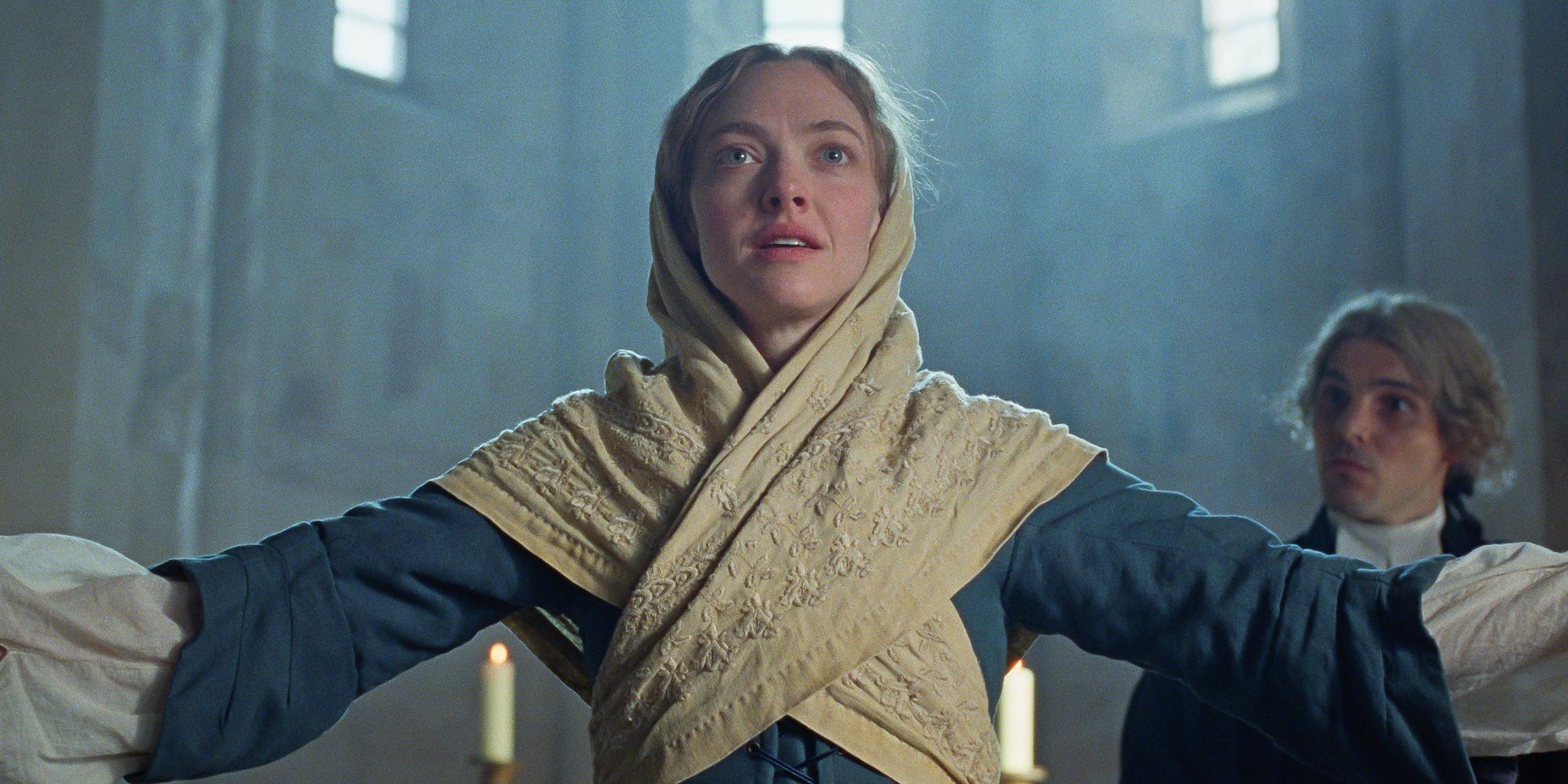
Directed by Mona Fastvold, ‘The Testament of Ann Lee’ tells the story of a woman named Ann Lee, who leads others towards spiritual activities in 18th-century England and America. With her humble origins, she forms the religious movement that goes on to be called the “Shakers.” As she goes on a turbulent journey, she is haunted by those who seek to persecute her for her way of life. Seen as a Jesus Christ-like figure by her loyal followers, she envisions a society where men and women can live without the troubles of inequality.
Her utilization of song and dance as part of her religious movement also makes her a unique character in the realm of religion. On one hand, she strives to help more people realize their faith, but on the other, she also faces increasingly chaotic personal turmoils that could alter her legacy. The musical drama film is a poignant navigation of faith, morality, loyalty, and the meaning of life. SPOILERS AHEAD.
The Testament of Ann Lee Dramatizes Ann Lee’s Intriguing Life History
Co-written by Mona Fastvold with Brady Corbet, ‘The Testament of Ann Lee’ is mainly based on the real-life history of Ann Lee. Also known as Mother Ann Lee, she was an 18th-century religious figure. Ann Lee, the second of eight children, was born in Manchester, England, on February 29, 1736. She was privately baptized at Manchester Collegiate Church on June 1, 1742. Raised in poverty, she worked in a textile mill. Lee married blacksmith Abraham Standerin around 1762 at her family’s insistence, reportedly an unhappy marriage marked by the deaths of their four children. At 22, she joined the Nonconformist Shaking Quakers (also known as Shakers), a sect led by James and Jane Wardley, noted for their shaking and dancing during worship. Jane and James held the belief that the Second Coming was imminent and that God would manifest as a woman.
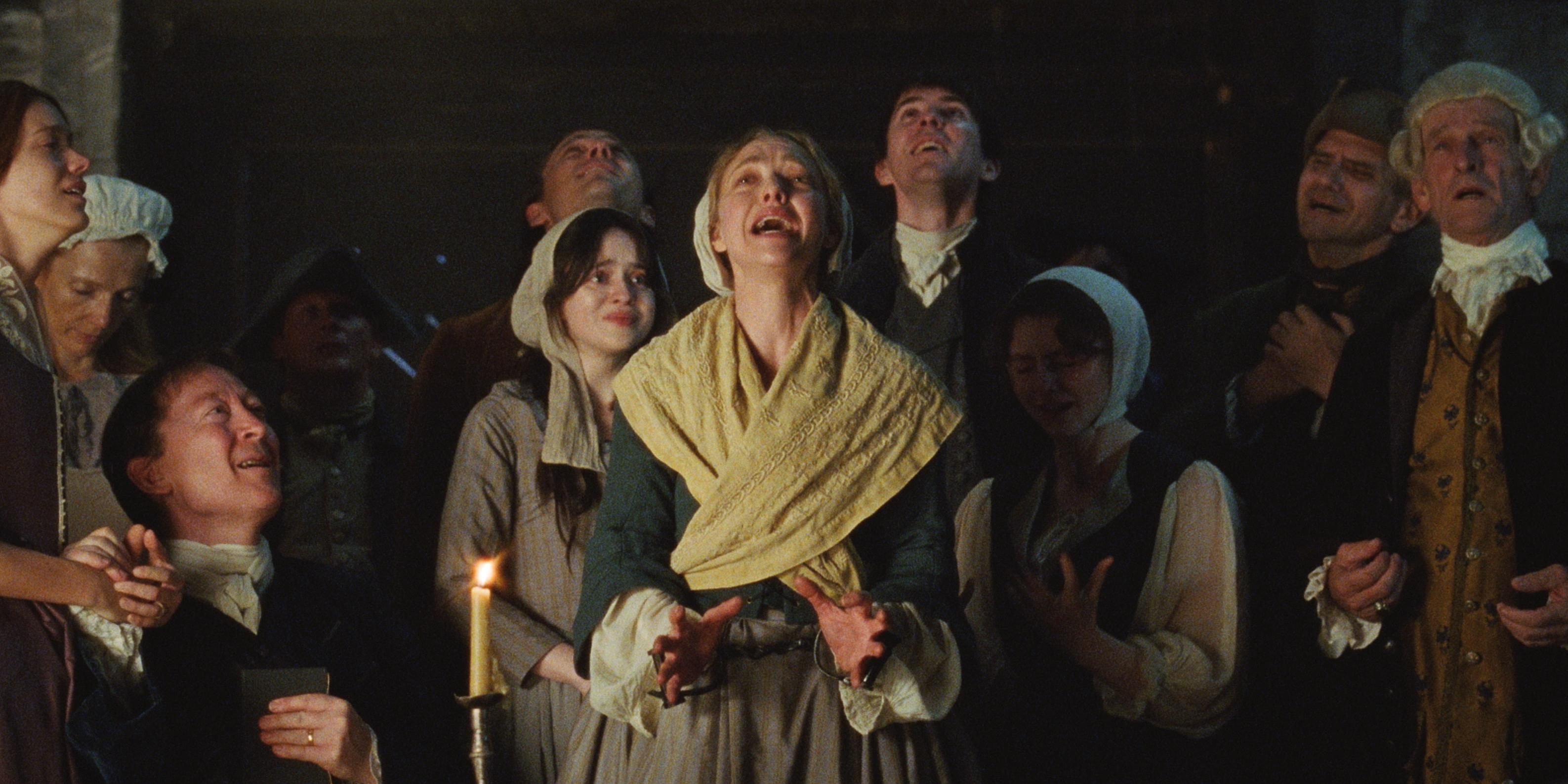
Ann Lee declared herself to be this divine female figure, a proclamation that later led to her being referred to as “Mother.” Imprisoned in 1770 for her views, Ann had a vision in jail that convinced her of certain religious truths. She concluded that sexual desire caused humanity’s downfall, and celibacy was essential for establishing God’s kingdom on Earth. After jail, Ann became a prominent leader in the radical Shaker sect. In 1774, driven by a vision and the need to escape persecution in England, Ann convinced her husband, brother William Lee, and six others to immigrate to the American colonies. Her husband eventually left, but Ann and her followers settled and bought land in Watervliet, New York. The Shaker movement grew and spread across New England, starting with an influx of local converts.
Mother Ann’s pacifist beliefs and refusal to swear allegiance to the newly formed United States led to her imprisonment on accusations of treason in 1780, after which her brother secured her freedom. From 1781 to 1783, Ann traveled across New England with fellow Shaker James Whittaker and her brother on a missionary journey, during which people reported that she performed miracles like healing through touch. Ann was repeatedly jailed, and the group faced widespread violence. Their missionary work’s exhaustion ultimately led to the passing of Ann and William Lee in 1784. The film dramatizes certain phases in Ann Lee’s life, with a focus on her musical talents and the Shaker culture. All in all, the film presents reality with a touch of cinematic flavor.
The Testament of Ann Lee Sheds Light on the Complexities of the Religious Woman
‘The Testament of Ann Lee’ is an evocative tale that represents a wide range of human emotions through the actions of Ann Lee. In an interview with Gold Derby, the director Mona Fastvold spoke about the inspirations behind the film. Talking specifically about Ann Lee, she stated, “There’s such determination in her journey. She came from nothing. She was illiterate. She immigrated to America with only eight followers and created what is one of the largest utopian societies in American history with complete equality. And I thought this is a story I should tell.” The narrative intimately deals with these aspects of Ann Lee’s life, making it a unique visual experience. The director also opined that Ann Lee was probably America’s first feminist.
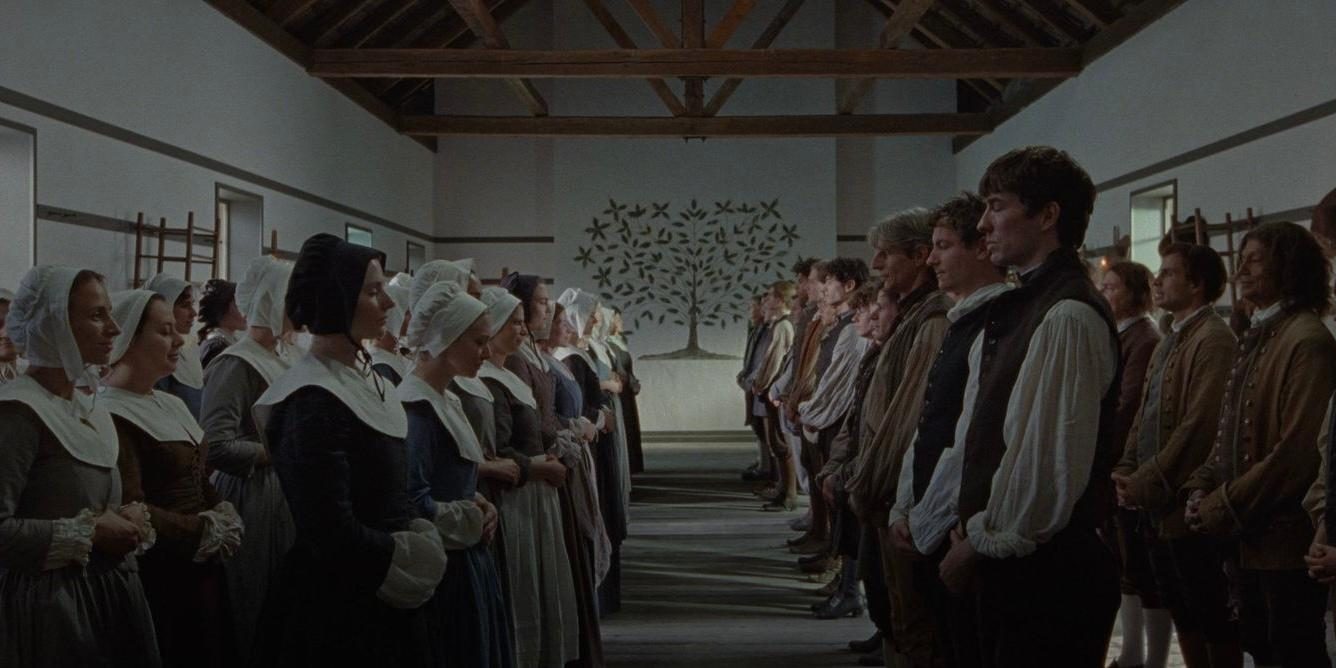
Talking to Deadline, Mona Fastvold said that she could connect to Ann Lee’s religious story despite being raised in a secular home. She also felt the need to tell the story due to Ann’s empathy for others, a quality that the filmmaker believes is essential in the present day. In an interview with ScreenRant, Amanda Seyfried, who plays Ann Lee in the movie, expressed that music was an integral part of the story. Delving into the musical abilities of the real Ann Lee, the actor said, “Ann Lee sang to survive, sang to worship, and sang to experience a greater power. I think that completely revolutionized the way I sing.”
Speaking to Variety, Amanda Seyfried, when talking about Ann Lee’s religious beliefs, divulged, “I’m not a religious person. No, I see it as that she didn’t eat and she was hallucinating — she was dying, and she hallucinated seeing Adam and Eve and seeing the devil. With that journey that she went on, she discovered new meaning, whatever that is.” Ultimately, the film is a poignant exploration of the various facets of Ann Lee’s journey. It seeks to portray the complexities of her personality, rather than presenting a limited or narrow view. While the creative liberties enhance the entertainment value for viewers, they ultimately support the grounded nature of the movie.
The Testament of Ann Lee Delves Into Morality, Loyalty, and Liberation
‘The Testament of Ann Lee’ is a haunting cinematic experience that explores real-life issues through the lens of faith. The idea of suffering is highlighted in the story, which Ann believes is why people deserve love. Ann seeks to provide love to her followers through her music and dance. The loyalty of the members is also tested, as they become part of Ann’s complex world. The moral questions related to faith and sacrifice also play a pivotal role in the story.
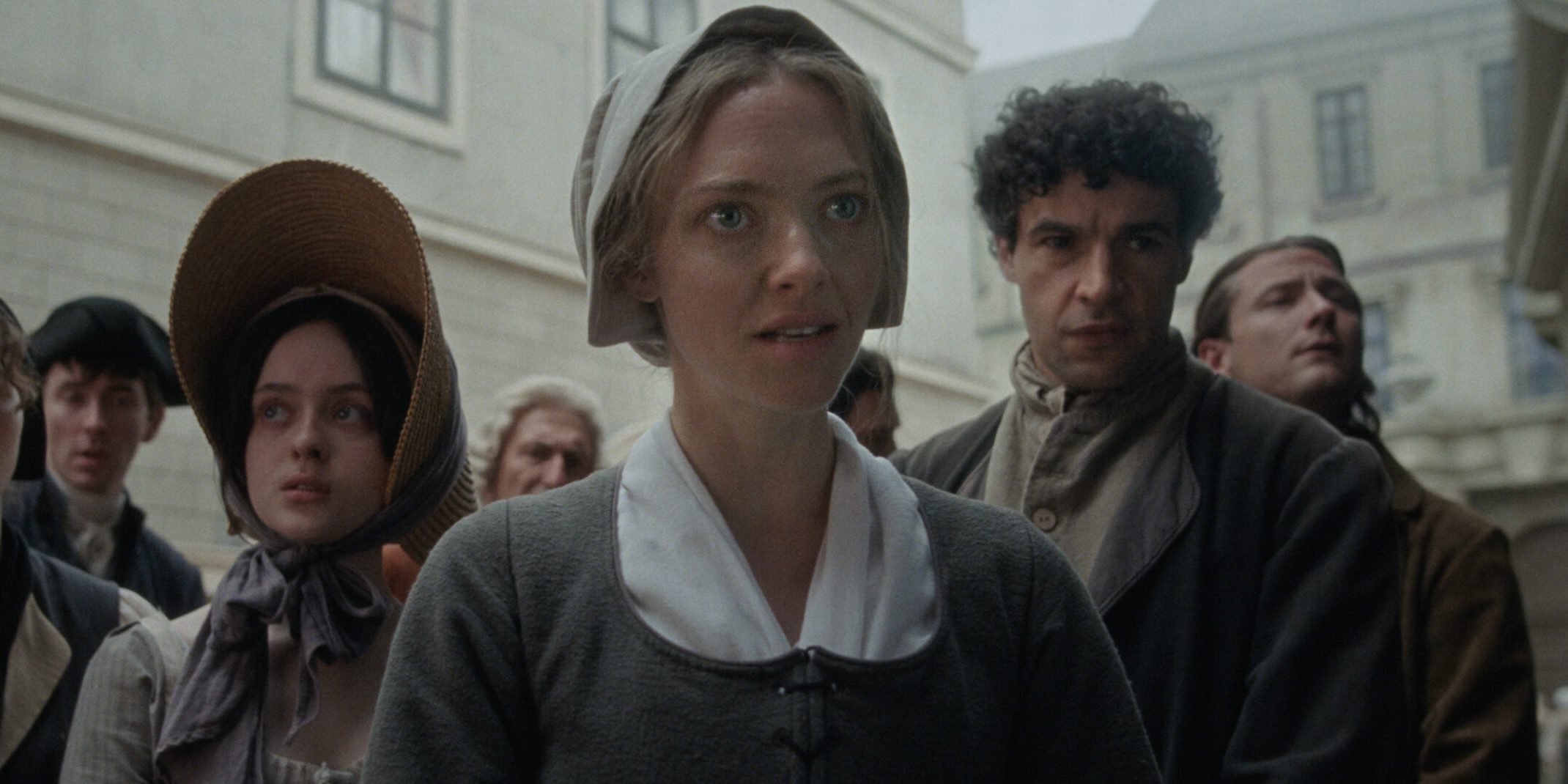
The movie also focuses on achieving a sense of liberation through the process of love in faith. These varying emotions contribute to the narrative’s authenticity and also offer a nuanced perspective on the reality of the Shakers’ religious practices. The music and dance sequences of the movie also contribute to the realism of the story. All in all, ‘The Testament of Ann Lee’ places a powerful woman at its core and paints a vivid picture of the trials and tribulations of her life.
Read More: Is 100 Nights of Hero Based on a True Story?


You must be logged in to post a comment.