
 Abhiroop Das
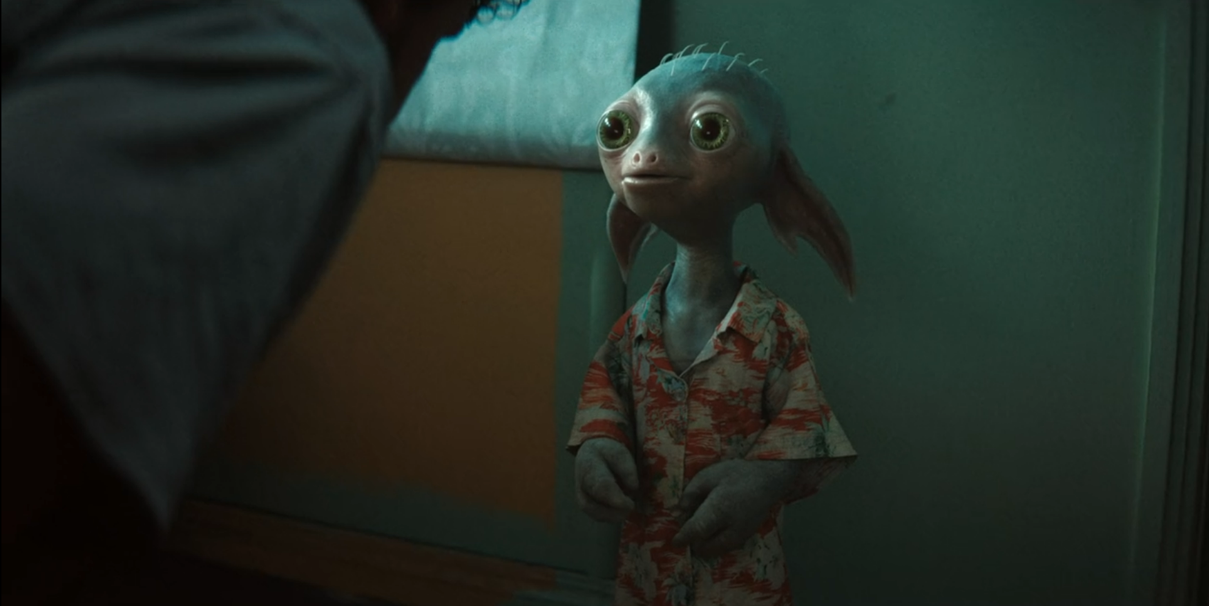
Co-directed by Daley Pearson and Jeffrey Walker, ‘Allen‘ begins with a boy named Petey chancing upon a creature who doesn’t belong to this world. Naming this alien “Allen,” Petey slowly becomes his best friend, until an inexplicable event leads Allen to leave Earth without saying goodbye. When he returns, a full 20 years later, their joyful reunion ultimately gives way to pure chaos as the little extraterrestrial reveals a world-changing secret, one specifically centered around Petey. Throughout all of this, Allen’s cute design remains a visual highlight of the film, not only allowing him to express more with his physicality than he can with words, but also keeping the overall tone light-hearted—almost disarmingly so—during the film’s most intense moments.
Allen Started Out as an Animatronic Before Being Developed as a Puppet Family
The eponymous alien in ‘Allen’ is brought to life with a combination of CGI and puppets, and there is quite the rich history behind its creation. After creator and co-director Daley Pearson came up with Allen’s adorable design, the initial plan was to create a complete Allen animatronic from scratch. That is exactly the job creature-effects designer Steve Boyle set out to do with his company, Formation Effects, but the finished product didn’t quite turn out as expected. Speaking with The Guardian, Pearson explained that the animatronic version of Allen ended up looking too severe and was eventually scrapped. “We’ll save that for the bad sequel where there are terrible versions of Allen,” he joked.
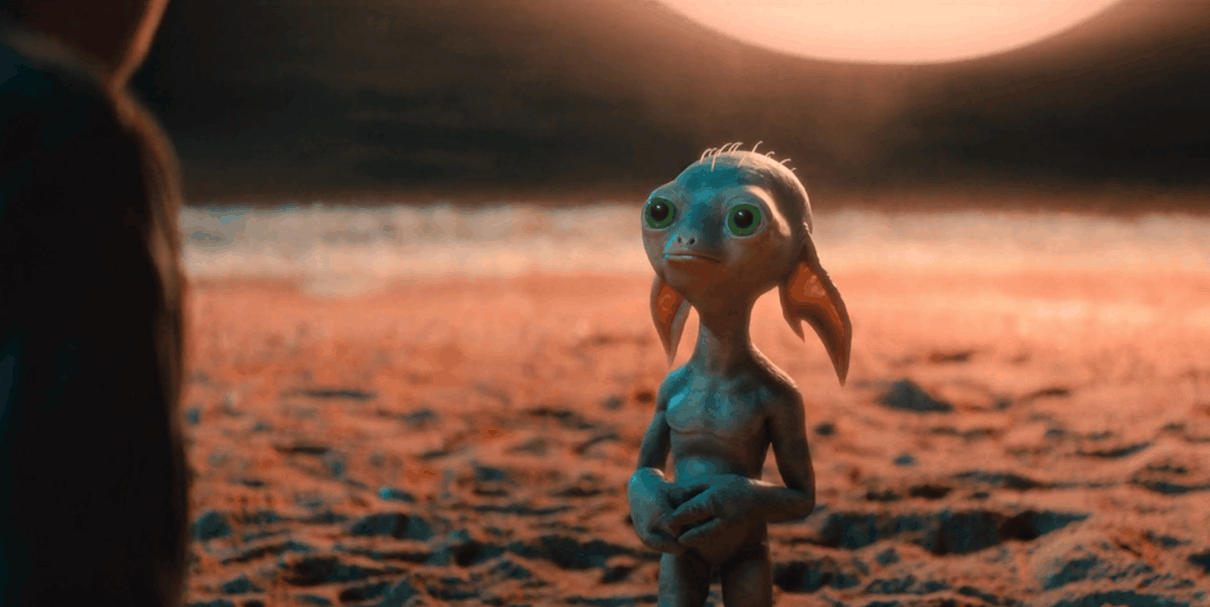
Instead of animatronics, the team then came to rely on manually operated puppets, constructing around eight separate renditions of Allen to accommodate different movements and filming requirements. The puppets came equipped with a mechanism to simulate breathing, and a layer of silicone to give the illusion of real skin. Given that only a few parts of Allen actually move in any given scene, puppets were often designed with missing limbs, as that is where the puppeteering team steps in to do their magic. Notably, the production opted for the bunraku technique, in which multiple operators handle a puppet simultaneously.
In an interview with What’s on Netflix, Pearson recalled that anywhere from two to ten puppeteers could be involved in a scene, being “crammed underneath a bed or on the crashing waves of Coolum beach.” He also noted how important it was for Allen to actually feel handmade, to which end he embraced the minor imperfections, the “cracks and sticky tape” that became a part of the puppeteering and filming process. Not all of these creative decisions made it to the film, though, as what we see on screen is primarily a digitally created version of the Allen puppets, brought together by Jordan McInnes and the team at Alt.VFX.
CGI and Puppet Work Come Together to Pour Life Into Allen
While the original plan was to simply take the footage with the Allen puppets and use VFX for touch-ups, the production had to get inventive for some of the more dynamic and challenging sequences. Eventually, the team decided to go with motion-capture, with performer Aljin Abella mapping out some of Allen’s most complex movements. From there, the graphics team created a digital version of Allen, and what we see in the film is largely based on this model, which relies on both motion-capture work and puppets. Daley Pearson described the scale of the special effects as unexpected, but also embraced the importance of puppets in shaping the finished product, whether in terms of lighting, movement, or allowing actors to better immerse themselves in the role.
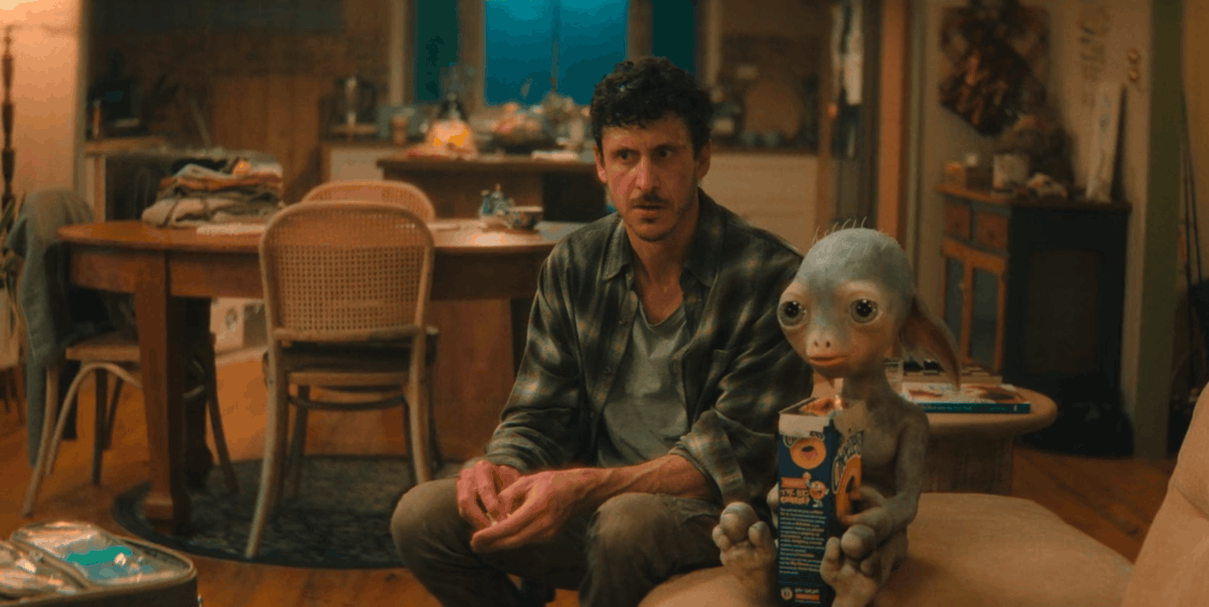
One thing the teams behind physical puppets and the CGI model have in common is an emphasis on making every detail feel as organic and lifelike as possible. This process began with the initial design stage, as Pearson modeled many of Allen’s features after the animal kingdom, as many astute viewers have noticed. In his interview with What’s on Netflix, he confirmed that Allen’s smile is inspired by a gecko’s appearance, while his translucent skin is based on a green tree frog’s. The warmth around his face, meanwhile, was influenced by a baby hippopotamus. The crew also tested various hues to gauge how warmly a design would be received before ultimately deciding on his final look. Recreating that essence through puppets and digital models, while also adapting to the many creative challenges, was a key part of the process, and it all goes to show how much love went into constructing Allen.
Read More: Allen Ending Explained: Will Allen Come Back? Does Petey Live or Die?


You must be logged in to post a comment.