
 Abhiroop Das
Directed by Toshiki Hirano and adapted from Keisuke Itagaki’s eponymous series, ‘Baki-Dou: The Invincible Samurai’ returns to the underground arena with Baki and his peers, some time after the events of ‘Baki Hanma: The Father vs. Son Saga.’ With Baki emerging as the new strongest creature on earth, much of the story’s original premise has been resolved, and what follows is an era marked by boredom. Desperate to conjure a new “arc” for the world, Tokugawa reaches back into Japan’s history and finds a solution in the form of Miyamoto Musashi, a legendary swordsman who died more than 300 years ago. Using advanced technology to clone his body from scratch, Tokugawa unleashes a beast like no other into the modern world, ready to take on Baki, Yujiro, and anyone who dares to challenge him in combat.
Miyamoto Musashi’s Name is Synonymous With Martial Arts in Japan
The reincarnated Miyamoto Musashi in ‘Baki-Dou: The Invincible Samurai’ is based on the real-life Miyamoto Musashi, who lived in the Edo period and is regarded as a Kensei, or “sword saint” in modern-day Japan. Although exact details about his past can’t readily be verified, records suggest that he was born between 1583 and 1584 as Shinmen Takezō and belonged to a long lineage of martial artists. Having learned the art of combat early on, Musashi won his first duel at the age of 13 and is even believed to have participated in the famous Battle of Sekigahara. His first moment of fame reportedly came when he defeated multiple students of the Yoshioka clan in Kyoto. Around this period, Musashi embraced the vagabond lifestyle, travelling through many towns and cities to duel with samurai and other martial artists of the era.
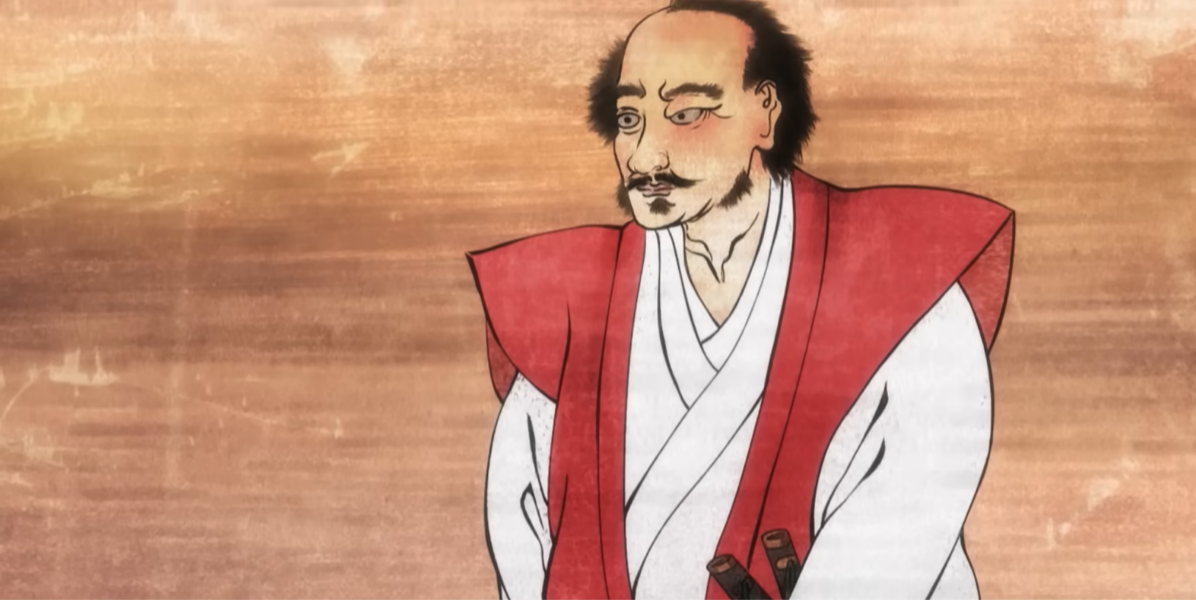
It is believed that Musashi held an undefeated record across as many as 62 duels, and this was in no small part due to his unique style of swordsmanship known as Niten Ichi Ryu, which involved the use of two blades. Records indicate that Musashi fought his most famous duel with Sasaki Kojirō on April 13, 1612, in what has become known as a modern-day legend and a staple of samurai pop culture. After winning against Kojirō, Musashi continued his journey across Japan, briefly opening a fencing school before reportedly joining the military troops of the Tokugawa shogunate. In ‘Baki,’ which features a fictional descendant of the Tokugawa clan, named Mitsunari, this historical connection is central to the story.
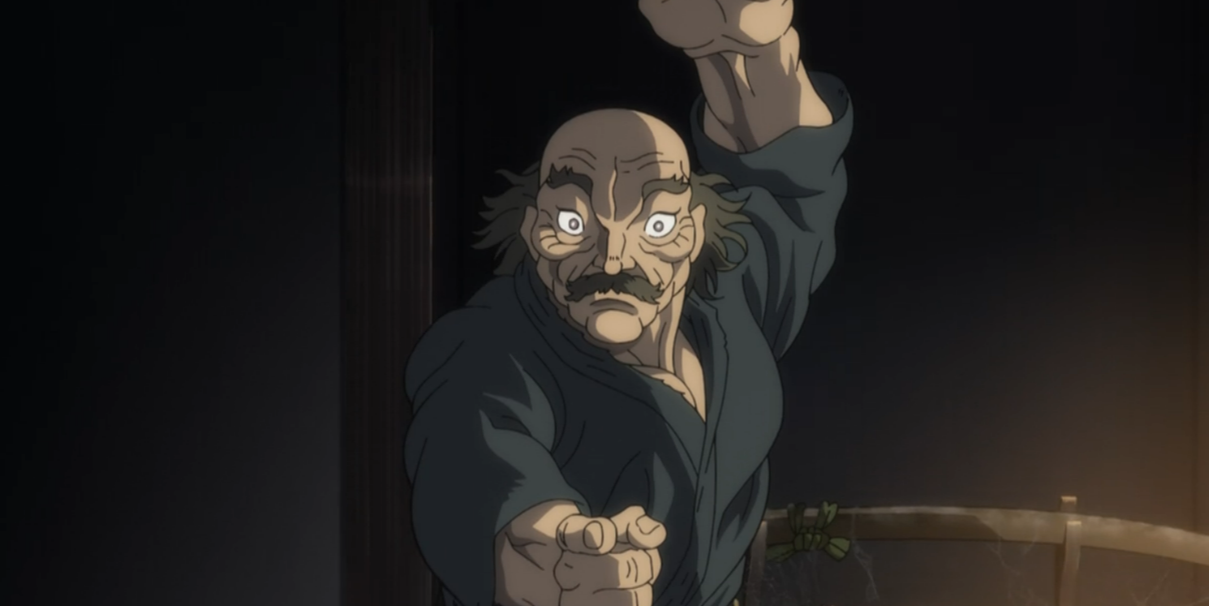
Around the early 1600s, shortly after entering the services of Lord Hosokawa Tadatoshi in Kumamoto, Musashi began deepening his knowledge of the arts, specifically by learning how to paint. Within less than a decade, he had published his first major work, titled ‘Hyoho Sanju Go,’ or ‘Thirty-five Instructions on Strategy.’ This text went on to become the foundation for the work he is most well known for, ‘The Book of Five Rings.’ It is believed that Musashi wrote and illustrated this book between 1643 and 1645, while living as a hermit in a cave known as Reigandō. He died shortly after finishing this literary project, allegedly due to lung cancer. Over the years, his legacy as a martial artist, painter, writer, and strategist has continued to grow, making him one of the most famous samurai to ever live.
Musashi in Baki-Dou is a Fictionalized Deconstruction of the Historical Figure
While the real-life Miyamoto Musashi is remembered in the modern day on the basis of various written and oral records, the version of him we see in ‘Baki-Dou’ has been heavily dramatized. Framed as an antagonist in the arc, this rendition of Musashi can be interpreted as writer Keisuke Itagaki’s attempt to creatively break free of, or subvert, many of the details attributed to the real-life samurai. This fits in with the very premise of the season, as Musashi is seemingly retrieved from his burial site at Musashizuka Park in Kumamoto, and then cloned with both scientific and supernatural means. Notably, Musashi is not the first character in ‘Baki’ to be directly based on a real-life figure, as the story also introduces characters inspired by Barack Obama, Muhammad Ali, and many others. In all of these cases, we see a fictionalized version of real people, designed specifically for the story.
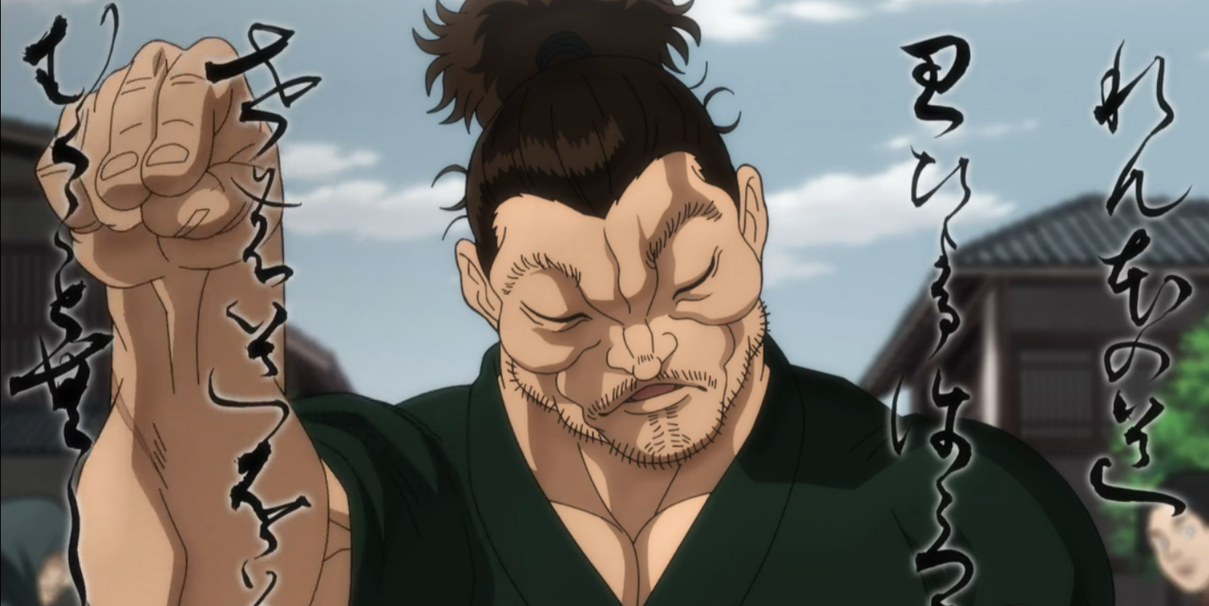
While the character of Musashi in ‘Baki-Dou’ may be directly inspired by his real-life counterpart, the story exercises numerous creative liberties along the way. For instance, Musashi’s famous swordsmanship style, known as Niten Ichi Ryu, is reimagined as a part of his supernatural moves, which are capable of cutting people without making contact. Furthermore, the story dramatizes and reintegrates several biographical details from Musashi’s life, such as his alleged participation in the Battle of Sekigahara and many of his famous duels. While it is likely that the creative team behind ‘Baki-Dou’ referenced Musashi’s written works as a part of their research process, the character we see on screen is fully transformed to fit the style of storytelling unique to ‘Baki.’
Read More: Baki-Dou The Invincible Samurai Ending Explained: Is Pickle Coming Back?


You must be logged in to post a comment.