
 Abhiroop Das
Helmed by Toshiki Hirano, ‘Baki-Dou,’ or also known as ‘Baki-Dou: The Invincible Samurai,’ follows in the footsteps of ‘Baki Hanma: The Father vs. Son Saga,’ which ends with Yujiro and Baki’s definitive battle. As the world grows convinced that it has witnessed the peak of martial might, a curtain of boredom begins to take hold of the narrative itself. For Tokugawa, the only way to shake away this stagnation is not by scouting new fighters, but by reviving old ones. With this agenda, he blends science and magic to create a living clone of Miyamoto Musashi, the legendary swordsman from the Edo period.
At once, every character in the series finds themselves back in the game, eager to show Musashi their fighting style and spirit. Among these is Retsu “Sea King” Kaioh, first introduced in the ‘Baki the Grappler’ manga series by Keisuke Itagaki. A master of the fighting style known as Shaori, Retsu stands tall as one of the strongest beings in the world of ‘Baki.’ As he puts his entire being on the line in a battle with Musashi, the whole world tunes in to gauge who is the greater warrior of the two. SPOILERS AHEAD.
Retsu is Killed by Musashi in the Underground Arena’s First Armed Battle
In episode 9 of ‘Baki-Dou,’ Retsu meets his end at the hands of Miyamoto Musashi, the legendary swordsman who has been brought into the modern world. This notably marks the first major death of the season, as well as the first time a core member of the supporting cast is killed in battle. Non-lethal and unarmed battles define the ethos of the Underground Arena, and yet Retsu’s fight with Musashi is intentionally designed to break both these rules, signaling a turning point for the narrative. For Retsu, it is unthinkable to battle a samurai such as Musashi without a sword, even if that means taking on arms himself. Retsu’s entire craft as a martial artist rests on his footwork, but by being forced to use weapons, he essentially volunteers for a limiter, all to give Musashi an opportunity to go all out.
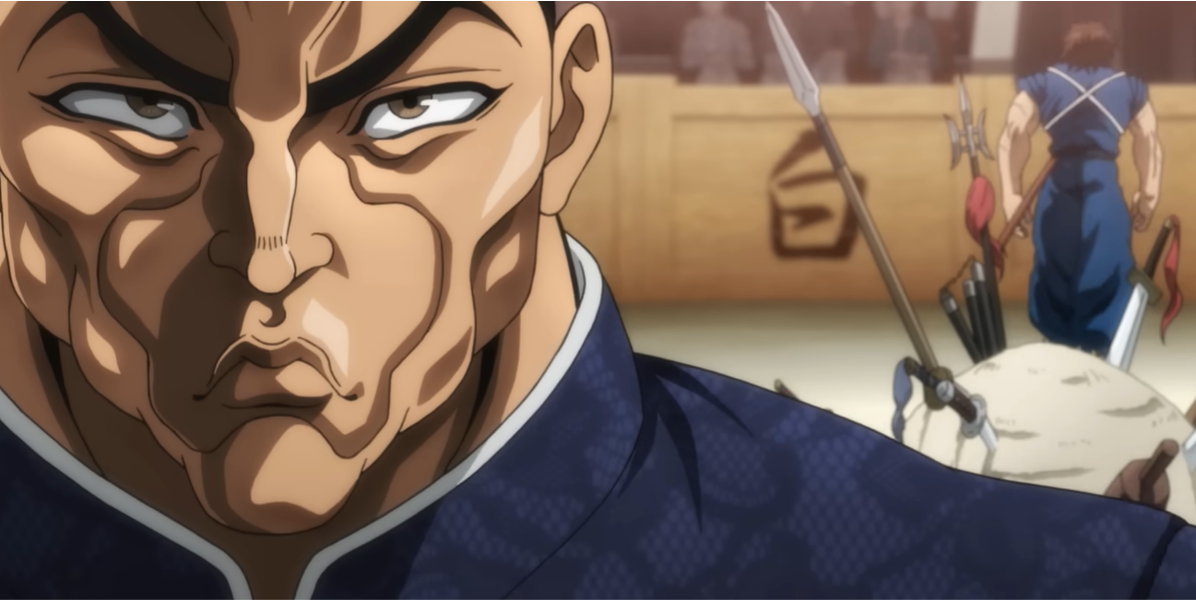
At the start of the fight, it appears that Retsu and Musashi are evenly matched, if only because of how many times a new weapon catches the samurai off guard. This pattern is short-lived, however, as it hardly takes Musashi more than two blows to neutralize each attack thrown his way. In fact, he appears to be unfazed even when Retsu launches tooth and nail pieces lying on the Arena floor, as for him, the remnants of warriors bygone are just that: remnants. Unlikely Baki, who symbolically values these small fragments as proof of people’s resilience, Musashi is self-centered to the core and focuses exclusively on the enemy in front of him, Retsu. Obliging his request to have a proper battle, Musashi lands the finishing blow with lightning speed, cutting through Retsu’s body so deeply that his internal organs come out, causing him to bleed out to his death.
Retsu’s Death Forces Tokugawa to Question His Resurrection of Musashi
Although Retsu Vs. Musashi technically ends with Musashi’s victory, but it doesn’t necessarily register that way on a thematic level. Notably, this fight is immediately recontextualized by Musashi’s follow-up bout with Yujiro, wherein he realizes the pointlessness of using weapons. His life goal to turn his hands into lethal objects is one already internalized by Retsu. In a way, even martial artists weaker than Musashi are wiser in their own ways, and Retsu represents one such life that is stifled for good. Unlike Pickle, whose isolation comes from a genuine inability to make human connections, Musashi is someone who has devoted himself to the sword. Unable to detach himself from it, he defaults to being a fatal force in his battles, not knowing that humanity has advanced past such violence.
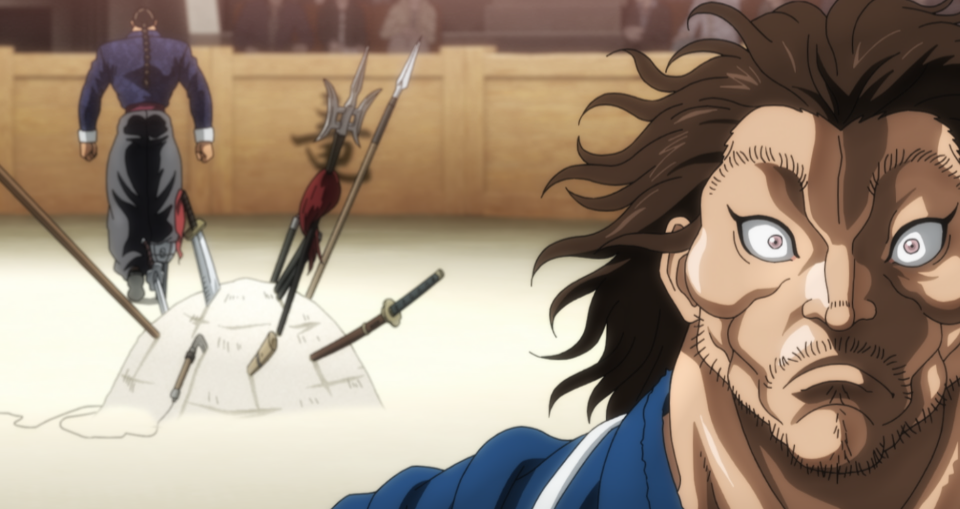
It is only after Retsu’s tragic death that Tokugawa realizes his mistake of forcefully bringing a person from the past into the present. Musashi, seemingly at war with reality, can only share his darkest side with the world, and that is what leads to Retsu’s fate. Fittingly, in a later conversation, Musashi compares his duel with Retsu to battling in Sekigahara. In the same breath, he denies the romanticized mythology of Musashi vs Kojiro, claiming that the latter was a forgettable warrior compared to someone like Retsu. While the statement is comforting on some level, with Tokugawa acknowledging that Retsu died in the spirit of battle, there is still an undeniably sad dimension to it. Having been a part of the core cast for so long, Retsu essentially feels like a part of Baki’s found family, and with him gone, the story is unlikely to ever be the same again.
Read More: Baki-Dou The Invincible Samurai Ending Explained: Is Pickle Coming Back?


You must be logged in to post a comment.