
 Aahana Swrup

In ‘Being Heumann,’ director Sian Heder delves into the historic disability rights protests that broke out across the country in 1977 as advocacy for the enforcement of the Rehabilitation Act’s Section 504. The film focuses on the inciting protest in San Francisco, where activists band together to carry out a sit-in at the Federal Building. They’re led in their efforts by Judy Heumann, who unflinchingly fights for systemic change and makes demands for laws and regulations prohibiting discrimination against people with disabilities to be put into legislation. The sit-in protest begins as an unplanned byproduct of a pre-existing demonstration, but quickly catches fire of its own. As the peaceful occupation of the building begins to catch the media’s attention, Judy and the protestors find an unexpected ally in Evan White, a reporter from the KGO-TV station. Given the film’s biographical roots in real life, the reporter, much like various other characters in the story, also finds a tangible basis in reality.
Evan White is a Real Reporter Who Covered the Section 504 Sit-Ins With the KGO-TV Station
‘Being Heumann’ presents a historical account of the disability rights protests of April 1977 with a biographical focus on Judith “Judy” Heumann. The film itself has its origins in the activist’s 2020 memoir, ‘Being Heumann: An Unrepentant Memoir of a Disability Rights Activist.’ While the book remained an influence on the screenplay by Sian Heder and Rebekah Taussig, the pair of screenwriters also employed real-life research in preparation for the project. The director conducted extensive interviews with about 30 people directly involved in these protests. It’s possible that the real-life Evan White, inspiration for Dylan O’Brien’s on-screen reporter character, might have been one of these people. The KGO-TV television station, based in San Fransico, was involved in reporting on the disability rights protests at the California city’s Federal Building from early on.

White, a reporter at KGO-TV, was among the various media personnel who covered the story on the ground as it was unfolding. “I supposed I had, like anyone in the media and everybody in society, went into this with a…..not a clear understanding of the issue, of what civil rights issues were involved here for the disabled,” the reporter said while recalling the protest. “We had to be educated, along with the general public. And that’s what the sit-in started to do. It’s not a matter of curb cuts; it’s a matter of kids who are disadvantaged, disabled rather, getting education that isn’t segregated and second rate, of being mainstreamed. Mainstreaming into the whole society; accessible transportation so people could have jobs and go shopping, and go……you know, none of us really sat down and gave it a hell of a lot of thought. Until it was put in our face and we had to pay attention and listen. So, it was a learning process for it all.”
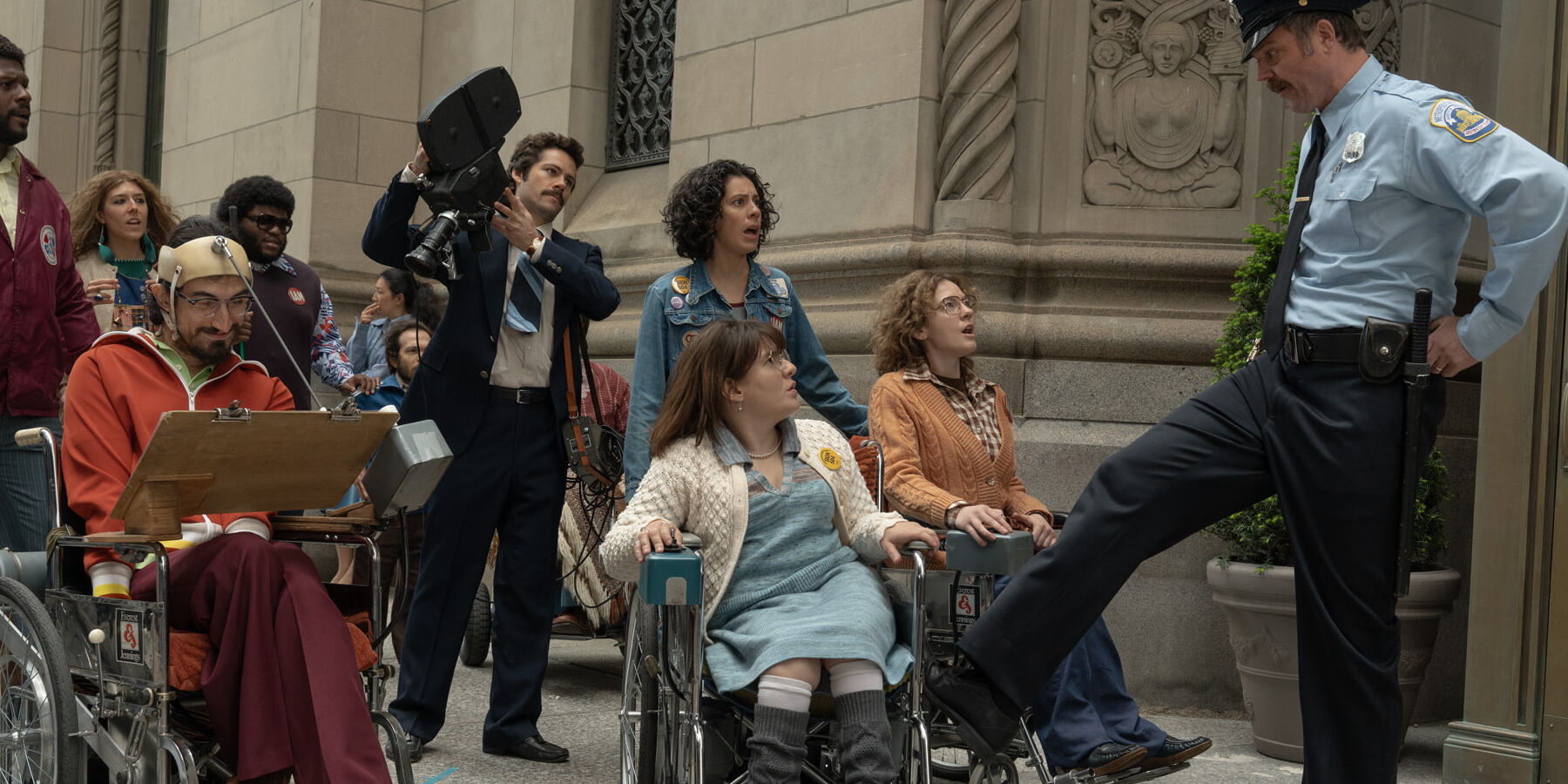
Under Heumann’s leadership, the sit-in demonstration at San Fransico started on April 5, 1977, and lasted for 26 days. The first few weeks into the protest, the group decided to send its leaders to Washington, DC, in hopes of earning an audience with Health, Education, and Welfare Secretary Joseph Califano or President Jimmy Carter. White accompanied the protesters to the capital city to continue providing media coverage of the cause. In her film, Heder captures the unique relationship formed between the protesters and the media personnel through the on-screen counterpart of Evan White. In pursuit of biographical accuracy as well as commitment to the historical facts, the film paints a realistic image of the real-life KGO-TV reporter and his professional involvement in the Section 504 sit-ins.
Read More: Where Was Being Heumann Filmed? All Shooting Locations


You must be logged in to post a comment.