
 Diksha Sundriyal
Netflix’s ‘Monster: The Lizzie Borden Story’ turns the spotlight towards the infamous axe murders of Andrew and Abby Borden. The eight-episode season follows the story of Lizzie, Andrew’s second daughter from his first marriage, whose life in the Borden household is more of a prison. The events unravel in such a way that Lizzie, with some help from her maid and lover, Bridget Sullivan, aka Maggie, ends up killing her father and stepmother. But before following through with the main event, she commits another axe-murder to find out if she has it in her to swing the axe when the time comes. Thus, her first victim turns out to be Abby’s friend Bertha Manchester. It is a significant event for Lizzie, but, much like several things in the show, it is depicted through a highly fictionalized lens. SPOILERS AHEAD.
The Netflix Series Presents a Fictionalized Version of Bertha Manchester
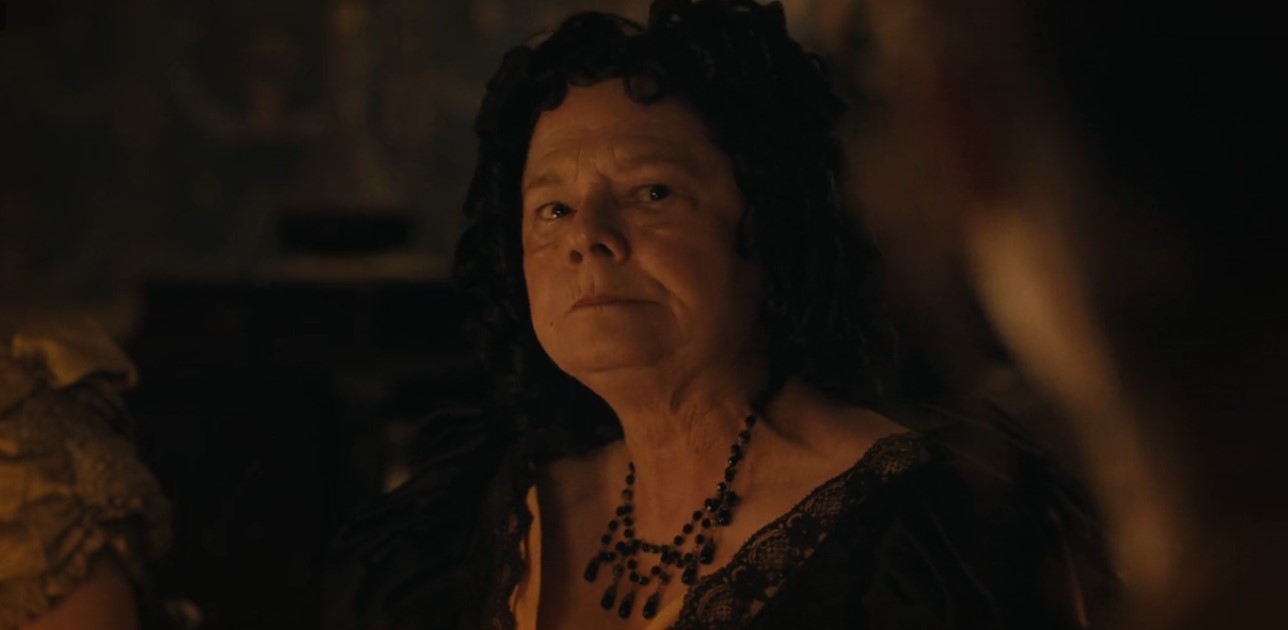
Bertha Manchester was a real woman who was brutally murdered in her home by an axe. However, the events didn’t exactly go down as shown in the Netflix series. The show presents her as an old woman who is friends with Abby Borden. As a punishment, Abby sends her maid, Maggie, to work extra hours at Bertha’s house. However, Bertha turns out to be a sadist who tortures Maggie by whipping her. In a fit of anger and revenge, Lizzie and Maggie plan the old lady’s murder. When the time comes, Maggie freezes, and Lizzie is the one who finishes the job. Later, some workers are arrested for the murder, leaving Lizzie and Maggie free to continue planning their next killing. This whole plotline is manufactured to serve the show’s plot and has very little resemblance to the real-life case.
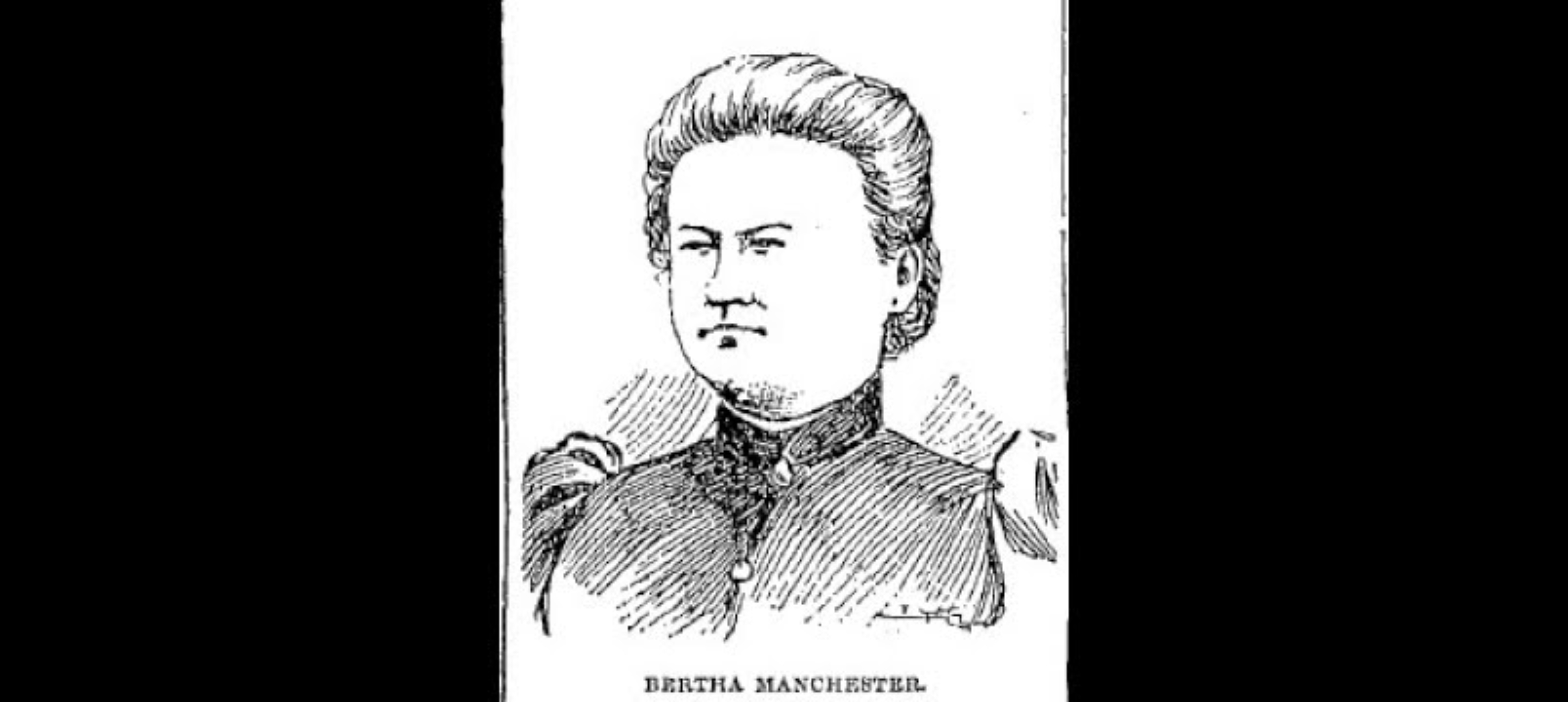
To begin with, the real-life Bertha was not an old woman living alone in a house in the city. Instead, she was 22 years old, living on a farm in Fall River, Massachusetts, with her father and brother, Stephen and Frederick. Moreover, she was killed on May 30, 1893, several months after the murder of Andrew and Abby Borden on August 4, 1892. At the time, Lizzie Borden was already under arrest, and her trial was scheduled to begin in a few days, which means she had nothing to do with Bertha’s death. There is no evidence to suggest that the Manchesters had any connection with the Borden family at all. On the day of Bertha’s murder, her father and brother were away making milk deliveries. They came back home in the afternoon, which is when they found Bertha dead in their kitchen.
A Different Person Was Convicted for Bertha’s Murder
Bertha Manchester had been killed by an axe, which was found by a woodpile outside the house. Reportedly, her watch and some money were also stolen. According to her autopsy, 23 axe wounds were reportedly found on and around her skull. The autopsy also reported defensive wounds, indicating a struggle before she was killed. After some investigation, the cops arrested Jose Correa de Mello, a Portuguese laborer who had been hired to work on the farm. Allegedly, he was also found to have been disgruntled with Bertha’s father, who was allegedly known for not paying his workers well. In the trial, de Mello started by pleading not guilty but later changed it to a guilty plea of second-degree murder. He was convicted and sentenced to life in prison.
Meanwhile, Bertha was laid to rest at the Oak Grove Cemetery. The timing of her death is also believed to be a major reason that turned the tide in favor of Lizzie Borden. When she was arrested for the murder of Andrew and Abby Borden, there was already a lot of discourse about whether or not she could have done it. About a week before her trial, Bertha Manchester was killed in a shockingly similar way and around the same time of day as the Bordens. By the time the jury was sequestered for deliberations, they were likely already exposed to the headlines about Bertha’s murder and the arrest of Jose Correa de Mello. Notably, Lizzie’s defense didn’t use Bertha’s case to prove her innocence at trial, though they did make a passing reference to it.
The public, however, was quicker to draw comparisons, which led to theories about whether the killer was the same in both cases. Still, it cannot be confirmed whether Bertha’s case played any role in Lizzie’s acquittal. However, the timing and the MO of the murder do raise interesting questions. The Netflix series seems to disregard most of these details, picking up only those that fit the plot’s narrative, which has to present an incremental arc in Lizzie’s bloodlust. Thus, the Bertha that we meet in the show is entirely different from the real woman who met a tragic end.
Read More: Who Was Lizzie Borden? Did She Kill Her Parents? How Did She Die?


You must be logged in to post a comment.