
 Abhiroop Das
Co-directed by Carlos Moreno and Claudia Pedraza, Netflix’s ‘Fugue State 1986’ follows Jeremias Salgado, a teacher, student, Vietnam War veteran, and crossword writer all in one, who on one ordinary day takes the life of dozens of innocent diners at a restaurant. Originally titled ‘Estado de fuga 1986,’ this Spanish psychological crime drama series presents a fictionalized account of the Pozzetto massacre, which is the deadliest shooting by a lone man in Colombia’s history. Jeremias, the show’s fictional counterpart to Campo Elías Delgado, however, is not alone in his downward spiral. The morning after the shootout, his confidante, Camilo León, realizes that he has zero memories of the past few days. As the narrative blends past and present in its excavation of the truth, all characters are forced to confront the darkest versions of themselves, in turn opening the Pandora’s box of the human condition. SPOILERS AHEAD.
Fugue State 1986 Plot Recap
‘Fugue State 1986’ begins with a massacre, as Jeremias Salgado quotes the iconic monologue from ‘Taxi Driver,’ before opening fire on every diner in his vicinity in the San Marzino Italian restaurant. The scene then jumps to the perspective of a young man, named Camilo León, who wakes up from a dazed state only to hear of Jeremias’s murder spree. Over the telephone, his friend Elena asks if he knew about this, but León can only sit back in horror as he realizes that he has absolutely no recollection of the last two days. A flashback to a few months before the mass shooting takes us to a university, where both Jeremias and León are students of literature. Interested in each other’s literary perspectives, the two strike an odd friendship, characterised by “crime-club” meetings where they discuss cold cases, and Jeremias’s experiences and learnings as a former Vietnam War veteran. However, all of this is washed in a suspicious light, as Jeremias appears to be grooming his new friend for a certain program.

From here, the show jumps back and forth in time, detailing Jeremias’s horrific body of crime in complete detail. Alongside the diners at the restaurant, he also appears to have killed some of his neighbors. Indira Quinchia, a former psychiatrist and forensic specialist, works unofficially with her police friend, Mario Polania, to figure out why the government hushed the restaurant massacre case. Her suspicions lead her to León, who is still struggling to recover his lost memories. Another flashback reveals that his friendship with Jeremias took a sinister turn, nearly costing him his life at certain moments. Still, the two connected over their paternal trauma, especially with León’s father suffering from cognitive impairments due to being abducted and tortured many years ago. Jeremias uses his sources in the military to fish out the identities of the men who tortured León’s father, and thus presents him with the option of exacting revenge.
In the present, Indira’s unofficial investigation goes nowhere, as Jeremias’s body appears to have vanished from the face of the Earth. Worse, much of the evidence points to León being at the restaurant on the same day as the massacre, and yet he has no memory of the event. A flashback reveals that he managed to track down the family of one of his father’s torturers, Jorge Ocampo. While León dreams of killing Jorge’s daughter, Teresa, he doesn’t bring those ideas into real life. Jeremias, on the other hand, has more violent plans and only gets angrier when León refuses to comply. Their altercation triggers the latter’s fugue state, and we see that while León indeed made it to the restaurant for a meeting, he was never joined by Jeremias. The Vietnam veteran, on the other hand, has already murdered his mother and two others by that time, and with Teresa missing, all plot threads come to a boil.
Fugue State 1986 Ending: Did Jeremias Die by Suicide or Was he Killed? Why is His Body Never Found?
‘Fugue State 1986’ ends with Jeremias’s body never being discovered, leaving it intentionally ambiguous whether he was killed or he took his own life. While the fact that he was shot to death on his left temple does make suicide unlikely, given that he was right-handed, the possibility still can’t be ruled out completely. Notably, in its final sequence, the show briefly returns to Jeremias in the restaurant, right after the massacre. Seemingly out of bullets, he looks around, smiling at his actions, or perhaps the sheer absurdity of it, before the scene abruptly cuts to dark. This transition obscures what is most likely his death sequence, adding to its enigmatic nature. As Jeremias’s final expression in the show is brimming with a sense of finality, suicide is a probable conclusion for his arc. However, the external circumstances involved in this massacre paint a vastly different picture.

Jeremias’s death is further complicated by the suspicious police activity that immediately follows, as we see them promptly replace his briefcase and gun with fake counterparts, essentially planting phony evidence. As we already know that his briefcase contained letters carefully detailing his thought processes, the police’s intentional takeover confirms their wrongful involvement in the whole event. The new set of objects surrounding Jeremias, such as the book, ‘The Park is Mine,’ paints a convincing picture of a maniac, removing any and all context from what was a carefully thought-out crime. While the book was originally gifted to him by León, in this new narrative, it is labeled a propaganda piece that enabled the mass murderer’s delusions of grandeur.
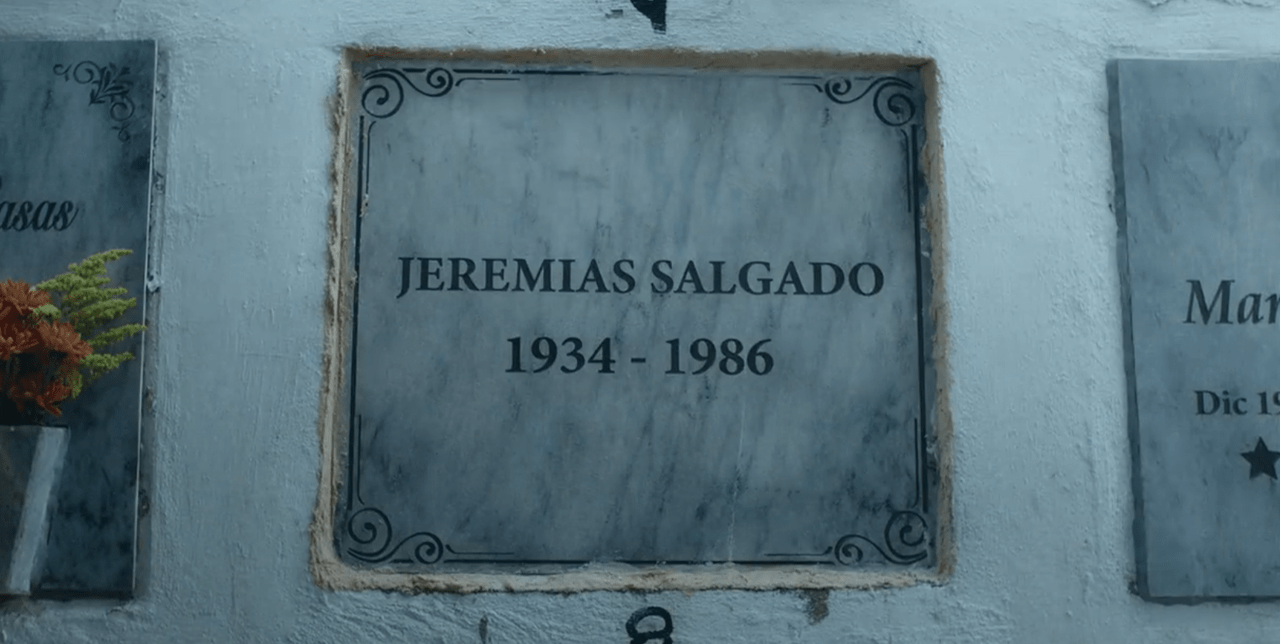
Although much of the series is spent looking for Jeremias’s body, the final scene confirms León and Indira’s defeat in that quest. Although León is fully aware of his former friend’s monstrous crimes, he still finds himself hung up on the inexplicable disappearance of Jeremias’s physical remains. To that end, he ends up paying for an empty grave in Jeremias’s name, hoping for some closure to their dynamic. While the pastor confirms that the spree-killer’s body was taken into custody by unknown authorities, Indira’s investigations fail to pin down their exact identity. León suggests that the people might be American, which explains how they have seemingly vanished from the scene. Given that Major Guillermo Perea is most likely involved in the cover-up of Jeremias’s death, the idea of US involvement gets even more credence, due to their shared knowledge of the mysterious program.
Why did Jeremias Commit the Massacre?
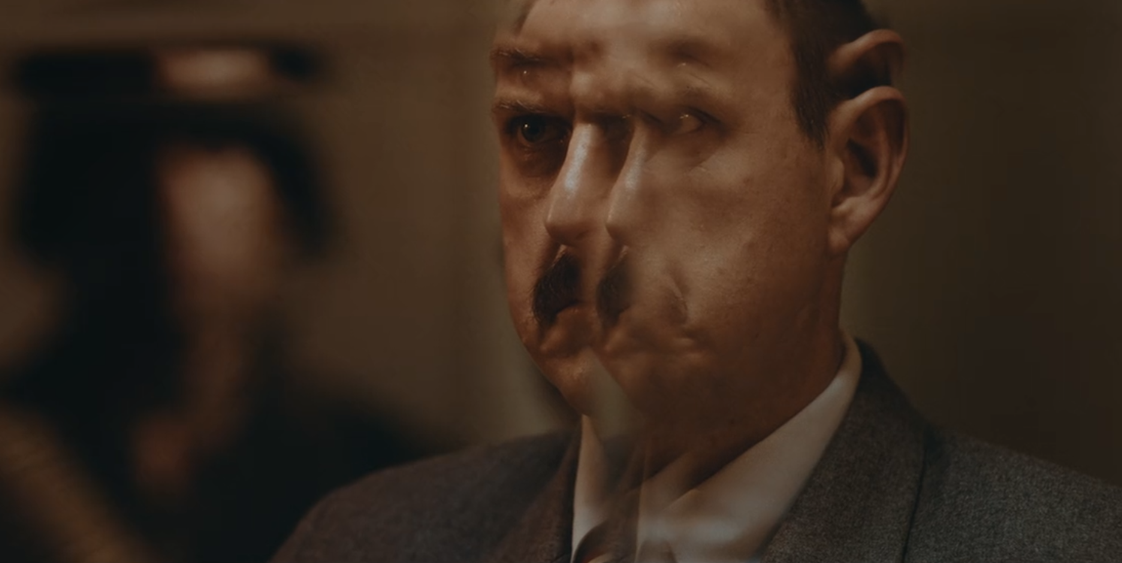
A burning question from start to finish in ‘Fugue State 1986’ is Jeremias’s motive behind the restaurant massacre. While the show’s title initially tricks the audience into thinking that he was in a fugue state while committing the crimes, the truth actually flows in the opposite direction. The finale indicates that Jeremias’s murders were partly the result of a post-traumatic stress disorder-driven psychosis, as well as his narcissistic beliefs about humanity. Notably, in the show’s opening sequence detailing the night of the massacre, we see Jeremias’s mirror reflection seemingly split into two moments before he opens fire on the diners. With the entire show in mind, this scene is recontextualized as his psyche finally collapsing. The scene right before this is also crucial, as Jeremias momentarily hallucinates Vietnam War soldiers all around him, seemingly urging him to take charge of the scene. This indicates that Jeremias might have been hallucinating before and during the massacre.
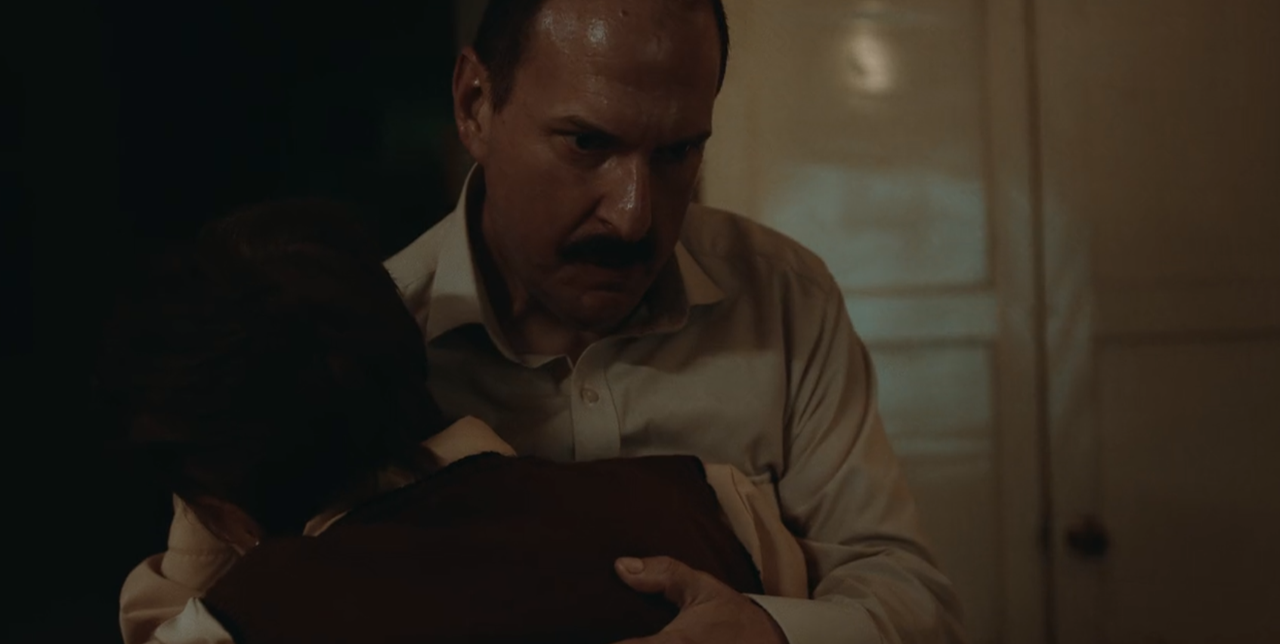
In an earlier scene where Jeremias tries to solicit a sex worker, he briefly hallucinates the face of a Vietnamese woman, and proceeds to choke the sex worker with all his might, nearly killing her. This is the first sign, amongst many, of Jeremias’s mind being unstable. This also reframes Jeremias’s San Marzino killing spree, as it is possible that he was convinced of the entire scene being a military mission, and killed innocents in a hallucinatory frenzy. However, an important detail in this scene is his deep-rooted prejudices that have been built up over the narrative. Jeremias consistently considers himself to be an intellectual who doesn’t mesh well with society, and particularly women. Moments before slaughtering dozens at the restaurant, he displays immense disdain for the people in front of him, which implies that his crime was one of passion and consciousness, at least on some level.
What is the Program?
While most of Jeremias’s far-reaching claims likely have a hallucinatory tint to them, every mention of the program in the story is met with seriousness. With Major Guillermo himself acknowledging its existence, the program is confirmed to be a real experiment that was carried out on soldiers by the US intelligence. Based on the information collected by Officer Mario Polania, the program involved a battery of experiments, a training regimen, and psychological programming methods that were meant to brainwash soldiers into becoming elite killing machines. To that end, the show implies that Jeremias was a part of this program, and much of his psyche was molded by it. This not only explains his single-minded dedication to serving the US Army, but also his tendency to manipulate others around him, especially León, whom he scouts and actively grooms for the program.
Jeremias’s conversation with Guillermo about the program also raises a particular uncertainty about whether the program was really still in place. Given the thematic point of the show, however, it is likely that the program was suspended, or at the very least, did not make its way to Colombia. Thus, Jeremias’s obsession with incorporating León into the program is revealed to be personal in nature, similar to his fixation with Arthur Conan Doyle being Jack the Ripper. It is possible that Jeremias’s post-traumatic stress disorder stems from the brainwashing he received as a soldier, which he is unable to shrug off even after a decade of being discharged. In his obsession with following the program, Jeremias ends up manufacturing a conflict, as well as allies with whom he can commit violent acts, in this case, León. While we never get a full look into the program’s after-effects on Jeremias, they are enough to gauge its potency as a psychological weapon.
Why Did León Hide the Fifth Tape? Does He Become a Writer?
While Jeremias fails to recruit León into his make-believe military mission, he still manages to have the last word in their dynamic, in the form of five audio tapes that he posthumously shares with his former friend. The tapes seemingly contain everything he knows about the program, which we have seen and heard him record over the episodes. However, when handing over these valuable tapes to Indira and the police, León intentionally leaves one tape out, without anyone noticing. This final tape, as it turns out, contains no information about Jeremias’s supposed mission and his background as a soldier. Instead, it takes the form of his heartfelt words to León, as a reader and former friend. In the final sequence of the show, we see León play the fifth tape in the background, as he prepares a grand typewriter to craft his first literary work in ages.

Despite León starting out as a budding writer, that aspect of his character gradually fades away over the course of this show, in no small part due to Jeremias’s corrosive influence. However, in the finale, we see León return to the writer’s chair, taking a meta-authorial role in the story. He begins to imagine every possible way he could have avoided the show’s conclusion, be it by stopping Jeremias before he is able to commit a crime, or by rejecting every bad decision he made even before that. Still, in the end, León winds up at the same ending, even in his mind palace constructs. Begrudgingly, he realizes that there are more powerful figures governing his life, such as the ones who have possession of Jeremias’s physical remains. Still, the only resistance he has left is by way of the pen, which makes his return to writing all the more powerful. Jeremias’s footprint on his life, as such, forces him to reevaluate just how reality informs fiction, and vice versa.
Related


Is Teresa Ocampo Found? Does Indira Get Her Job Back?
A running mystery of ‘Fugue State 1986’ that finds its conclusion in the finale is that of Teresa Ocampo’s disappearance. In the end, we learn that Teresa was kidnapped by none other than her school’s gardener, following which, Indira rescues her. This twist is foreshadowed in León’s first interaction with the young teen, where she reveals that the school’s gardener secretly helps her collect flowers. This detail takes on a chilling new meaning when we learn that he is sexually abusive, which led him to kidnap her eventually. Given León’s numerous attempts to make contact with Teresa, he is the first in the police’s spotlight, and even Indira briefly believes him to be the perpetrator. His amnesiac state only makes his case more difficult, as he cannot rule out his own or Jeremias’s culpability. However, in the end, he manages to remember the gardener, solving the case.

Upon locating the gardener’s address, Indira and Polania rush to the location and break into his home, leaving León chained to the car. Inside, Indira discovers children’s toys and signs of a struggle, but at the same time, we see from León’s perspective, the gardener returning home. Suspicious of the car parked in front, the gardener arms himself and stealthily approaches the two officers, but his plan is disrupted by León honking and getting Indira’s attention. Fortunately, she locates Teresa just in time and rescues her by gunning down the gardener. This victory is redemptive for both her and León, and just like his arc closes with his return to writing, Indira ultimately gets her job back. Armed with her recent success, as well as the four tape recordings where Jeremias talks about Guillermo and the program, she heads to the army major himself, forcing him to reinstate her as a psychiatrist and forensic analyst in return for her silence. Thus, while Jeremias meets his end, both León and Indira find new beginnings.


You must be logged in to post a comment.