
 Abhiroop Das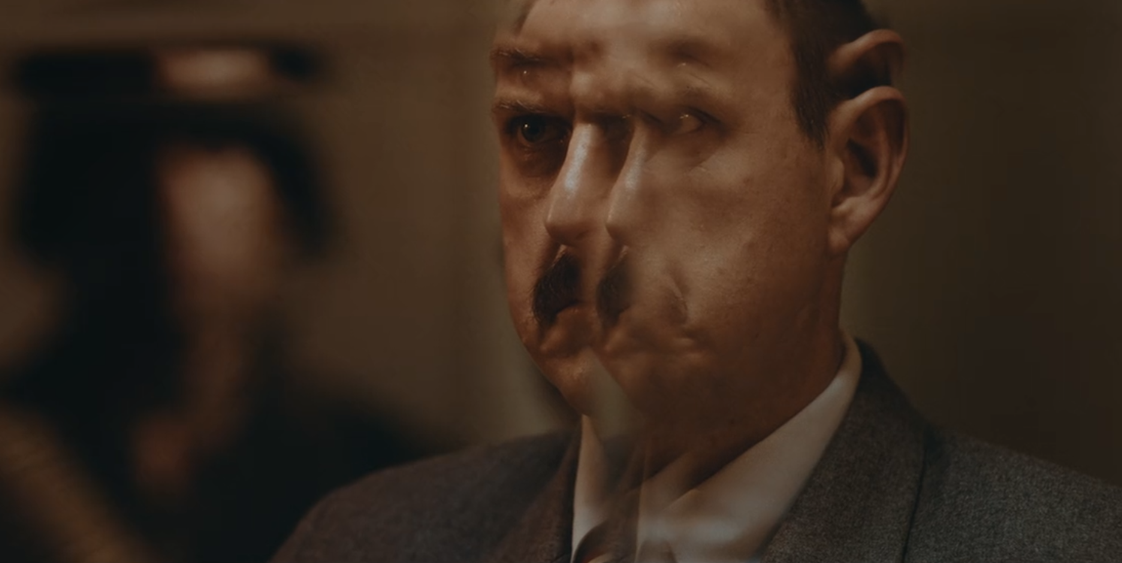
Helmed by Carlos Moreno and Claudia Pedraza, Netflix’s ‘Fugue State 1986,’ originally called ‘Estado de fuga 1986,’ is a fictionalized rendition of the Pozzetto massacre that occurred on December 4, 1986, in Bogotá, the capital city of Colombia. To that end, the series creates a fictional counterpart of the mass murderer, Campo Elías Delgado, in the form of Jeremias Salgado, a student and teacher of literature. His passion for words particularly comes to life in his brief but eventful friendship with León, which only makes his turn to crime all the more jarring. As it turns out, Jeremias’s past is not without secrets, and his time as a soldier in the Vietnam War manifests itself in increasingly morbid ways over the course of this Spanish psychological crime drama series. Unable to make sense of his former friend’s murderous spree, León is forced to retrace and reevaluate their dynamic and figure out the building blocks of Jeremias’s psyche. SPOILERS AHEAD.
Jeremias Suffered From a Brainwashing-Induced Post-Traumatic Stress Disorder
While Jeremias shows signs of post-traumatic stress, the origins of his disorder are chilling in their own right. Based on the details about a mysterious program that are sprinkled throughout the show, we can infer that Jeremias was psychologically exploited by the US Army during his time in Vietnam. The program, as such, appears to be a brainwashing regimen that turned Jeremias into an elite soldier; a mentality he can’t let go of even after a decade of being discharged. Although Jeremias’s PTSD is largely the driving factor behind his obsession with war, he is also engineered to think that way, and that bleeds out in his dynamic with León. While the budding writer is tormented by his own inner demons, Jeremias simply sees a potential candidate for the program and proceeds to groom him accordingly, providing us with a glimpse into what he might have originally gone through.

Based on Jeremias’s tape recordings, we can approximately recreate the process that goes into brainwashing a candidate, as outlined in the program manual. The first step is to find common ground, and then gradually corrupt that shared interest or passion. Following this, a psychological conditioning is likely used to trigger amnesia and psychotic reactions, eventually reducing the candidate to a puppet. While Jeremias doesn’t go all the way with León, it is likely that he had a different fate in Vietnam. Jeremias’s PTSD also manifests in other ways, such as his lingering obsession with death and the deceased, as well as his inability to have normal human interactions.

As much as Jeremias’s time in the military altered his psyche, his dark childhood is as much, if not more, crucial to understanding his present. Throughout the show, we see him physically and emotionally abusing his mother for reasons that are only unveiled in the finale. Jeremias’s father took his own life in front of him, and to this day, he believes his mother’s alleged affair to be the reason. While we never learn the truth about Jeremias’s father, this chapter in his path is formative to his misogynistic and antisocial behaviour. Towards the end of the show, his mental state is creatively visualized through a literal crack in the screen. This suggests that his self-identity might have fragmented itself as a way of coping with the trauma of what he had gone through, and of what he would go on to commit.
Related


Jeremias Hallucinated a Vietnam War Mission in the Restaurant
Among the many recognized signs of post-traumatic stress disorder are hallucinations, be they auditory, visual, or of any other sensory type. In Jeremias’s case, we see him hallucinate on screen on two occasions, which, while seemingly unrelated, point to the same source of trauma. In episode 3, when Jeremias tries to solicit a sex worker, his actions quickly turn violent when he superimposes the face of a Vietnamese woman on top of the woman in front of him. This all but confirms the horrific actions he committed as a soldier, which manifest in the form of hallucinations. It is likely that these memories of his past are deeply buried in his subconscious, and while Jeremias appears superficially devoted to war, his true personality is revealed in such moments of crisis. To that end, we see a similar scenario repeat at the restaurant on the day of the tragedy, except this time, he imagines his fellow soldiers instead.

In Jeremias’s hallucinatory episode, he is surrounded by soldiers from the Vietnam War, who seemingly nudge him to join them. This reframes the entire massacre from his point of view, as it is possible that Jeremias perceived it to be his mission as a soldier. His hatred for society also plays a formative role in this delusion, as he likely feels little remorse in taking the lives of those he considers beneath him. His glee in the immediate aftermath of that violent episode is also telling of the evil he possessed, which was further amplified by his military mental programming. Still, with his mind actively warping the reality around him, the situation becomes far more complicated. Although Jeremias displays complete clarity during the mass shooting, the sudden and drastic leap in his personality is likely symptomatic of his post-traumatic stress running its course through his psyche.


You must be logged in to post a comment.