
 Abhiroop Das
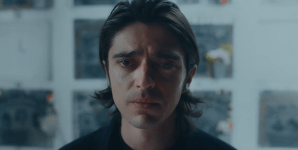
Co-directed by Carlos Moreno and Claudia Pedraza, Netflix’s ‘Fugue State 1986,’ originally known as ‘Estado de fuga 1986,’ presents a dramatization of the Pozzetto massacre of December 4, 1986, which was perpetrated by 52-year-old Campo Elías Delgado. In the show, he is fictionalized as Jeremias Salgado, a crossword puzzle maker who both studies and teaches English. His love for literature leads him to Camilo León, a fellow student who is struggling with his own downward spiral. What begins as a friendly “crime-club” meeting where they reimagine cold cases is dragged into the dark when Jeremias’s past as a war veteran leaks into his present.
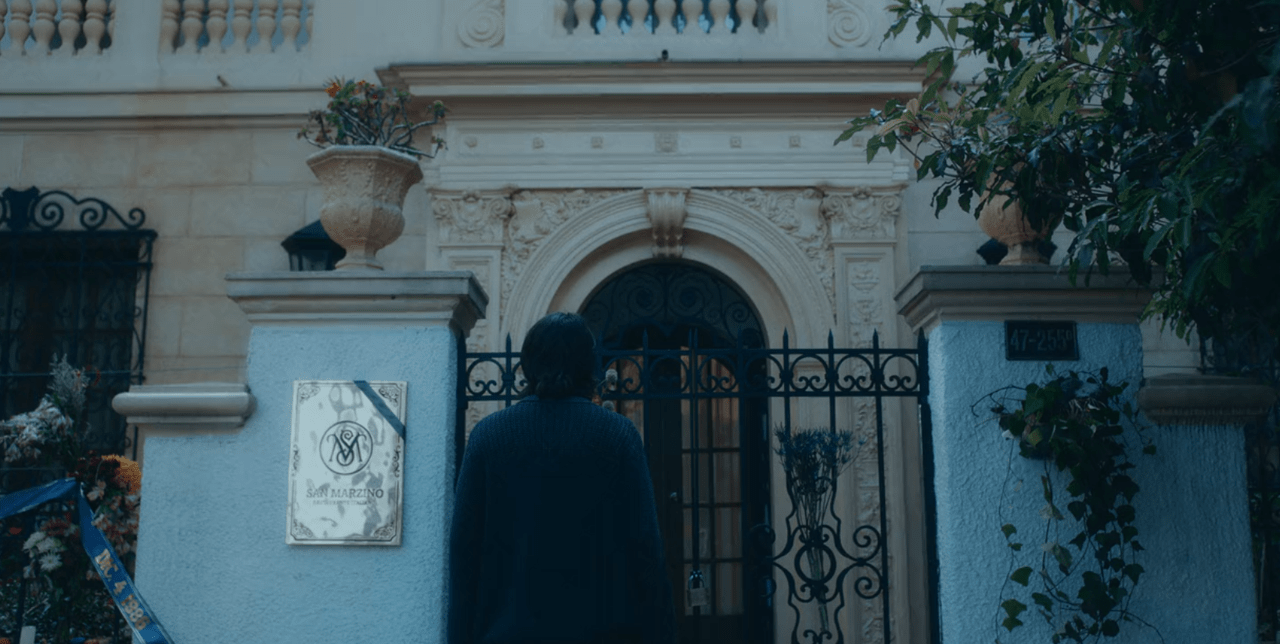
As the narrative fragments and warps along with his psyche, Jeremias finds himself opening fire on dozens of innocent diners at San Marzino restaurant, which he himself had frequented innumerable times. When León wakes up the following day with no recollection of the immediate past, but an apparent confirmation of his ties to San Marzino, all sense of truth and lie becomes a subject of inquiry. Thus, the Italian restaurant serves as a linchpin in many ways for this Spanish psychological crime drama series, concealing many untold stories in its wake.
San Marzino Recreates the Real-Life Site of Campo Elías Delgado’s Murder Spree
San Marzino Italian is the fictionalized counterpart of Restaurante Pozzetto, which was the site of the eponymous massacre carried out by Campo Elías Delgado on December 4, 1986. Situated at Carrera 7, No. 61-24, in the eastern end of Colombia’s capital city, Bogotá, Pozzetto had opened a decade before the mass shooting, and specialized in Italian cuisine. Delgado was reportedly a regular patron of the restaurant and was familiar with several staff members. These real-life details were reimagined for the narrative of ‘Fugue State 1986,’ by writers Alejandro Convers, Antonina Kerguelen, Felipe Useche, and Ana María Parra, who aimed to “take a historical fact (…) and from there we fictionalized all of that backwards,” according to a press statement in Bogotá.
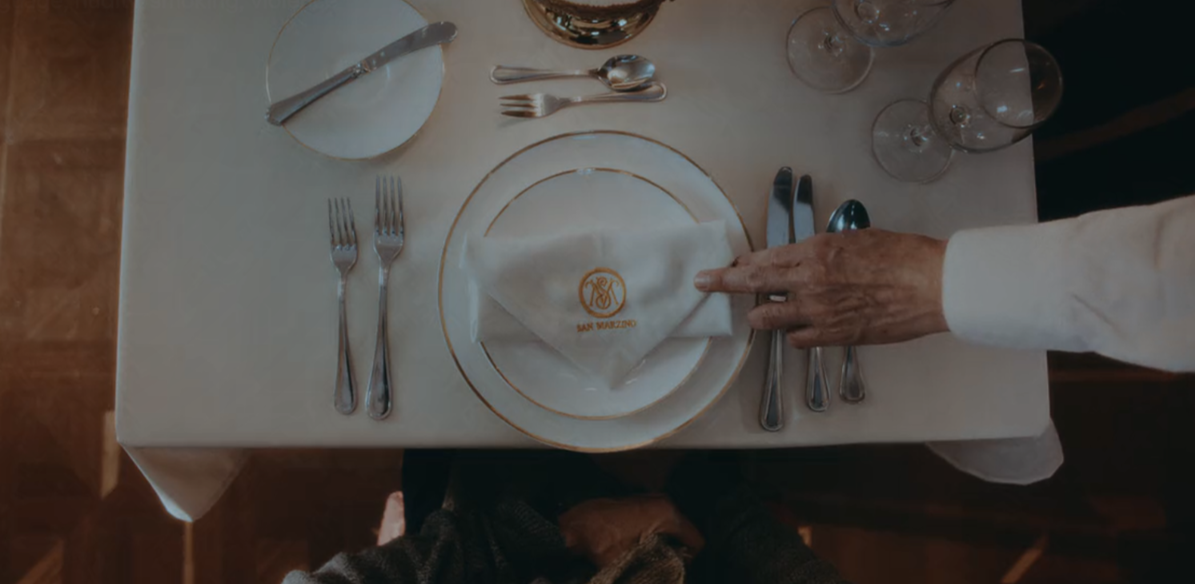
Given that the series was filmed in the city of Bogotá, the crew likely took over a real restaurant with a similar size and aesthetic to Pozzetto, and then crafted the fictional identity of San Marzino Italian on top of it, complete with customized serviettes and an artificial restaurant banner. Among the most iconic features of Pozzetto in real life was the stone well placed near the doorway for decorative purposes. Although the show did not recreate this detail, it nonetheless managed to evoke a sense of authenticity by making full use of its creative license. However, despite San Marzino being a distinct setting in its own right, the base layer is still Restaurant Pozzetto and its tragedy.
Campo Elías Delgado Took 13 Innocent Lives Within the Restaurant Premises
As a frequent diner at Pozzetto, Delgado would typically sit at his preferred table 5, but that changed on the fateful day of December 4, 1986. When he arrived at the restaurant at 7.15 pm, Delgado had already stabbed three people to death and shot an additional six people. Before sitting down at Pozzetto, he had allegedly told his long-time family friends, the Castros, that he was going “to the other side.” Secretly armed with a .32 caliber revolver and roughly 500 rounds of ammunition, Delgado sat at table 20, possibly to get a wider view of the rest of the diners. That was not the only surprising thing about his visit, as his usual server, Alfonso Guaneme, took notice of his unusually formal attire.
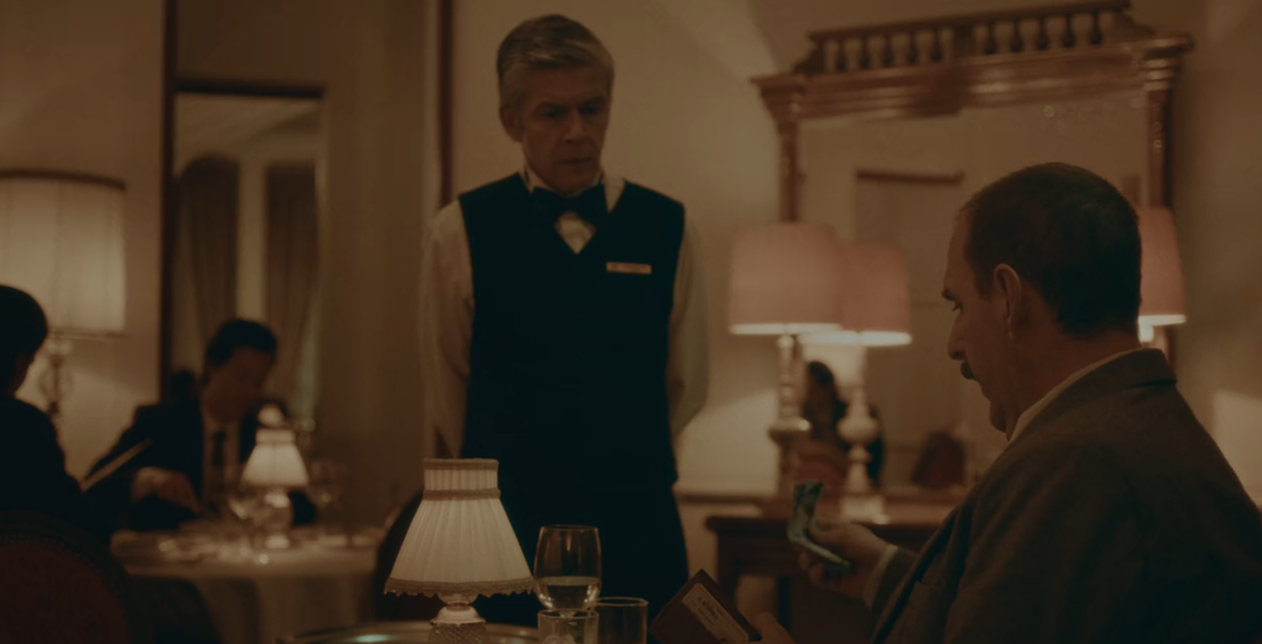
When Alfonso asked whether it was Delgado’s birthday that day, he was met with a now ominous response from Delgado, who declared that he was celebrating something personal. Further straying away from his set pattern, Delgado ordered a half-bottle of red wine with his meal, spaghetti bolognese, instead of the usual Colombiana Cola. According to some of the servers, he also made frequent visits to the restroom that evening, and uncharacteristically ordered several screwdriver cocktails after his meal. After finishing his food and drinks, Delgado paid his bill and gave a large tip to Alfonso before adding that the server always treated him well, and he would keep that in mind.
At approximately 9.15, Delgado pulled his gun and began firing at the diners and restaurant attendants, claiming that he was committing a robbery. When most people ducked to the floor, he approached them individually, shooting them point-blank in the head. Within a span of a few minutes, Delgado killed thirteen people and injured fifteen others, of whom seven died the following day. Around this point, the restaurant was surrounded by police, who had already shattered the glass windows and taken out the curtains. When the police and Delgado began exchanging fire, many escaped from the front door, including the Pozzettos’ manager. Allegedly, his first reaction was to plead with the officers to stop the operation, as the damages to the restaurant had already totaled a million pesos. Delgado was killed a minute into the shootout.
Related
Pozzetto Remained Open as a Restaurant Until 2018
In the aftermath of the tragedy, Pozzetto was reportedly closed for eight days for cleaning as well as renovation of the interiors due to gunshot damage. Following this, the restaurant resumed service and remained open until 2018. Alfonso Guaneme survived the massacre and continued serving in the restaurant until his retirement in 2013. While talking to El Tiempo, he described Pozzetto as a piece of Bogotá’s cultural legacy, and expressed sadness about its ultimate fate.
Around December 2018, the restaurant’s owners sold the building to a construction company, which was set to demolish the premises to make way for an apartment complex. While Pozzetto continued to flourish as a restaurant in its final years, its identity gradually became synonymous with the massacres, with the term “Pozzetto syndrome” being commonly used to describe copycat crimes. In this sense, the tragedy unforgettably reframed the memory of restaurants in many minds, and its effects continue to linger, as captured in the series’ reimagined narrative.


You must be logged in to post a comment.