
 Abhiroop Das
Helmed by Janus Metz, Netflix’s ‘Unabomber’ follows Ted Kaczynski‘s journey, from entering Harvard University as a 16-year-old math prodigy to becoming the infamous Unabomber, who kills three people and injures 23 others in a serial bombing campaign spanning almost two decades. The psychological thriller film splits its narrative into two, both focusing on the FBI’s attempts to bring the criminal to justice, and on Kaczynski’s participation in a mysterious personality experiment conducted by Henry Murray, an acclaimed professor of psychology at Harvard. As Murray and Kaczynski begin to share a unique dynamic, the darker shades of the story slowly come to light.
Henry Murray Trained in Biochemistry Before Turning to Psychology and Psychoanalysis
Henry A. Murray was a real American psychologist and Harvard professor whose work later became associated with one of his former students, Theodore “Ted” Kaczynski, better known as the Unabomber. Perhaps best known for co-developing the Thematic Apperception Test, Murray became renowned for his work in the field of personality psychology, as well as for his work in the Harvard Psychological Clinic. In the film ‘Unabomber,’ we meet a heavily fictionalized version of Murray, created by writers Sam Chalsen and Nelson Greaves, who were drawn to the idea after hearing an anecdote on NPR about the alleged unethical psychological experiments Kaczynski participated in. Their depiction of Murray, as such, takes a lot of creative liberties for a dramatic effect.

Henry Murray was born on May 13, 1893, in New York City and was the grandson of Samuel D. Babcock, an influential financier. Growing up, Murray had little interest in psychology at first, and noted that his “bud of interest” was nipped after he attended psychology classes as an undergrad. In 1915, he graduated from Harvard with a degree in history. Later, he earned graduate degrees in medicine and biology from the University of Cambridge before receiving his PhD in biochemistry from the same university. It wasn’t until 1923 that he was driven to embrace the world of psychology, having read Carl Jung’s ‘Psychological Types’ and made acquaintances with psychoanalyst Christiana Morgan, who also appears as a character in ‘Unabomber.’ In 1925, Murray reportedly spent three weeks with Jung in Zurich, and this meeting is believed to have defined his decision to pursue psychoanalysis professionally.
Henry Murray Supervised a Controversial Experiment that Ted Kaczynski Took Part in
Soon after his encounter with Carl Jung, Henry Murray joined the Harvard Psychological Clinic, and by 1928, he had become the facility’s director, a position he held for roughly nine years. His work at Harvard eventually led him toward what he called “personology,” that is, a way of studying personalities through a combination of biological, psychological, and environmental factors. Around the same time, he also developed the Thematic Apperception Test with Christiana Morgan, which is a test that presents subjects with ambiguous imagery and gauges their responses to it.
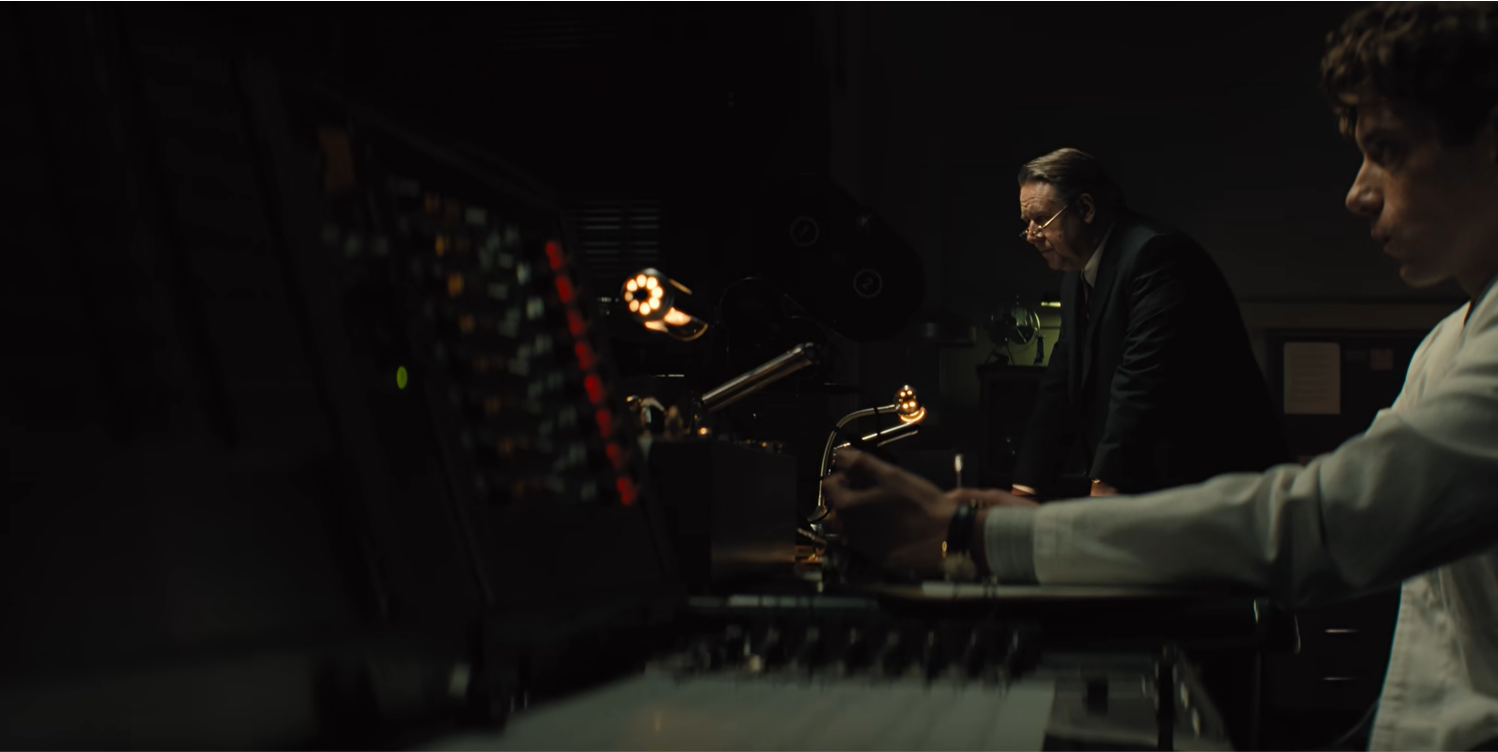
However, Murray soon began to get more closely involved with government work, especially during World War II, when he was reportedly asked to prepare a psychological profile of Adolf Hitler. He was also noted to have served in the Office of Strategic Services, where he reportedly developed psychological screening tests for applicants. By the time Ted Kaczynski arrived at Harvard University as an undergraduate in 1959, Murray was already an eminent name in the field of psychology, having published his magnum opus, ‘Explorations in Personality,’ among other significant works. At that time, he was supervising a research program titled “Multiform Assessments of Personality Development Among Gifted College Men.”
The study, intended to assess the subjects’ personality in stressful situations, ran from the fall of 1959 to the spring of 1962. Kaczynski was one of 22 Harvard undergraduates from the Class of 1962 who participated in the research, which reportedly involved confrontational interviews. Murray later noted, in his 1963 paper titled ‘Studies of Stressful Interpersonal Disputations,’ that confrontations were “far more vehement, sweeping, and personally abusive than you were led to expect.” Kaczynski reportedly spent 200 hours participating in the study and later expressed resentment at what he perceived as an invasion of his privacy during the experiment. While this connection has been the subject of much discourse and speculation, Kaczynski himself noted that his “experiences with Professor Murray had no significant effect on the course of (his) life.”
Henry Murray Died From Pneumonia on June 23, 1988
Henry Murray retired from Harvard in 1962, the same year Ted Kaczynski graduated, and, as of writing, there are no publicly known instances of Murray commenting on either the Unabomber killings or Kaczynski. As per the end-cards of the Netflix movie, Murray’s published findings from the research program involving Kaczynski were met with a lukewarm reception. Claims of the program’s supposed connections to the CIA or the MK-Ultra program remain disputed and have not been established by the available evidence, as of writing, and thus remain in the realm of speculation. The movie ‘Unabomber’ treats the rumors surrounding Murray’s Harvard study as a stepping stone for the narrative, which fictionalizes Murray and Kaczynski’s dynamic to a great extent.

Following his retirement, Murray continued to work and write in the field of psychology, gaining the title of professor emeritus. The Henry A. Murray Research Archive, established at Radcliffe in 1976, remains a renowned repository for the social sciences. Murray died in Cambridge, Massachusetts, on June 23, 1988, aged 95, reportedly from pneumonia. Eight years later, on April 3, 1996, Kaczynski was arrested, and on January 22, 1998, he pleaded guilty to all federal charges, subsequently receiving a sentence of life imprisonment without the possibility of parole.
Read More: Where is Unabomber Ted Kaczynski Now?


You must be logged in to post a comment.