
 Abhiroop Das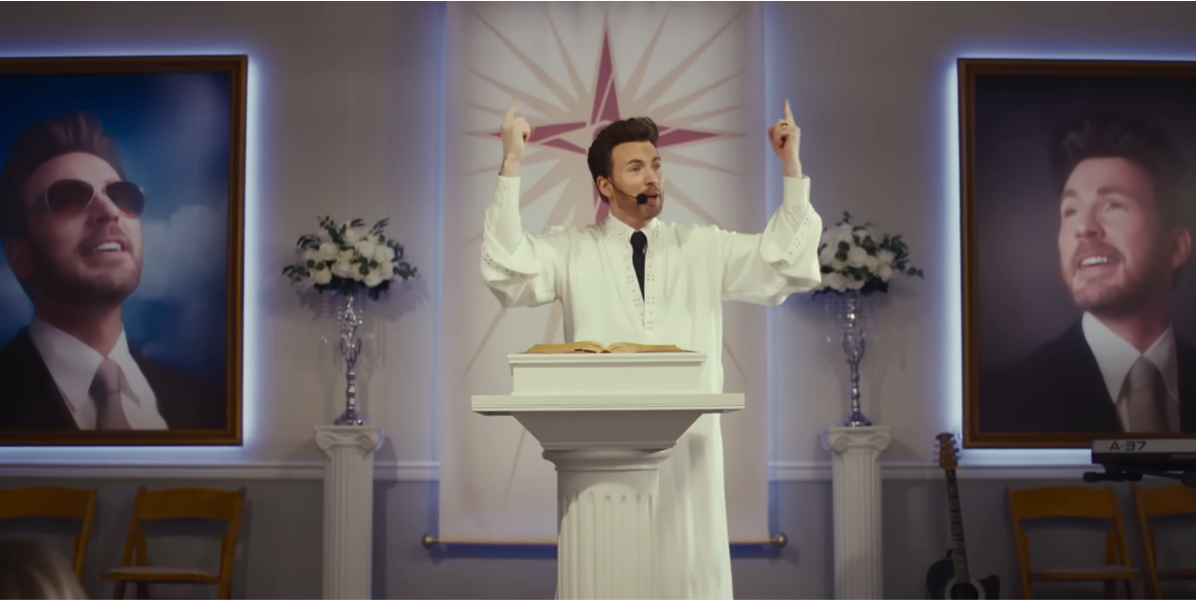
Directed by Ethan Coen, ‘Honey Don’t!’ follows the adventures of Honey O’Donahue, a legendary small-town private investigator whose job is to go down rabbit holes and retrieve all the answers. However, when one of her potential clients dies in a car accident hours before their scheduled meeting, Honey naturally grows suspicious. After ruffling a few feathers and knocking on a few doors, she comes across the name of a church repeatedly: Four-Way Temple, led by one Reverend Drew Devlin. While he seems like the perfect priest and a helping hand on the surface, the church’s true nature comes out in the shadows, revealing Drew to be a power-hungry, drug-peddling, sexual abuser who exploits the vulnerability of his own followers. As Honey connects more and more cases to the church and its connection to a French gang of criminals, Honey finds herself at odds with Drew, front and center.
Honey Don’t!’s Four-Way Temple is a Fictional Church With Cult-like Characteristics
Four-Way Temple is the name of a fictional church created by writers Ethan Coen and Tricia Cooke specifically for the story of ‘Honey Don’t!,’ as an antagonistic presence behind many of the narrative shenanigans. Depicted as more of a cult than a church, Four-Way Temple is among the first things introduced in the movie, but it appears that just about everything surrounding the church, be that its insignia, church motto, or location, is a hand-crafted creation with no direct connection to reality. On top of that, there is a good chance that the writing duo did not rely on real-life cults or infamous churches as their reference points and instead created their story from scratch.
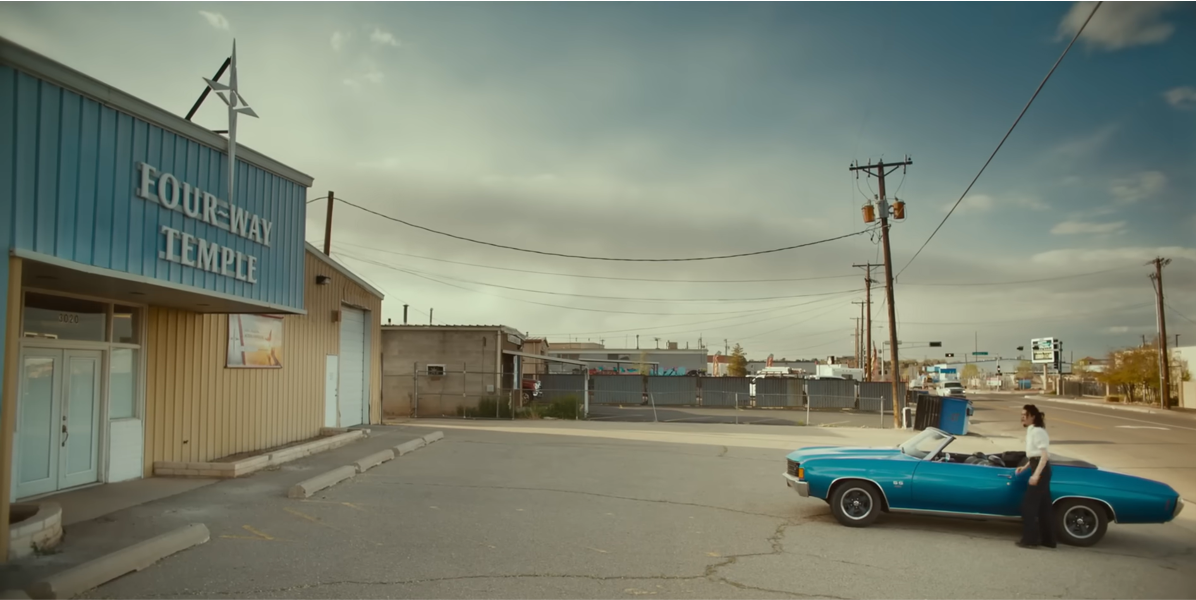
With the entire movie essentially written in the image of B-grade noir thrillers, it makes sense for Coen and Cooke to construct a church with shady underpinnings, as has been in the formula in various B-movies. Although there are a number of real-life defunct churches or other pseudo-religious organizations that have a confirmed history of criminal activity, such as the Branch Davidians and the Aum Shinrikyo, it is likely that their similarities to the Four-Way Temple are superficial in nature. If there is indeed a connective tissue between the invented church and real life, it is likely for research purposes exclusively. As of writing, Coen and Cooke have not pointed to any real-life inspirations, which only reiterates the same.
Reverend Drew is an Invented Character Who Plays the Big Villain
As the Four-Way Temple in ‘Honey Don’t!’ is fictitious in nature, it makes sense that the face of the institution, Reverend Drew Devlin, is also a fictional character created by Coen and Cooke. Much like the church, it is quite unlikely that the writing duo had a specific real-life antecedent in mind while concocting the character, though some real-life pseudo-religious leaders with a cult-like personality stand out as eerily similar. Among these is Chris Brain, the former head priest of the alternative evangelical movement known as Nine O’Clock Service. In August of 2025, Brain was found guilty of 17 counts of indecent assault against 9 women. While there are a tragic number of similar cases in real life, it is likely that the movie only draws a partial inspiration from them.
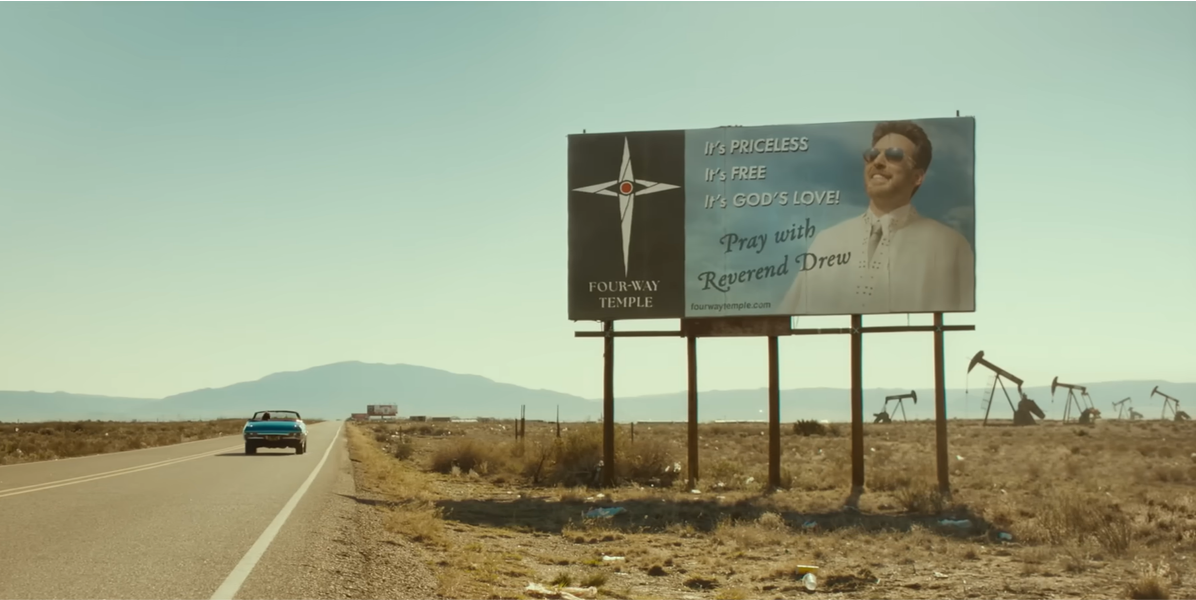
As is the case with Honey, MG, and other eccentric characters in the movie, it is probable that the character of Drew Delvin is meant to embody the tacky stylizations of B-movie villains. Given how his dialogues are intricately connected to the larger, fictional story presented in ‘Honey Don’t!,’ chances are that Drew is not inspired by real life and then fitted into the narrative. Actor Chris Evans, who essays the role, has not spoken about potential real-life reference points for the character as of writing, but his energized performance is more than enough to make Drew a compelling presence, with or without any linkages to real-life. It is likely that both Evans and the creative team did their own research about pseudo-religious leaders, be it in how they address their followers, or how they dress and act in public. All of these details shine through in Evans’ take on the fictional character, elevating the movie as a whole.
Read More: Is The Beauty a True Story? Is the Beauty Based on a Real Drug or Virus?


You must be logged in to post a comment.