
 Aahana Swrup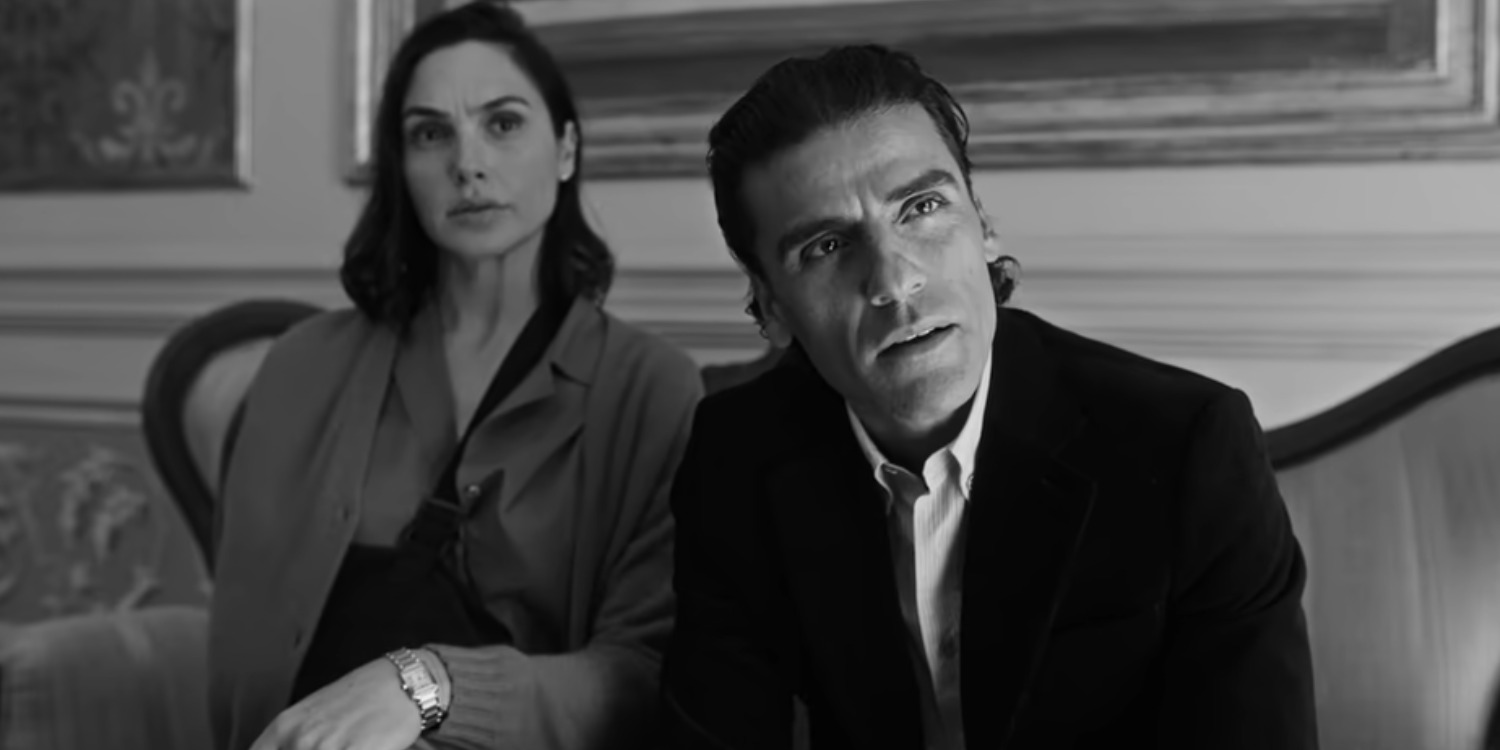
‘In the Hand of Dante’ is a surreal drama film that blends the stories of a gifted medieval artist and a modern writer who reveres the former’s revolutionary work. Nick Tosches is a 21st-century author who despises editing and loves the works of Dante Alighieri. This makes him the perfect candidate for the local mafia boss, Joe Black, who is planning to acquire the original manuscripts of the 14th-century Italian poet. Since these manuscripts are so rare that they were previously thought to be nonexistent, the gangster requires someone with Nick’s expertise to authenticate the pages.
However, the coveted nature of these ancient texts also entails a level of discretion and, when Nick inevitably decides to steal the treasure for himself, danger. As the New York writer embarks on this thrilling heist, his story parallels the reality of Dante, who pursues a different but kindred artistic pursuit in 1300s Florence. SPOILERS AHEAD!
In the Hand of Dante Plot Synopsis
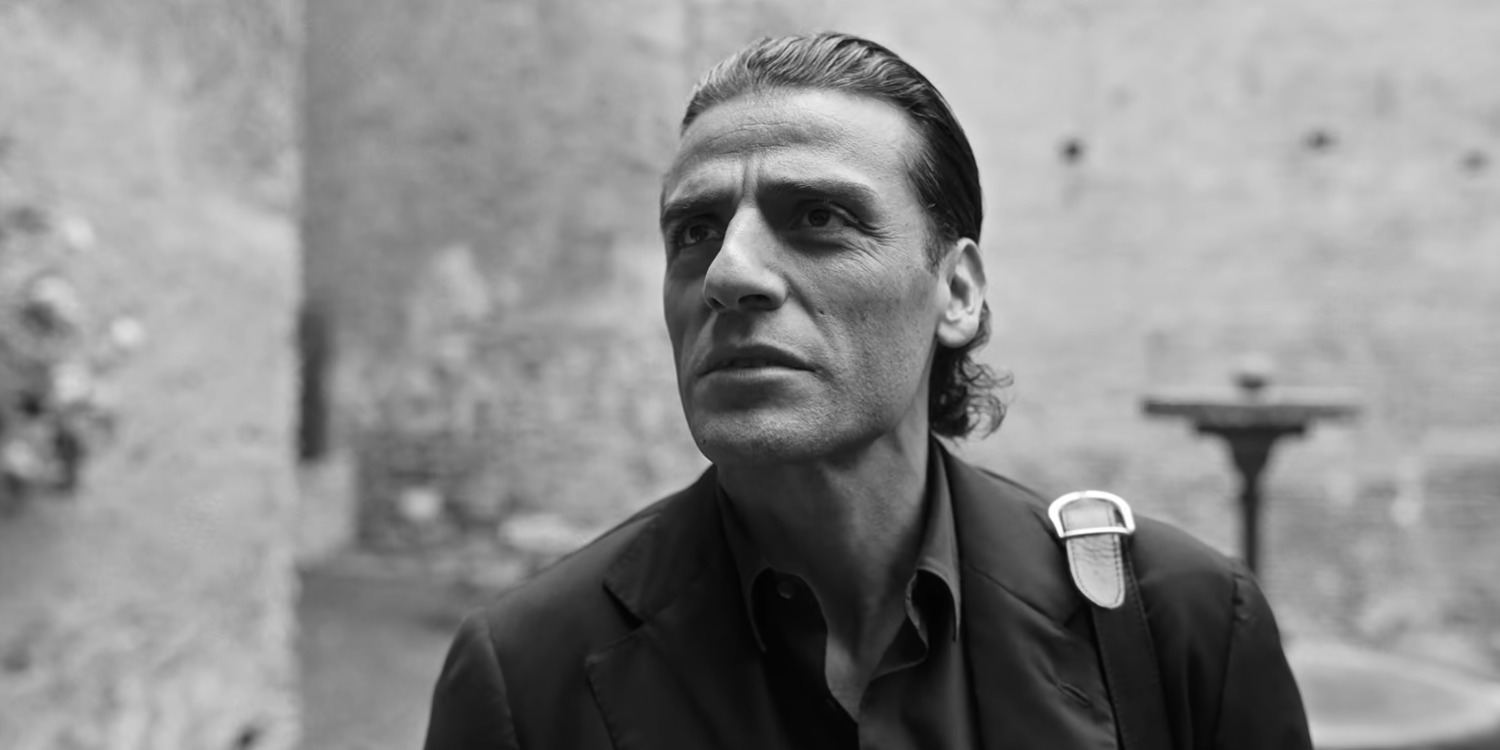
Nick Tosches is working on his next project, a translation of Dante Alighieri’s ‘Divine Comedy.’ The author fell in love with the Italian poet’s work at a young age and has since engaged with it so thoroughly that he feels a tangible kinship with the long-dead artist. As a result, when his friend, Lefty, comes across a big job that requires extensive knowledge of the artist’s life and work, he knows just who to call. This is how Nick ends up on the radar of Joe Black, a mafia boss who has learned of the discovery of Dante’s original manuscripts. After employing him for the job, the gangster sends the author on a trip to Italy, accompanied by ruthless muscle-for-hire, Louie. Once the duo retrieves the artifact from local crime boss Don Lecco, Louie kills everyone else on the premises so they can make a clear, safe exit with the stolen manuscript in their possession.
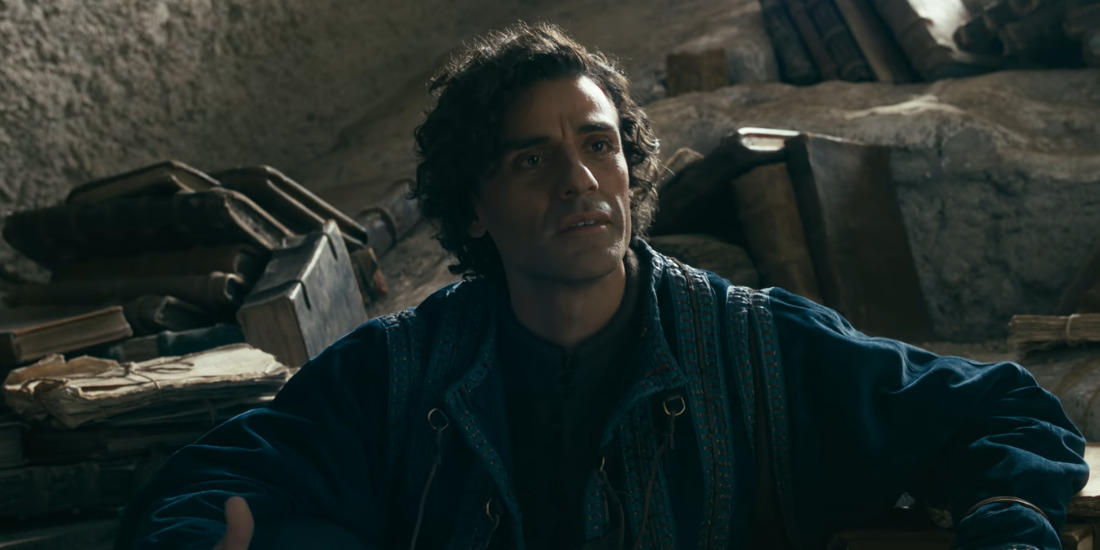
Back in the 1300s, Florence, Dante is excommunicated by the Pope and exiled from the city. Nonetheless, instead of seeking to return to his position in the Church, the poet turns to a different voyage. He seeks out a man named Isaiah and strives to unravel confounding spiritual webs in search of an artistic muse. The personal trials he undergoes pave the way for the creation of the very same manuscripts that Louie brings back to Joe in New York in the 2000s. Still, the work isn’t done just yet. To sell the artifact for its true value, they first need to obtain proper authentication as proof of their claim. This responsibility inevitably falls to Nick, who consults various historical archives and even carbon-dating facilities. His travels, which are discreet and circumspect, have to be planned by Giulietta, a new assistant who is filling in for her sick cousin.
Eventually, on a trip overseas, Nick meets with Giulietta in person, and it’s not long before the two end up in bed together. Nonetheless, despite the depth of his feelings for the woman, the artist decides to take his leave, convinced that he would only bring trouble to her door. As it turns out, his fears aren’t unfounded since Joe Black and Louie have been assassinating every expert the writer has been meeting with in an effort to ensure the existence of the manuscripts remains a secret. Soon after this revelation, Nick decides to carry out a few executions of his own, targeting Joe, Louie, and even Lefty. Afterward, he continues his quest to obtain the required authentications. Somewhere along the line, he realizes he needs to fake his death in order to secure his safety. As a result, he convinces Giulietta to sow the seeds of a rumor that the author has died in the 9/11 attacks.
Meanwhile, Nick reaches the final stages of his authentication process, which brings him to Dr. Susanna Pulice. However, this turns out to be the wrong move since the scholar seems to be in cahoots with Rosario, Don Lecco’s descendant. Therefore, it’s only a matter of time before the criminal catches up to the thieving writer and his partner-in-crime, Giulietta. Consequently, Nick finds himself held captive by Rosario, his cruel tormentor. When he refuses to give up the location of the manuscripts himself, the other man uses him as a bargaining chip against Giulietta. The final confrontation that follows results in Rosario shooting Giulietta. Yet his victory is short-lived, as he is shot by Pulice, who has realized that her lover is more interested in making a profit from the manuscripts than in surrendering them to academia. In the end, Nick manages to use his and Pulice’s love for Dante to free himself and reunite with the great love of his life.
In the Hand of Dante Ending: Are Nick and Giulietta Reincarnations of Dante and Gemma?
One of the most notable aspects of the story’s dual-timeline narrative is that many of the characters across the two time periods wear the same faces. The pope is identical to Louie; Lefty looks just like a medieval lord; and, most importantly, Dante and his wife Gemma share their appearances with Nick and Giulietta. Initially, there’s no outward reason to believe that the two stories are connected through a string of reincarnation. Nonetheless, over time, more and more evidence supporting this theory emerges. Off the bat, Nick’s kinship with Dante Alighieri seems to surpass the simple relationship between a centuries-dead artist and their modern-day devotee.
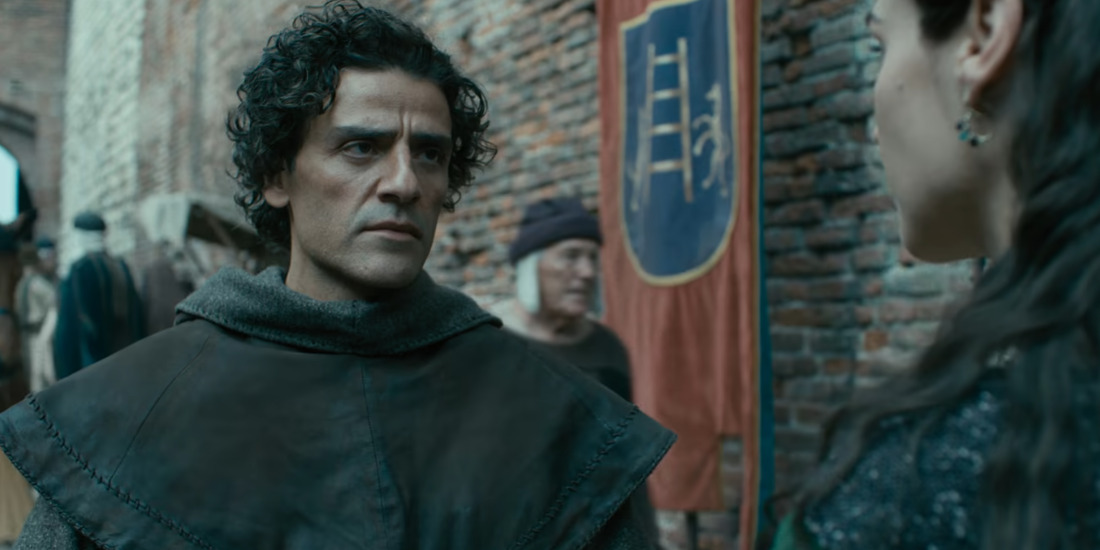
The author himself claims that he understands Dante’s work on such a personal level that it almost feels like he’s the one who has written it himself. Yet, these minor sprinklings of association between Nick and Dante aside, concrete confirmation of their connection arrives at the very end of the story. Nick and Giulietta somehow manage to survive the confrontation against Rosario and Pulice. As they emerge on the other side, they seek out safety for themselves and find it through a man known as Mephistopheles. The aftermath finds the couple enjoying their lives together, as expecting parents on a beach. During this time, the two speak to each other as if they’re reunited lovers who lost each other for the first time centuries ago. In the past, when these two were Dante and Gemma, the artist never saw his wife for what she truly was.
He was in constant pursuit of his muse, Beatrice, the girl he fell in love with as a boy but never spoke a word to, even to the day of her untimely death. In his past life, Nick, then Dante, spent all his time chasing after the wrong thing. In this life, he almost makes the same mistake, this time in pursuit of the priceless remnants of his old artistry rather than its creation. Either way, he comes close to losing to the one thing that truly matters to him because of it: the love he has found with Giulietta/Gemma. Although Dante never realized the errors of his ways, Nick has since, over the course of two lifetimes, learned his lesson. This arc is finalized with his time with Giulietta at the beach when the couple acknowledges how they had both traversed past their old lives and “come forth from the tomb” into their new lives. This is why Nick has always felt a tangible connection to the Florentine artist and why he and Giulietta are able to find each other in their new lives.
Why Does Nick Kill Pulice? Is She Beatrice’s Reincarnation?
Despite confirming a reincarnation element in the story, ‘In the Hand of Dante’ still remains pretty ambiguous about the true nature of rebirth and the connection between the two timelines. While Nick and Giulietta’s co-existence across time is acknowledged, the same is never extended to other characters. Even so, Pulice’s case remains especially unique. Much like Nick, the scholar is also introduced as a devoted enthusiast of Dante’s work and artistry. As a result, she is also in pursuit of the historical manuscripts. However, unlike Nick and the others, her interest in the work is purely sentimental and academic. She doesn’t strive to reap a monetary profit from the artifact. For the same reason, when she confronts Rosario, her lover, she easily kills him on the spot for the security of the manuscripts.
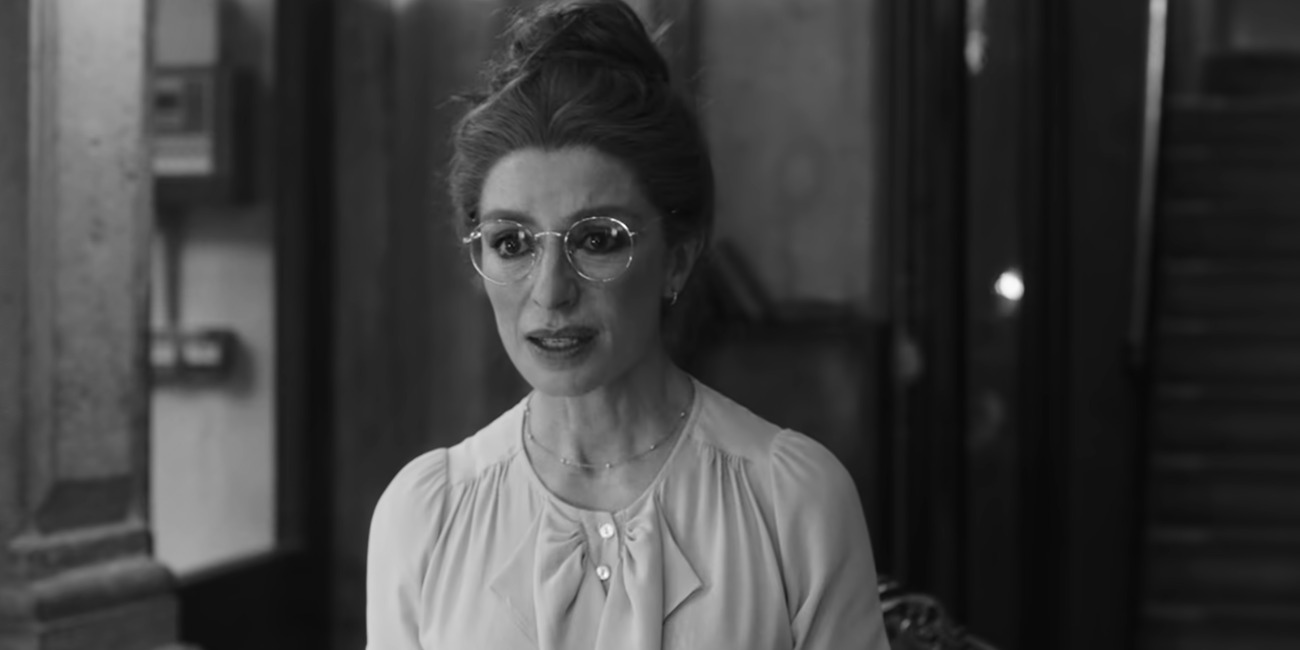
In that moment, she also makes a startling revelation: Pulice claims to be a reincarnation of Beatrice. Beatrice is the young girl in 1300s Florence who caught the eye of a similarly young Dante in his boyhood years. Even though he went on to marry Gemma, his heart always stayed with the beautiful girl whom he could never even hold a conversation with. He wrote several poems about her, in comparison to the none that he dedicated to his wife. Therefore, Nick’s decision to shove Pulice to her death becomes all the more intriguing. If the author is indeed a reincarnation of Dante and the scholar Beatrice, then a unique affinity should exist between the two. However, it’s worth noting that while Beatrice was incredibly important to Dante, the same doesn’t have to be true the other way around.
After all, the two barely ever interacted in their past lives, and the old timeline barely features her. Therefore, the idea that Beatrice, even in her reincarnation, would hold any emotion for the poet seems ludicrous. Thus, the more appropriate explanation emerges that Pulice, unlike Nick and Giulietta, has no spiritual connection to the past. Instead, she only has her obsession with Dante, which compels her to cast herself as the artist’s muse, Beatrice. After she shoots down Rosario, Nick uses this same obsession to turn the tables on Pulice by convincing her that he is Dante’s reincarnation. Once she frees him, Nick secures his own safety by hurling her to her death. Ultimately, even if the scholar were to be Beatrice’s rebirth, the artist in this lifetime covets his affection only for Giulietta, the same woman whose love he couldn’t properly cherish in his past life. Thus, Pulice becomes a simple blunder in his path that he can afford to neutralize.
What Happens to the Manuscript?
When Nick settles into a blissful life of romance and domesticity with Giulietta, it comes with a price. He can no longer chase after the aspirations of an artist, specifically in a fiscal sense. This can partly be true because of his own stunt of faking his own death. On the other hand, his deal with Mephistopheles and his eternal connection with the manuscripts might also influence this reality. Either way, it’s a juxtaposition to Dante’s life, which was spent away from his wife, Gemma, in preference for his artistic muse. Dante dedicated his life to his art form and consistently chose to remain in love with the same.
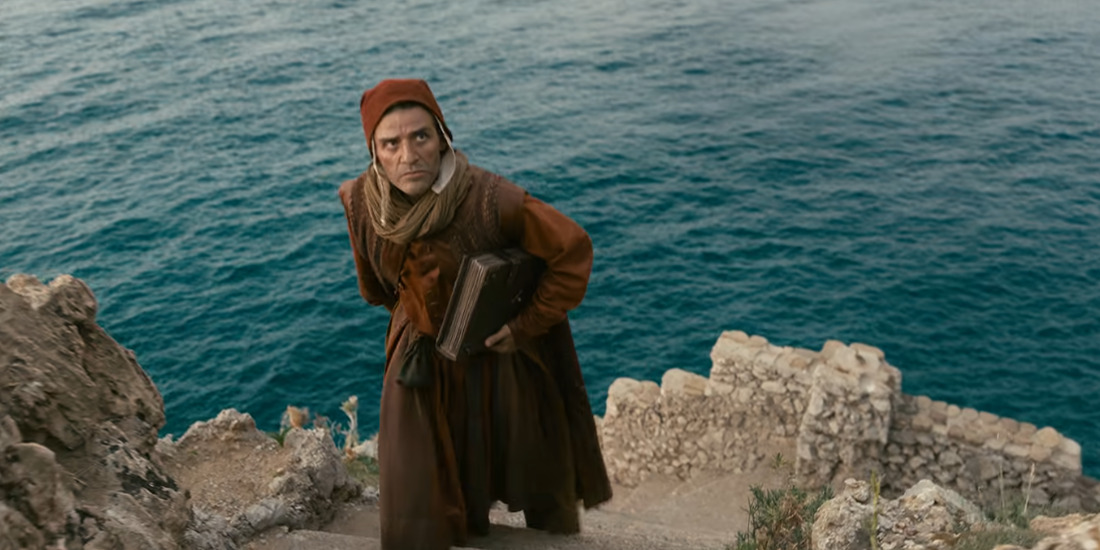
Dante’s reincarnation, Nick, takes a different path. However, that doesn’t mean he can’t benefit from the fruits of his old life’s labor. After chasing down the manuscripts and committing murders to come into possession of them, the author has earned the luxury of forgoing any fiscal responsibilities for the future. Each page of this manuscript is as priceless as the next one. Moreover, he has the proper authentication to ensure the artifact sells for its rightful value. Therefore, Nick and Giulietta live out the rest of their days on the profit they make from the strategic sale of these manuscript pages. Even though Nick parts with many of Dante’s original writings, he also keeps some, such as the first page of ‘Inferno,’ for himself.
Who is Mephistopheles?
One notable and mysterious character is responsible for the transition between Nick and Giulietta’s danger-filled life and their beachy epilogue. This character is Mephistopheles, a pianist who meets them in the aftermath of their near-fatal altercation with Rosario and Pulice. This part of the story exists in a solidly surreal realm, with multiple interpretations. As a result, Mephistopheles can be perceived as many things. First off, the most suitable explanation casts the character as a devil or another mystical force connected to the artist and his wife’s reincarnation cycle. Rosario’s shot at Giulietta at first glance seems fatalistic.
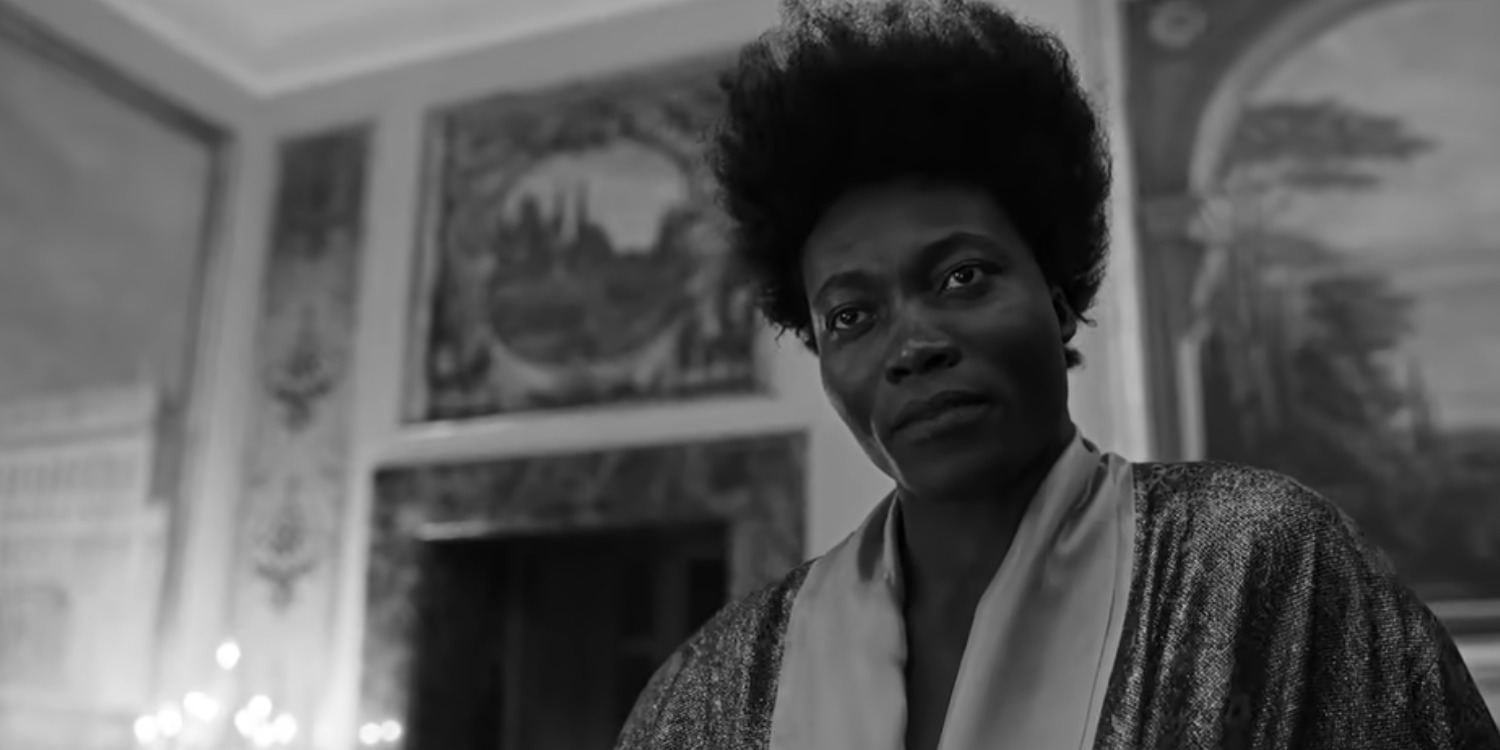
Therefore, it’s not unfair to assume the woman could have died in the conflict, bringing her and her lover to an afterlife where they strike up a deal of rebirth with the spiritual pianist. This would explain Mephistopheles’ comments about another couple passing through, which can be interpreted to mean the couple’s own old selves as Dante and Gemma. On the other hand, a more grounded explanation pitches the pianist as an underworld dealer who is well-versed in helping people find new beginnings in their lives. He could be the one who helps facilitate the death of Nick as an author and sets up the channels to allow him to make money off the manuscripts for a price. Either way, Mephistopheles becomes a guide of sorts, introducing the couple to their new lives.
Read More: Where Was In the Hand of Dante Filmed?


You must be logged in to post a comment.