
 Kriti Mehrotra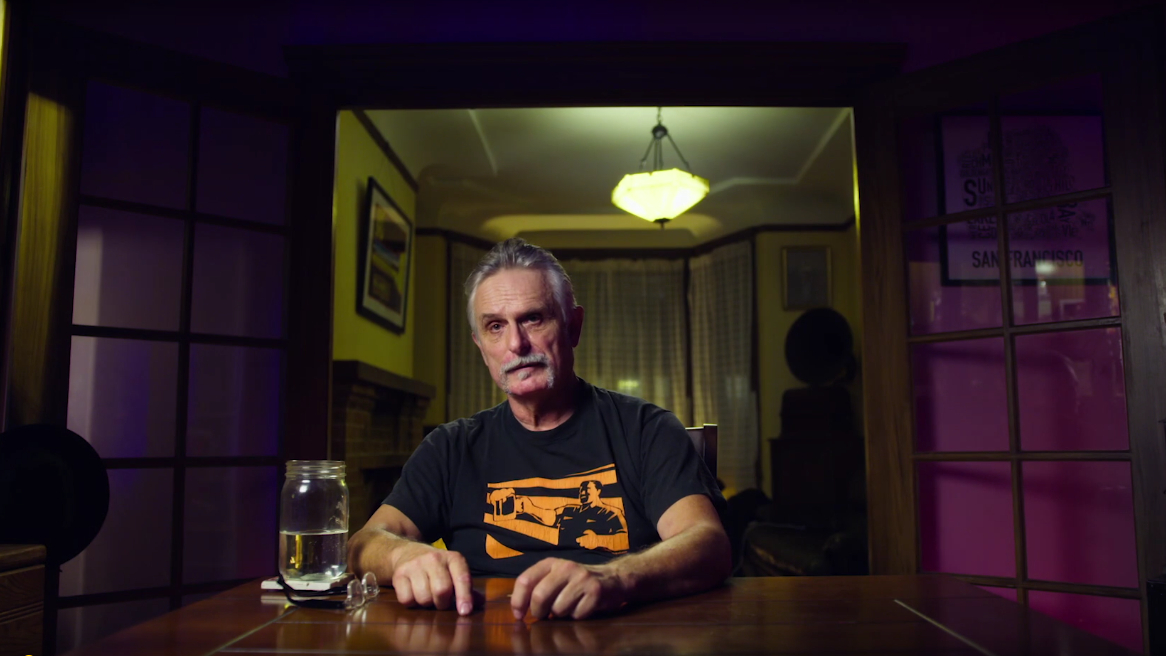
As a documentary series tracing the evolution of Burning Man through its ups and downs over the past four decades, HBO’s ‘The Man Will Burn’ tackles all aspects of the desert festival. It doesn’t shy away from placing the event under a microscope, underscoring its anarchic countercultural roots, community-driven celebrations, or the way money may have changed its philosophy. Among those who thus shared their experiences in the original is John William Law, one of the festival’s co-founders, who has not been involved in any capacity since 1996.
John Law Turned His Life Around Through Art After a Short Stint in a Juvenile Hall
Although a proud native of Michigan, John William Law was in Tennessee when he reached a turning point in his life as a teenager, which ultimately landed him in a state juvenile facility. He reportedly long held a dislike for commercialism and rules, but no one imagined it would lead him to the wrong side of the law as he committed two felonies — auto theft and breaking and entering. That’s how he ended up in a juvenile center for a short period before being released in the mid-1970s while he was still just a minor, driving him to decide it was time to turn over a new leaf.
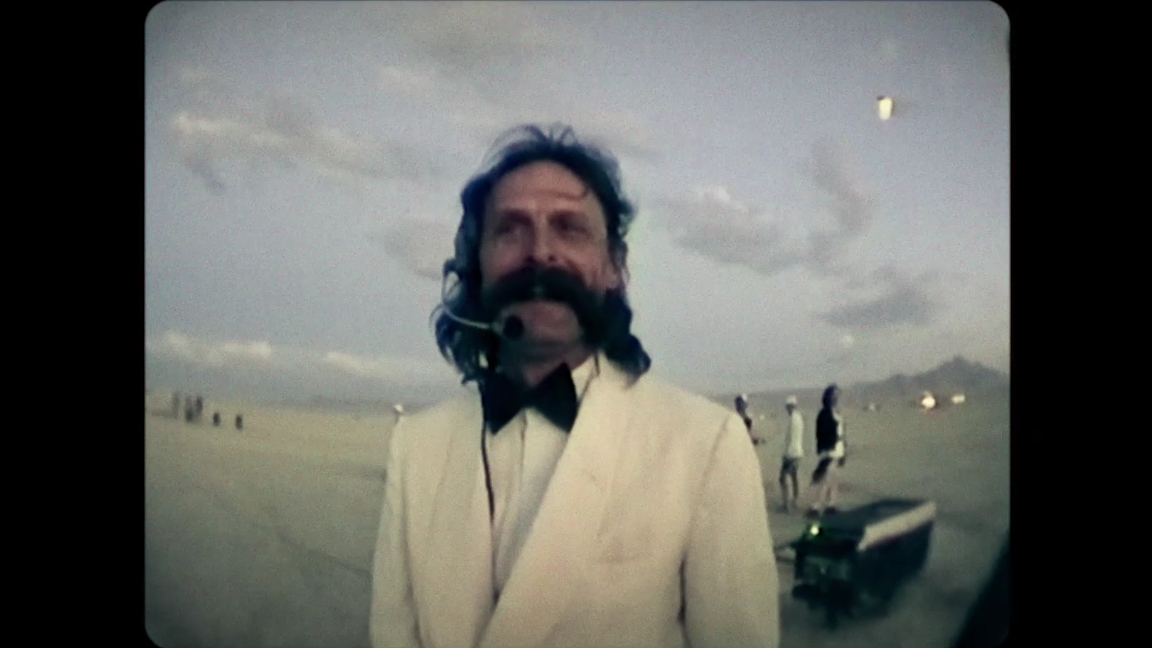
John subsequently hitchhiked to San Francisco, California, where he spent some nights sleeping in Golden Gate Park while trying to find his path and his voice in this world. He soon recognized the significance of art, which was all around him, leading him to embrace his passion for it before it inadvertently pushed him to explore his own creativity. That’s when he joined the Suicide Club (1977-1982), a modern-urban exploration society that had nothing to do with actual suicides and everything to do with anarchic art events or pranks. According to records, they surprised people with a pie to the face, hosted events at various local establishments, summited both major bridges in the region, and more.
“The idea was not to f**k with society,” John told SFGate. “It was to explore and utilize the urban environment as though it were a playground, and everyone was involved in the game.” Not everyone appreciated or liked what they were doing, though. Nevertheless, they never shied away from their aim of disconnecting from reality and creating surreal experiences. The Suicide Club did, unfortunately, disband in 1982, but surviving members soon got together and launched the Cacophony Society in 1986 to keep chasing enchanting moments. As per reports, this community – comprising individuals “united in the pursuit of experiences beyond the pale of mainstream society” — eventually spread to several cities across the globe.
John Law Was a Key Figure in Building the Foundation of Burning Man
While John was among the earliest members of The Suicide Club and the Cacophony Society, he was also an artist who built a career as an electrical repairman and a neon sign technician. It was in the mid-1980s that he was hired to work on the landmark Tribune Tower in Oakland, California, which soon led to him securing a permanent contract and a small office. From there, he established himself as a global neon contractor and a respected visionary, playing a major role in many of the Bay Area’s significant cultural moments. That’s how he also became the owner of three of the 12 remaining Doggie Diner heads — Doggie Diner was a small fast food chain, and the heads are from its mascot.
John wasn’t aware of Larry Harvey when the latter decided to burn a wooden effigy on Baker Beach on the summer solstice of 1986 for fun, but he later came to know of him. In fact, the Burning Man founder and Cacophony Society decided to start collaborating on the now-annual event in 1989, which led to a close friendship among almost everyone involved. Therefore, when local police objected to the burn in 1990, John and his fellow Cacophonists offered to take the effigy and Larry to the remote dry lake bed called Black Rock Desert in Nevada. They had discovered it around four years prior and had been making “Zone Trips” there every summer, inspired by the 1979 Soviet film ‘Stalker.’
That’s how Burning Man as we know it today came to be, with John, Larry, and Michael Mikel subsequently working together to organize an annual festival unlike any other. They hoped to celebrate all forms of art, community, and interpersonal relationships, which is precisely how the project panned out in the years to follow before the crowd grew too big, too quickly. As per John’s account, he tried to warn his fellow co-founders, but to no avail, so a friend, Michael Furey’s, tragic death during a stunt mere hours before the 1996 event became his breaking point. He claims it was Larry’s business-focused, damage-control responses that left a sour taste in his mouth, driving him to leave the festival behind for good.
John Law No Longer Holds Any Affection for Burning Man
Although John was once proud to be among the core creators behind the still-booming Burning Man, he now believes it “is the least interesting thing” he has ever been involved with. Part of the reason is what happened in 1996 and what he thinks the event has now evolved into/come to represent, whereas another part is all that he has done and achieved since. According to his account, when Larry heard Michael Furey died in a motorcycle accident before the gates of the festival opened, he expressed, “Thank god, there’s no blood on our hands.” John continued, “The death didn’t happen at the event, that’s all he cared about… That was it, something inside me broke like a f**king stick. I’m done.”
As for what John thinks of Burning Man today, he reportedly has nothing but disdain for the event because he thinks it is just “a giant party for rich, white people.” Some of his other quotes to SFGate include, “They’re selling the idea of freedom, and it’s not free,” “The whole philosophy, it’s a bunch of crap,” “It’s as clubby in its own way as the Elks or some hunting lodge in Minnesota.” Therefore, what he is proud of now is being among the founders of SantaCon, an annual winter pub crawl that began in 1994 in San Francisco and involves people dressed as Santa Claus or as other Christmas characters.
John Law Continues to Thrive as an Artist
Since then, John has also penned ‘Tales of the San Francisco Cacophony Society’ (2013) alongside fellow Cacophonists Kevin Evans and Carrie Galbraith and continued working as a neon sign technician. He not only still maintains the signage and clock face of the Tribune Tower in Oakland, but his original designs have reportedly been displayed in several countries around the world. Even the office space the now-67-year-old had secured in the landmark building over four decades ago remains his to this day, from where he happily connects with vibrant communities of urban artists from across the globe.
John’s message of anti-consumerism remains the same, too, making him a culture-jammer in every sense. In fact, one of his 2025 pieces took over a week to create, but he was deliberate about making it for an audience of 12. It was reportedly a very complex, sophisticated audiovisual installation inside a 500-foot tunnel somewhere in the Midwest in the USA. He then did another audiovisual installation piece, but this time, it was in a former Nazi anti-aircraft tower in Berlin. Most recently, though, his focus has been on his Cinemasthesia Film Series, the first run of which revolves around the genre of Psychogeography. Apart from that, John is currently a proud member of two Activist Art Collectives named Billboard Liberation Front (BLF) and Indecline. He is also the proud father of an adult son who seems to have an interest in music and could potentially pursue a career in it.
Read More: Larry Harvey’s Net Worth: How Rich Was the Burning Man Founder at the Time of His Death?


You must be logged in to post a comment.