
 Kriti Mehrotra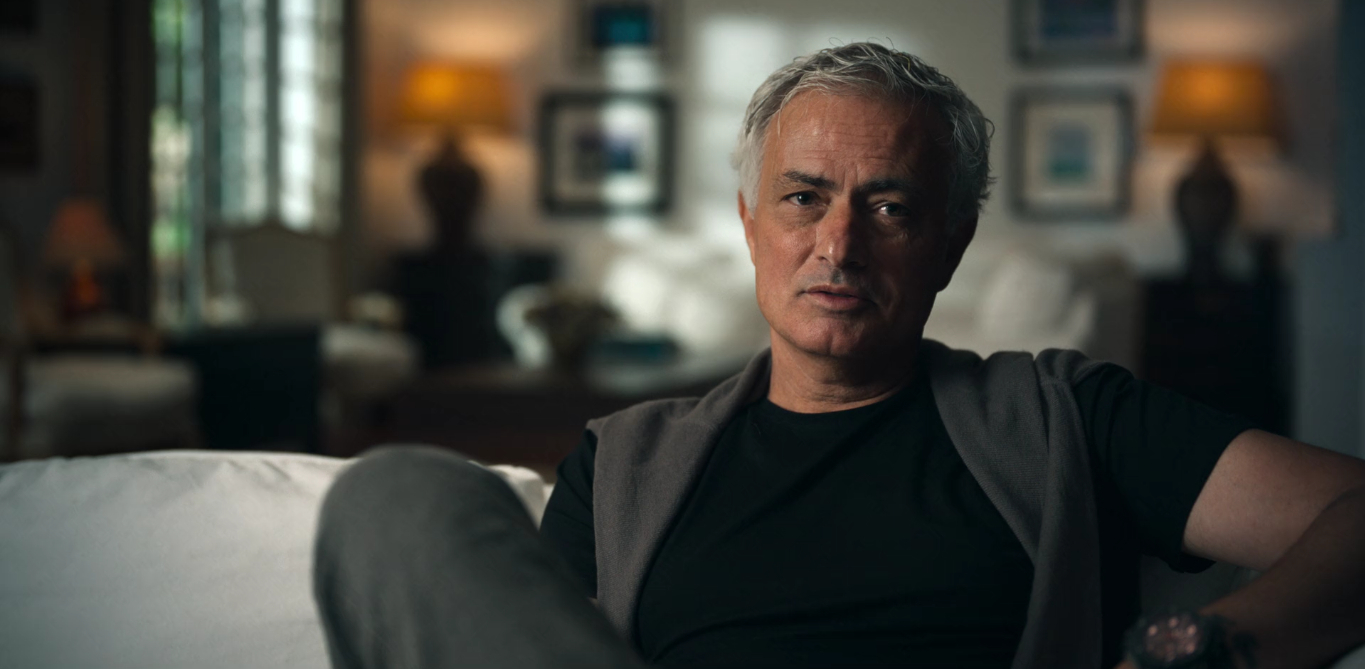
If you’re a fan of English football (soccer), you have definitely heard of José Mário dos Santos Mourinho Félix (or simply José Mourinho), as he is one of the most decorated managers of all time. Not only has he won the League Championship in four countries, but he has also secured the European Cup with two clubs and conquered the coveted Conference League in its inaugural season. It thus comes as no surprise that he has been nicknamed the Special One and is the subject of a Netflix documentary series – appropriately titled ‘Mourinho’ – to chronicle his iconic career.
How Did José Mourinho Earn His Money?
As the son of primary school teacher Maria Júlia Carrajola dos Santos and goalkeeper-turned-manager José Manuel Mourinho Félix, José Mourinho always wanted to follow in his parents’ footsteps. He admittedly developed a real passion for football and sports at an early age, thanks to his father often bringing him along to work, resulting in his resolve to study physical education at university. Unfortunately, the timeline he had devised for himself went a little awry when a bad math grade prevented him from graduating high school in time – he did so after a special exam months later.
José’s mother subsequently registered him in a business school because she did not want him to waste any time or opportunity, but he dropped out on his very first day since he had his mind set. That’s when he found a way to enroll himself in the highly regarded physical education program at the Instituto Superior de Educação Física (ISEF) of the Technical University of Lisbon. It was while he was pursuing his studies that he found a mentor and realized his calling: mixing traditional coaching methods with kinesiology, motivational approaches, and psychological techniques.
José originally wanted to follow his father’s career trajectory as a player-turned-manager, so he served as a midfielder on youth/reserve teams in the Portuguese leagues for a few years. However, he quickly recognized he was not the greatest athlete on the field and could be of a lot more use on the sidelines, so he retired from playing at age 24 to focus solely on coaching/managing. He thus dabbled as a physical education teacher at local schools before finding himself coaching youth teams in the early 1990s and then moving on to become an assistant manager as well as a scout.
José’s big break, though, came in 1992 when he was hired as a translator for renowned English coach Sir Robert “Bobby” Robson after the latter was appointed Lisbon club Sporting CP’s new manager. The young man made himself almost indispensable in the ensuing months as he proved to be not only a great interpreter but also someone who knew football culture, tactics, and sports management. Therefore, when the manager moved forward to lead Porto FC in 1994 and Barcelona in 1996, he asked his right-hand man to join him as an interpreter and an assistant coach.
José then worked with Sir Bobby’s successor at Barcelona, Louis van Gaal, who really helped him hone his skills by letting him develop independent game plans and take on more team coaching duties. Hence, when he was offered a top-tier management role in September 2000 for Sport Lisboa e Benfica (or simply club Benfica), he knew he was more than ready to take on that dream responsibility. Yet, he parted ways with them less than a year later to sign with União de Leiria as their manager in July 2001, only to make another move within months to join Porto in January 2002.
José’s stint at Porto was one for the books as he won his first Primeira Liga title in 2003 before leading the team all the way to the Portuguese Super Cup and the Champions League in 2004. That same year, he signed a 3-year contract with Chelsea and became the first-ever Portuguese manager in the Premier League, while also immediately earning the moniker of the Special One. According to experts, he essentially changed everything about how the team operated and developed all core players from the ground up to be much more aggressive, intense, and play-oriented.
Chelsea secured the League Cup and the Premier League titles during José’s first season, followed by the FA Community Shield in 2005, the Premier League Cup in 2005, and the FA Cup in 2006. He moved to Inter Milan in the summer of 2008, where he helped them earn the Serie A title in 2009 and a historic treble – the Serie A, the Coppa Italia, as well as the Champions League – in 2010. He then had a great stint at Real Madrid, where he led the team to victory in the Copa del Rey title in 2011, the La Liga in 2012 with a record-breaking 32 wins, and the Supercopa de España in 2012.
José returned to Chelsea in 2013, proving he was one of the best managers in the industry for a reason by leading the previously shaky team to conquer the Champions League title that same year. He later served as a manager for Manchester United from 2016 to 2018, Tottenham Hotspur from 2019 to 2021, Roma from 2022 to 2024, Fenerbahçe from 2024 to 2025, and Benfica from 2025 to 2026. Since then, though, he has returned to Real Madrid, where he hopes to continue proving his mettle. We specify continue because he has won several other titles over the years, including the Conference League in 2022.
José Mourinho’s Net Worth
In the 25+ years that José has served as a manager in the world of football, he has accomplished so much that he holds the honor of being a Grand Officer of the Order of Prince Henry, a Portuguese knighthood. Apart from that, he was named Portuguese Coach of the Century by the Portuguese Football Federation in 2015 and currently has a win percentage of 61.69 with a total of 1,240 games and 765 wins. Hence, of course, he has managed to accumulate significant wealth over the years, primarily from his high-profile contracts as manager of elite European football clubs and his public presence.
From what we can tell, José’s salary wasn’t much throughout his time as an athlete, educator, translator, and assistant coach, but it was enough to support his family. We believe he made between $50,000 and $70,000 in the 1990s, based on the market at the time, his skill sets, and his gradual rise in the football industry. His income in the initial few years as manager was seemingly in the same range or just higher, as he still had to prove his mettle, only for it to see a massive jump in the mid-2000s. In fact, when José left Porto to sign with Chelsea, the teams agreed to a £1.7 million compensation package for his early release, so he personally likely made even more than that.
As the years passed, José’s annual base salary reached multi-millions, which we believe averaged around £5-6 million in the late 2000s and £8-9 million in the 2010s. Most recently, when he signed a 3-year contract with Real Madrid in 2026, it specified his base salary at roughly £10.2 million, plus performance bonuses and a £13 million release clause compensation. We should mention that he has also done several advertisements for various brands over the years, including for American Express, Adidas, Braun, Jaguar, Samsung, and Snickers, among others. Therefore, taking all these aspects into account, along with his potential assets, investments, returns, and expenses as a married father of 2, we believe José’s net worth to be roughly £100 million (close to $135 million).
Read More: Chris Evert’s Net Worth: How Rich is the Former Tennis Athlete?

