
 Kriti Mehrotra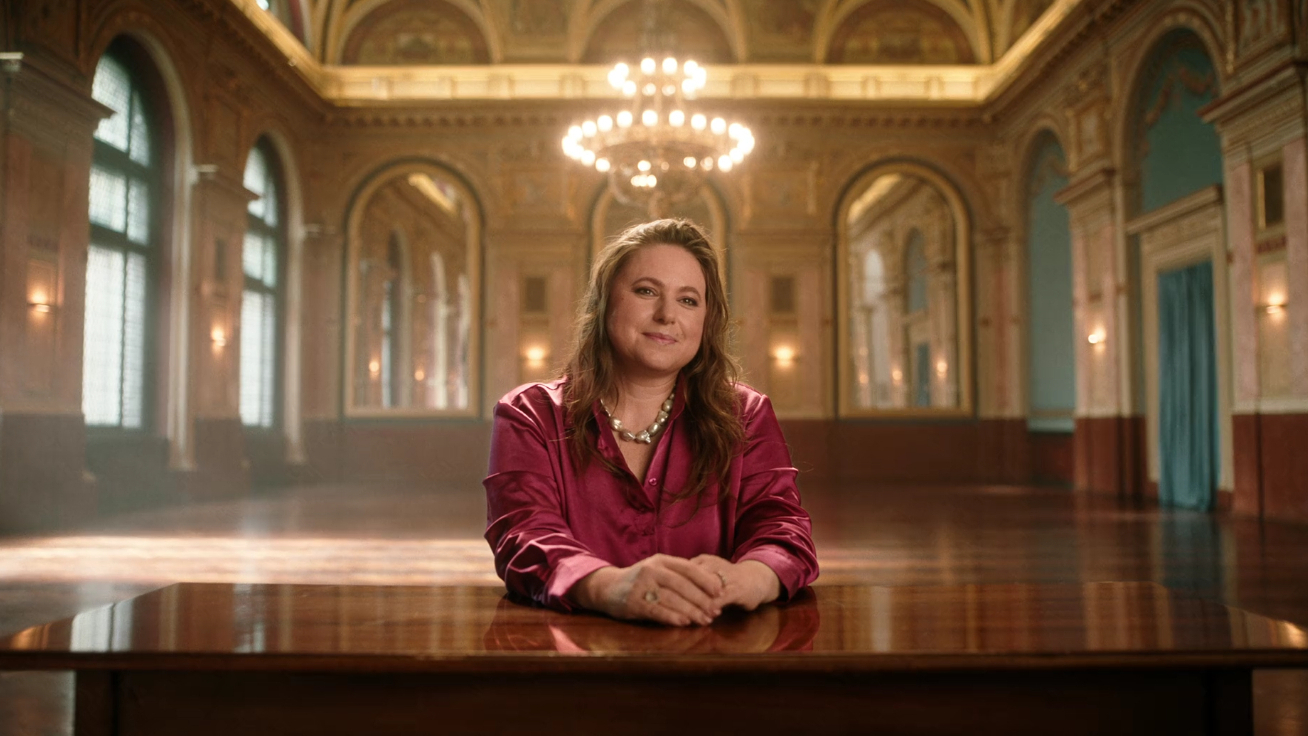
Judit Polgár was merely 5 years old when she became part of an experiment carefully concocted by her father. László Polgár believed geniuses are not born but made, as explored in Netflix’s ‘Queen of Chess,’ so he decided to prove it by having all his girls train primarily in the game of chess from an early age. In the years to follow, despite outside criticism over his alleged control and resistance from the authoritarian socialist regime, the Polgár sisters thrived, and Judit in particular broke all bounds.
How Did Judit Polgár Earn Her Money?
As the youngest of 3 kids in a Jewish-Hungarian household, Judit Polgár was initially separated from her siblings when they trained in chess under the watchful eye of their parents and professional coaches while being homeschooled. They had any idea at the time that it would only increase her interest, so as soon as she was allowed to learn the rules at age 5, she wholly dedicated herself to the game in the hopes of catching up. She was ambitious, and although she also had a competitive spirit, it was a positive one that comprised affection, inspiration, plus motivation — in other words, she just wanted to be the absolute best.
It’s thus no surprise that Judit began competing in local tournaments at the age of 6, where she quickly proved her mettle and soon earned the rating of 2080 in the Hungarian Chess Federation. She was even a member of a chess club in Budapest to garner more professional experience from Master-level players, all the while doing her best to participate in as many events as possible. She even played blindfolded games against her sisters, peers, and male Masters to further hone her core skills, which ultimately helped her conquer most international tournaments too.
Judit was 9 when she won her first-ever rated event in the US, following which she defeated International Master Dolfi Drimer at the age of 10 at the Adsteam Lidums International Tournament. She then made her International Master debut in 1988 at the International B section of the New York Open, leading her to later secure a spot at the World Youth Chess and Peace Festival. She even defeated a Grandmaster before finishing first in a London tournament and completing the requirements for the International Master title. The 12-year-old created history as the youngest player to achieve the distinction, whether in the male or female division.
It was then that Judit asked about playing against boys in all tournaments, but the International Chess Federation did not permit it on the grounds of what they believed to be fair play at the time. Hence, along with her sisters and Ildikó Mádl, she represented Hungary in the women’s section of the 28th Chess Olympiad in 1988, which concluded with them securing first place without any issues. The tween played a significant role throughout the tournament, and it was recognised by industry experts since she ended up being point-rated 2555 when the formal Elo list came out in January 1989.
Judit ranked #55 in the world at the tender age of 12 and became the Top Woman in the world because she was 35 rating points ahead of the reigning Women’s World Champion, Maia Chiburdanidze. She subsequently tied for third at the OHRA Open in Amsterdam, won the men’s under-14 section at the World Youth Chess Festival in Wisconsin, and secured gold at the 1990 Women’s Olympiad. The latter was the last women-only tournament she ever competed in, as she decided that it was high time for her to prove her standing against the cream of the crop, which happened to be men.
It was a little over a year later, in December 1991, that Judit created history once again by becoming the youngest player ever to earn the coveted title of Grandmaster — she was 15 years, 4 months. She did so by securing a win in the Hungarian National Championship, which she followed with second place at the Madrid International in Linares and at the Reshevsky Memorial in Manhattan in 1992. As only the fourth woman to become a Grandmaster, she knew she had a lot of eyes on her at every turn, but it only fueled her to do even better, keep succeeding, and thrive with her aggressive style.
In the years to follow, Judit tied for first in the 1992-1993 Hastings tournament, played exhibition matches against World Champions, and placed fourth at the Melody Amber tournament in Monaco. She also became the first woman to ever qualify for an Interzonal tournament in 1993, where she tied for second at the Budapest Zonal before unequivocally winning the tiebreaker event. Then, she won the 1994 Madrid International in Spain, finished third at a Grandmaster contest in Argentina, placed third at the 1995 Donner Memorial in the Netherlands, and won several other events.
Judit made history once more in January 1996 by becoming the only woman ever ranked in the Top Ten of all chess players, a record she proudly holds to this very day, two decades later. Since then, she has placed fourth at a strong 10-player Grandmaster tournament in Vienna, won the 1996 León event, and placed in the top three in numerous tournaments. She even won the 1998 US Open, the 1998 Wydra Memorial Rapid tournament in Israel, the 1999 VAM Chess Tournament in the Netherlands, and the 2000 Sigeman & Company Tournament in Sweden.
In 2000, Judit also conquered the Japfa Classic in Bali, Indonesia, as well as the Najdorf Chess Festival in Poland, all the while playing among the elite in various Championships and special events. Whether it be the World Championship, Linares, Olympiads, or more, she continued to participate in them all and ultimately reached her peak ranking of #8 in July 2004 and peak rating of 2735 in July 2005. She subsequently slowed down to balance her love for chess with her family life as a new mother, only returning to competitive games in 2010 with a desire to prove that she is among the best players ever. She did so in the next 4 years before announcing her retirement in 2014.
Related
Judit Polgár’s Net Worth
When Judit first started as a professional competitive chess player, there was not much money in the game for women, as made evident by the fact that her first win earned her a magnetic chessboard. Over time, though, with her breaking all the glass ceilings, a rise in the number of female athletes, and more interest in the women’s division, this has drastically changed. In fact, while she earned $1,000 at the age of 9 for winning a tournament in New York, her stint at the 1992-1993 Hastings tournament helped her bag a total of $110,000, which was the largest prize money for her at that point in her career. Then, from what we can tell, her winnings varied from $6,000 to $150,000 until she retired.
Since then, Judit has evolved into an author, a chess instructor, and a public figure, which has further helped her accumulate significant wealth for herself and her family. The greatest female chess player of all time is the brains and heart behind the Judit Polgar Chess Foundation, through which she has helped develop two educational programs — Chess Palace for primary school children and Chess Playground for pre-school children. As if that’s not enough, the 2021 World Chess Hall of Fame inductee and former head coach of the Hungarian national men’s chess team is also the creator of a chess course and the author of 7 books. Taking all these aspects into account, along with her potential assets, investments, liabilities, returns, and expenses as a family woman, we believe her net worth to be in the range of $4 million.

