
 Kriti Mehrotra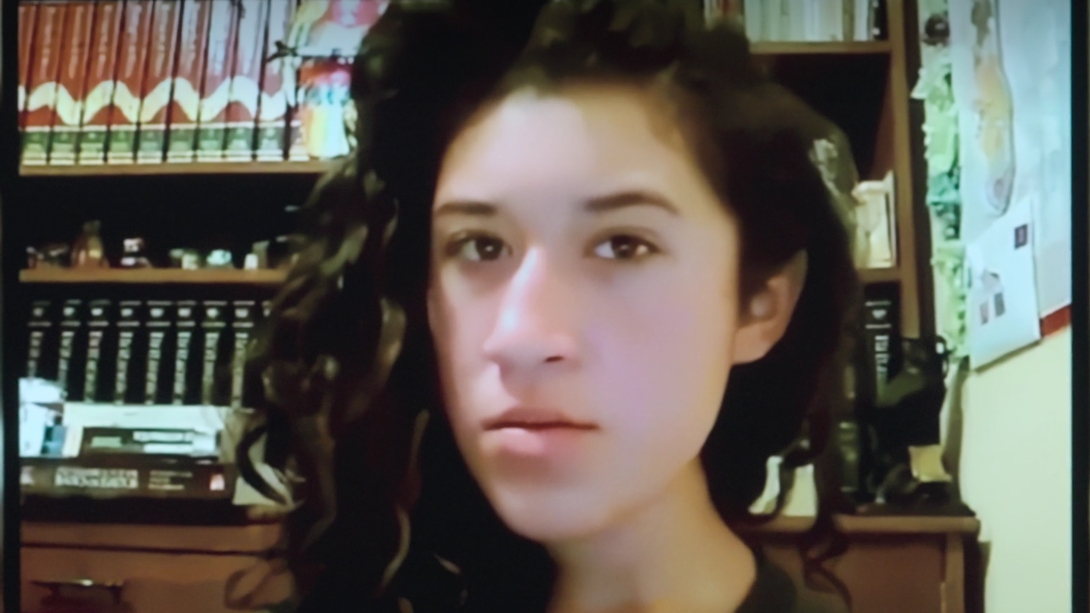
When Lesvy Berlin Rivera Osorio was found dead on the campus of the National Autonomous University of Mexico (UNAM) on May 3, 2017, what followed was pure anger and chaos. That’s because authorities not only initially ruled her death as suicide but also indicated through a series of tweets that she herself was to blame for her fate, as chronicled in Netflix’s ‘The Prosecutor.’ They re-victimised the 22-year-old graduate of the nation’s largest university in arguably the most horrific way imaginable, especially since it soon came to light that she had actually been murdered.
Lesvy Berlin Osorio Was Strangled to Death With a Public Telephone Cord
Born to Araceli Osorio Martinez and Lesvy Berlin Martinez in 1995 as the joy of their lives, Lesvy Berlin Rivera Osorio reportedly grew up in an affectionate, caring, and supportive home. She was a typical young woman by all accounts, as she loved to hang out with friends, let loose from time to time, and spend quality time with loved ones, all the while also focusing on her further studies. After all, by the time 2017 rolled around, she had graduated from the National Autonomous University of Mexico (UNAM) and was living nearby with her boyfriend, Jorge Luis González Hernández.
Lesvy had a bright future ahead of her, yet everything turned upside down in the morning hours of May 3, 2017, as the 22-year-old was found dead outside the Faculty of Political & Social Sciences. According to records, she was out in the open with a public telephone cord heinously wrapped around her neck, resulting in her cause of death to be ascertained as asphyxiation/strangulation. Her manner of death was initially ruled suicide, but following intense public outrage and open family pressure within 48 hours, the conclusion was revisited before being reclassified as a femicide.
Lesvy Berlin Osorio Was Killed in a Domestic Dispute
It was mere hours after Lesvy’s remains were recovered that the investigative authorities in the case turned their attention to the victim herself, publicly insinuating her lifestyle led to her demise. The Public Prosecutor’s Office published a series of tweets wherein they blamed the 22-year-old’s alleged substance intake, low university attendance record, and the fact that she lived with her boyfriend. “She was an alcoholic and a bad student,” read one tweet, followed by “she had left home and was living out of wedlock with her boyfriend,” as well as “she had been taking drugs with friends.” They essentially asserted she had questionable morals as if that somehow justified the ruling of her death by suicide.
The Prosecutor’s Office immediately faced backlash, with thousands of individuals using #SiMeMatan (#IfTheyKillMe) to speculate how their lives would be used against them if they were killed. Then, Lesvy’s loved ones, advocates against femicide, social attorneys, and UNAM students banded together to organize a march/strike at the university to demand real justice for her. They did so while also expressing their horror at what was said, even after the city’s elected Public Prosecutor Rodolfo Rios stated that the tweets sent by his office were “inappropriate” before ordering them removed.
In the ensuing few days, Lesvy’s case was revisited, her manner of death was reclassified as a homicide, and then it started being investigated as such by the local police and the prosecutor’s office. It quickly became clear that someone had purposefully strangled her with the public telephone cord – she hadn’t done it herself – and that someone was her boyfriend, Jorge Luis González Hernández. Surveillance cameras from around the crime scene clearly showed Jorge beating his girlfriend minutes before she lost her life and later loitering around before fleeing, leading to his arrest.
Jorge Luis González Hernández is Currently Incarcerated in a Prison
Although there seemed to be a mountain of evidence against Jorge in connection with the homicide of his then-girlfriend Lesvy, it wasn’t until around 2 years later that he faced trial in 2019. The most incriminating aspect was the surveillance footage, wherein the couple could be seen arguing before their fight turned violently physical, during which he strangled her to death with the telephone cord. As a result, following a lengthy legal process, he was found guilty and ultimately sentenced to 45 to 52 years in a Mexican prison. So, today, the early 30-something-year-old remains incarcerated in a state facility, where he is expected to remain until at least 2062. We should mention that this entire case is considered a landmark in Mexico because it not only formally recognized Lesvy’s murder as a femicide but also underscored the systematic negligence in the investigations of gender-based violent crimes. In other words, it inadvertently led to the establishment of the Office of Femicide in the Department of Justice a few years later.
Read More: Sayuri Herrera Román: Where is the Prosecutor Now?

