
 Shivangi Sinha
Lifetime’s ‘The Copycat Killer,’ directed by Jim Donovan, follows Eleanor “Ellie” Douglas, who has been living in seclusion since catching the infamous Sigil Slayer. When she decides to attend a true-crime conference, a fan is found murdered there. Ellie immediately notices that the style of the killing is strikingly similar to the case she had pursued years earlier. As she becomes involved in the investigation, however, she herself emerges as the prime suspect and must find the new killer mimicking the Sigil Slayer before her own life is threatened. The film brings together thriller elements, a deadly chase and the violence born out of revenge, exploring how far someone can go against a person they hold a vendetta against.
The Copycat Killer Likely Draws From the Real Cases of Criminals Mimicking Each Other
Written by Al Kratina, ‘The Copycat Killer’ is not based on a true story, but it seems rooted in a very real phenomenon of copycat killers. They are criminals who imitate the methods, signatures, or behavior of previous offenders. Such cases have been documented over the years and it makes the film’s central premise unsettlingly plausible. Police officers and investigators who have worked on cases involving copycat crimes have often spoken about how difficult they can be to solve, particularly when offenders deliberately recreate details from earlier crimes to mislead investigators. The film uses this reality to build suspense while exploring the challenges of identifying a new killer.

One of the most infamous examples of a copycat killer is Derek Brown, who police believed was attempting to emulate Jack the Ripper. He was convicted of the 2007 murders of Xiao Mei Guo, 29, a DVD seller, and Bonnie Barrett, 24, a sex worker, in London’s Whitechapel, the same area associated with Jack the Ripper’s 1888 murders. Investigators found blood evidence from both women in Brown’s flat, although their remains were never recovered. Police also discovered that Brown had borrowed a book about notorious killers and had assembled equipment, including a bow saw and a steam cleaner. In 2008, Brown was convicted of both murders and sentenced to life imprisonment, with a minimum term of 30 years. He died in prison in 2025 while serving his sentence.
The Movie Sheds Light on the Tough Police Work That Goes Into Catching a Copycat Killer
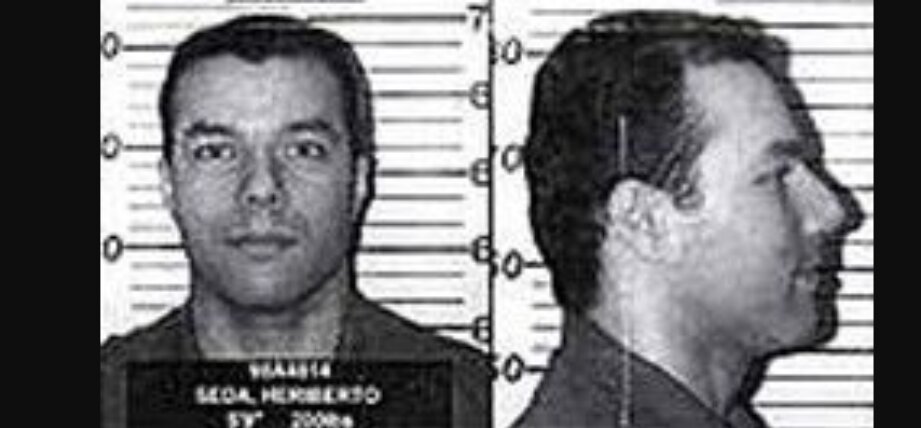
A major aspect of the film is the police work involved in identifying a copycat killer, highlighting how difficult it can be to distinguish imitation from coincidence. A real-life example is Heriberto “Eddie” Seda, the New York Zodiac copycat. Active from 1990 to 1993, Seda was convicted of killing three people and wounding others while sending messages modeled on the original Zodiac Killer. NYPD detectives, including Louie Savarese, studied the original case closely as they investigated him. Seda was finally identified after shooting his half-sister in 1996. Detectives noticed Zodiac-like symbols in his written statement, while fingerprints and DNA provided further evidence. He was convicted in 1998 and sentenced to 232 years in prison.
Although ‘The Copycat Killer’ is fictional, it draws on real elements of criminal investigations, particularly the challenges of identifying offenders who imitate notorious crimes. The idea of the same police officers working on both the original and copycat investigations is less common in practice, especially when cases occur years, and sometimes decades, apart. Some aspects of the film also heighten or exaggerate police work for dramatic effect. Nevertheless, its central premise remains grounded in reality and seems to derive from documented cases of copycat crimes and the difficulties investigators face in distinguishing deliberate imitation from coincidence.
Read More: Is Lifetime’s The Babysitter’s Double Life Based on a True Story?


You must be logged in to post a comment.