
 Abhiroop Das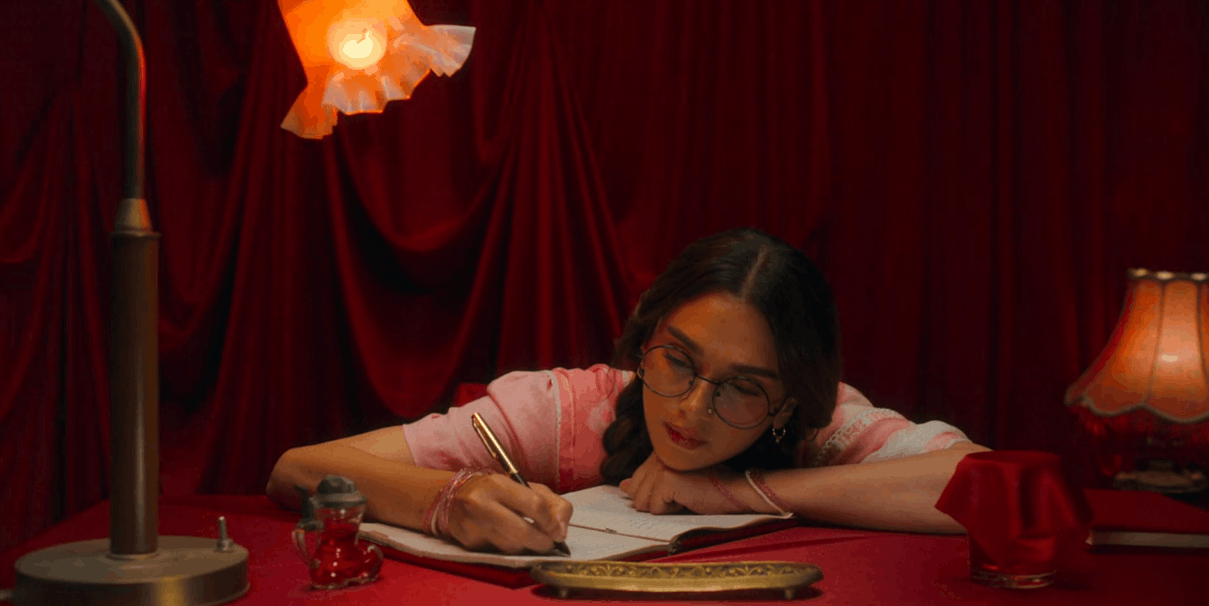
The fourth and final short film within Netflix’s ‘Lust Stories 3‘ is quite distinct from any other stories the film series has ever seen before, given that it goes back in time to the late 1980s in Hyderabad, tracking a vibrant literary and artistic culture through the eyes of Saira, a scholar and budding professor. Though she specializes in the stark and incisive works of Manto and similar writers, a chance encounter with pulp erotica pulls her attention in an entirely new direction. Sensing the literary potential in these sensual writings, she drafts an erotica out of her desires, bringing her deepest, darkest fantasies to light. These stories then take a life of their own, only to get published under the title ‘Chulbuli Begum,’ with the pen-name Raseeli Jaan being associated with Saira, regardless of whether she wants this legacy.
Chulbuli Begum is a Fictional Work That Draws From India’s Pulp Erotica Tradition
‘Chulbuli Begum’ is the name of a fictional book and character created by Vishal Bhardwaj for his segment in ‘Lust Stories 3.’ When conceiving of this women-centric piece of erotica, noted to be unusual for its time, Bhardwaj primarily drew from an era long before the internet, and prior to even VHS and DVDs. In a conversation with the Press Trust of India, he noted that the youth of that time were introduced to the concepts of love, lust, and desire with the publications of Mills & Boon, the pulp works of writers such as Mastram, and the magazine Debonair.
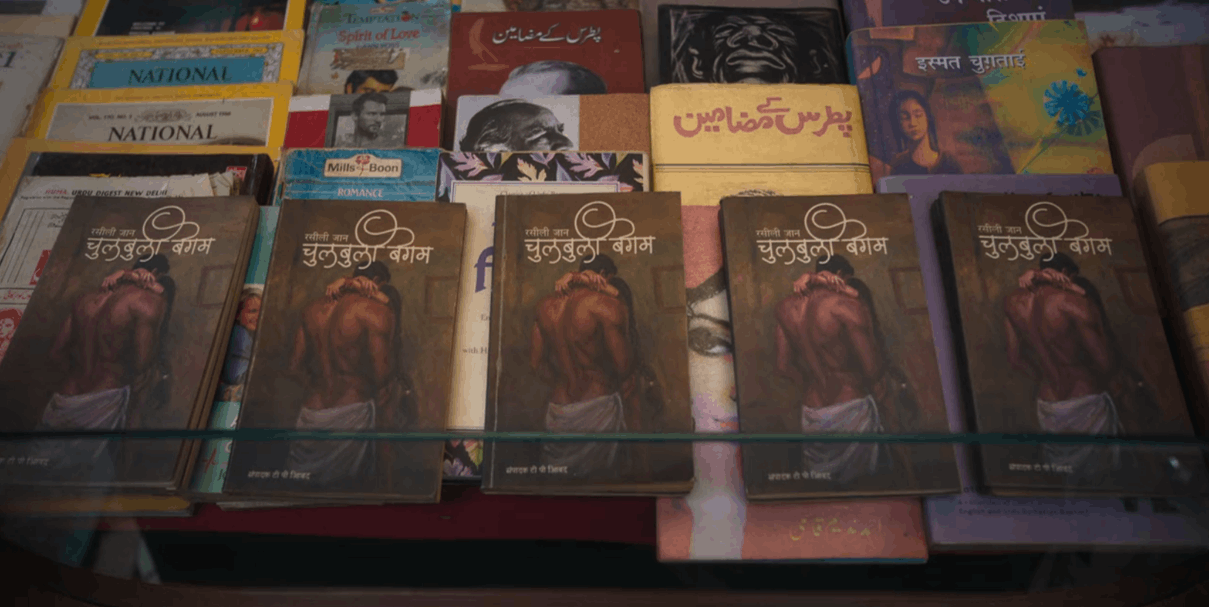
‘Chulbuli Begum’ provides a similar yet subversive space to these works and can be interpreted as a response to the fictions of Mastram, which typically cater to male fantasies and are also referenced in the film. The book’s ability to pour out an unhindered vision of sex and desire largely stems from the nature of pseudonymous pulp fiction, which allows for greater creative freedom than usual. Feminist writer Rosalyn D’Mello, who wrote the acclaimed ‘A Handbook For My Lover,’ provided her insight into this literary tradition during a conversation with Times of India, stating, “Given the kind of moral policing that is rampant in Indian society, there is always the danger that a writer may indulge in self-censorship.” This perspective helps contextualize ‘Chulbuli Begum,’ and the transformative effect it has on its readership in the film.
Saira is Loosely Inspired by a Real-Life French-American Writer of Erotica
While ‘Chulbuli Begum’ may be an entirely invented work, the inspiration for Saira actually comes from a real-life author. During a conversation with PTI, Bhardwaj revealed that his research for the short film eventually led him to Anais Nin, an acclaimed French-American novelist, diarist, and short story writer. Bhardwaj was intrigued by Nin’s story, noting, “I learned that she was a major poet and literary writer. And because she was short of money, a publisher offered her one dollar per page if she wrote erotica for him.” This became his starting point for Saira’s character, and while there are major differences between her and Nin, the common thread is their ability to imbue a literary quality into erotic fiction.

When looking for inspiration and references, Bhardwaj specifically digs into the literary world, as he wanted to create a writer whose stories are not only titillating but also profound. Saira, using her in-universe pen name Raseeli Jaan, fits that description to a T, which makes one of the more unique additions to the ‘Lust Stories’ universe. In real life, Nin went on to pen some of the most iconic pieces of erotica literature, most famously her short story collection ‘Delta of Venus,’ and ‘Little Birds.’ None of these books, however, appears to have inspired ‘Chulbuli Begum,’ which has its own aesthetic and sensual sensibilities. Thus, while Saira draws on the tradition of India’s anonymous or pseudonymous erotica writers, the details of her own “lust story” remain fictional.
Read More: Lust Stories 3: All Endings Explained


You must be logged in to post a comment.