
 Abhiroop Das
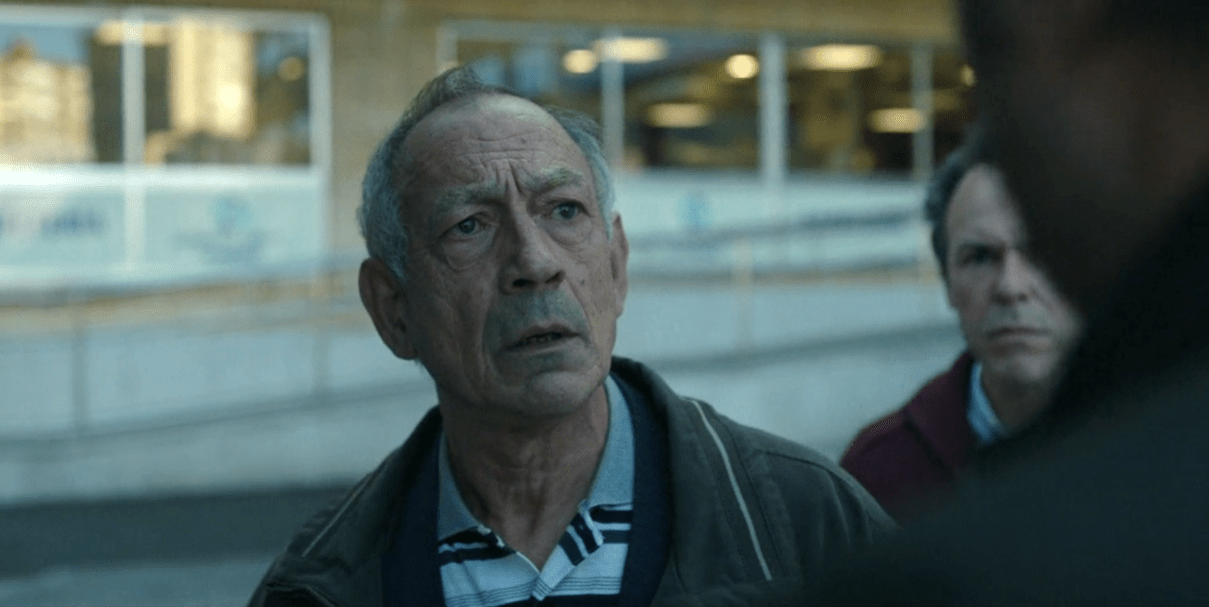
Created by Ramón Campos, Curro Serrano, David Orea Arribas, and Gema R. Neira, Netflix’s ‘Murder in Galicia,’ also known as ‘El crimen de Pazos’ in original Spanish, dramatizes the real-life murder of Isabel Fuentes, who was tragically attacked in her home and later stabbed to death in the hospital. The series reimagines Isabel as Irene Freire and presents a fictionalized account of the aftermath of the initial attack through the eyes of Sergeant Elias Lago, the lead investigator on the case. Though Irene’s husband, Aniceto, claims it was a botched robbery, Elias can’t shrug off the feeling that things might not be as straightforward as they look. This curiosity leads him to suspect Aniceto, but with each new turn in the investigation, the path to the truth gets blurrier and blurrier, until the real culprit shows up once again. SPOILERS AHEAD.
Murder in Galicia Plot Recap
‘Murder in Galicia’ begins with an old man named Aniceto Rodríguez waking up his neighbors in a panic, claiming that his wife, Irene, has been attacked by robbers and left to die. When it turns out that Irene is still alive, though barely, an ambulance is called, along with the Civil Guard. As Sergeant Elias Lago and Officer Turrientes arrive at the scene, Aniceto explains that he was asleep upstairs when the robbers came and could only watch them steal the keys and escape through the back door. However, it soon becomes apparent that some of the details in his story aren’t adding up. For instance, the robbers have no reason to escape from the back door and not from where they came in, seeing that there are seven different keys, and only two people can know exactly which key works, namely the couple themselves.
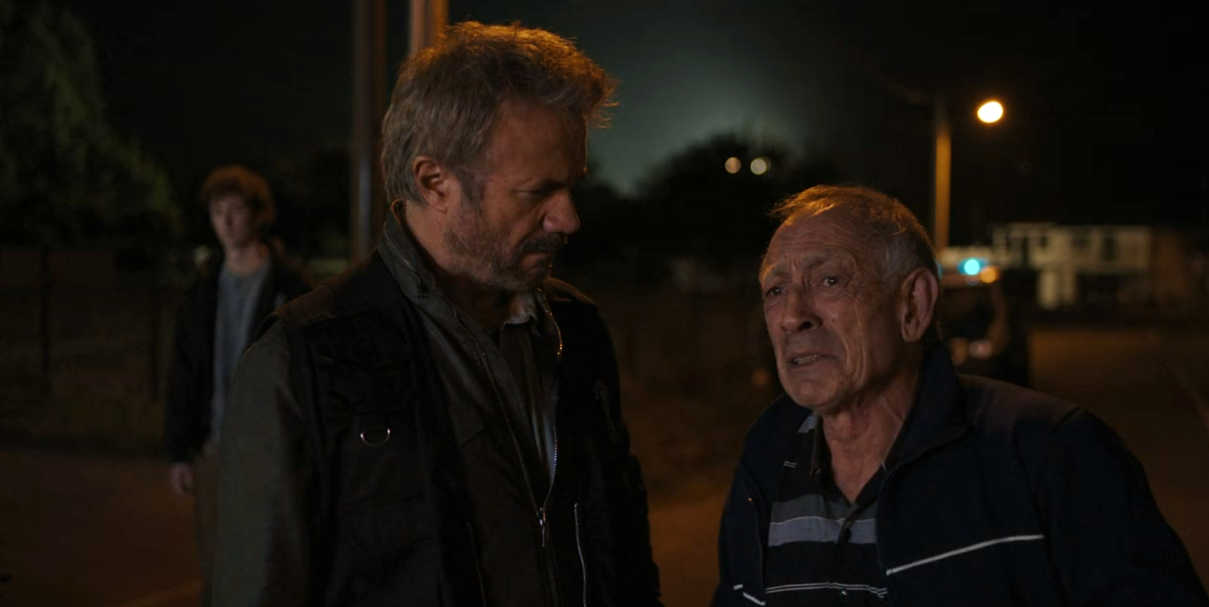
Elias also notices that nothing was actually stolen from the house, and that the weapon used in the attack, a hammer, was found in the gallery, potentially with prints on it. As Elias’s suspicion towards Aniceto increases, it gets countered by the words of practically everyone he talks to. Aniceto and Irene, as it turns out, were the perfect couple, and to top it off, the DNA tests get pushed back due to bureaucratic holdups. As the case begins to receive national coverage, the press grows increasingly curious about the details, prompting Elias to secure a gag order. However, with no real evidence against Aniceto, he can hardly stop the man from visiting his wife in the hospital.
Eventually, Elias learns that Aniceto and Irene got together decades ago but never married until the last few years. Furthermore, Irene had only recently begun to recover from the trauma of losing her mother, which leads Elias to theorize that Aniceto may have become jealous of her newfound agency. However, this once again doesn’t fly with the higher-ups, and with the DNA tests on the hammer getting delayed, Elias has no choice but to guard Irene’s hospital bed and wait it out. Aniceto soon begins to express discomfort, in turn prompting the sergeant to have the CCTV footage around her room monitored. However, one day she gets shifted to a different room without anyone’s knowledge, and soon thereafter, Aniceto goes home and grabs a knife before returning to the hospital and bringing Elias’ worst fears to life.
Murder in Galicia Ending: Why Did Aniceto Kill Irene? Does He Go to Prison?
‘Murder in Galicia’ ends with a tragedy as Aniceto stabs Irene to death in the hospital, before attempting to take his own life. The only thing he leaves by her side is a note, addressed to Irene herself, in which he claims that she was attacked, and all of this is an attempt to put her out of her misery. There is a fundamental problem with this note, however, in that it doesn’t make much sense to write a note to someone you are about to kill. Thus, the real recipients of this note seem to be the authorities, and it effectively makes Aniceto’s actions appear to be a mercy killing, contrary to what Elias Lago and his team believe. The result is a lengthy, complex legal battle in which the truth about Aniceto slowly comes to light, only to be met with stiff opposition from various opposing narratives.
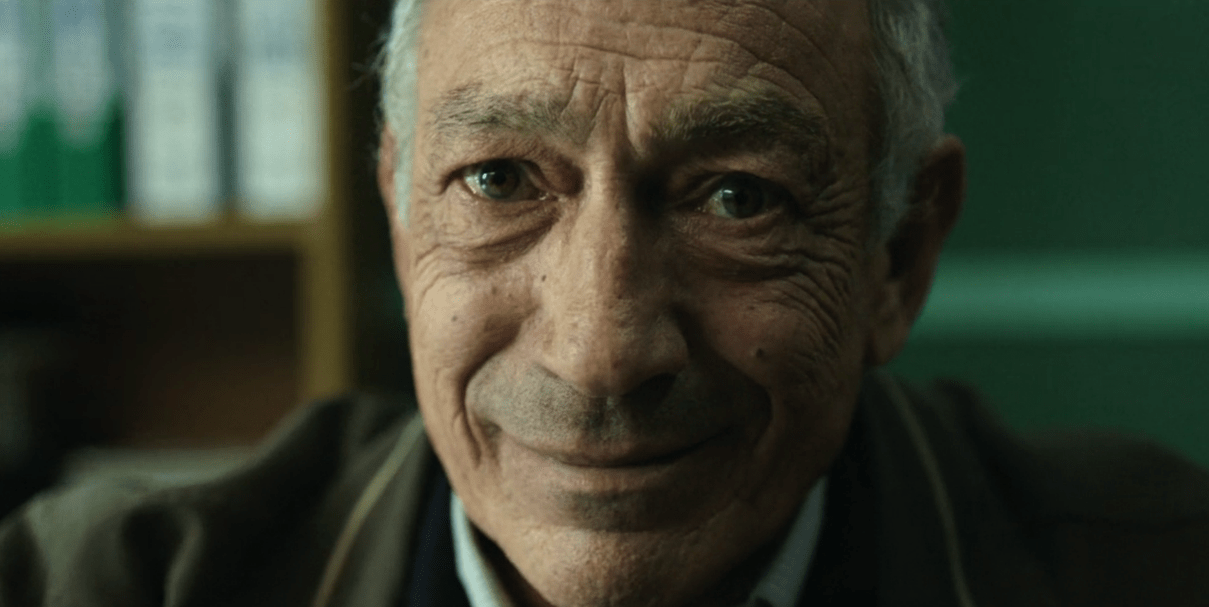
Given that there is good reason not to take Aniceto’s written note as the ultimate truth, there remain possibilities as to why he killed his wife. For Elias, the key to this mystery seems to lie in the last five or so years the couple has spent together, seeing that a lot of major shifts happened. First, he learns that Irene cared for her mother in this very home until her mother passed away, followed by the revelation that Aniceto and Irene married only recently, having spent decades as partners. Upon hearing this, Elias’ thoughts naturally lead to the question of a widow’s pension, and just like that, all the disparate details begin to come together. Thus, one theory is that Aniceto got married to Irene after her mother’s death, and then tried to kill her to get her pension.
While the entire final episode revolves around Aniceto, we never actually get a resolution to it, at least not in this fictionalized form. The end cards of the show note that, in real life, Aniceto was found guilty of both the initial hammer attack and the subsequent murder of his wife, something that the show leaves purposefully ambiguous. There is also the detail about Aniceto’s first wife dying decades ago under mysterious circumstances, which also captures Elias’ attention. While we don’t get a definitive answer to that, it does point towards the subtler cracks in the old man’s psyche, and how this hunger for control and propensity for violence led him to take Irene’s life. While Aniceto may end up behind bars, Irene’s death leaves behind a reminder of the gaps that exist in the system.
Who Leaked the Information to the Press? Why?
Curiously, the show also never gives us an answer as to who leaked the full details of Irene’s case to the press. Instead, Elias finds himself as the ultimate scapegoat for the authorities, with no means of defending himself. Ultimately, though, the list of suspects can be narrowed to only a handful, given that there are details in the report that only people in Elias’ immediate circle would know. Given that the audience knows Elias to be innocent, this chiefly leaves us with four potential suspects, namely, his fellow investigators Turrientes, Barreira, and Medina, as well as Judge Loiro. Only these four people know that Elias tried to have the DNA tests expedited and to get approval to store CCTV footage. However, there are still internal differences in how these characters are depicted after the press leak.
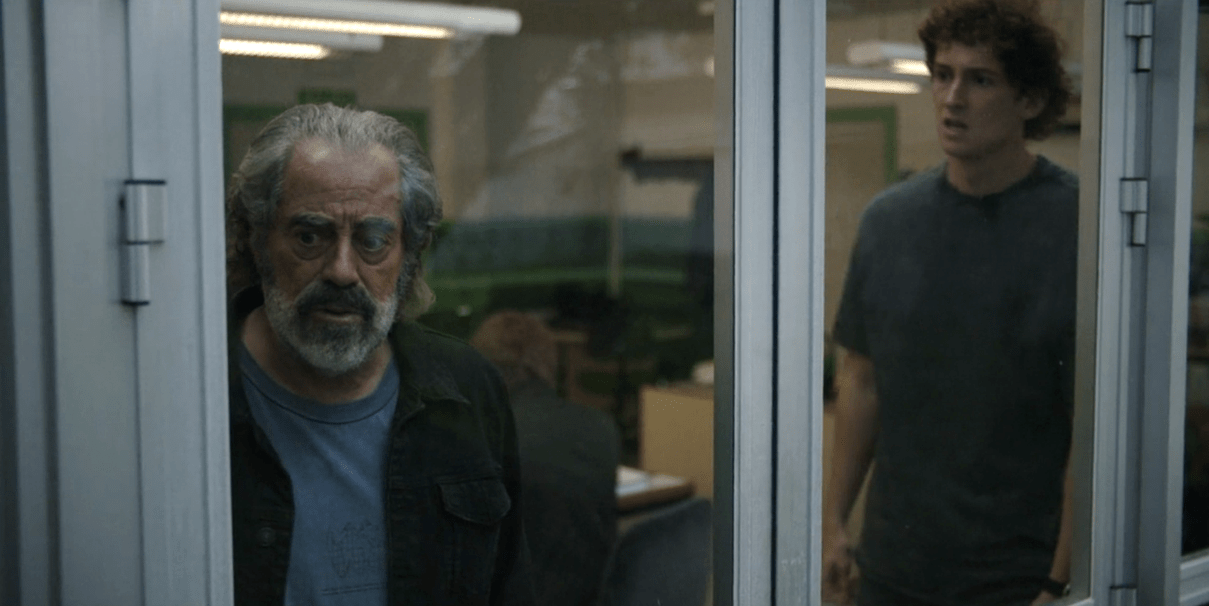
Of the group, the easiest person to rule out seems to be Barreira, despite the fact that he is in a relationship with Antía, the journalist who wrote the piece in the first place. We know that because we actually see him talk to Antía, where he laments that everyone will suspect him even though he didn’t say a word. From there, we can also safely rule out Medina, as her domain is mostly forensics and has very little to do with the development of the CCTV footage. Ironically, this leaves us with the two characters who strongly accuse others of leaking the information. While it makes sense in the case of Judge Loiro, seeing that she is the one who signed the gag order, Turrientes appears to be covering his tracks, as he is most likely the source himself.
While Elias may be the protagonist of the story, and the one most passionate about bringing Aniceto to justice, one shouldn’t forget that Turrientes is on board with him from the very first scene. Just like Elias, he suspects Aniceto from the start and helps uncover crucial pieces of evidence, only for his efforts to prove futile in the end. Thus, it makes sense for him to give in to the rage and reveal the truth to the world about how Irene’s death wasn’t just about one man’s whims, but a systemic failure. And though Elias never breaks the law, a part of him also knows how it’s this very system that wronged her. Thus, when the time comes, he doesn’t hesitate to voice his concerns to the press either, though that requires taking a massive step at first.
Is Elias Suspended? Does He Leave the Civil Guard?
The mini-series ends with the implication that Elias has decided to leave the force for good, and the end cards support this, revealing that Elias’ real-life counterpart took early retirement in his 40s. Within the context of the show, however, Elias’ decision comes as the culmination of his entire arc, serving as the ultimate indictment of the justice system. From the very start, Elias and Turrientes appear to be the only officers who actually look at the evidence and question simplistic narratives, and there is a specific reason for this. Everyone else involved with the investigation has a very distinct image of Aniceto as the mild-mannered, perfect-seeming husband who wouldn’t even hurt a fly. This, in turn, reaffirms their idea of an idyllic family, one where they can simply ignore the nuances of power imbalances and abuse, in all forms.
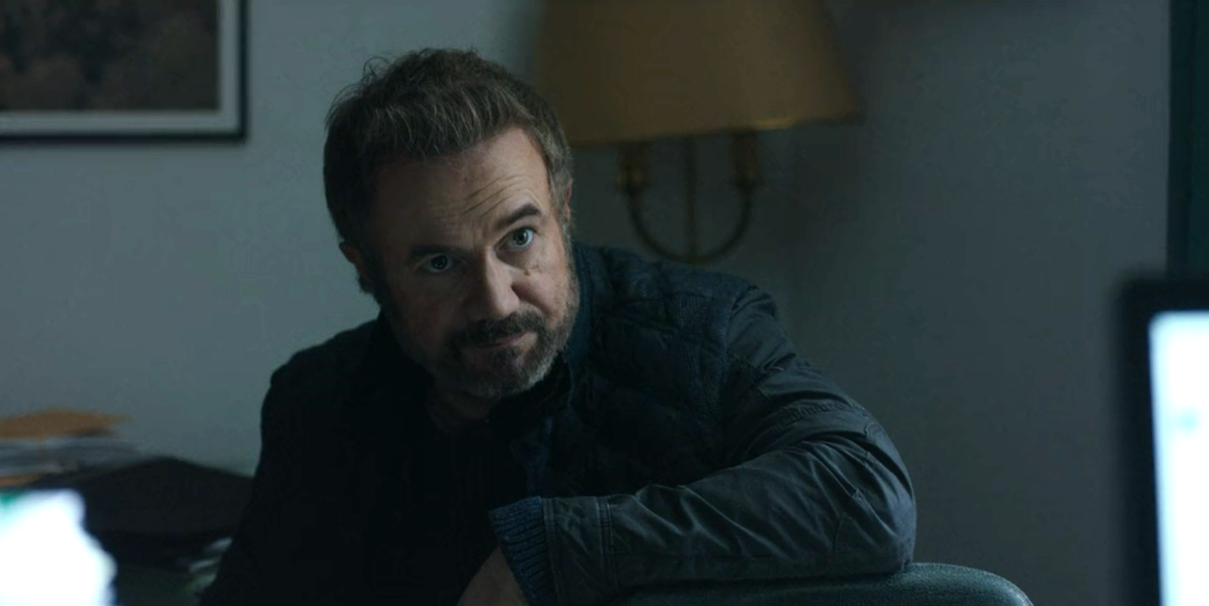
Within the narrative, Aniceto represents the idea of how easily domestic and gender-based violence can and does get swept under the rug, suppressing the voice of the survivors and normalizing a culture of silence. It is precisely because of everyone’s perception of Aniceto that Irene doesn’t get the protection she needed, despite Elias making repeated comments. Then, when the information does get leaked, he becomes the prime accused solely because of how hard he fought for justice. With his own commitment to saving lives being weaponized against him, Elias sees no reason to participate in a system that encourages complacency. His decision to quit, thus, marks one step in the long and arduous process of breaking the cycle, something that is only possible if everyone dares to open their eyes.
Read More: Murder in Galicia: Who is Sergeant Elías Lago in Real Life? Where is He Now?


You must be logged in to post a comment.