
 Abhiroop Das
Co-directed by Phil Lord and Christopher Miller, ‘Project Hail Mary‘ begins with Ryland Grace, a high school teacher cum scientist, waking up all alone aboard a spaceship that is several light-years away from Earth. What’s more troubling is the fact that he has amnesia, and his memory of the days back on Earth only returns in small bursts. Throughout the movie, we learn that Earth has begun rapidly cooling down due to the dimming of the sun, which is caused by billions of space entities taking over and feeding on the star.
Even more mysteriously, these entities seem to have a transportation channel to and fro Venus, which results in a bright pink trail of light. Ultimately, Grace discovers that these entities are actually space microorganisms, named astrophages that feed on the sun and excrete pure kinetic energy. The more he learns about these invasive beings, however, the more it becomes clear that he is running out of time to save humanity from extinction. SPOILERS AHEAD.
Astrophages are Fictional Space Microbes That Are Based on the Panspermia Hypothesis
While astrophage is a fictional alien microorganism created by author Andy Weir specifically for his book, ‘Project Hail Mary,’ its origins can loosely be traced to real scientific concepts and ideas. Though humanity has not found any proof of life outside of Earth, much less one that can feed on stars, Weir has a thought-out explanation for why there seems to be microbial activity several light-years away from Earth. In a conversation with Space, the author revealed, “I didn’t want to try to invent multiple different kinds of lifeforms all the way from the ground up. So I decided there was a panspermia event.” Within this context, a panspermia event refers to the hypothesis that life is spread across the universe through meteoroids, asteroids, and comets, which explains the presence of similar beings in vastly different corners of the universe.
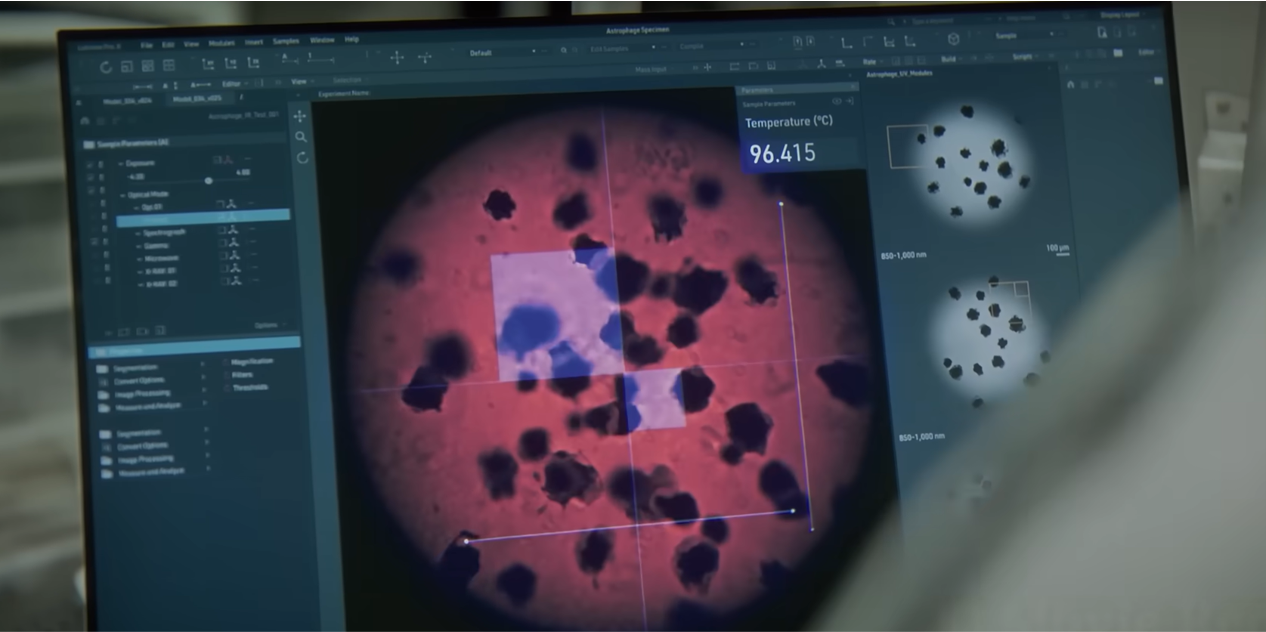
What makes astrophages unique isn’t just their ability to move around by and reproduce through sunlight, but also their ability to efficiently metabolize thermal energy. When compared to real-life, this makes them similar to some forms of extremophile microbes, which are microorganisms that seem to thrive in the most extreme or hostile living environments. Some microbes have been reported to live inside volcanic hot springs, whose temperatures consistently reach as high as 80 degrees Celsius, or 176 degrees Fahrenheit. In other cases, some microbes have been known to survive prolonged and intense doses of radiation, both of which are characteristics of the fictional astrophages as well. It isn’t unusual for Andy Weir to base his story-centric inventions on real scientific knowledge, and the astrophages make for one more instance of his artistic and scientific curiosity reaching an intersection.
The Petrova Trails Are an Invented Space Phenomenon to Behold
Given that astrophages themselves are crafted entities in the world of ‘Project Hail Mary,’ it makes sense that the Petrova trail, a chain comprised of billions of astrophages alternating between the sun and Venus, is also a fictional phenomenon. While the outer space is no stranger to seemingly inexplicable phenomena, Weir doesn’t seem to have a direct interpretation in mind for the Petrova trails. It is possible, however, that the designs are loosely a reference to Earth’s space debris, and how it is often visualized as slowly cluttering Earth’s spatial boundaries.
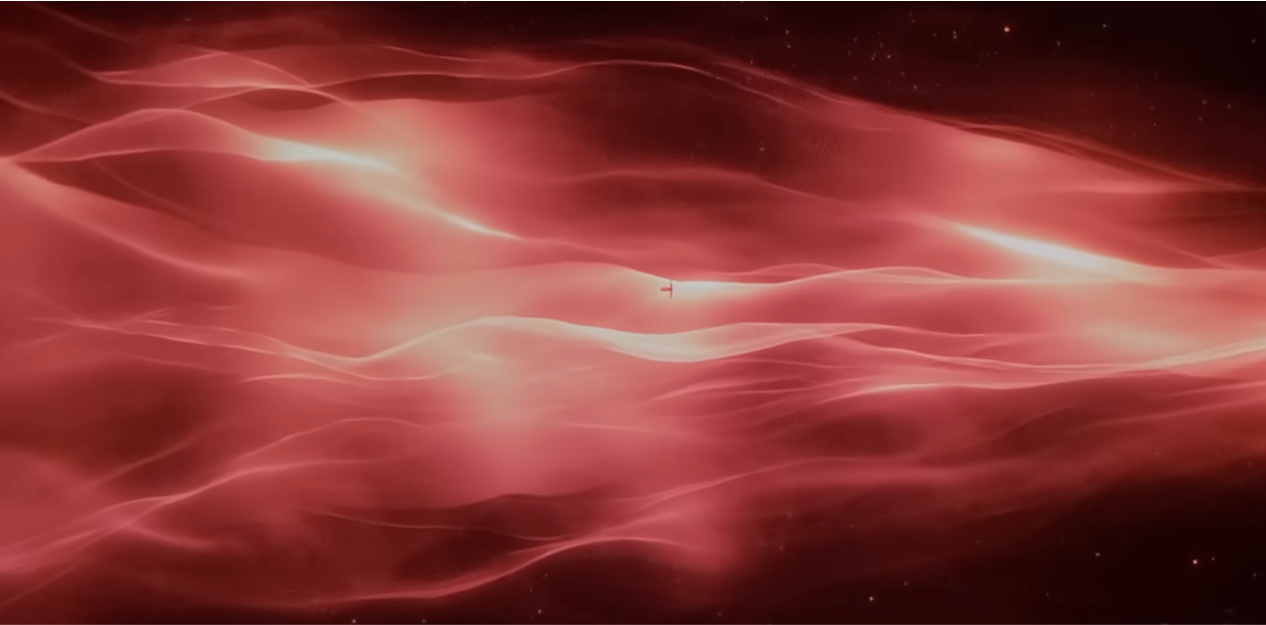
Some similarly uncanny phenomena outside of our home planet include Mars’ famous dust devil trails, which take the shape of long, swirling lines that are caused by natural phenomena. While there are vague overlaps between these space-related phenomena and the imagery of the Petrova, nothing seems to point to a direct inspiration. While the Petrova line may be a figure of complete imagination, its associated astrophages remain Weir’s favorite part of the original story. In a conversation with Popular Mechanics, he was discussing the future viability of the movie’s inventions. Mentions of astrophage came first. “If that’s one of the things I can pick, I pick astrophage. If I can have some of that in the real world, and I could be fairly sure that I didn’t accidentally get any on the Sun, I mean, it would change the entire world,” the author expressed, reiterating the fictional nature of this microbiological marvel.
Read More: Where Was Project Hail Mary Filmed?


You must be logged in to post a comment.