
 Aahana Swrup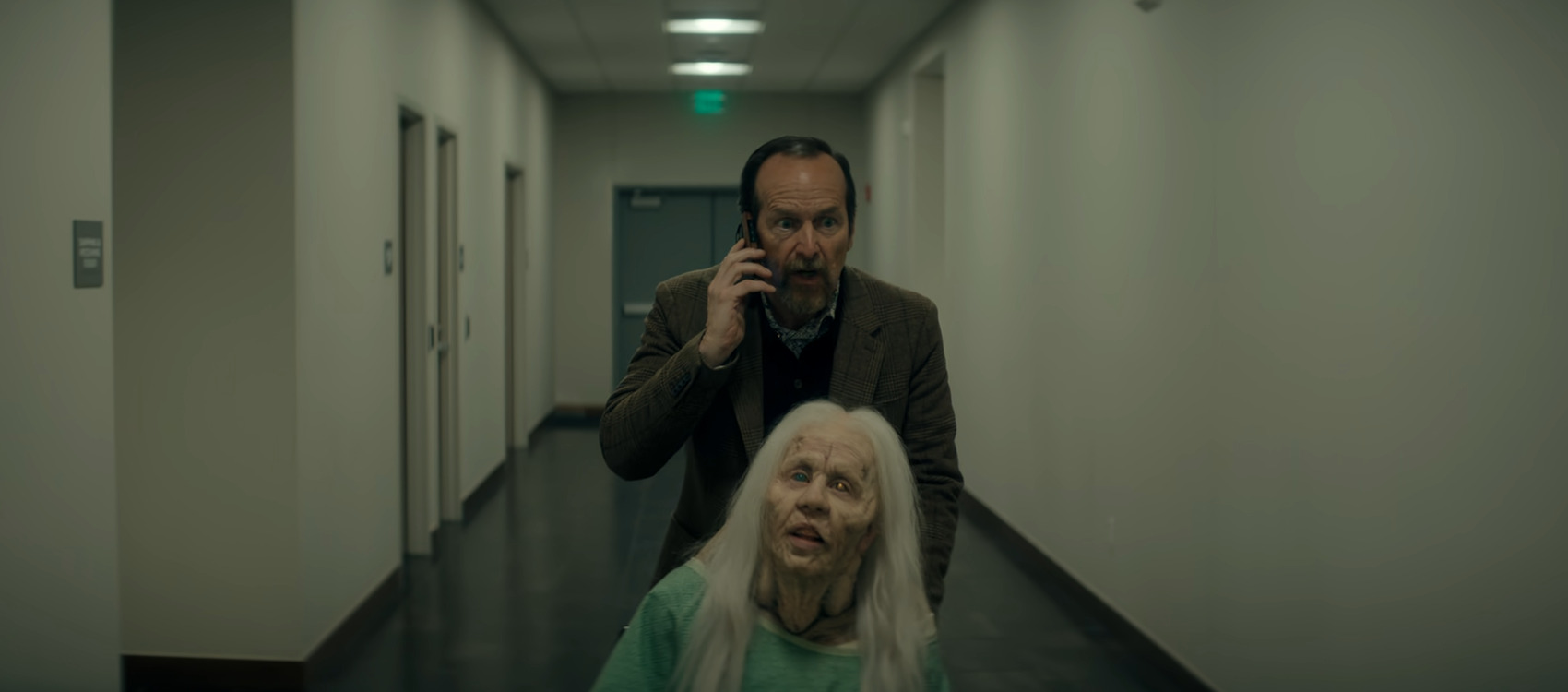
Netflix’s ‘The Boroughs’ presents a story where what goes on above the surface is much different than the terrifying reality that simmers underneath. When Sam Cooper first moves into the Boroughs, a retirement community for the elderly, he’s expecting friendly neighbors and infantilizing staff members to be the worst thing around. Therefore, he’s in for a surprise when he inadvertently discovers the existence of a monstrous creature as it feasts on his next-door neighbor and tentative friend, Jack.
Soon, with the help of others from his cul-de-sac, he discovers that these creatures roam in the shadows of the community and prey upon the residents. Eventually, the show introduces another key player: Mother, the originating creature who gave birth to the creatures roaming the town’s underground tunnels. Intriguingly enough, the alpha creature shares almost no physical qualities with its multiple-legged, monstrous offsprings, and instead looks like a sickly, old woman. SPOILERS AHEAD!
The Mother is a Supernatural Creature Who is More of a Victim Than the Villain
The mechanics of the Mother’s supernatural existence, her origins, and the logical explanation for her existence, remain clouded in relative ambiguity in the story. However, the narrative does offer up bits and pieces of her history. The Mother’s origin can be traced back to 1949, when an egg was discovered in the mining town, which would eventually become the Boroughs. The discovery was made by a miner named Marcus Shaw, known to the audience thus far as Blaine Shaw. From the egg, the creature was hatched and swiftly given the title of the Mother. Shaw and a few others, including Annelise, whose family owned the town, discovered that drinking the blood of this creature grants the consumer perpetual youth.
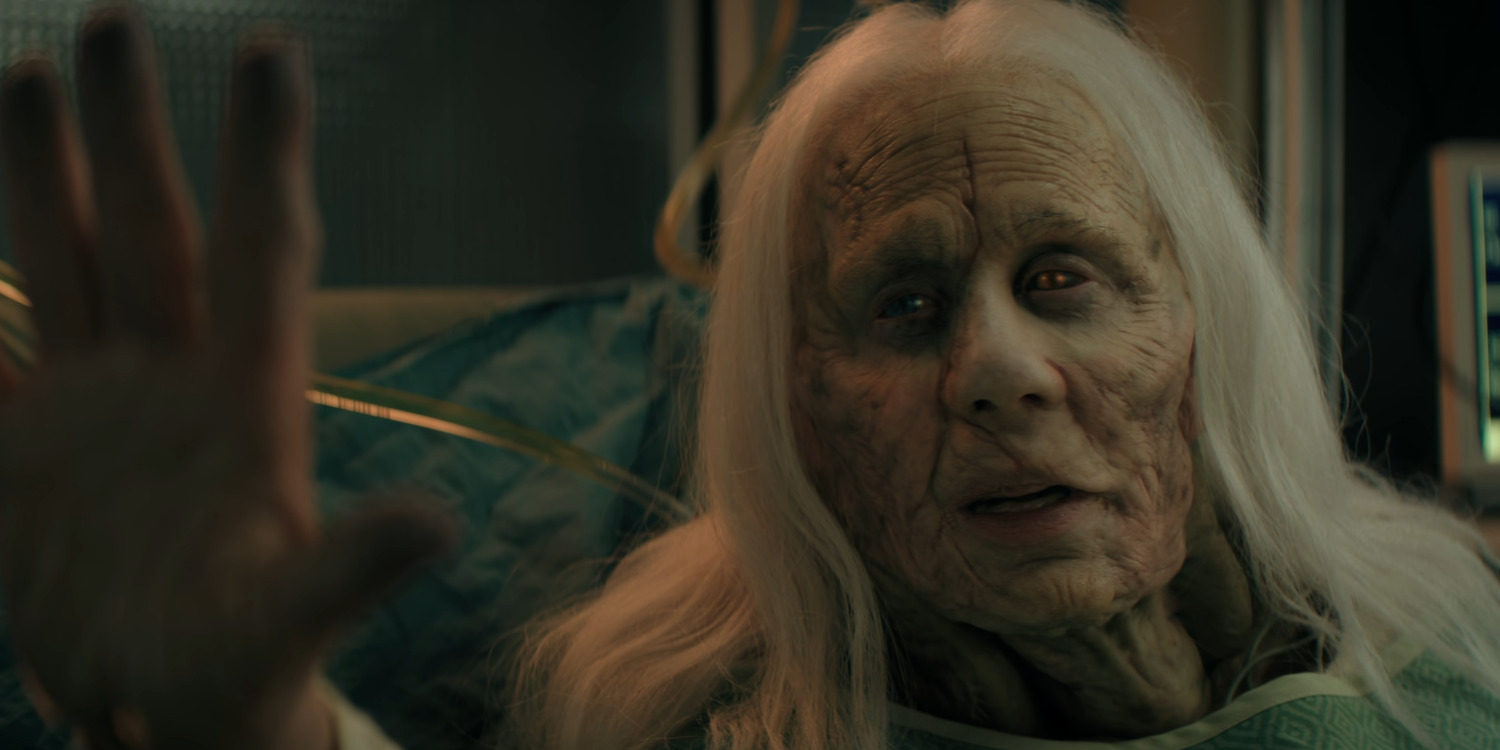
The blood freezes the consumer in time, keeping things like aging, disease, and even death at bay. However, this fountain of youth came with a trade-off. In order to sustain the Mother’s blood and the survival of her eventual offsprings, she needed to be fed on human brain fluid. As a result, Blaine and Annelise created the Boroughs as a retirement community to create a herd of elderly people who can be unwitting cattle for the Mother’s feeding. Yet, in this arrangement, the creature is as much a commodity to be exploited as the residents of the predatory town. The Shaws discovered the Mother before she even hatched. As a result, they have been able to contain and control her throughout her life.
For the same reason, the Mother never actualizes as an individual entity with any autonomy. She is simply used as a supply for the demands of the greedy, who exploit her powers for their own isolated self-preservation. As a result, it’s entirely possible that many of her other abilities that would have otherwise informed her identity as a being are left unexplored. For instance, she can telepathically communicate with people, only those with impaired minds, by appearing to them as apparitions. Furthermore, her healing abilities aren’t confined solely to her blood and seem to also be able to be administered in certain circumstances through touch. Nonetheless, in the end, being born and bred in captivity robs Mother from being able to be defined as anything other than the atrocities committed against her.
The Mother’s Human-Like Appearance is Connected to Her Unusual Diet
The first time that one of the creatures is introduced in the story, it’s one of the many kids that the Mother has birthed. The creature itself presents a distinct visual as a gangly, monstrous being with many legs and buggy eyes. In comparison, its originator, the Mother, has a vastly different appearance. She looks nothing like a monster or an otherworldly being. Instead, she looks like an old, diseased woman. Her human skin is wrinkly, saggy, and bumpy in places, and she has long white hair. This unique appearance is actually a result of the strict diet that the Shaws maintain for her. The Mother feeds on the cerebral fluids of humans.
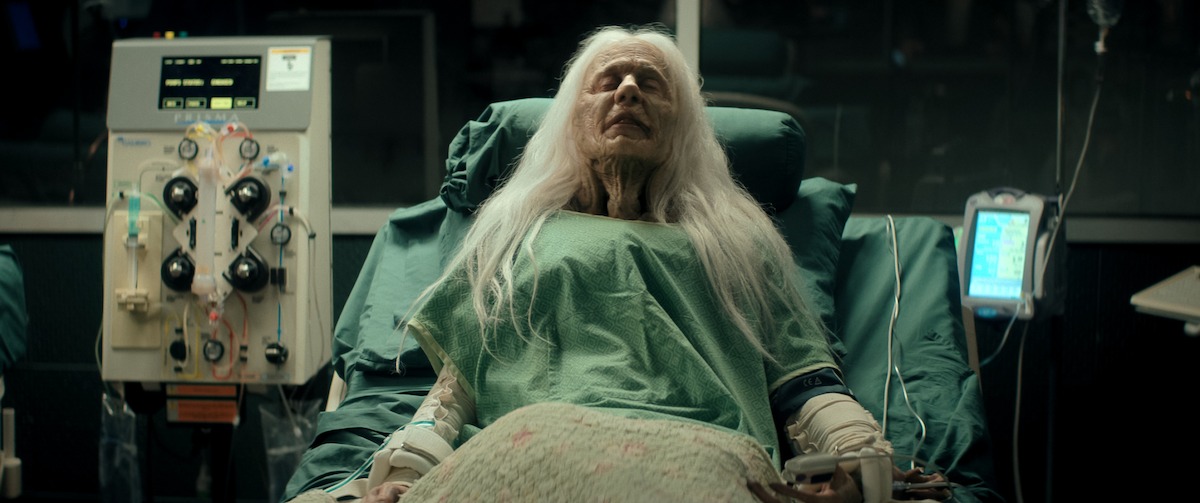
Even after her health declines, her children facilitate this exchange of fluids between unwitting humans and the Mother in order to keep her alive and keep her blood potent. It’s this lifelong feeding on human brain fluids that has morphed the Mother into a human-like creature, distinct from the physical appearances of her children. Her appearance is meant to be a play on the saying, “you are what you eat.” Since she has been feeding on humans her entire life, she has taken on the appearance of them as well. Notably, on a subliminal level, this becomes another manifestation of her victimhood. If it’s the feeding that informs her unique appearance, it’s fair to assume the Mother, and other creatures like her, are meant to be something unique from humanity. However, by making her a slave to their mortal greed, the Shaws rob that from the creature.
The Creature Thematically Represents a Fear of Aging
Initially, it seems like the creatures and their elusive Mother are the real villains of the story, preying on the community members and feeding on their brain fluids. Nonetheless, a different truth emerges with the revelation of the Mother’s entrapment under the Shaws. As the shift arrives, transitioning the creatures from villains to victims, so does the visual reveal of the Mother, as a human-like creature instead of a monstrous being. As a result, a connection is formed between the concept of the scary thing lurking in the shadows and the concept of aging. Thematically, this neatly fits into the narrative of the series.
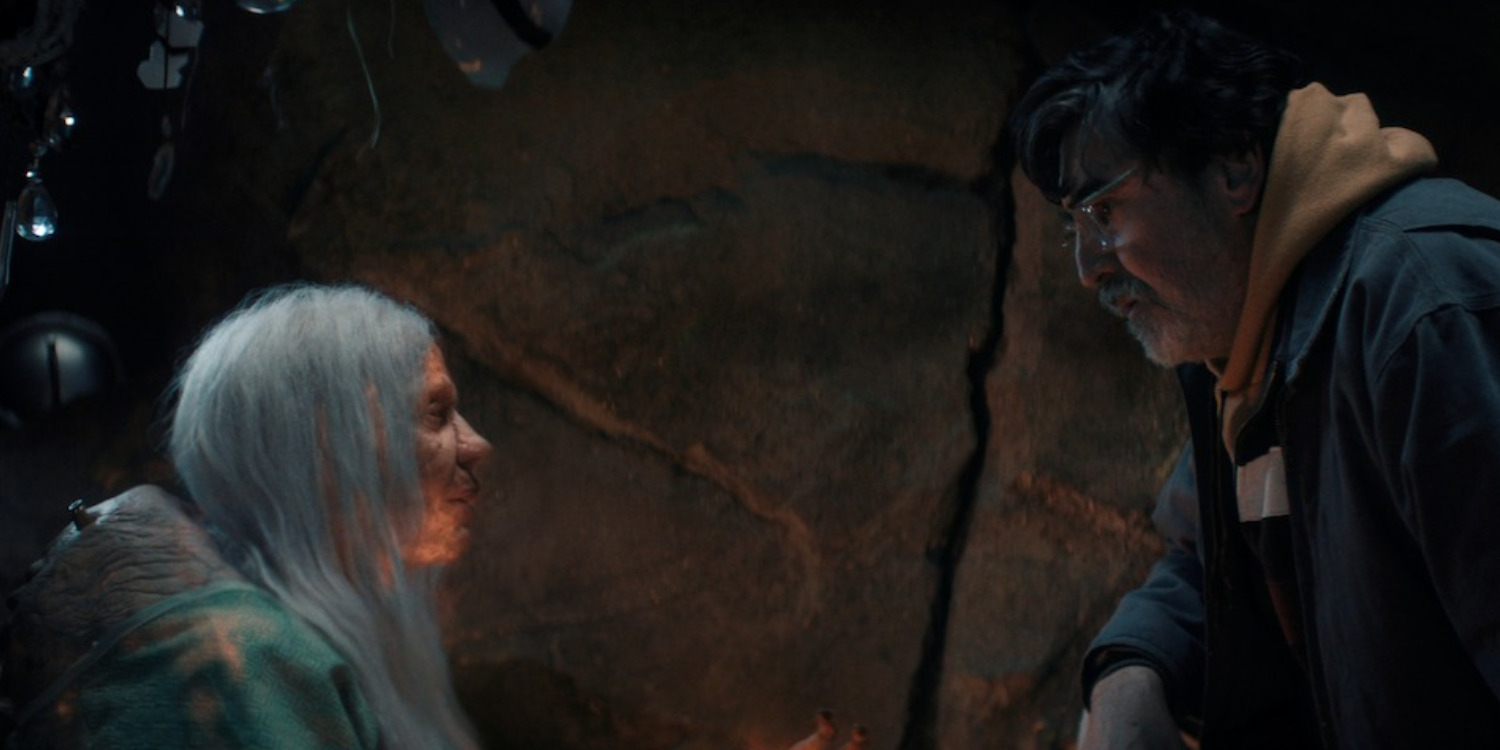
As the show centers around individuals, most of whom are in their 70s, old age remains one of the more prevalent themes in the story. Initially, Sam, who has just his wife, Lily, thinks all that’s left for him in his life is the looming inevitability of death. Similarly, there’s a sense that Wally, who has terminal cancer, is only waiting to meet his demise. However, it’s in the friendship and camaraderie that Sam, Wally, and the others find that they realize that old age doesn’t have to be synonymous with something scary or doomed. Narratively, the gradual progression of the Mother as an unseen eldritch horror, who is revealed to be an old woman, who turns out not to be the villain at all, serves a similar purpose.
Read More: The Boroughs: What is the Tree in the Cave? Why does It Die?


You must be logged in to post a comment.