
 Abhiroop Das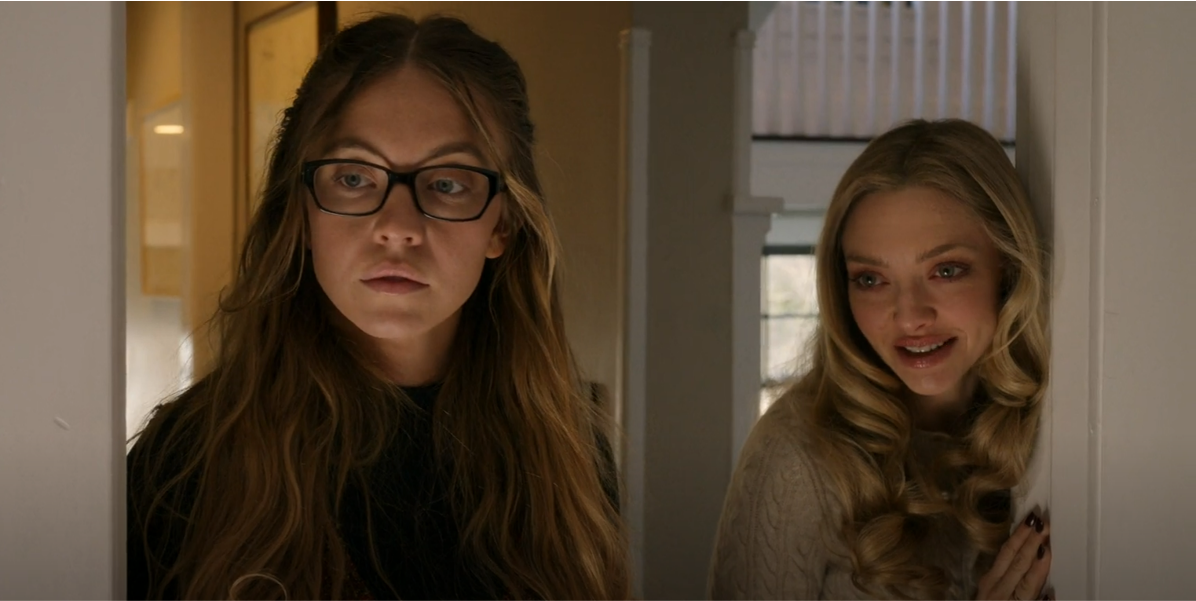
Helmed by Paul Feig, ‘The Housemaid’ is a psychological thriller movie that follows Millie Calloway, whose second start at life slowly descends into chaos. Having been behind bars for 10 years, Millie is shocked to learn that a stable job is an absolute condition for her parole. Relief comes with the wealthy Winchesters, who hire her as their house manager, despite her criminal background. However, each day in the job reveals another darker layer to the family’s subconscious, particularly when it comes to Nina Winchester. As Millie juggles Nina’s arbitrary demands and frequent breakdowns, she ends up developing feelings for Andrew Winchester, sinking deeper and deeper into the heart of this twisted family saga, till it’s too late. SPOILERS AHEAD.
The Housemaid Plot Synopsis
‘The Housemaid’ begins with Millie Calloway desperately looking for a job, but meeting constant disappointment due to her background as an ex-convict for manslaughter who is out on parole. Still, the Winchester family, comprising Andrew, his wife Nina, and daughter Cece, is more than happy to employ her as their house manager. While Millie is initially overjoyed by this development, she finds it suspicious that her room in the attic has a lock without a key, as well as a window that is firmly jammed shut. After a little deliberation, the Winchesters hand her the key to the attic, but their clashes are just beginning. Over time, Millie ends up having both major and minor disagreements with Nina, who seems to repeatedly forget her own orders shortly after making them.

Before long, Millie is left thoroughly exhausted by the job, but the fear of losing her parole forces her to keep at it, even when Nina threatens to cut her salary or have her arrested at numerous points. Throughout all of this, Andrew comes off as the calm one in the family, who always has Millie’s back. Due to this, she gradually begins to develop feelings for him, even wondering why he is still with Nina, despite the apparent fractures in their marriage. On one occasion, she even overhears Nina’s friends gossiping about how she was admitted to a mental health institution for a year after nearly drowning Cece during an emotional breakdown episode. Some time later, Nina asks Millie to book tickets for a musical, but later denies having asked that.

Instead, Nina heads to a ballet camp with Cece, leaving Millie and Andrew to secretly go to the musical and later spend the night together. Not long after, Millie learns that her phone has a tracker installed in it, meaning that Nina is fully aware of her husband’s affair and is likely furious about it. Sure enough, Nina retaliates by revealing that Millie was in prison for 10 years, and then nearly has her arrested under a false accusation. A furious Andrew demands that Nina leave then and there, and enters into a live-in relationship with Millie. However, only a few days in, Andrew is revealed to be a sadistic, control-hungry partner who has abused Nina for years by locking her in the attic, and now plans to do the same to Millie.
The Housemaid Ending: Is Nina a Victim or a Puppet Master?
At the end of ‘Housemaid,’ Nina is revealed to have been faking her mental disorder this time, all as a part of her desperate attempt to escape Andrew’s abuse. However, that is merely one half of her grand plan, and the other is to involve Millie in the equation. With Millie and Andrew ending up together, he no longer feels the urge to exploit Nina, which is why he forces her out of his life. While Nina theoretically could have left the house a long time ago, she knew that Andrew would find her and exact revenge, which is why it is imperative for him to volunteer for her exit. Still, all of this comes at the cost of Millie’s freedom, and she is unwittingly duped into this cycle, that is, until she rebels and successfully flips the script on Andrew.

The first indicator of Nina having ulterior motives can be traced back to Millie’s employment itself, as even she is left bewildered by the Winchesters’ hiring an ex-convict without conducting any background checks. This, however, is all a part of Nina’s strategy, as she specifically requires someone who is both attractive and desperate for money and resources, because that is the kind of person her husband preys on. This makes Millie Nina’s spiritual successor, and that is symbolized by Millie’s room being the attic itself, which is a literal cage in function. Millie’s stay in the attic also temporarily halts Andrew’s punitive ritual, thus serving Nina on two levels. Following her departure from the house, Nina takes the key with her, symbolizing how it is now Millie’s turn to be trapped with the monster that is Andrew.

While Nina’s ploys have an undeniably cruel edge to them, it is also true that she is a victim of years of incomprehensible emotional and psychological torment. With all paths ahead of her getting steadily blocked, she is, in a way, forced to take the most drastic measures imaginable. However, this still means that she is willing to sacrifice another person’s life, one who was previously imprisoned, specifically because she took a stance against injustices. In the end, it is Nina’s daughter who helps her reconnect with a sense of humanity that had been buried deep due to Andrew’s grip on her mind. Being finally out of the toxic system, Nina is uniquely in a position where she can fight back against Andrew and rescue Millie before she is met with a similar fate, and this is why Nina grabs hold of the attic key and decides to sneak back into the house.
Nina and Millie Come Together to Bring an End to Andrew’s Abuse
While Nina expects to break into the Winchester mansion to free Millie from the attic, she has no idea that inside, Millie has already fought an intense battle with Andrew and won. Shortly after Nina’s departure, Andrew shows his real colors to Millie by locking her in the attic for breaking a family heirloom plate. Her punishment, he decides, is to cut herself in the stomach 21 times, and while Millie initially denies the commands, she is ultimately forced to relent. What Andrew doesn’t expect, however, is that she is ready to pounce back the moment he unlocks the door to check on her. After attacking with a small knife, she dashes for the door and locks the attic from the outside, flipping the power dynamic instantly. Following this, she unleashes her personal hell upon Andrew, making sure that he goes through the same horrors he once inflicted on Millie, Nina, and possibly many others.
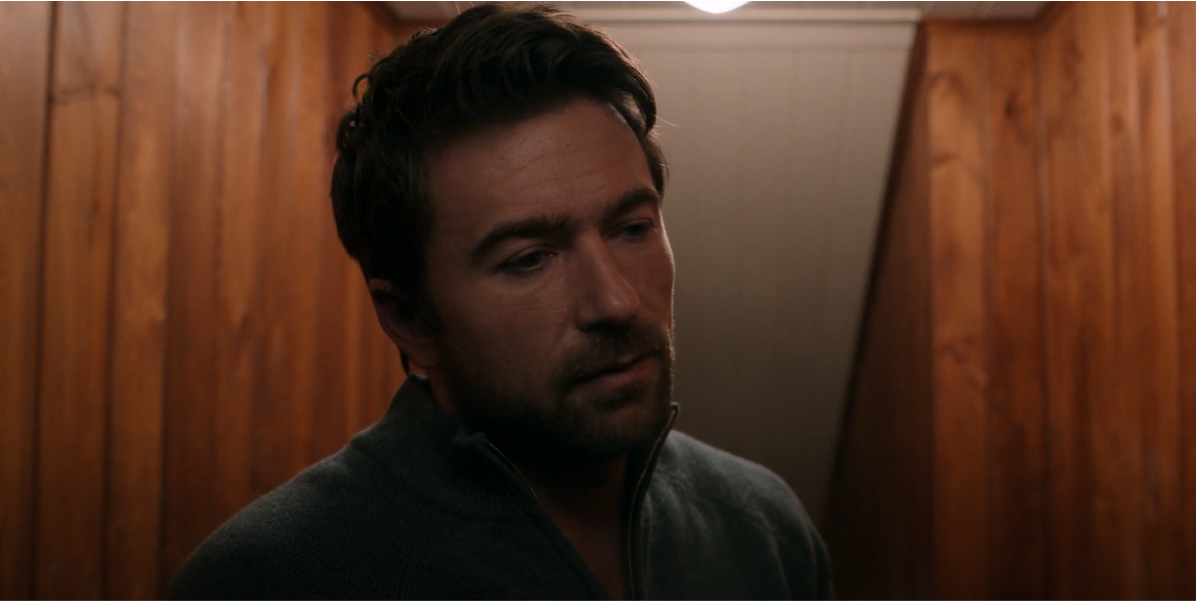
Nina’s sudden arrival the following night briefly puts the entire plan into disarray, but both she and Millie ultimately join hands to defeat Andrew for good. Notably, this brief partnership unfolds an important layer in Nina’s decision to bait Millie. While it is obvious that she is among the most desperate people who could take this job, she is also the fiercest and has a known history of protecting women from abuse. Thus, one possible interpretation of Nina’s gray actions is that they are her subconscious attempt to have someone bring Andrew to justice for her. Millie steps into that role with complete confidence, pushing Andrew off the staircase and to his death in the movie’s climactic sequence.
How Did the Police Officer Know to Help Nina? Why Does She Let Nina Go?
While Andrew technically dies due to the fall, there are enough gashes and wounds on his body to paint a clear picture of what transpired. The same goes for Millie and Nina, who fought tooth and nail to survive the night. Because of that, Nina’s idea of claiming that Andrew fell while changing a light bulb is almost comically far-fetched, but almost intentionally so. Although Millie realizes that no one can be expected to buy into such an obvious lie, she also understands that this is Nina’s method of redeeming herself after nearly sacrificing Millie’s life for her own freedom. Still, this is not exactly an admission of guilt either, and Nina puts all of her faith in making the story as convincing to the police as possible, while Millie escapes the scene.
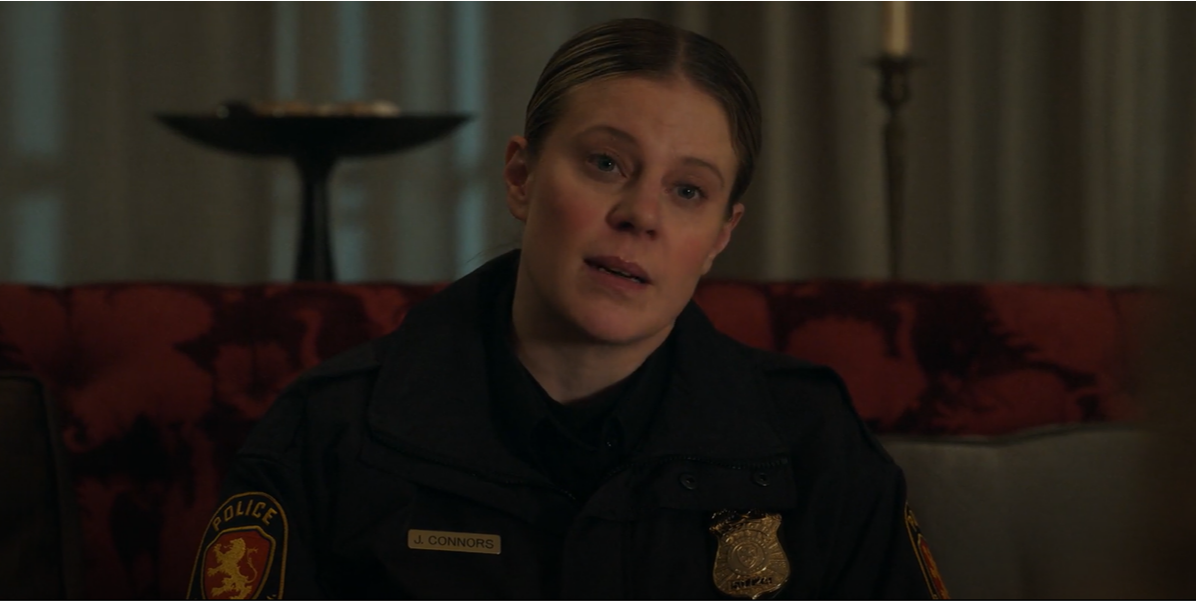
As fate would have it, the police officer charged with investigating Andrew’s death is Jessica Connors, who introduces herself as the sister of Kathleen, Andrew’s former fiancée. Given that, Connors has first-hand knowledge of Andrew’s monstrous nature, making her genuinely sympathetic to Nina. Although it is obvious to both Nina and Connors that the scene is actually murder, and not an accident, they form a silent, mutual understanding, and the investigation stops right there. With this, Nina is truly liberated for the first time, along with Millie, who later shows up at Andrew’s funeral. While the duo doesn’t exchange many words in the scene, there is, once again, a silent recognition of their kindred journey through hell, one they are free from at last.
How Does Andrew Die in the Book? Why Did the Filmmakers Change the Ending?
While in the movie, Andrew dies after a brutal showdown with Nina and Millie, the book version of the story features a very different conclusion for his character. Both storylines are largely aligned up to the point that Millie seizes control of the attic, but from there, the movie diverges significantly. In the book, Andrew ultimately dies of dehydration, as Millie leaves him with no food or water during his imprisonment. Nina re-opens the attic only after her husband’s death, and the story shifts back to her coming clean to Millie. In both iterations of the narrative, Nina advises her former house manager to flee the scene, while she faces the brunt of the investigation.

Another major difference between the film and the book is in the aftermath of Andrew’s death, as the book’s version of Officer J. Connnors is an older man. Furthermore, it is not his sister, but his daughter, who was engaged to Andrew, but beyond that, the plot points remain largely the same. Andrew’s death is ruled an accident, and once the dust settles, Millie and Nina reconnect to continue their campaign to save women from their abusive partners. The movie has a similar ending, with the final scene showing Millie getting hired by a woman who’s friends with Nina. A close-up of the woman’s hand suggests that she, too, is abused by her partner, and Millie takes it upon herself to liberate the woman as well, no matter the method.

While the creators have not given a specific explanation for the changes between the book and the movie, the augmentations are much more suited to the screen and do add an extra layer to the narrative. Writer Freida McFadden, who penned the book, also called the film’s ending better than the original, which shows how it is a step in the right direction. While talking to People, she explained, “I just thought the end was so exciting, and it really made the whole thing go out with a bang.” The decision to bring Andrew out of the attic one last night not only heightens the dramatic tensions on screen but also gives Nina a chance to confront Andrew for the last time, something that was missing in the original narrative. Thus, the altered ending in the movie only serves to amplify, and not detract from, the story’s deeper meaning.


You must be logged in to post a comment.