
 Abhiroop Das
Directed by Janus Metz Pedersen, Netflix’s ‘Unabomber’ dramatizes the story behind one of the longest and most notorious manhunts in the homeland’s history, that of Ted Kaczynski, AKA the Unabomber. Between 1978 and 1995, Ted used mail bombs to claim three lives and injure 23 others, but that’s not the only detail about him that has often been the subject of discourse. Before he was known as a killer, Ted was a professor known for his prowess with mathematics. The psychological thriller movie simultaneously shines a light on Ted’s college years and, specifically, on how an encounter with Professor Henry Murray alters the course of his life. SPOILERS AHEAD.
Unabomber Plot Synopsis
‘Unabomber’ begins with Thomas J Mosser finding a mysterious package in his mail, opening which triggers a bomb explosion that instantly takes his life. This marks the second killing by the infamous Unabomber, known to have injured dozens of people with his homemade explosive devices over a span of more than 17 years. Shortly thereafter, all the top newspapers publish the Unabomber’s manifesto, where he seems to declare a lone war against the industrial age. As the FBI struggles to piece the mystery together, one of the agents, Joanne Miller, suggests that their current profile is outdated and that they need to start a fresh search, this time focusing on academics and highly trained individuals.

Parallel to the late-stage investigation, we get a look at the early years of Ted Kaczynski, a prodigy who has already made his way into Harvard University at the age of 16. The class that truly captures his attention, however, is that of Professor Henry Murray, a psychologist famous for co-creating the Thematic Apperception Test. When Henry talks about a small debating experiment that he is about to run, Ted is among the most passionate applicants, but his first time debating philosophy with a mysterious Mr. C turns out to be disastrous. Very soon, however, Ted begins to learn the art of argumentation and grows increasingly aggressive along the way. Despite his math grades taking a nosedive, Ted seems more interested in joining a clique of intellectuals, spending his days philosophizing.
In the present timeline, Joanne hears of a report of someone claiming to know the Unabomber, and her follow-up ultimately leads her to Ted Kaczynski. However, without any hard evidence, she is forced to drop the investigation, only for the bomber to strike again, not many days later. In the flashbacks, we see Ted become increasingly obsessed and yet agitated with the debates, but that changes when he discovers that Henry and team have been recording their private conversations to use against him during debates. That’s not all, as this entire time, Henry has been conducting experiments on how to subdue people like Ted, rather than help them grow. Feeling betrayed, Ted begins preparing for revenge, while in the present, Joanne decides to continue her investigation on her own.
Unabomber Ending Explained: Why Does Ted Kaczynski Become a Killer?
‘Unabomber’ ends with Ted Kaczynski leaving Henry Murray’s experiment and taking his first steps on the path that eventually turns him into the infamous Unabomber. Having utterly demolished Mr. C in debates, Ted finds his final, ultimate challenger in the form of Henry himself, who enters the conversation with the sole goal of making his protégé submit. Given that the entire experiment was created to devise ways to suppress rebellious and anti-authoritarian thought, Ted makes for a perfect candidate of sorts, knowing who he eventually becomes. While his grievances with the world and its people are largely external in nature, Henry decides to take the conversation inwards, reflecting on Ted’s drastic transformation over the weeks, as if handing out a report card.
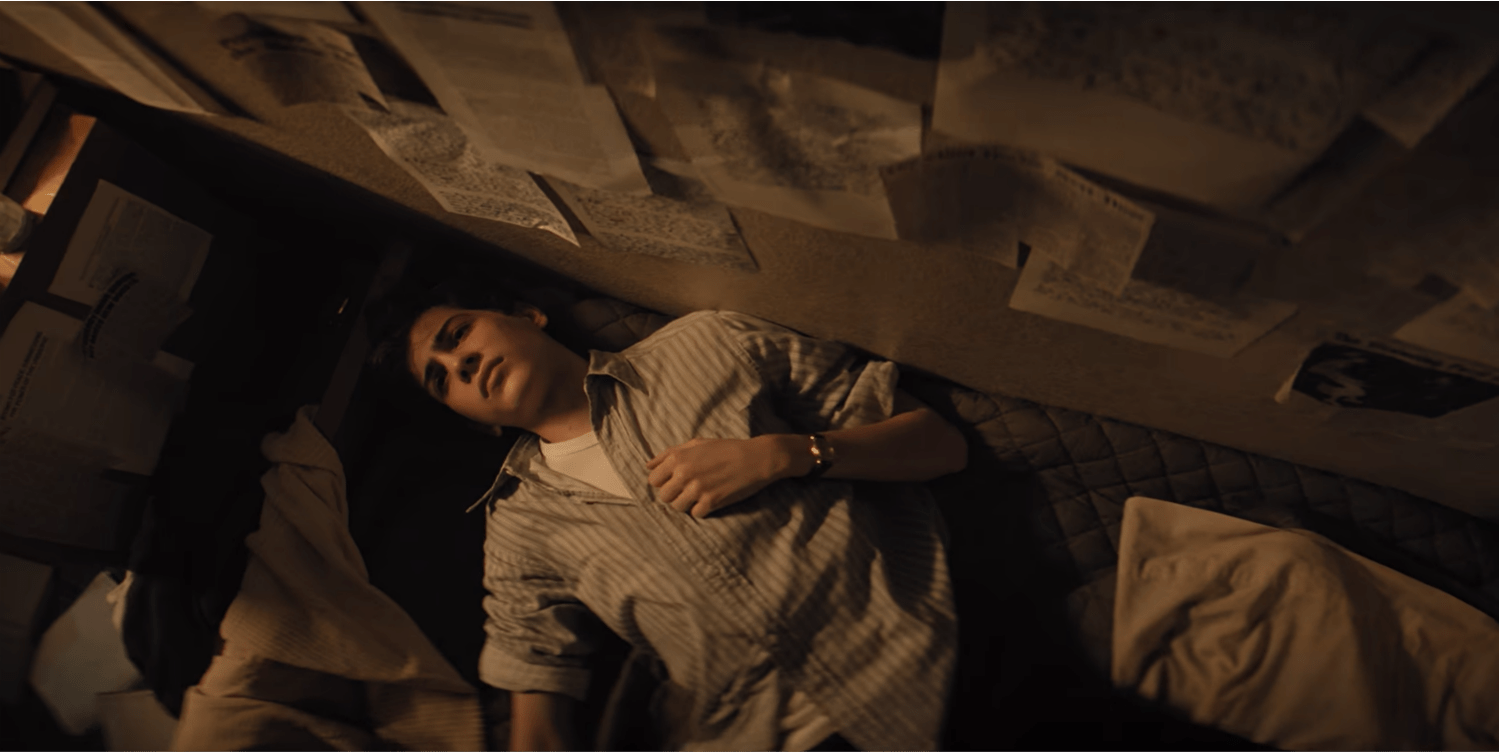
Where Ted began the experiment as a timid young man with underdeveloped ideas, he leaves the project as a much colder man, who has realized that the key to winning the argument isn’t necessarily having a better argument, but simply presenting it with greater conviction. While for the most part that meant putting pressure on the opponent in the immediate moment, Henry and Ted’s debate seems more like a chess match that has been a long time in the making. When Henry presents Ted’s unusual ideas and feelings of isolation as symptoms of schizophrenia, he is ironically trying to force Ted into a more general context, treating his asociality itself as the result of a psychosocial phenomenon that is outside of his control. Henry’s plan to let Ted restrict himself, however, backfires spectacularly.
All the points Henry makes about Ted’s inability to convince society with words have the opposite of the desired effect, as some part of Ted determines that conversations are meaningless in the face of a larger, systemic problem. In a world where everyone seems to antagonize him, Ted gives in to his worst, most violent fantasies, and it all begins by rejecting modern society altogether. The very idea of debate, here a stand-in for civilized discourse, seems to have been corrupted in Ted’s mind, and all that’s left are cold, violent actions, resulting in the creation of one of the most notorious lone-wolf terrorists in history.
Who Wrote the Letters to Henry? What is in the Box?
The letters of praise that seem to be Henry’s driving motivation for the research are ultimately revealed to be fakes created by none other than Ted, all in order to toy with the professor. In essence, this is a callback to when Henry claimed that Ted is desperate for approval from the so-called real thinkers, which can also be interpreted as Henry projecting his own insecurities. This is illustrated across every detail of how he is depicted in the story, starting with the fact that this entire elaborate experiment isn’t his brainchild to begin with. The movie ends by suggesting that Henry’s work is a part of a larger CIA project meant to manipulate, subdue, and control others. To that end, it almost serves as a mockery of Henry’s original professional interests, which were meant to save lives and improve mental health.
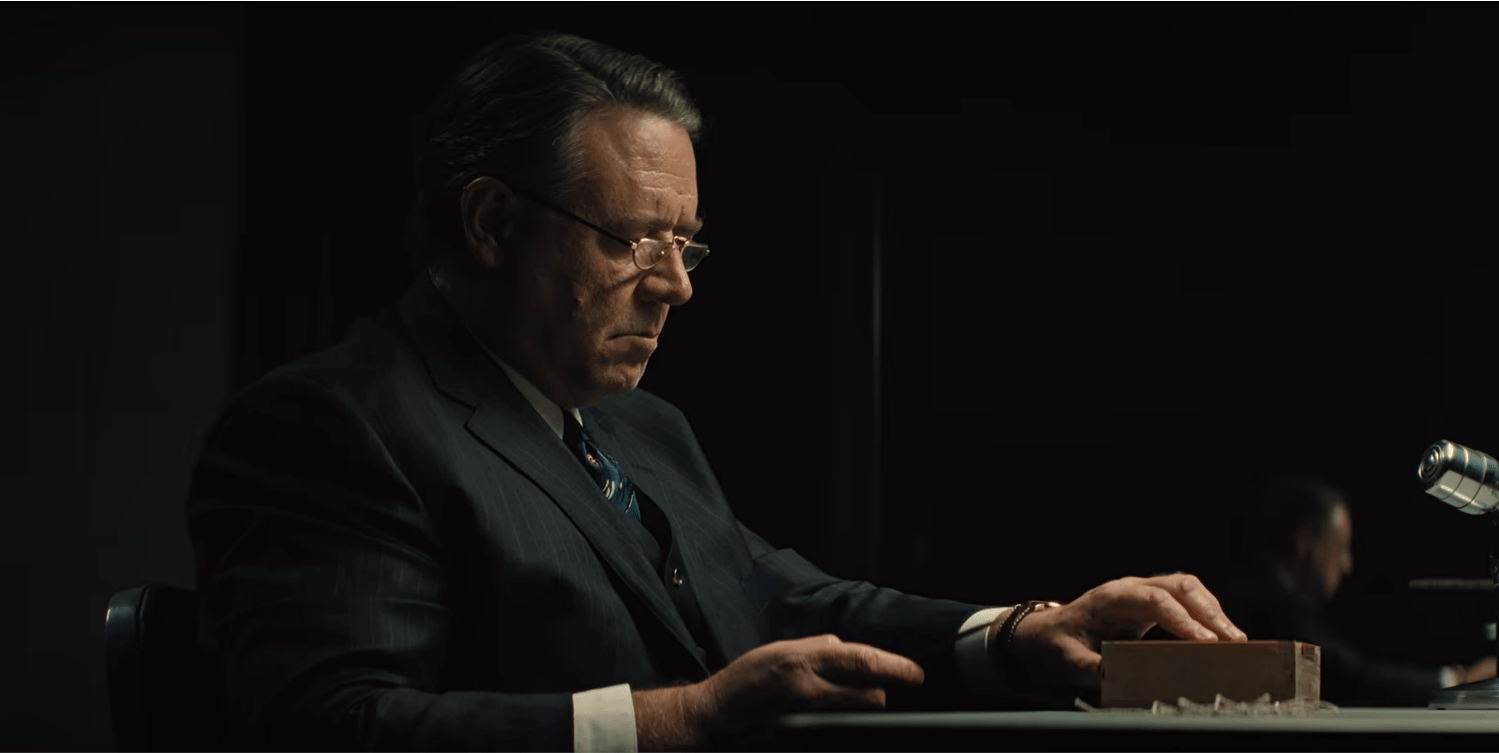
The Thematic Apperception Test, co-created by Christiana Morgan and Henry, is primarily concerned not with analyzing a particular situation, but one’s perception of, and reaction to it. The debate experiments then twist and contort the original meaning of Henry and Morgan’s research by presenting themselves as a discussion of many ideas, only to secretly be condensed down to a single, thought-subduing exercise. Instead of learning more about a person’s mind for their betterment, Henry’s research now relies on making them homogenous, such that he no longer even sticks around for the experiments, and only reads the data. Faced with his own downfall, Henry can do nothing but seek approval and justifications from the letters of praise by his peers, which turns out to be Ted’s return gift of sorts.
More than the true nature of the experiments, it’s the invasion of privacy that hurts Ted the most in this exchange. It is here that he learns how one’s deepest feelings can be weaponized when brought to the forefront, and by doing the same with Henry, he ultimately wins the mind war. Thus, the anticipation built around the parcel he gifts to Henry is actually a misdirection, as it doesn’t contain a literal bomb, but rather, an annotated copy of ‘Moby-Dick.’ Every single highlighted passage seems to be a personal attack on Henry and how far his research and commitments have strayed from his original goal. With this, the film establishes that Ted wasn’t the only one to turn to the dark, as the ingredients were put into place decades earlier, reiterating a cycle of sorts.
How is Ted Caught? Why Does Joanne Cry at the End?
While Henry may have been projecting when he declared that Ted yearns for recognition and approval, that diagnosis isn’t entirely untrue either. Despite understanding how pouring one’s thoughts out can potentially lead to disaster, Ted finds himself unable to resist the urge as he writes down his manifesto, titled ‘Industrial Society and Its Future,’ and mails it to every major newspaper. It is ultimately this very manifesto that forces the FBI to entirely restart its search with a new profile, that of an intelligent aggrieved individual who seeks to cut ties with the industrial age. Still, the person who ultimately leads the authorities directly to Ted’s house is none other than his own brother David.

Linda Patrik, David’s wife, is the first to notice the similarities between the writing style in the manifesto and the written material left behind by Ted at his family’s house. While it is enough to raise suspicion and alert the police, David rejects the possibility that his brother may be the Unabomber. However, it is Joanne who correctly figures out that David’s denial is not based on facts as much as it is based on emotions. Even when no one at the bureau believes her, Joanne goes on a solo mission to Ted’s shed in the wilderness, only to return to David’s house and find the definitive piece of evidence: an early draft of the manifesto. Subsequently, the FBI team makes its way to Ted’s cabin and discovers a bomb in the making, and one of the longest manhunts in history is brought to rest at last.
As Ted is brought to justice and the FBI celebrates, Joanne returns to her office and begins to cry, seemingly overwhelmed with emotion. Describing it as just that, however, undermines the layers of the sequence, as it points to her broader frustrations with the system she is part of. Throughout the movie, everyone at the bureau suppresses their own opinions in favor of less developed theories, only for Joanne to solve the crime all by herself. Even at the very end, she doesn’t get the recognition she deserves, which leaves her in a spot eerily similar to that of Ted, at least in a thematic sense. Though both characters realize that something is deeply wrong with the world they live in, they diverge in how they fight back: Joanne fights from within the system while Ted decides to burn it all to the ground.
Read More: Where is Unabomber Ted Kaczynski Now?


You must be logged in to post a comment.