
 Abhiroop Das
Helmed by Suzi Ewing, ’10×10′ follows a flower shop owner whose life is swept up in chaos and horror when a man kidnaps her for seemingly no reason. After stalking Cathy Noland for days, the man picks the right moment to attack her in broad daylight, before taking her to a secret, 10-by-10-foot cell, which is painted all white and soundproofed. When Cathy tries to object and resist, she is only met with a strange line of questioning, one that delves into a past that may or may not be real. By the end of this thriller drama movie, the line between good and bad blurs steadily as we learn that both characters are hiding something. As Cathy and the man enter into a complex tug of war for control, the reality of what transpires between them leaves the whole narrative overturned. SPOILERS AHEAD.
10×10 Plot Synopsis
’10×10′ begins with a glimpse into the life of Cathy Noland, a seemingly ordinary florist-to-be, who for some reason is being stalked by a mysterious man. As she does her daily rounds through her favorite diner and then the gym’s yoga club, the man keeps close, carefully monitoring everything she does. Completely oblivious to all of this, Cathy exits the gym and makes her way back to the car, only to be ambushed by the man. Despite her best attempts, Cathy is ultimately overpowered and stuffed into a car. From there, the man drives for several miles, narrowly avoiding an encounter with the police, before making his way to his lavish, but desolate, mansion. There, a special, 10×10 cell made of soundproof material is waiting for Cathy, and she is effectively caged in without a single explanation.

As the hours go by and Cathy’s screams go silent, the mysterious man returns with a curious set of questions. For the most part, he only has one thing to ask of her: What is her real name? And despite her repeatedly replying with the same answer, Cathy, the man refuses to budge from his point, convinced that she leads a secret lifestyle to earn huge sums of money. When the man is outside the cell and distracted, Cathy partially frees herself and knocks the man out, nearly freeing herself before he subdues her with a gun. Not long after, the man’s house helper, Alondra, walks into the house, calling him Lewis. While he manages to get her out of the house in time, in the background, Cathy carries out a plan of her own.

As it turns out, Cathy managed to grab hold of her cell phone during the fight earlier and later tried to call the cops, to no avail. Meanwhile, the man spends hours looping through videos of his wife, Alana, and his daughter, Summer, as well as old news footage about a hospital on trial for murder. After suddenly remembering Cathy’s phone, he manages to grab hold of it moments before she is connected to the police. However, Cathy is not one to go out without a fight. She manages to chip away at one of the cell’s tiles and uses its sharp edges to free herself and later stab the man. In the middle of their all-out brawl, Lewis’ daughter and Alondra appear out of nowhere, prompting Cathy to grab a gun and shoot the latter in the head. Realizing that her very identity is at stake, Cathy promises to leave no stone unturned in her attempt to not just escape, but bury the truth.
10×10 Ending: Why Does Lewis Kidnap Cathy? Is She the Killer?
At the end of ’10×10,’ it is revealed that Lewis kidnaps Cathy as revenge for killing his wife, Alana. This twist comes in tandem with a number of other developments, all concerning Cathy’s elusive past and identity. In reality, her real name is not even Cathy, but Natalie-Ann Stevens, and she turns out to be a former nurse living under her dead sister’s identity. Natalie was born in a small town and, along with her sister, was a devout follower of a church. The turning point in her life, however, came when her father abandoned the family and escaped with one of her school friends, presumably having groomed and abused her. This event creates an irreparable rift in Natalie’s psyche, which, when combined with her strong value system, leads her to a life of darkness. Still, it isn’t until Cathy’s suicide that things go completely off the rails for Natalie.

It is implied that Natalie turned into a serial killer sometime after her father’s exit, specifically targeting people she deems sinful. As a nurse, she often gets to hear people’s darkest secrets, which is how she decides whom to kill, typically via poison. Given that all of her known targets are involved in some form of infidelity, it is apparent that this is Natalie’s attempt to vicariously take revenge on her father. That modus operandi, however, changes when three of her murders are brought into the limelight, though under the accusations of patient negligence by the hospital. With the discreet nature of her poisons, the hospital, and by extension, Natalie, are found to be innocent, but that still gives her enough of a spook to restart her life in a different city from scratch, this time as Cathy.

From what we know about Cathy’s new lifestyle, it appears that her flower shop is a cover for her real gig: creating and selling poisons. While things appear to be going her way with this new identity, her sudden disappearance is also possibly what leads to her downfall. Robert Lewis, the husband of one of the women she killed, is likely to take notice of her sudden dip. If he wasn’t already suspicious of her before, this ought to have done it, and explains why he went above and beyond to stalk, ambush, and kidnap her. While he seems convinced of Cathy’s culpability, it isn’t until she herself confesses that we learn of what happened. While on paper, Alana seems to have passed away due to an undiagnosed complication, in reality, Cathy killed her after learning of her affair.
Is Cathy Dead or Alive? Will She or Lewis Get Arrested?
’10×10′ ends with a gruesome confrontation between Cathy and Lewis, one that goes through several weapons and settings, before settling in his parking garage. As Cathy prepares to pierce his body with a garden fork, Lewis manages to use the last ounce of his strength to deflect her strike at the last minute, causing her to stumble. Seizing this opportunity, Lewis lands several more hits before escaping the garage just in time before the door malfunctions and swings, hitting Cathy in the torso. While it seems for a moment that the blow is fatal, Cathy can still be heard wincing in pain as the scene moves on, indicating that she is greatly injured but still alive. Furthermore, Lewis’ face shows no hint of Cathy being dead, which further confirms that her story isn’t exactly over.

Notably, the garage door’s role in the narrative is foreshadowed early on, when Lewis tries to get the car in and shut the door, only for it to malfunction and get stuck halfway. It is the same error that causes it to slip during Lewis and Cathy’s fight, adding to the irony of it all. However, with Cathy most likely surviving the blow, a bigger question now remains, one of crime and punishment. As police sirens can be heard in the background, it is likely that the police are here to respond to the sounds of gunshots and violence. As of now, the scene at hand paints a picture of Lewis kidnapping and torturing Cathy, following which she attempts to make her daring escape, and is knocked out in the last minute. While a huge chunk of that retelling is technically true, there is also some game-changing context that highlights Cathy’s culpability in it all.

To begin with, Lewis confirms that every word uttered in the house, and specifically in Cathy’s cell, has been recorded, which means that her confession to the murder of at least three people is now out in the open. Additionally, Alondra’s murder can also be directly traced back to Cathy; thus, even if she makes it out of this exchange alive, she is most likely to be found guilty of serial murder and punished accordingly. However, things are more complicated when it comes to Lewis, as while he is fully guilty of kidnapping and abusing Cathy, there is a chance that Cathy’s confession of her crimes can be declared void under the idea of Lewis coercing her. Still, it is evident that both parties in this case are guilty of many crimes, for which it is likely that both of them will have to pay.
Is Cathy Lying About Lewis’ Wife? Is Summer His Biological Daughter?
One of the many things Cathy reveals in her “mask-off” monologue is that Alana was seemingly cheating on Lewis with an unnamed character, and that Summer is not his biological child. While the story never explicitly confirms or denies her statements, several details help construct an argument for both sides. Immediately after learning of his wife’s alleged infidelity, Lewis begins to look at her tape recordings in an entirely new light. Instead of reminiscing about her as is, he starts paying attention to the more ambiguous details, like her quickly covering her phone when it begins ringing. While these subtle actions are too random to lead to a specific answer, Lewis’s mind is already filled with the possibility of her affair, which causes him to interpret everything with a suspicious gaze.

Amongst the many things recounted about Alana’s death, one detail that stands out is the fact that she had more than usual amounts of alcohol in her body, combined with a drug commonly used by sexual abusers to get a person unconscious. As such, there is a possibility that Alana was actually assaulted shortly before her hospitalization, and Cathy, in a state of delusion, interpreted that as a sin. The fact that Cathy typically kills women, despite being angry at her father, suggests that she, too, is subconsciously repeating the cycle by potentially targeting the survivors of abuse, rather than their perpetrators. While a clear answer about Alana’s mystery doesn’t exist, the fact remains that Cathy’s actions are driven by her own psychological issues, and not necessarily because of Alana.
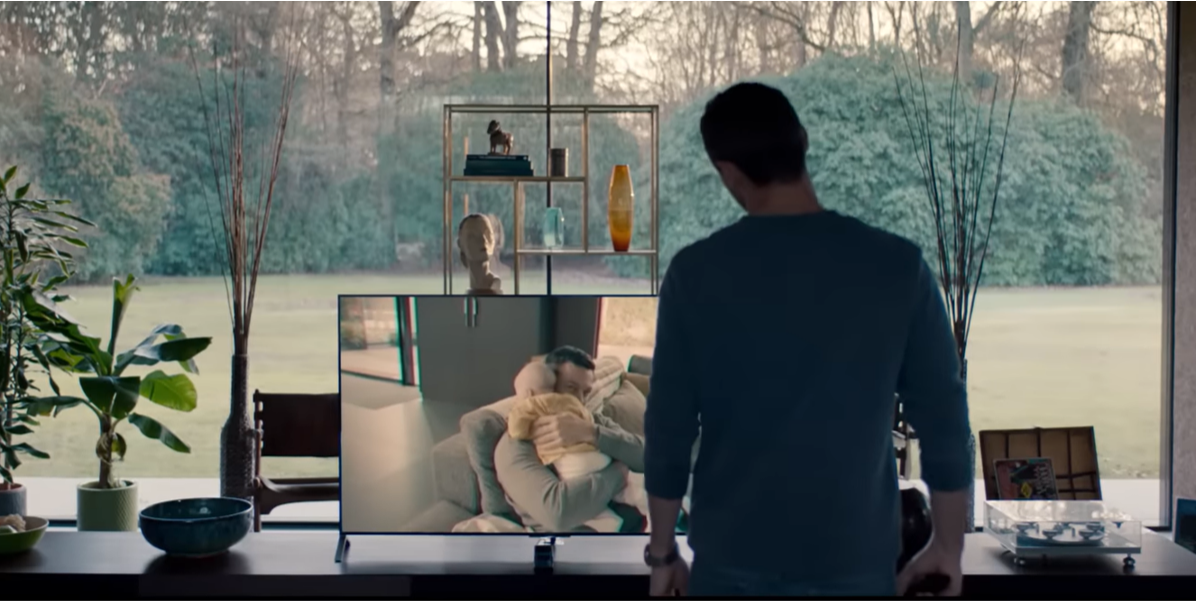
In the same vein as the question of Alana’s infidelity being secondary to Cathy’s culpability, the question of whether Summer is Lewis’ daughter also doesn’t matter in the grand scheme of things. Even after the seeds of doubt are introduced into his mind by Cathy, Lewis ultimately embraces Summer as his daughter, showing no difference before or after the serial killer’s claims. For Lewis, familial bonds are forged not necessarily by blood but by the love people have for each other, and Cathy’s words are not powerful enough to shatter that. While her traumatic past is a large factor behind her present actions, it doesn’t excuse anything she does, either, and the same holds true for Lewis and his kidnapping plan. In the end, Summer is perhaps the one who is most viscerally affected by the unfolding of this tragedy, which serves as a grim reminder of how the cycle of vengeance and violence perpetuates.
Read More: Baki Dou: True Story of Miyamoto Musashi, Explained


You must be logged in to post a comment.