
 Abhiroop Das
Directed by Ana Lorena Pérez Ríos, Netflix’s ‘A Father’s Miracle,’ or ‘La celda de los milagros,’ is a Mexican drama movie that follows Hector, a father with developmental difficulties whose life turns upside down after a false conviction. Separated from his daughter and forced into prison, Hector finds himself in a completely unfamiliar world, one where everyone seems to be unfriendly towards him. At the heart of it all is the accidental death of the local police captain’s daughter, for which Hector is wrongfully found guilty. Still, with a fake narrative mounting against him, Hector has no choice but to sit back and pray for a miracle. However, his daughter and loved ones aren’t ones to give up, and as their combined efforts give way to a tug of war with the corrupt higher-ups, the possibility of justice for Hector begins to emerge.
Hector is an Invented Character With Vague Parallels to Two Wrongful Conviction Cases in Real Life
Hector is a fictional character created by Patricio Saiz specifically for ‘A Father’s Miracle.’ The basis for his character comes from the Korean movie ‘7-beon-bang-ui seon-mul’ or ‘Miracle in Cell No. 7,’ written by Lee Hwan-kyung, which is also the original source material for the Mexican film. Notably, Hwan-kyung was himself inspired by the real-life story of Jeong Won-seop, who was falsely convicted of the sexual assault and murder of a 9-year-old girl in September of 1972, and later exonerated in November of 2008.

On September 27, 1972, the daughter of a police chief in South Korea’s Chuncheon-si city was found dead. Police soon arrested Jeong, who was 34 at that time, and ran the comic-book shop where she was last known to have been. Jeong was reportedly tortured into giving a false confession, and while he later denied the charge in trial, the court ultimately sentenced him to prison. After getting out on parole in December 1987, fifteen years after the incident, Jeong and his family began reaching out to authorities and filing petitions, but to no avail. Ultimately, it was his petition to the Truth and Reconciliation Commission of Korea in 2005 that led to a retrial, following which he was fully exonerated on November 28, 2008. While Hwan-kyung was inspired by a real incident, his character, Lee Yong-gu, still exists within a fictional context, and the same holds true for Lee’s subsequent renditions, including Hector.
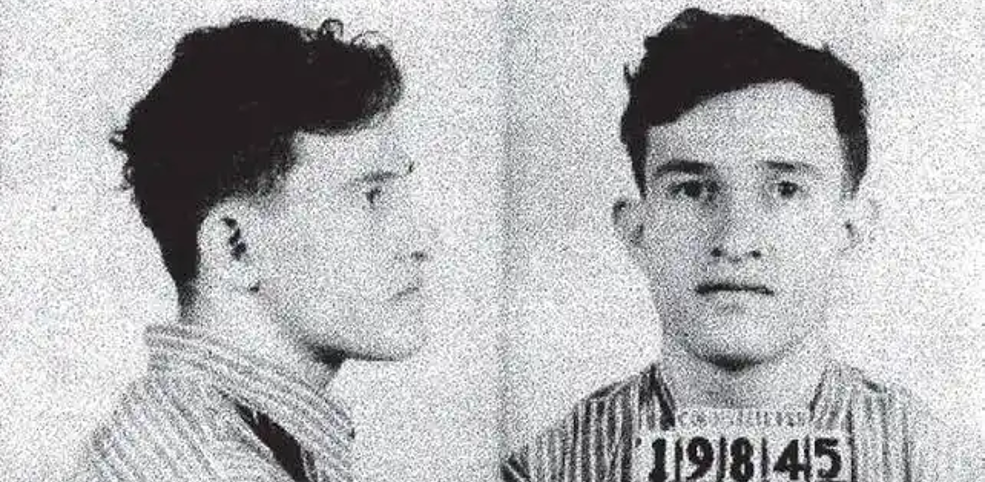
Another real-life case that may have partially influenced the story of ‘A Father’s Miracle’ is the wrongful conviction and execution of Joe Arridy. On August 26, 1936, Arridy, who had a general learning disability, was arrested under suspicion of desertion. Following this, he was reportedly coerced into confessing to the sexual assault and murder of Dorothy Drain, which led to his wrongful conviction and death sentence. Arridy was 23 years old when he was executed on January 6, 1939, and it wasn’t until 2011, more than 7 decades after his death, that he received an unconditional posthumous pardon by the governor of Colorado. While there are some loose parallels between Arridy’s case and Hector’s story, particularly in light of the exploitation of their respective neurological conditions, the creators have not confirmed any such linkages as of writing.
Hector’s Journey With Learning Disability is Central to A Father’s Miracle
While ‘A Father’s Miracle’ doesn’t specify the exact nature of Hector’s neurological disorder, his on-screen depiction is more consistent with general learning disability rather than autism. Many of the common signs of general learning disability, also known as intellectual disability, can be found in Hector’s characterization, such as his limited speech, developmental difficulties, and what has been described as a continued childlike behavior. In an interview with El Informador, actor Omar Chaparro, who plays Hector in the movie, also referred to his character as a childlike man. He further added that Hector’s medical conditions do not affect his capacity for kindness and love, especially when it comes to his daughter, Alma.

In ‘A Father’s Miracle,’ Hector’s learning disability is portrayed with utmost sensitivity from the creators’ end, which can also be seen in how his character arc unfolds. While his innocence is taken advantage of by nefarious characters such as Captain Aviles, Hector’s fellow inmates soon take notice of how he is a good person who has been manipulated by the system. Specifically, one of the inmates, Tiger, is the first to point out that Hector may have been falsely convicted and that he needs a proper support system. As such, while Hector may be an invented character, he provides a stark lens into society’s relationship with people who have learning disabilities.


You must be logged in to post a comment.