
 Abhiroop Das
Helmed by Daisuke Mataga and based on Hideaki Sorachi’s debut manga, Netflix’s ‘Dandelion’ is a comedy anime series that delves into a fantastical world where angels are tasked with locating wandering spirits on Earth and sending them back to the afterlife. While the job is supposed to be mechanical and emotionless in nature, operatives Tetsuo Tanba and Misaki Kurogane of the Dandelion Squad can’t help but empathize with these spirits. More often than not, these entities harbor regrets about the lives they led, and though Tetsuo and team believe in giving them closure before calling it a day, the system disagrees. When a high-level operative named Masaki is tasked with monitoring the squad’s actions, the supernatural series turns into a deeper inquiry into what it means to be a human, in life and in death. SPOILERS AHEAD.
Dandelion Plot Recap
‘Dandelion’ begins by introducing us to the world of angels, which only interacts with the human realm when some wayward spirits find their way back home. These entities, known as earthbound spirits, are sent back to the netherworld by angels who form the send-off division. Our protagonists, Tetsuo and Misaki, are both part of the Dandelion Squad and specialize not in solving cases but in tagging along with the spirits and helping them find closure. However, because of this, their performance rate takes a sharp dip, prompting a meeting with the Angel Federation’s higher-ups. Daigoro, the leader of the board, tasks his youngest son, Masaki, with supervising the Dandelion Squad and improving their efficiency. Though he develops a Proto AI to do precisely that, each new day brings him closer to understanding their perspective.
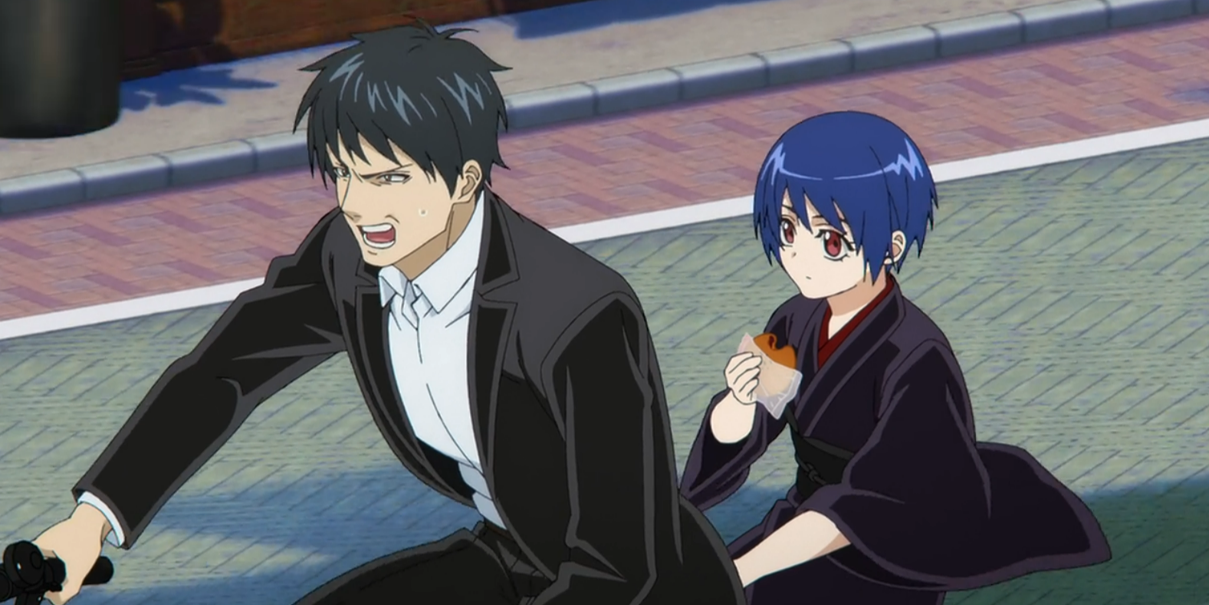
Across their journeys, the trio meets with a number of eccentric spirits, all of whom have a rather sophisticated reason for their escape. One wishes to bid his partner goodbye, while another desires to have a boxing match of his dreams, even if it means possessing a dead kangaroo for the part. At first, Masaki tries to pressure Tetsuo and Misaki into giving such spirits a quick passing, but before long, he too joins them in their campaign to bring forth nicer endings for the dead. During one such mission, they encounter a scientist who has successfully created a machine that separates the soul from the body. However, after turning himself into a soul and botching the machine, he is rendered helpless. Luckily, Masaki, now on board with the squad’s shenanigans, helps him fix the machine and return to the human world.
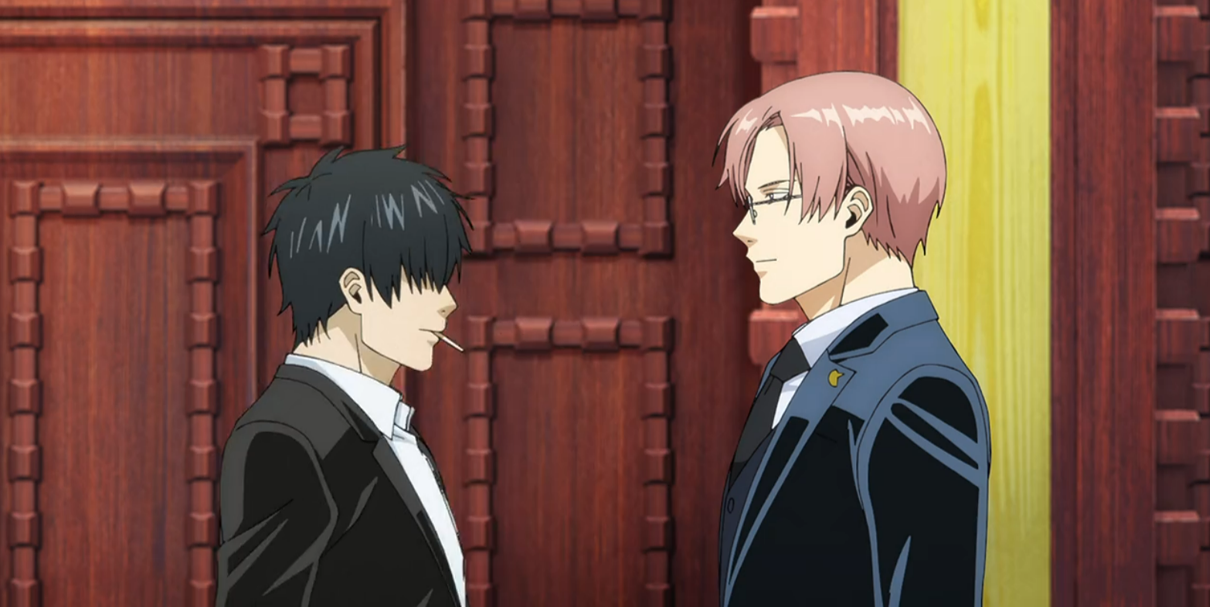
Although the Dandelion Squad is successful in giving closure to several spirits, their efficiency remains only a fraction of what other squads achieve. Desperate to hit the required quota, Masaki engineers an AI bot named Proto, which can take down several spirits in one go, causing rifts between him and the rest of the trio. When their paths ultimately separate, Masaki has no choice but to submit his AI to Daigoro, who orders it to be mass-produced. The send-off department, along with Tetsuo and Misaki, is soon disbanded, and with the AI wiping out basically all earthbound spirits in record time, the system crashes. The purification device breaks down after reaching its capacity, and as a result, thousands of vengeful spirits descend back to Earth. With all Protos being defeated, only the Dandelion Squad remains capable of dealing with the catastrophe.
Dandelion Ending: Who Was Controlling Daigoro? Is He Back to Normal?
‘Dandelion’ ends with the revelation that Daigoro, leader of the Angel Federation, has been possessed by a vengeful spirit this entire time. Though he is partially responsible for all the cruelty he has inflicted over the years, it’s the literal mass of negative energy building up inside his body that facilitates all of this. It all started decades ago, when Daigoro was still a lower-level executive working in the send-off department. After years of being rebuked and belittled, a part of his spirit broke, rendering him vulnerable to the call of malicious entities. Vengeful spirits, as we know, are the interim product of the spirit-cleansing process, which means that they are stripped of all morality and personhood by default. When a cluster of such spirits found Daigoro, they saw a man hollowed from the inside out, ready to become a vessel for their ultimate goal: to conquer both the angel and human worlds.
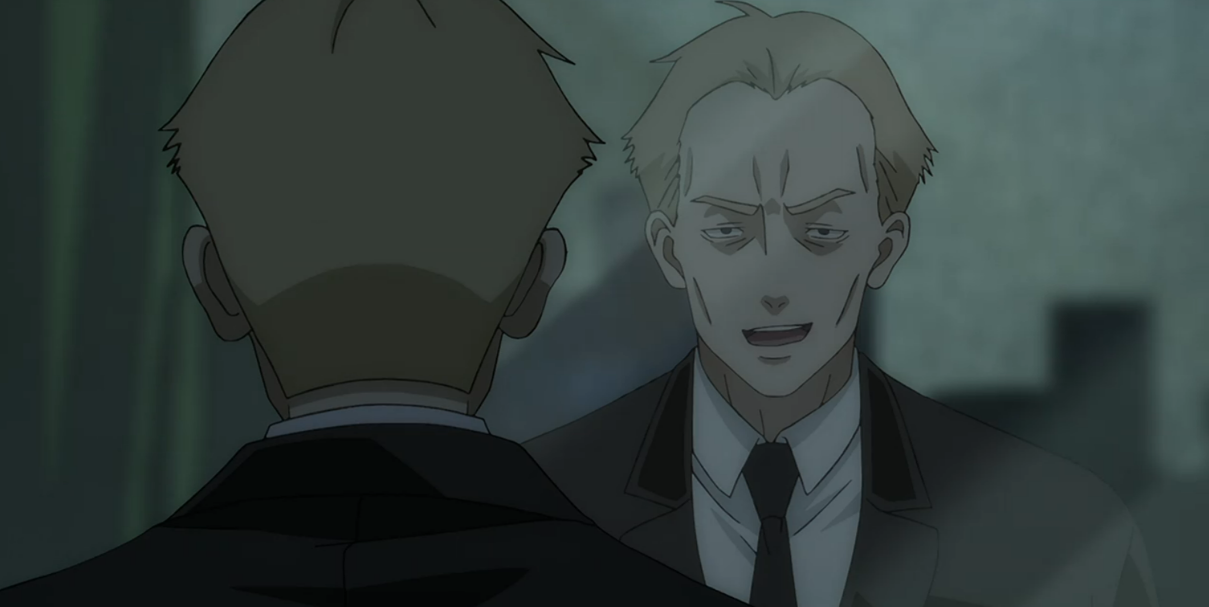
Tetsuo is the first to figure out exactly what is going on with Daigoro and makes an important distinction: the spirits merely enable his worst characteristics. The actual hatred that rests in Daigoro’s heart comes from lived experiences, specifically the workplace abuse he had to endure. With his sense of good being chipped away day after day, he began to replace it with thoughts of evil, and the vengeful spirits simply amplified it till they had control. In Masaki’s memories, we see Daigoro as a kind angel and father, who genuinely appreciates his son’s inventions. Following his possession, however, Daigoro makes a complete 180 and begins concocting an elaborate plan to flood the world with dehumanized spirits.
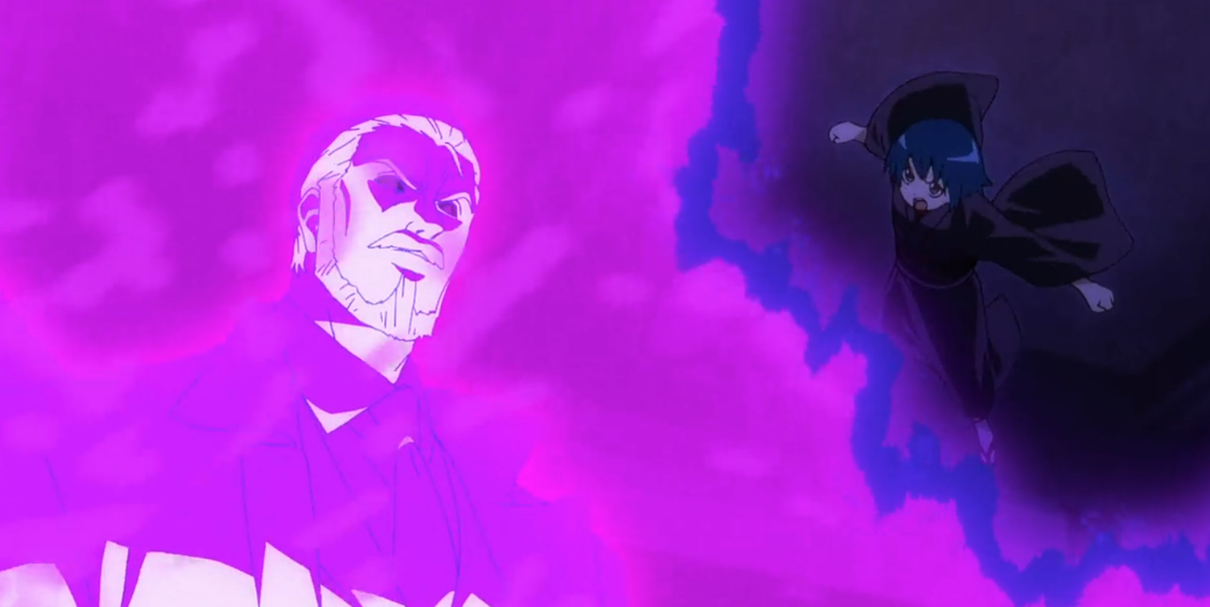
Given the sheer number of spirits that are compressed inside Daigoro, it becomes impossible for Tetsuo, Misaki, and Masaki to beat him by brute force. To that end, Daigoro almost feels like an advanced version of the giant, spirit-infested Proto, which doubles down on the symbolism of being puppeteered. When not even Misaki manages to make a scratch on Daigoro’s body, Masaki realizes that he has to wake his father up from the depths of his soul. Throughout the fight, Daigoro subconsciously reserves his most powerful blows for Tetsuo and Misaki. As such, when Masaki sneaks up from behind and holds his father back, the latter is momentarily paralyzed. That is all Tetsuo needs to land a shot from his pistol, which spares Daigoro and instead targets the spirits within him, purging him of his evil.
What Happens to All the Spirits? Does Tetsuo Live?
With Daigoro returning to his kinder self, the core of the vengeful spirits’ army begins to crack, making the send-off department’s job much easier than before. Though they are vastly outnumbered during the initial bouts, the spirits make the mistake of bundling up together in the hopes of landing bigger attacks. Given how all of the spirits are depersonalized in a laboratory and left to their nefarious whims, it makes sense for them to club together to have a better realized sense of self. That sense becomes crystallized in the form of the giant Proto, who is oddly reminiscent of Proto’s evil mode that Tetsuo and Misaki fight off earlier. This transformation also gives the spirits a material form, effectively rendering them immune to the angels’ bullets, which forces Tetsuo and team to get creative.
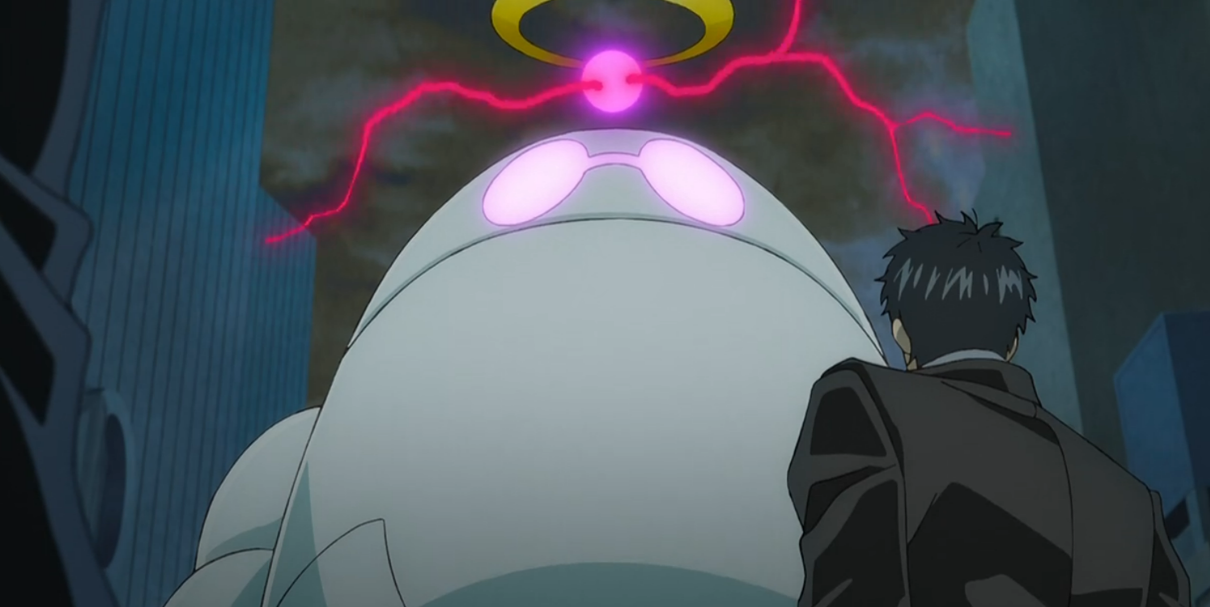
Surprisingly, the ones to come to Tetsuo, Misaki, and Masaki’s rescue are the very spirits they have saved over the years. The Kangaroo man leads the charge against the evil Proto, which hurls several projectiles his way, possibly with the intention of becoming a host. We know that spirits are capable of entering and exiting the bodies of entities that have died recently, and this brute force attack makes for a complete subversion of that rule. Though Misaki is able to dodge most of the blows, it soon becomes clear that they have to target Proto from the inside to beat it for good, and that requires someone making a sacrifice. Luckily, Masaki has an EMP device that is designed to disrupt Proto’s functioning, meaning that Masaki was possibly harboring plans for a rebellion of his own. Instead, it’s Tetsuo who chooses to go into the lion’s den, knowing there’s no other way.
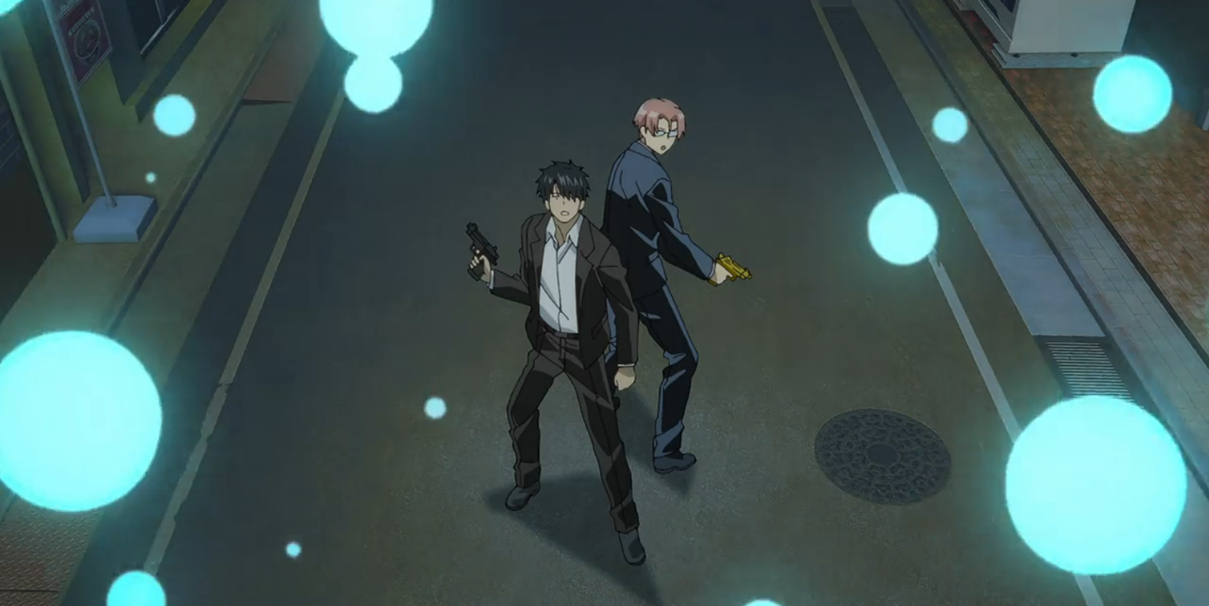
Once inside, Tetsuo is confronted by thousands of vengeful spirits, who grow stronger by feeding on negative emotions. As fate would have it, Tetsuo is the perfect counter for any such ability, as his innate call to do and be good overpowers whatever malice the spirits could gather. Still, with Proto’s labyrinthine structure and offensive capabilities, Tetsuo soon loses his way and ponders sacrificing himself during the blast. However, what comes to his rescue is the peach-shaped glowing keychain that just so happens to fall next to an opening. The keychain has been the symbol of our trio’s friendship from the start, and it is ultimately Tetsuo’s urge to return to his friends that helps him defeat evil Proto, and, by extension, all the spirits housed within.
Is the Dandelion Squad Reinstated? What’s Next For Tetsuo, Misaki, and Masaki?
Though the Dandelion Squad is briefly shut down after the takeover of Proto, the finale brings our group back in full capacity. After returning to his senses, Daigoro wastes little time in reinstating the send-off division, except this time it comes with a twist. While earlier the division was expected to focus on quotas and eliminate as many wandering spirits as possible, their new modus operandi is something closer to what Tetsuo and Misaki have been doing all along. Instead of shooting the earthbound spirits on sight, it appears that the department is now ready to pay attention to learn why the dead have returned in the first place. Often, it’s not because of a malicious reason, but instead to find closure or check up on their family, both of which are something the department can actually help with.
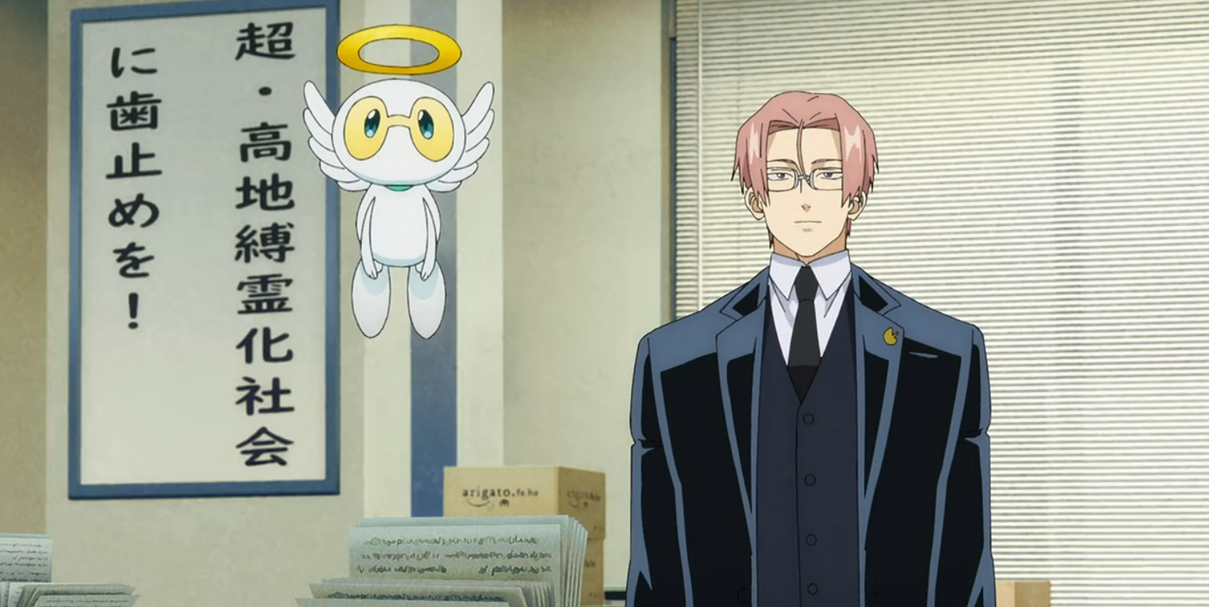
The Dandelion Squad’s manner of closing their cases has one unique effect when it comes to the netherworld ecosystem, in that those spirits don’t turn into vengeful entities. We know that the spirit machine was always intended to play into Daigoro’s plan, and with all of that over, the Angel Federation has likely ditched that process for good. Instead of forcibly extracting all personality and leftover desire from a spirit, the Dandelion Squad opts for a more natural conclusion to their story. A similar process being adopted worldwide, possibly through Masaki’s Proto AI, will likely usher in a new age for the human and angel realms. Though the humans are now aware of the existence of spirits, the federation likely has the ability to wipe out the world’s memory, just as they did with Misaki’s mother. What this presents is a fresh slate for a cooperative existence that hasn’t been tried before.
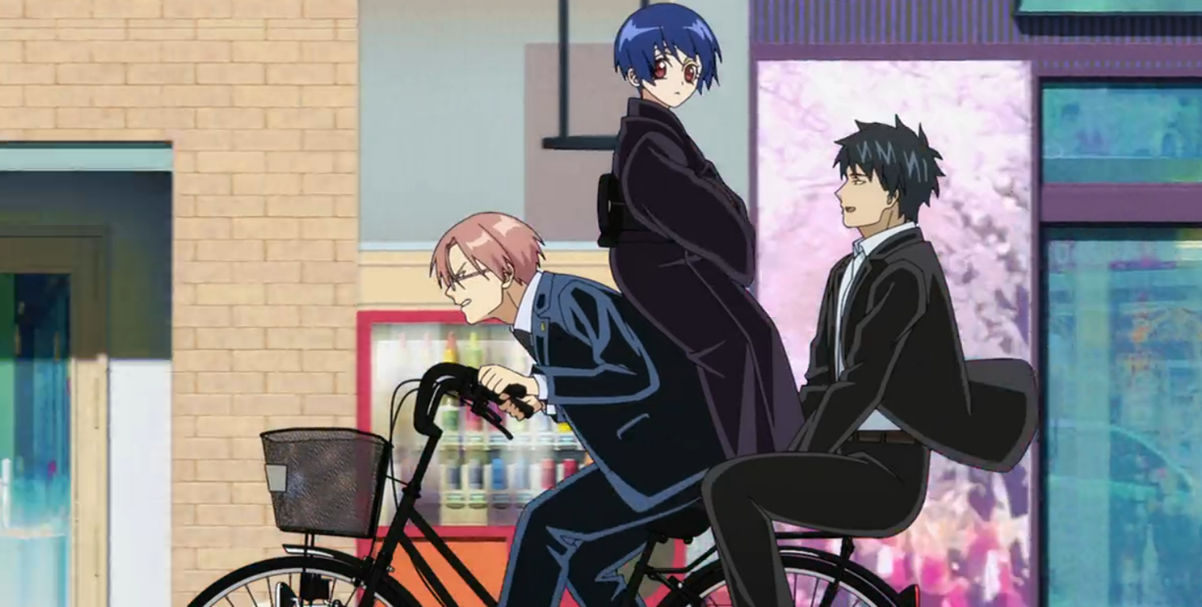
The transformation within the send-off department is perhaps best embodied by Masaki himself, who goes from being a by-the-book operative to truly understanding the spirits he interacts with. Fittingly, the final scene of the season mirrors the first, except this time it’s three people on the cycle, and Masaki doing all the pedaling. Though the bickering between these three friends never stops, Tetsuo correctly points out that Masaki is much happier in this new life, because he gets to give everything his all. When Masaki asks Tetsuo if he is satisfied with life, the latter chooses to keep his answer secret, though it is obvious that it’s a yes. While Tetsuo may not express vulnerabilities all too often, there is nothing he is prouder of than saving Misaki on that fateful day and helping all the spirits since.
Read More: Is Netflix’s Thrash Based on a True Story? Are Hurricane Sharks Real?


You must be logged in to post a comment.