
 Abhiroop Das
Helmed by Gus Van Sant, ‘Dead Man’s Wire’ dramatizes the fateful day of February 8, 1977, when Anthony “Tony” Kiritsis walked into the office of the president of the Meridian Mortgage Company, Richard Hall, and held him hostage. Using an elaborate homemade mechanism that functions as an instant kill switch, Tony took charge of the scene and laid out his grievances and demands. In capturing the true story, the movie gives a peek into the complicated interiority of Tony, as his back is pushed against the wall by the system. As his own shortcomings swoop in to fill in the gaps in his consciousness, Richard Hall, son of the man whom Tony is really after, gets caught up in a world far beyond his control. By the end of this crime thriller movie, the line separating reality and fiction gets about as blurred as the line between the just and the unjust. SPOILERS AHEAD.
Dead Man’s Wire Plot Synopsis
‘Dead Man Wire’ begins on the date of February 8, 1977, with Tony Kiritsis arriving at Meridian Mortgage with a sling around one hand and a long box in the other. Tony has a meeting with his broker, M.L. Hall, but is surprised to learn that the man is on vacation, which makes his son, Richard, the one in charge of the portfolio. Though hesitant at first, Tony agrees to go to Richard’s office and, not a moment after, holds him at gunpoint. With the doors locked and no means to call for help, Tony carefully ties a wire around Richard’s neck before connecting it to his shotgun, creating an amateur dead man’s switch that is sure to kill Richard if he even moves too suddenly. Tony then reveals that all of this is payback for what M.L. Hall has done to him and his property, and to get the full story out, they must contact the police.
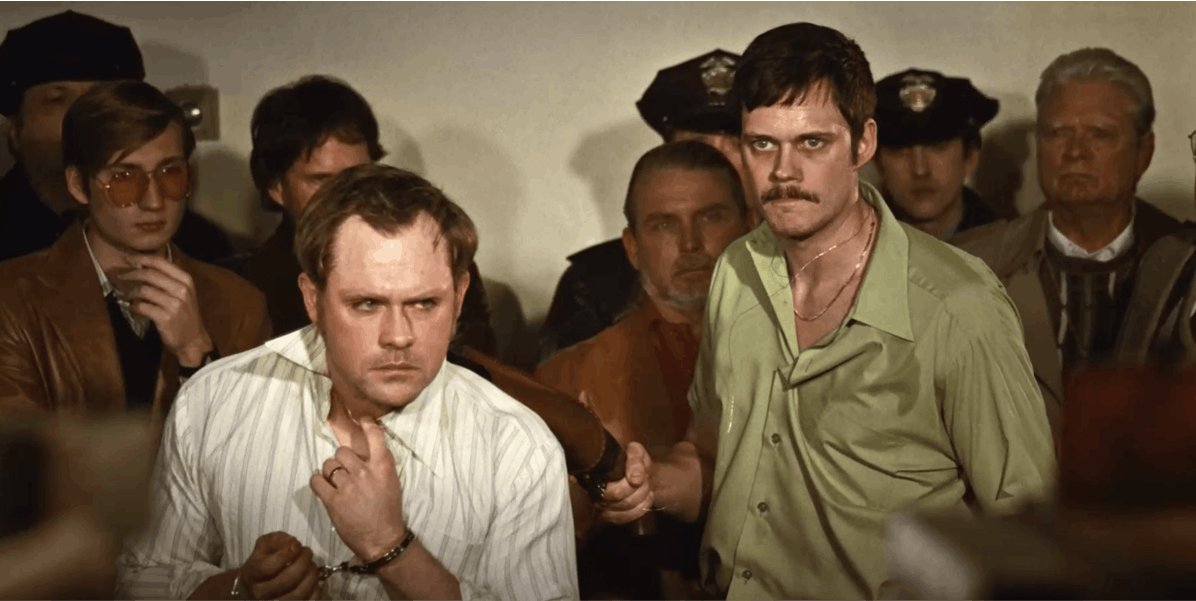
The police station seems wholly incapable of handling an emergency of such nature, and is left with no choice but to give in to Tony’s demands. Confidently, he walks out of the company building and towards Richard’s car, before ultimately choosing a cop’s car instead. With Richard, cuffed as well as wired, driving, Tony asks the entire police entourage to follow him home, attracting the attention of a local journalist. After reaching home, he announces that every door and window is fitted with innumerable explosives, which means that no tricks are welcome. With that out of the way, Tony settles down with Richard by the dining table and begins making his case, ultimately drawing the attention of his favorite radio jockey, DJ Fred Temple.
Tony reveals that he had a piece of land that he wanted to serve as the base for a sprawling mall. However, M.L. Hall chose to short-sell him on the prospects, intentionally taking away his money while also not giving him enough time and resources to pick the pieces back up. Anguished and feeling betrayed, Tony concocts this plan over the course of several weeks, all for a set of goals. In return for Richard’s return, Tony demands a public apology from M.L. Hall, a press conference, as well as compensation and immunity. Though some of the deals do not come through, Tony gets most of what he wanted, including a conference where he frames himself as a national revolutionary. The moment he lets go of Richard and the dead man’s switch, however, he is arrested by the police, with Richard being freed at last.
Dead Man’s Wire Ending: Does Tony Go to Prison? Why is He Found Not Guilty?
At the end of ‘Dead Man’s Wire,’ Tony is arrested, but is found not guilty by reason of a mental disorder. What is intriguing about this conclusion, however, is that it’s not Tony who claims this defense, but his lawyers. In fact, when he is released from custody and surrounded by the press, Tony makes a loud proclamation that he’s not mentally ill and was lucid when orchestrating the kidnapping plot. However, that hardly stifles the court’s ruling, and in the aftermath of the trial, he is sentenced to two years in a mental health facility, much to his vehement disagreement. Here, the movie takes a point break from its dramatization, showing instead real-life snapshots of Tony’s kidnapping of Richard, as well as what happened after the trial.
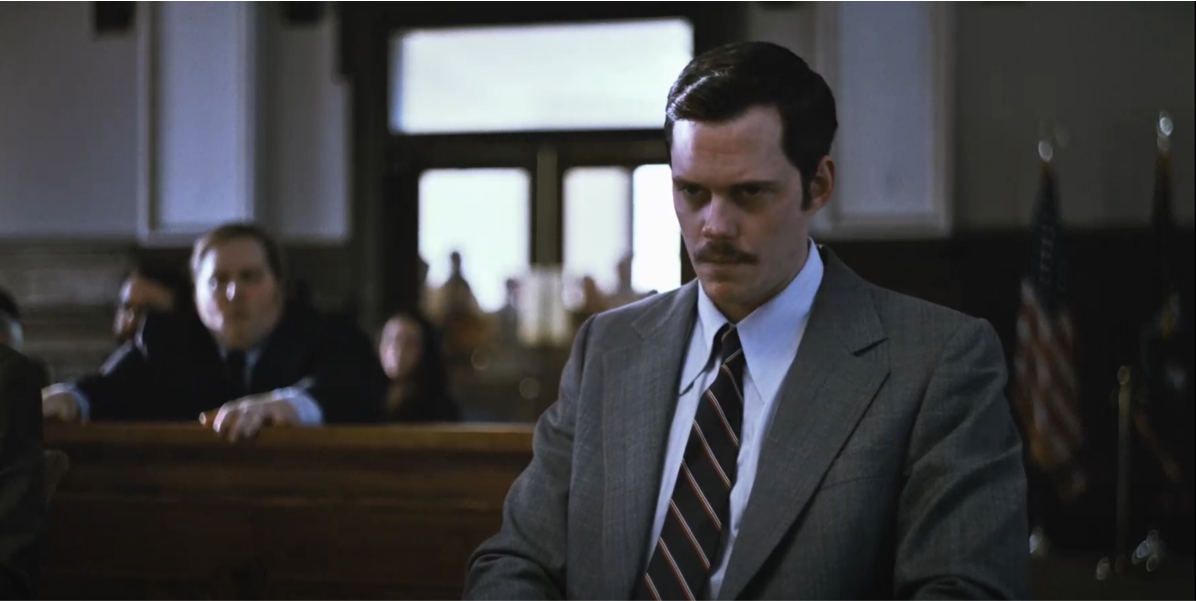
In the epilogue of the movie, we learn that Tony rejected his two-year sentence by not going to the mental health facility. As a result, his sentence was revised, with a full eight years being added to the total. Though we don’t learn much about Tony from this timestamp onwards, it’s sufficient to say that his story merges with reality, both by means of narrative and presentation. That said, everything we learn about Tony’s planning and actions on the fateful day put the court’s verdict into an internal doubt. Notably, he isn’t the only person claiming that his actions were unobscured. On the contrary, the FBI’s lead profiler also makes the same assessment, adding that the only way to rein Tony in is by respecting his process and allowing him to dig his own grave.
Though the FBI profiler’s plan is a success, it is ultimately the opposite of his argument that is used to set Tony free from prison. However, almost ironically, it’s the same line of defense that Tony now perceives as a disrespect to all the effort he put into the kidnapping. In his mind, the judgment strips down the effectiveness of his larger message, and yet the public has something entirely different to say. When Tony ultimately walks out of court, he is greeted by a mixed crowd, with some lamenting the verdict but most celebrating Tony as a national hero. In a twisted way, he does get the end goal that he wanted all along, even if it is by means of a judgment that happens outside of his own agency.
What Happens to Richard and Meridian Mortgage?
Though Richard is released and makes a safe return to his family after Tony’s arrest, life never quite gets back on track for him. The epilogue session reveals that Richard soon developed an alcohol addiction, possibly in response to the trauma of the kidnapping and its coverage over the years. In the same vein, we learn that Meridian Mortgage went belly up not long after, though it’s not confirmed whether this is expressly due to Tony’s actions, or due to other reasons as well. What this combined framing does suggest, however, is that the incident was a watershed moment for the public consciousness, changing things forever. Where we see a microcosmic expression of that change through Richard’s arc, the fall of his company illustrates the same on a larger level.
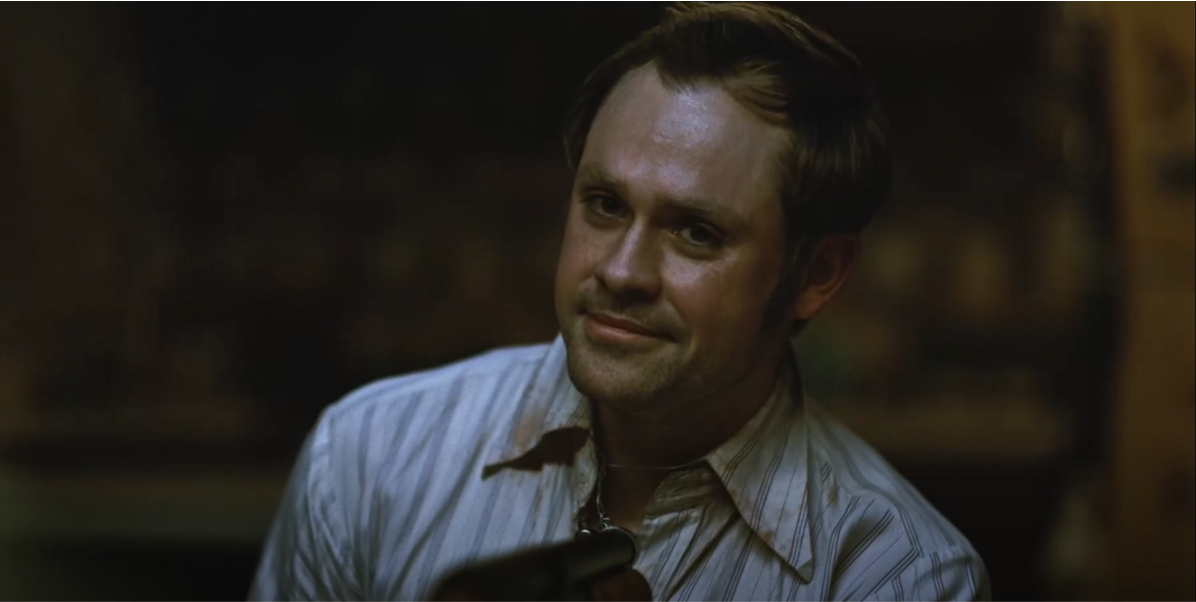
Arguably, one factor that contributes to Richard’s addiction just as much as the kidnapping is his father’s seemingly apathetic reaction to it. In the most intense moments, M.L. Hall simply refuses to accept his fault and apologize in public, despite knowing that it could cost his son’s life. Richard’s realization that he is effectively dispensable in the eyes of his conceited father is likely enough to take a toll on his psyche. This is further amplified in how M.L. Hall later assumes that his son is alright just because he has no tears in his eyes. In reality, however, this silence and subtlety is exactly how Richard expresses his grief, and his own father’s failure to recognize that, coupled with the general trauma of the incident, explains the tragic conclusion for his arc.
What Does Tony and Richard’s Final Meeting Mean?
The most curious scene in the movie comes towards its very end, when Tony and Richard meet for the final time, years after the events of February 8, 1977, have gone by. This time, their meeting is not in a mortgage company, and neither is it hostile. Instead, the two meet around a bakery, separated by a glass window. Perhaps most importantly, the two never share a single word in this entire exchange, and yet their piercing gazes alone convey the inexplicable tragedy of things. While Tony’s actions are undeniably twisted, it doesn’t take away from the fact that both he and Richard are effectively the victims of a much larger system, one that is perpetuated by greed and greedy people like Richard’s father. This scene, then, frames Tony and Richard as people who are simply too worn out by what life has done to them, which renders all possible wordy exchanges pointless.
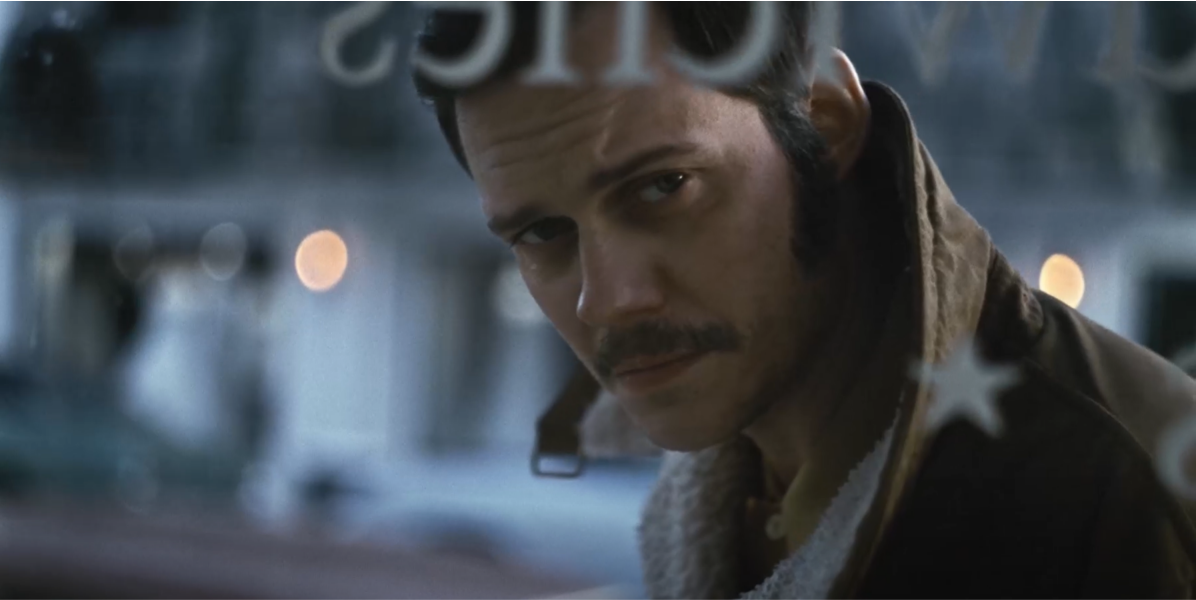
Though Tony’s expression leans towards a certain ambiguity, the one emotion that emerges most powerfully is a sense of empathy. In essence, the scene draws back to Tony claiming early on that he venerated M.L. Hall like a father, which by extension makes Richard a brotherly figure to him. As such, while he is undeniably an abuser in this dynamic, it also goes to show that a part of him understands Richard, perhaps better than anyone else. With both characters losing all sense of stability in their lives, they go from being each other’s mortal nemesis to two unfortunate pawns on a chessboard that is operating outside of their control. Though they likely never meet again, this scene confirms that, on some level, their lives are intertwined in a way that defines words and reason alike.
Read More: Is Lifetime’s Friends Until the End Based on a True Story?


You must be logged in to post a comment.