
 Diksha Sundriyal
HBO’s ‘A Knight of the Seven Kingdoms’ follows the story of Dunk, who hails from the streets of Flea Bottom and arrives in Ashford after burying Ser Arlan, the knight he squired for all these years. This is a new chapter of Dunk’s life, where, for the first time in his adult life, he is finally on his own. Not surprisingly, he is focused on establishing a name for himself so that a lord from a noble house can take him under their banner and give him a purpose in life. All of this hinges on his status as a knight, albeit a hedge knight. But, time and again, throughout the story, his knighthood is called into question. The final episode raises another question mark at this point, teasing the audience with an almost-answer that could change everything we know about Dunk. SPOILERS AHEAD.
Dunk’s Knighthood is Never Confirmed
It is not uncommon for a knight to make another knight, particularly by bestowing the title on their squire. However, usually, a knight has a witness or two to prove that the ceremony has taken place. For Duncan, this confirmation never arrives in ‘A Knight of the Seven Kingdoms.’ The story begins after Ser Arlan’s death, and every time we see him in the flashbacks, the focus is on filling the gap in Dunk’s story. Interestingly, we never see Ser Arlan making Dunk a knight, and Dunk’s behaviour at Ashford doesn’t help his cause either. There are several points that make one wonder if he was ever truly knighted. One of the most notable signs comes right before the trial of seven, when Raymun Fossoway asks Dunk to knight him so he can fight for him.
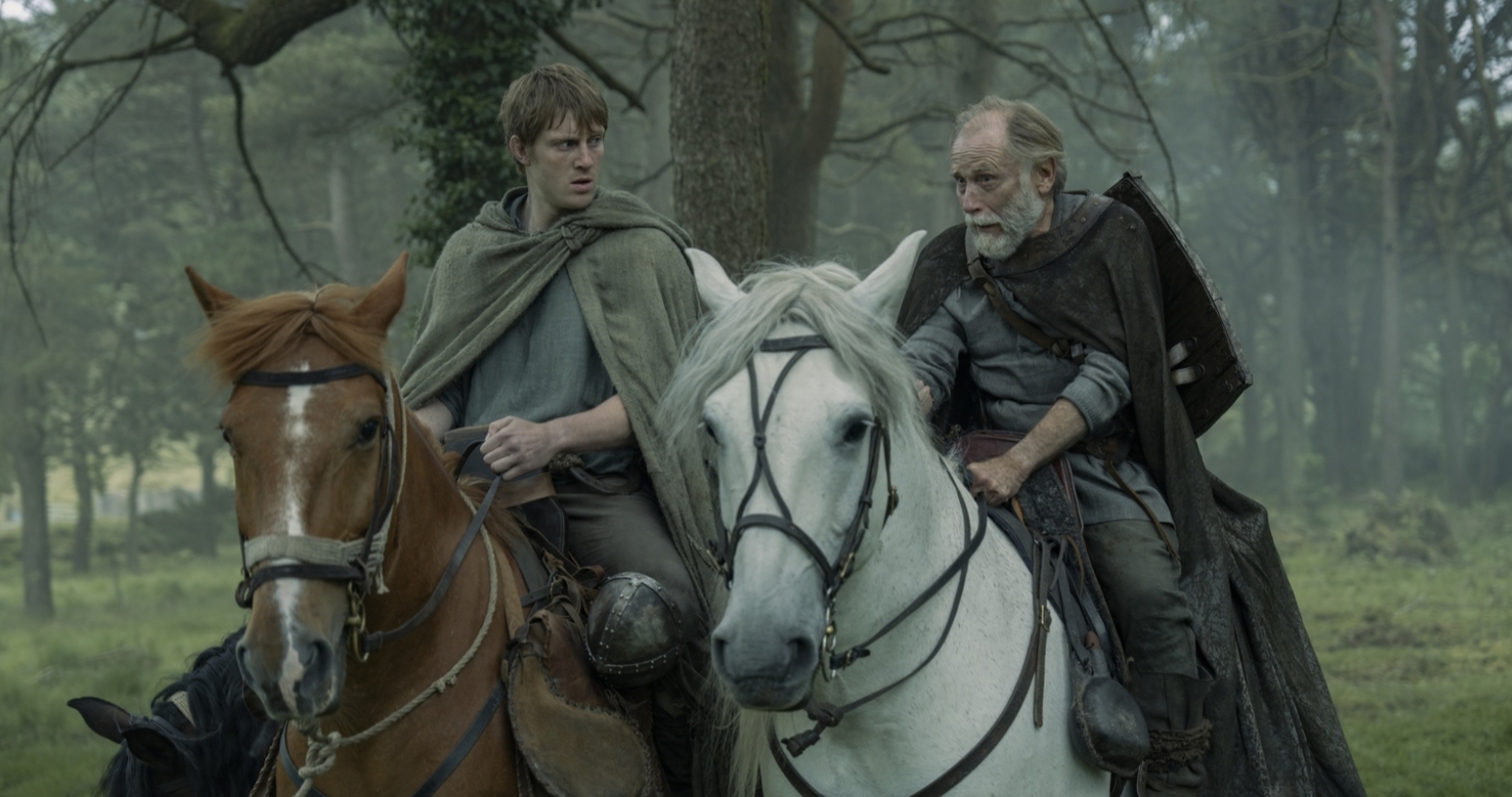
Dunk hesitates, even as Lyonel Baratheon encourages him to do it. Eventually, Dunk walks away while Lyonel performs the ceremony for Raymun. One could say that it is Dunk’s guilt that prevents him from doing it. Because he isn’t technically a knight himself, his knighting Raymun won’t count, and he doesn’t want to deceive someone who is ready to fight for him, even though they’ve known him for only a couple of days. The last episode strengthens this suspicion when Maekar asks Dunk to come with them to Summerhall and train Egg under him. Dunk refuses to do it, saying that he is done with princes. Later, while sitting next to Egg, he says “he can’t,” though he doesn’t explain why. Then comes the flashback. We know that Ser Arlan died when his wound got infected. The finale shows his last moments, in which he tells Dunk the story of Pennytree.
What’s more interesting is that Dunk asks the dying knight why he never knighted him. He wonders if Ser Arlan was afraid that, once knighted, Dunk would leave him. And then, Ser Arlan goes deadly quiet, which, for a moment, confirms the theory that he passed away before making Dunk a knight. Right as Dunk thinks his prospects are gone, Ser Arlan takes another breath and finishes his story. This means he could still have knighted Dunk, but again, we don’t actually see it happen. This plotline is borrowed from the Dunk and Egg novellas, where George R.R. Martin kept an air of uncertainty about Dunk’s knighthood. There are several instances in which his guilt gives away that he has been lying to the whole world. But again, it is never confirmed in specific terms, and there is a very good reason for that.
Dunk Proves Himself to be a True Knight at Heart
What makes a knight a knight? Is it the training, the squiring, the skill they show in jousts and battles? Or is it the values that they uphold to justify the title? With the characters that we have become familiar with in ‘Game of Thrones’ and ‘House of the Dragon,’ it has become clear that just having the title of “Ser” doesn’t make a person worthy of being a knight. Instead, the ones who haven’t actually been knighted often show more honor than the titled warriors. Take Brienne of Tarth, for example. With all that she goes through in ‘Game of Thrones,’ is it the moment that Jamie Lannister performs the ceremony that she becomes a knight, or had she been a knight all along because of her dedication to duty and honor? The same questions pop up in reference to Dunk’s knighthood as well.

If we believe that Dunk wasn’t knighted by Ser Arlan, that he lied about it to enter the tourney at Ashford, does that really make him worse than Aerion Targaryen? When Raymun asks Dunk to knight him, there is a chance that Dunk didn’t want Raymun to fight and risk his life for him. Perhaps he wasn’t so sure about kind strangers fighting his battles, something that tugs at his heart even more when Baelor, along with Hardyng and Beesbury, dies at the end of the trial. Or perhaps, Ser Arlan’s method of knighting was just as unorthodox as him. Perhaps, Dunk didn’t know the right words because his master never said them that way. Perhaps Ser Arlan knighted him in so many words that expressed his intent, and that was good enough for Dunk. The reason for Dunk’s insecurity regarding the title could be that he didn’t get the time to slip into the role under his master’s watchful eye.
In ideal circumstances, he would have fought his first tourney under Ser Arlan’s guidance, but with him gone, Dunk had no idea how to go about things, and that could have added to his lack of surity. And yet, even if it didn’t happen, one cannot say that Ser Arlan didn’t teach him enough to at least act like a good knight. In fact, all of Dunk’s actions are dictated by what it means to be a good knight, and this is acknowledged by the commonfolk, who support him during the trial (at least in the books), as well as by Baelor Targaryen, who fights for him despite not knowing him at all. It is his honor and his goodness that make him a worthy knight, and, at the end of the day, that’s what counts. So, while there may be a lingering question on whether or not Dunk was knighted by Ser Arlan, there is no doubt about the fact that Dunk is a knight. This is what the show and the books lean into, posing the question to the readers and the audience, whether they would still consider Dunk a knight.
Read More: Who is Rafe? Who Plays Her in A Knight of the Seven Kingdoms?


You must be logged in to post a comment.