
 Abhiroop Das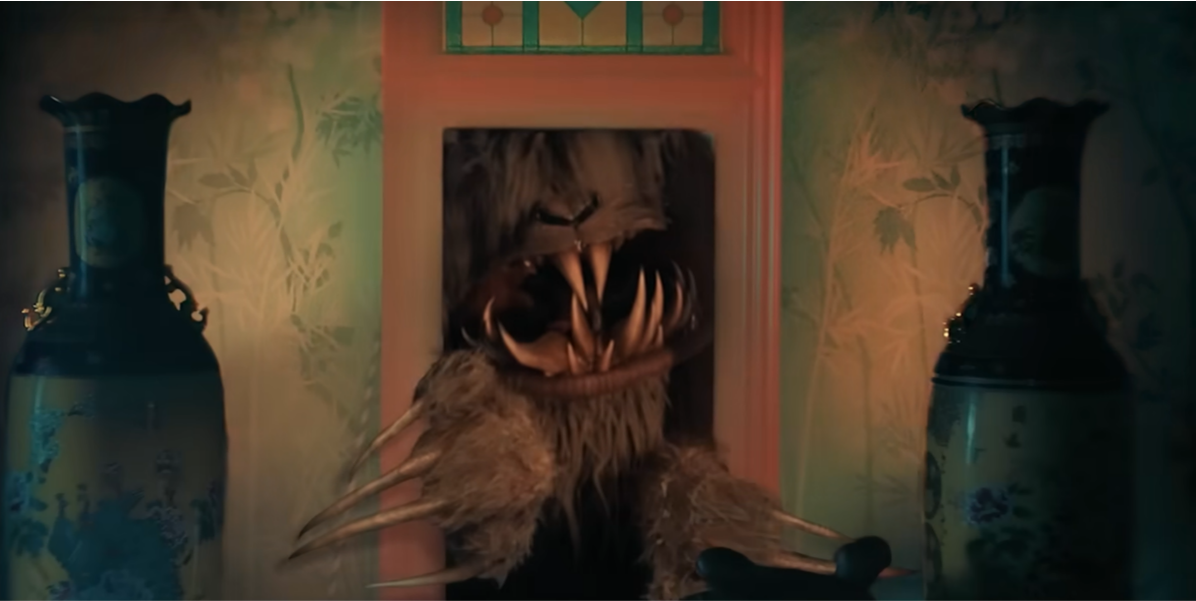
Helmed by Bryan Fuller, ‘Dust Bunny’ begins with eight-year-old Aurora living in a home that appears to have sprung out of a fairy tale. However, no one seems to believe her when she repeats that there is a monster under her bed, one that is growing larger and hungrier every day. It seemingly lurks out only at night, and, much to Aurora’s surprise, so does her neighbor, Resident 5B. When she ultimately discovers that he is a hitman, she finds a golden solution: to hire him and get rid of the beast that has been haunting her. In the process of humoring her wishes, 5B discovers that Aurora’s parents are missing, and there seems to be an army of assassins hunting either him, her, or both. Before long, all the characters involved come to the stomach-dropping realization that the monster she swears exists might just be real.
The Monster of Dust Bunny Comes to Life With Puppets and VFX
Though the monster in ‘Dust Bunny’ has a stop-motion-esque movement pattern, director Bryan Fuller confirmed in a conversation with Bloody Disgusting that the beast we see on screen is a blend of visual and practical effects. For most close-up shots, the team used an enormous puppet created by Legacy Effects studio. However, given the budget and cinematographic constraints, the monster was only partially built, with shots adjusted to show only the complete parts of the body on camera. For the wider shots featuring the monster’s full body, the movie’s special effects team stepped up to the task, bringing a unique design to life. The initial dust bunny stages of the monster, on the other hand, are rendered entirely in CGI, showcasing the elements of whimsy from the movie’s opening scene itself.
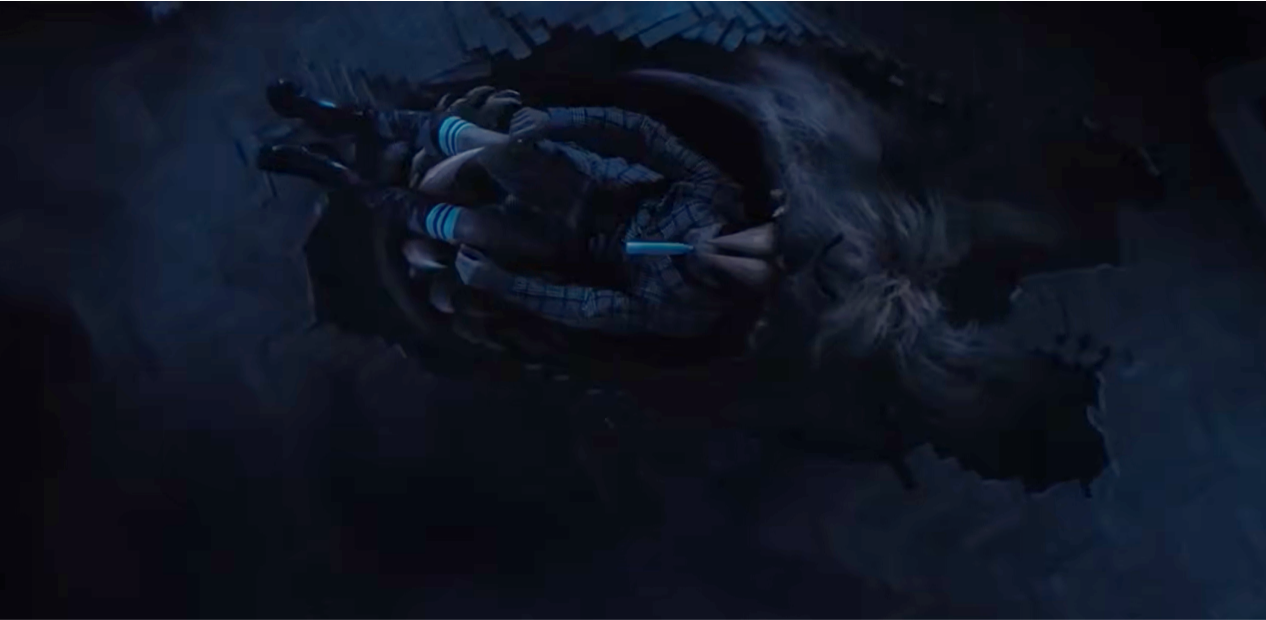
The story behind the monster’s look is as interesting as the creation process itself, as it all started with comic book artist Jon Wayshak, who worked with Fuller on the ‘Pushing Daisies’ comic. Fuller approached him with a very specific cocktail of designs in mind, describing it as part Highland cow, part piranha, and part hippopotamus, with everything dialed up several notches. Wayshak’s concept art then underwent a few changes under the supervision of Legacy Effects, and the result is the monster we see on screen, complete with the signature underbite that Wayshak incorporated into the design. From there, the next task was to storyboard the monster’s scenes, with Fuller reportedly coming up with the majority of the sequences himself.
The Team Used a Giant Green Ball as the Monster’s Stand-in While Filming
Given that a chunk of the film’s action sequences relied on extensive effects and CGI work, the crew often had to film the portions with actors first and then fit in the animated constructs later. To pull this off, cinematographer Nicole Hirsch Whitaker set up a substitute for the monster in the form of a large green ball with eyes drawn on its surface and pool noodles for the ears. This helped the team determine the lighting and other specifications, which were then recreated digitally during the work on the CGI monster. Aside from that, the crew also tried its hand at some extreme practical effects, often with multiple artists moving a bed for the horror sequences.
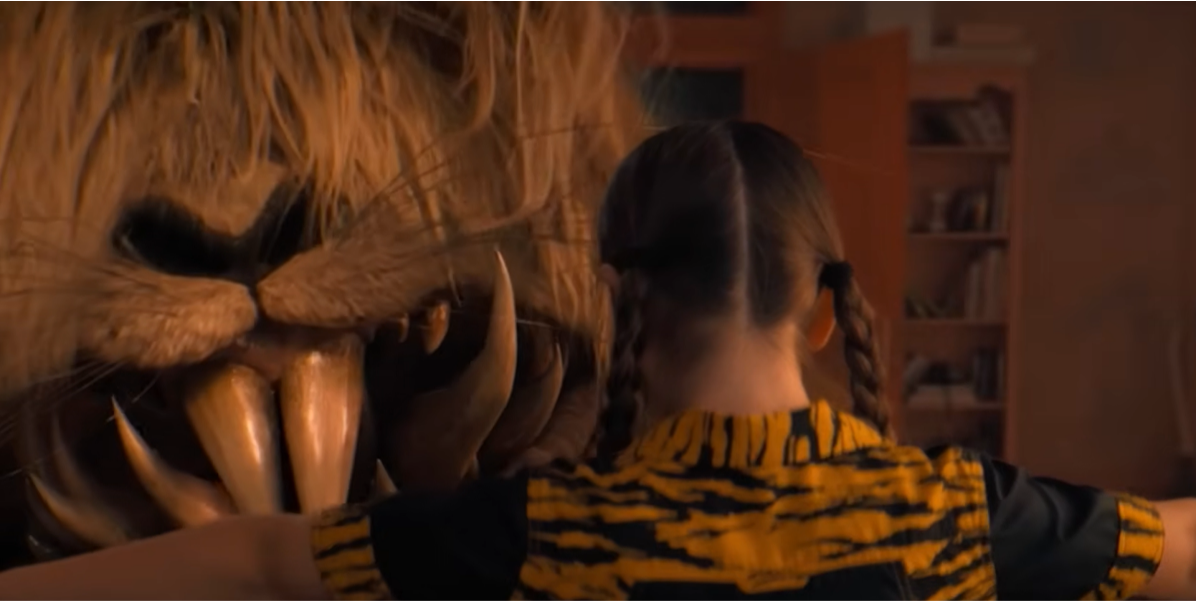
According to Nicole, the hand-crafted puppet was key to realizing many of the sequences, as it not only made production easier but also allowed actors to have more organic reactions to stimuli. However, getting the puppet moving was no easy feat, and several puppeteers were called from Los Angeles to do the job perfectly. Reportedly, actor Sophie Sloan, who plays Aurora, was far from scared when she saw the puppet, and instead found it quite adorable, especially since it is accompanied by puppy-like sounds in the movie. Legacy Effects is known for its impressive puppets and animatronics, with landmark titles like ‘Iron Man 2,’ ‘Life of Pi,’ ‘Jurassic World,’ and ‘The Revenant‘ under its belt. When it came to ‘Dust Bunny,’ the team brought the very essence of fairy tale creatures to life, both in the form of gigantic puppets and intricate CGI models.
Read More: Is Lifetime’s Ten Thousand Reasons for Revenge Based on a True Story?


You must be logged in to post a comment.