
 Abhiroop Das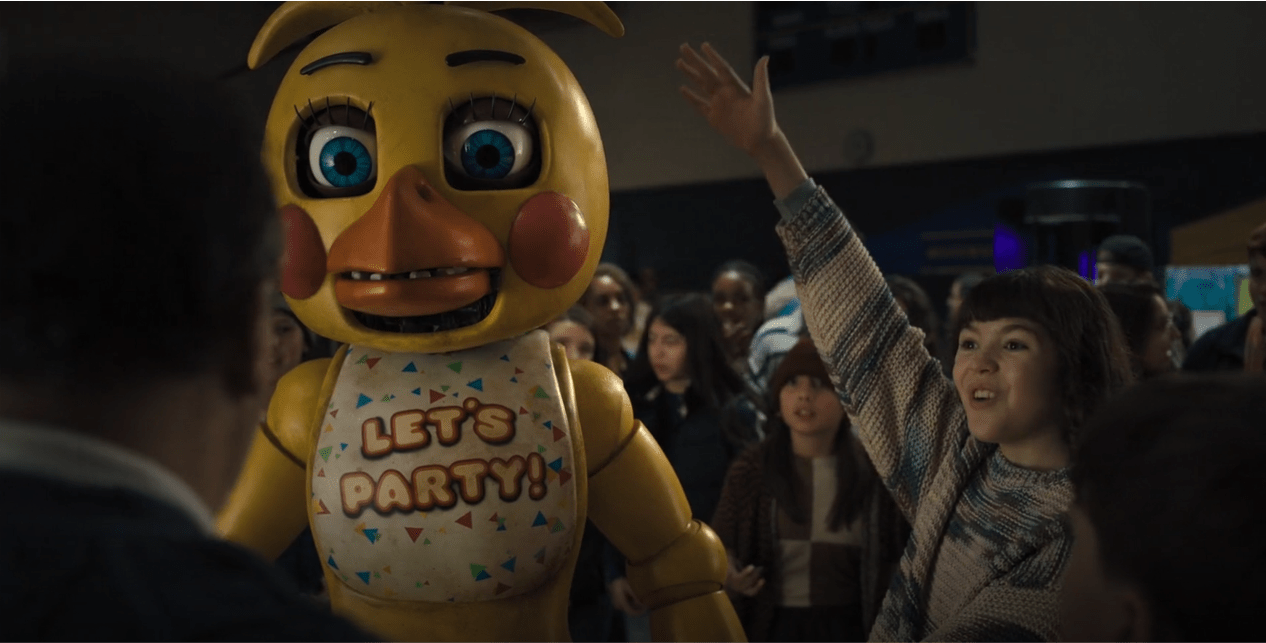
Helmed by Emma Tammi, ‘Five Nights at Freddy’s 2’ serves as a sequel to ‘Five Nights at Freddy’s,‘ adding to the story of Mike Schmidt and the band of conscious animatronics who call Freddy Fazbear’s Pizza store their home. The horror mystery movie series, which is loosely based on the eponymous video game series by Scott Cawthon, is entirely built around the supernaturally awakened mascots and how they interact with the world around them. As Mike slowly uncovers the traumatic truth behind their consciousness, their grim presence is entirely recontextualized, and each mechanical movement paints a story of tragedy. In the second mystery movie, the weathered, fabric-coated animatronics are pitted against their shiny, plastic counterparts, which not only expands the world and narrative scope but also makes the movie even more of a technical feat.
Five Nights at Freddy’s 2 Continues the Trend of Making Real-Life Animatronics
Both the original animatronics and the toys in ‘Five Nights at Freddy’s 2’ are the result of extensive practical effects designed by the movie’s creative team. The use of real-life animatronics was one of the earliest decisions made by director Emma Tammi in order to maintain both narrative and visual cohesion for a story set in the early 2000s. To achieve the desired effect for the first film, the crew partnered with Jim Henson’s Creature Shop, an animation and visual effects company specializing in animatronics design. The expert team created several life-size models from scratch, which could either be controlled from the inside or puppetted remotely. Jim Henson’s Creature Shop was also confirmed to participate in the second movie, with even more impressive constructions than before.
When asked about the use of practical effects in the sequel movie, Tammi told Collider, “The amount of animatronics that we added to the mix on the second film felt like, okay, we’re stretching ourselves much further creatively, technically, and so much action with them, as well. That was really a very cool expansion of the world.” One animatronic in particular, that of a character named Mangle, proved to be the most technically complicated thus far, with at least 13 people assisting its puppeteering at any given moment. On the other hand, characters such as Toy Chica could function with just one person donning the costume, showing just how diversely challenging the production of these robotic mascots was for the team.
FNAF’s Creative Team Poured Their Heart Into Creating the Mascots
Robert Bennett, a Jim Henson’s Creature Shop creative who worked as the lead designer for both the ‘Five Nights at Freddy’s’ movies, detailed the inner workings of the animatronics in a conversation with The AU Review. There, he clarified that, while CGI might have been used to touch up the puppets on-screen, the base layer was consistently practical effects, with real-life animatronics determining the flow of every scene they were in. Prior to the addition of Mangle to the story, Foxy was apparently the most challenging mascot to manage, as his animatronic needed about six puppeteers for movement, each controlling a specific body part. To ease the process, the creators reportedly started experimenting with shot composition, often focusing only on the upper or lower half of an animatronic to make filming easier.
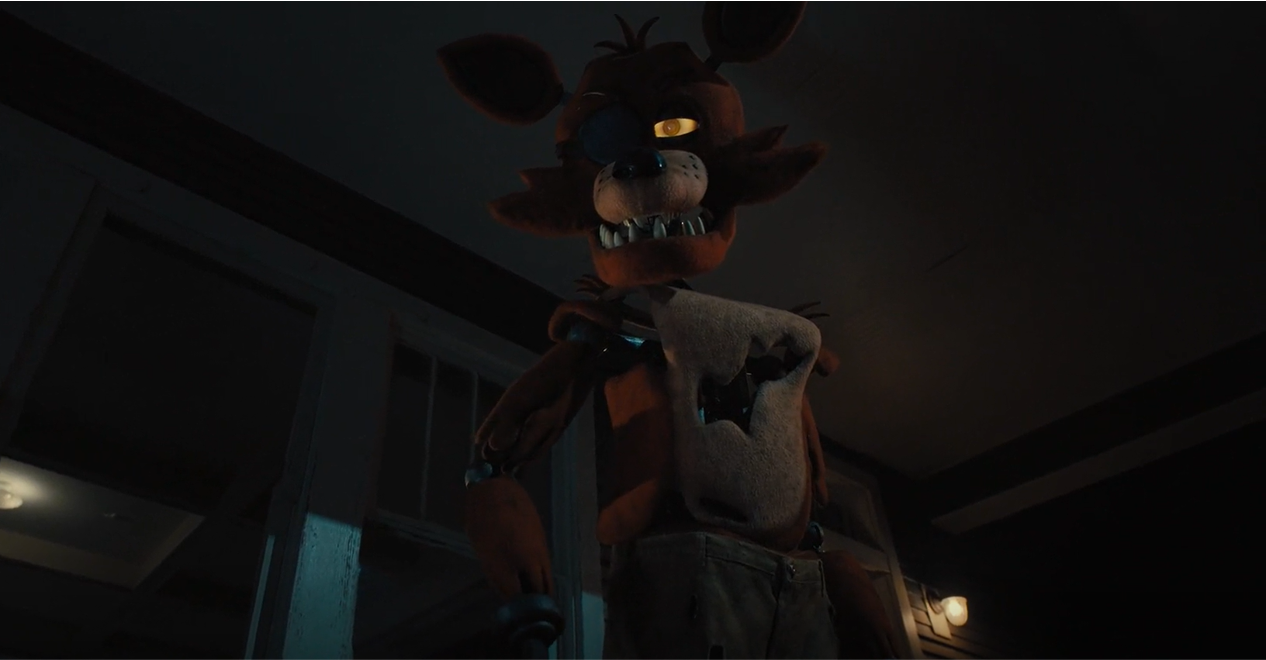
One of the most visually iconic elements of the ‘Five Nights at Freddy’s’ animatronics is undoubtedly their glowing eyes, which were not digitally augmented but added by hand. In an interview with Dexterto, Bennett explained his design philosophy about eyes being the soul of a puppet. To that end, the creative team put extra effort into capturing the awe and fear factor exuded by the glowing eyes, using specialized LEDs to achieve the desired effect. He stated, “We spent a lot of time designing them, figuring out what the right material was for the LEDs behind the eyes to glow correctly.” This committment to the craft was not only carried over into the sequel, but also magnified.
The Sequel’s Plastic Toy Animatronics Brought Their Own Share of Challenges
While the original movie largely featured animatronics made with a mix of metal and fabric, the second movie introduces toy variants of the same characters, who are made of plastic. This meant the creation of a whole new set of animatronics, specifically designed to match the look and vibe. While the crew primarily drew inspiration from the toys’ video game counterparts, it was up to Jim Henson’s Creature Shop to figure out the finer details and add their creative touches to the final product. Bennett described the new designs as having an “autobody finish,” which meant experimenting with different materials and techniques.
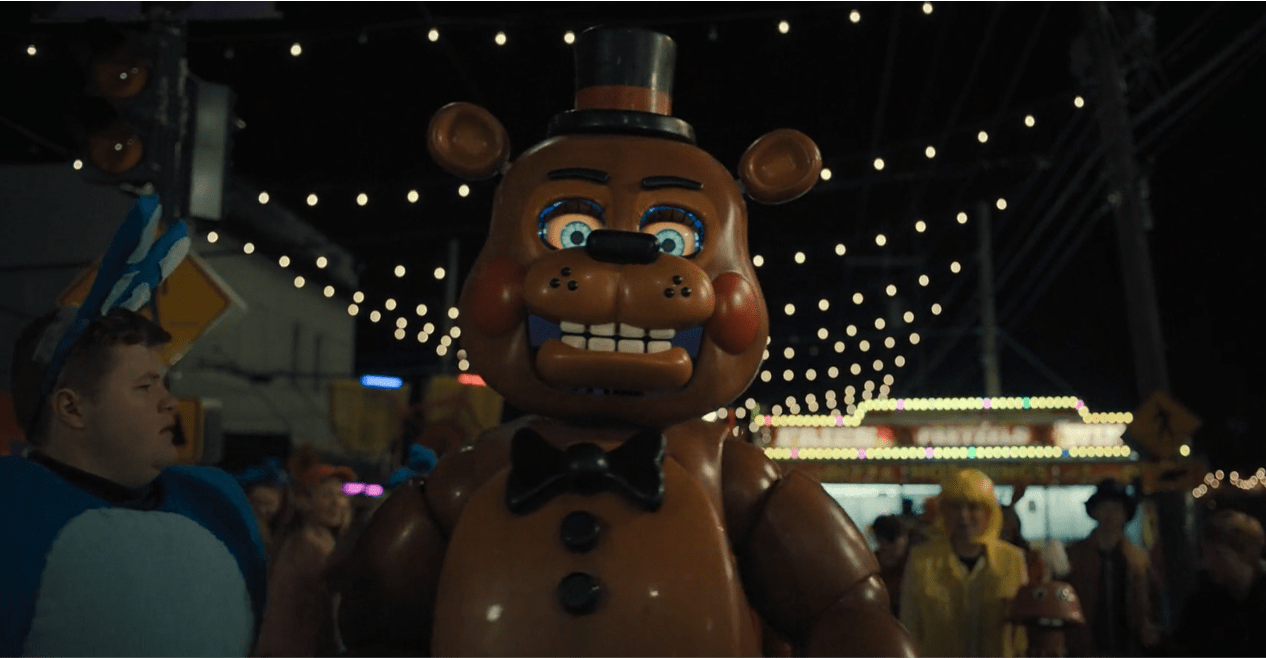
Actor Jess Weiss, who is the stunt double for Toy Chica, talked about the unique experience of donning an animatronic suit, explaining, “it’s like wearing a suit of armor, so it’s a little bit more restrictive (…) I had to find ways to express Toy Chica (…) within the suit.” Similarly, actor Jade Kindar-Martin, who plays the stunt double for Bonnie in the film, added that the actors could not sit down while wearing the suit, as it could damage the plastic, and that meant figuring out new ways to take a break between scenes.
Actor Kevin Foster, who serves as the stunt double for both the original and toy versions of Freddy, pointed out in a special behind-the-scenes feature that the plastic suit did not allow any manual facial expressions, as all movements were determined by the puppeteers. Furthermore, multiple versions of the same animatronics were created with different materials to accommodate scenes where the mascots would have to endure damage. Thus, with the second movie, the crew raised the bar for the animatronics and how they can be woven into visual storytelling.
Read More: Who is Michael Afton? Who Plays Him in Five Nights at Freddy’s 2?


You must be logged in to post a comment.