
 Abhiroop Das

Co-directed by Pablo Trapero and Pablo Fendrik, Netflix’s ‘Gordon’ dramatizes the grim rise of Aníbal Gordon, a small-time criminal who eventually becomes one of the most infamous killers and torturers in Argentina’s history. A large part of his journey is shaped by the people he meets at key junctures in his life, and one of them turns out to be Acosta, another criminal who appears to be ideologically aligned with a hyper-nationalist, armed organization. With Aníbal’s help, the organization soon becomes a powerful force within the country, and as his relationship with Acosta deepens, the sheer brutality of what they engage in begins to reveal itself, leading up to some chaotic twists and turns in the narrative itself. SPOILERS AHEAD.
Acosta is a Semi-Fictional Character Whose Arc Recreates Major Events in Argentine History
The character of Acosta is most likely a loose reimagining of Pedro Jesús Acosta, a reported associate of Aníbal Gordon who was arrested alongside him in 1971 after a robbery gone wrong. While some aspects of the character may be a nod to real life, for the most part, the Acosta we see on screen is the result of several creative liberties. Not just that, the show also treats him as a composite figure to integrate many other events from the period, thus making him a broader reflection of the sociopolitical developments in Argentina at that time. The origins of this invented rendition of Acosta can be traced back to Marcelo Larraquy’s novel ‘Gordon,’ which also serves as the inspiration for the series, and here the character seems to unlock an entire political dimension.
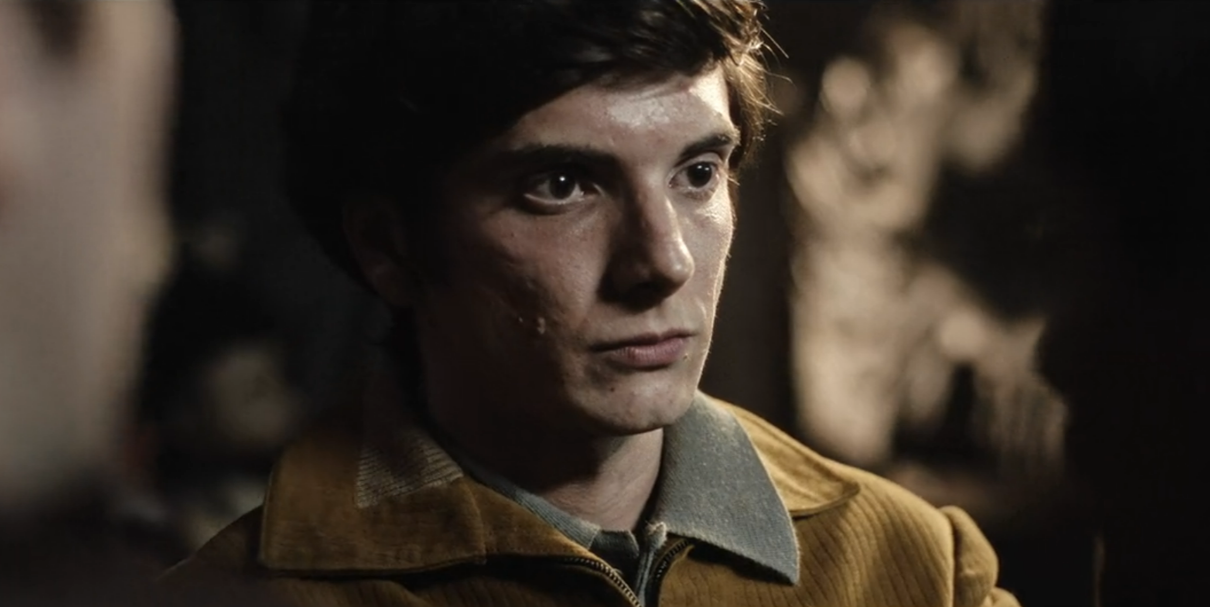
In a conversation with Diario UNO, Larraquy brought up the character of Acosta and how he was conceptualized, particularly connecting him to history and nationalist symbolism. In particular, the author brought up the Malvinas Islands (Falkland Islands) dispute, referring to the longstanding sovereignty conflict between Argentina and the United Kingdom over the archipelago, which Britain took control of in 1833. In his interview, Larraquy explained that Acosta’s tendency to leave the Argentine flag at every robbery site is his symbolic attempt at reclaiming the Malvinas Islands, which, while completely invented for the story, loosely parallels another real-life event.
The very first scene where Acosta is introduced in the show happens to be a fictionalized recreation of 1966 Operativo Cóndor, when 18 Argentine nationalists hijacked an Aerolíneas Argentinas flight bound for Río Gallegos and forced it to land in the Malvinas Islands. Following this, the nationalists, led by Dardo Cabo and Alejandro Giovenco, raised seven Argentine flags on the islands to claim sovereignty. The operation ended with the participants surrendering to Argentine authorities, though ‘Gordon’ adds its own creative touch to the events, with Acosta being depicted as one of the hijackers who eventually resumed operations after finishing his sentence. It should be reiterated, though, that this is an entirely fictional addition, and none of the 18 participants in the hijacking operation were named Acosta.
Acosta Might be a Blend of Two People From Aníbal Gordon’s Life
A person named Pedro Jesús Acosta appears in accounts of Aníbal Gordon’s criminal activities in the early 1970s, and many of these accounts are key to Marcelo Larraquy’s research for his books ‘Gordon’ and ‘Gordon, the Annihilator,’ which prominently feature Acosta as a character. In real life, several records identify Pedro as one of Aníbal’s associates in the period surrounding the February 1971 robbery of the Banco de la Provincia de Río Negro in Bariloche. Later, in November 1971, both Aníbal and Pedro were arrested following a failed attempt to rob a watch importer on Uriburu Street in Buenos Aires, though not a lot is known about the latter’s status following the arrest. The show’s recreation of this event diverges from real-life reports, in that Acosta manages to flee the scene just as Aníbal is put behind bars.
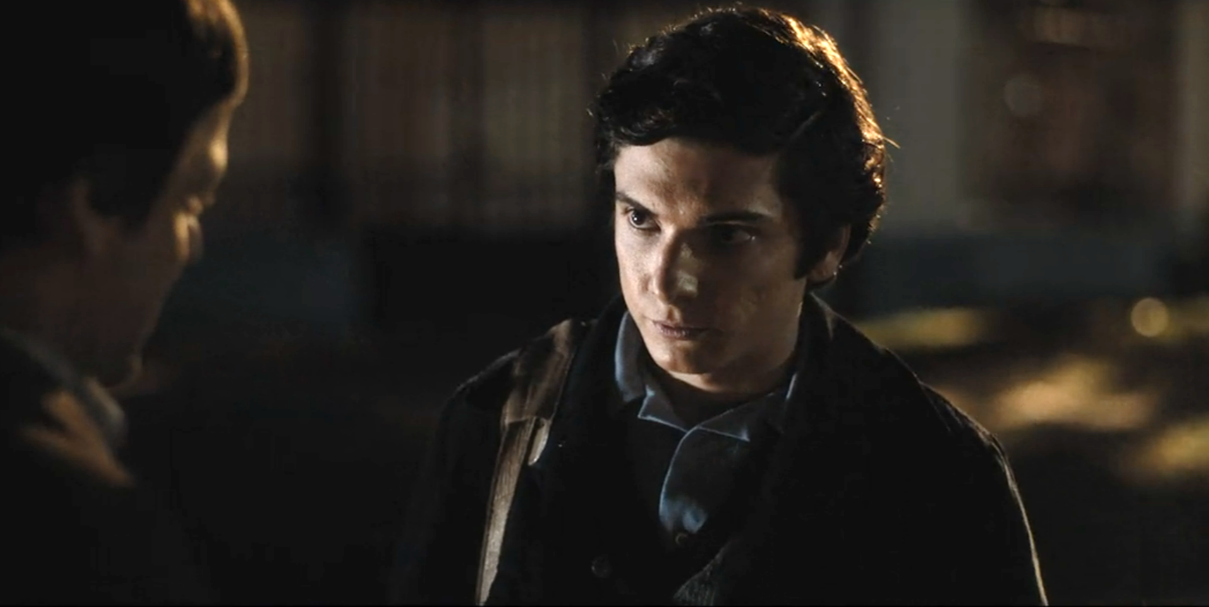
There is, however, another Acosta whose history is closely connected to Aníbal’s later activities. A man named Juan Carlos “Cicuta” Acosta reportedly belonged to the UOM’s armed security network, which later came into conflict with Gordon’s group. On July 24, 1975, Cicuta was one of two people implicated in an attack on César Alejandro Enciso, a member of Aníbal’s group, who eventually survived. On October 12 later that year, Cicuta was shot dead while dining at a restaurant, with a survivor later naming Aníbal among those she alleged had carried out the attack, though he was never convicted for the killing. Keen-eyed viewers of ‘Gordon’ may notice some loose parallels between these real-life events and the show’s twists and turns, though the character of Acosta broadly remains a fictional construct.
Read More: Gordon: Is Graciela Mancini Based on a Real Political Rebel?


You must be logged in to post a comment.