
 Abhiroop Das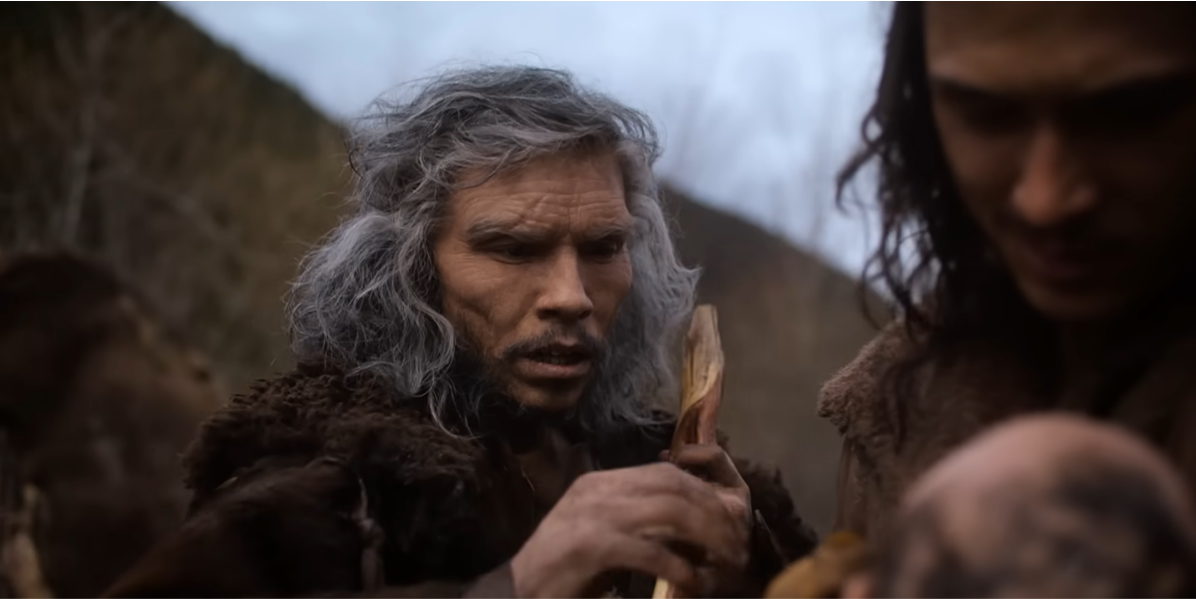
Helmed by Andrew Stanton, Hulu’s ‘In the Blink of an Eye’ captures a snapshot of humanity’s past, present, and future, all in the span of a single, multi-perspective narrative. It brings to life three stories: the first featuring a Neanderthal family struggling against nature, the second following an anthropologist named Claire as she makes major discoveries on the personal and professional front, and a third set in the far future, journeying alongside a nigh-immortal astronaut named Coakley, who is tasked with making humanity interplanetary. While the three tales in this science fiction drama movie seem disparate at first glance, a metaphysical thread runs between all of them, bypassing space, time, and reason to render an expansive, but also infinitely detailed portrait of the human condition. SPOILERS AHEAD.
In the Blink of an Eye Plot Synopsis
In 45000 BCE, one of the last remaining Neanderthal families on Earth finds itself isolated from any larger settlement and chooses to reside in a cave. Thorn, the patriarch, has an accident while gathering food and endures significant internal bleeding, and has to be taken care of by his family, comprising his wife, Hera, and their two young children. In 2025 CE, Claire, an anthropologist, has an on-and-off relationship with Greg, a statistician working at her university. Claire’s work involves the examination of prehistoric human remains, and this time, the skeleton she is working on turns out to be holding an acorn pendant. The story then shifts to the far future, where we learn that an astronaut, named Coakley, has been tasked with making a centuries-spanning interstellar journey to raise a new generation of children.

Back in the prehistoric era, Thorn heals from his injuries and is gifted an acorn pendant by Hera, but tragedy soon strikes the family when their youngest baby dies due to mysterious causes. In the present, Claire learns that her mother has been diagnosed with a fatal disease and has very little time left to live. Abandoning her job at the university, Claire heads back to Canada, but finds herself incredibly lonely. As she enters a long-distance relationship with Greg, the two begin to fall in love, and this newfound companionship is key for Claire when she later loses her mother. In the future, Coakley learns that the greenhouse in her spaceship has been infected, and the plants that supply her oxygen are rapidly dying. While Coakley initially plans to take her own life and leave enough oxygen for the babies, her AI friend and assistant, ROSCO, suggests that it be shut down, and the space be used for a second greenhouse, to which Coakley obliges with a heavy heart.
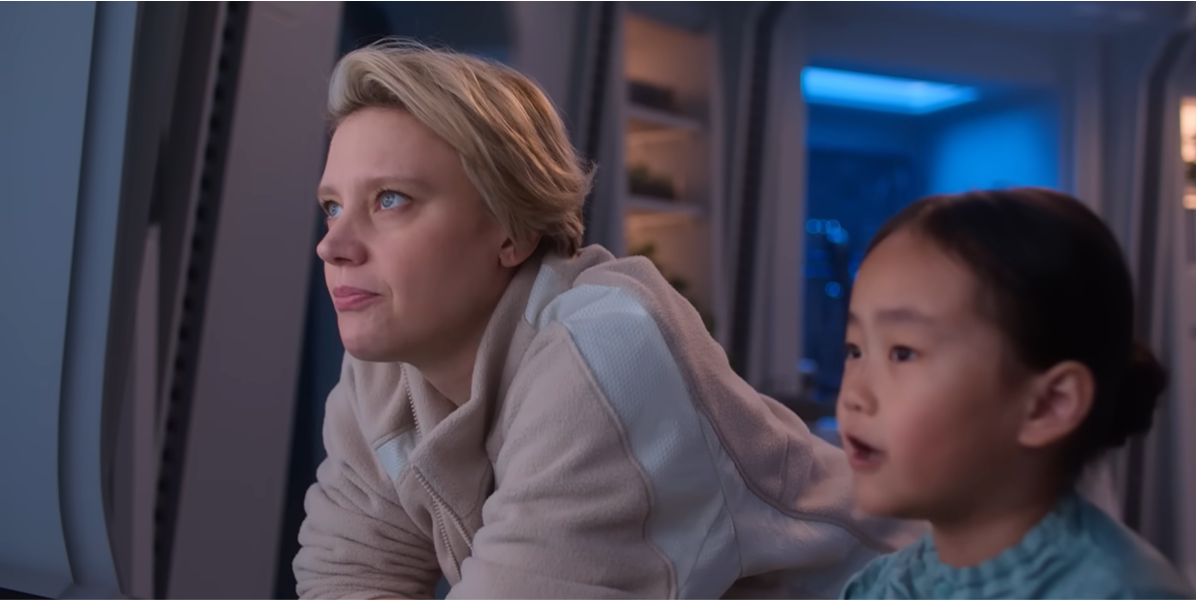
Shortly after the birth of her third child, Hera passes away due to health complications, leaving the Neanderthal family shattered. Thorn and his children take on a nomadic lifestyle, but are ultimately found by a tribe of humans who take them in. In 2030, we learn that Claire and Greg tied the knot and are now the parents of a child named David. This child grows up to become a world-famous inventor, creating an anti-ageing technology by the name of Elixir. In the future, Coakley reaches close to her target planet and has to now take on the challenging task of incubating the babies. While the first four pass away due to numerous complications, the fifth baby makes it, and grows on to become Coakley’s second in command. With half of the mission now accomplished, she decides that it’s time to head to a brand new world.
In the Blink of an Eye Ending: Do Coakley and the Babies Make it to the New Planet?
‘In the Blink of an Eye’ ends with a statement of hope, as it is revealed that humanity has successfully started anew on the new planet Coakley calls home. Although the journey to this new planet may have taken centuries, in the end, the scenery Coakley steps onto is indistinguishable from Earth’s nature, with dense, lush greens spreading as far as the eye can see. Having spent an incomprehensible amount of time alone in the spaceship, Coakley finally regains her connection with nature, or at least a recreation of it, and this time she is not alone. Most of the children she raised have grown up now and are right there by her side when the ship’s gates open. As such, it is implied that the group turns into a matriarchal society of sorts, retracing humanity’s forward journey in a new light.
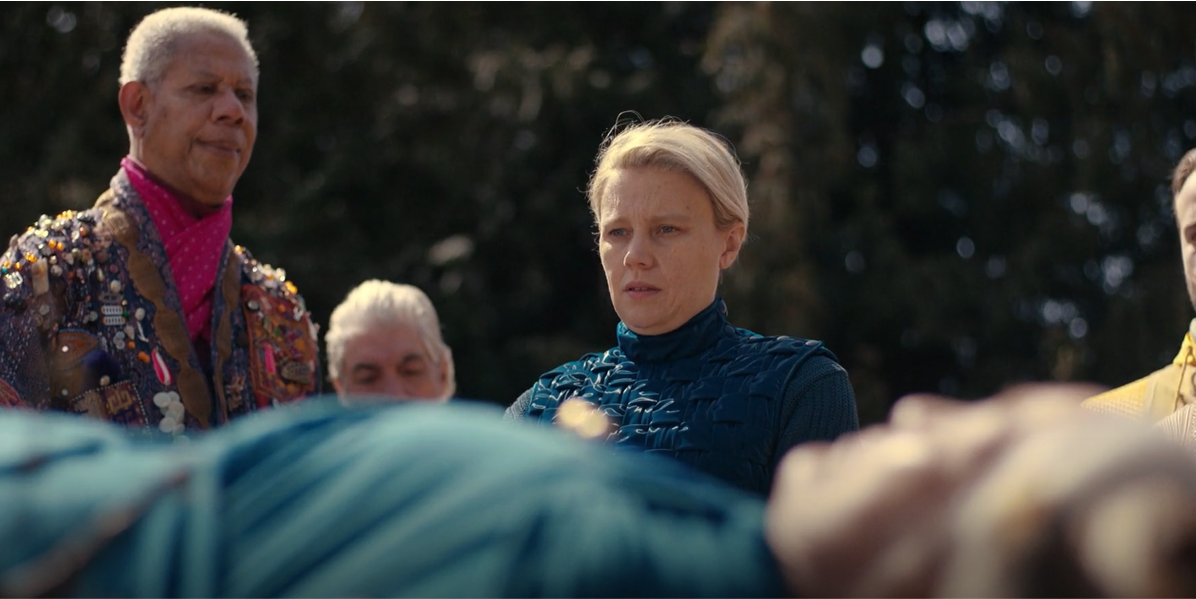
The fluidity of time is a staple element of the movie, and it is no different when it comes to the ending. From Coakley’s arrival on the planet, we jump several decades into the future, where V, the first child to be born on the spaceship, has now died of old age. The fact that these characters are known purely by their order of birth can sound troubling at first, but this is likely because we never get a full insight into their inner lives, and especially their new culture. Much like in the case of the Neanderthals, whose sophisticated language is intentionally left untranslated, the humans of the far future continue to be a mystery for the audience, especially when it comes to their engagement with time. V’s death is not framed as just an isolated event, but as a reminder of the most universal element of life: death.

For Coakley, who seemingly hasn’t aged a day, seeing V’s journey from start to finish is as heartbreaking as it is inspirational. She acknowledges that death is not necessarily the culmination of one’s life, but merely a signifier of the wheels turning, as each human existence is part of a much larger cycle, both literally and spiritually. The fact that Coakley is brought to the funeral ceremony by a child is symbolic by itself, as it confirms that we now have multiple generations of humans on this new, terraformed planet. The movie’s ethos, as such, is not to reject death but to acknowledge it as something that gives life even more meaning. Every death in every generation is given meaning by the lives that follow, across space and time.
How Are the Three Stories Connected? Whose Skeleton is it?
While ‘In the Blink of an Eye’ never explicitly points out a connection between its three stories, set centuries, if not millennia apart, there are enough clues to piece together a singular timeline. Our story starts roughly 47000 years ago, with the Neanderthal family of Thorn and Hera. However, the very fact that humanity has no way of piecing together Neanderthal names from way back implicitly suggests that these are names given by modern scientists and anthropologists, possibly Claire herself. The handprints on the cave that we see each tell a story in layers, giving scientists ample evidence to pick apart each individual memory that is etched on stone. While we are initially led to believe that the skeleton Claire finds is also Thorn’s, the ending proves that to not be the case.
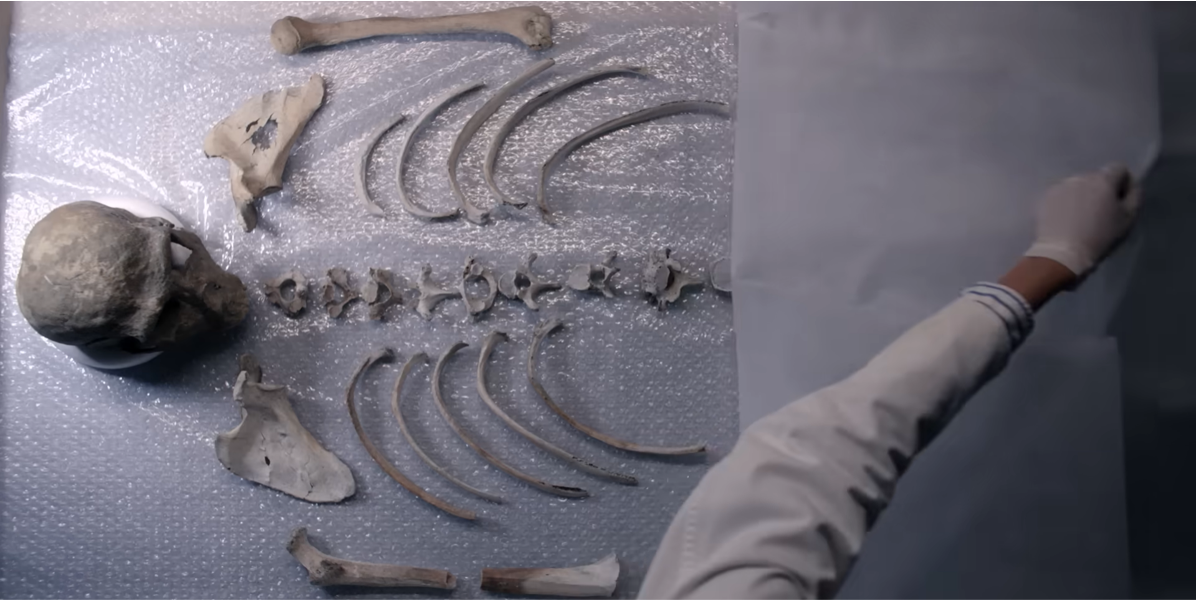
In the final moments of the movie, we learn that the skeleton being studied by Claire’s team is most likely that of Lark’s daughter and Thorn’s granddaughter. In one of the scenes, we see that the child sports a birthmark on her left cheek, and later that same birthmark can be seen on the dead, old woman’s face. Thus, chances are that there is a quick timeskip between the two scenes, meant to highlight yet another generational exchange. The remains of Thorn’s unnamed descendant are discovered by Claire’s team after all this time, and a brush down reveals the acorn pendant, which then goes on to be worn by Claire herself, and then made into an heirloom for Elixir as a company. With thousands of years of history behind it, the acorn serves as the linchpin for the entire narrative, tying together many of its themes.
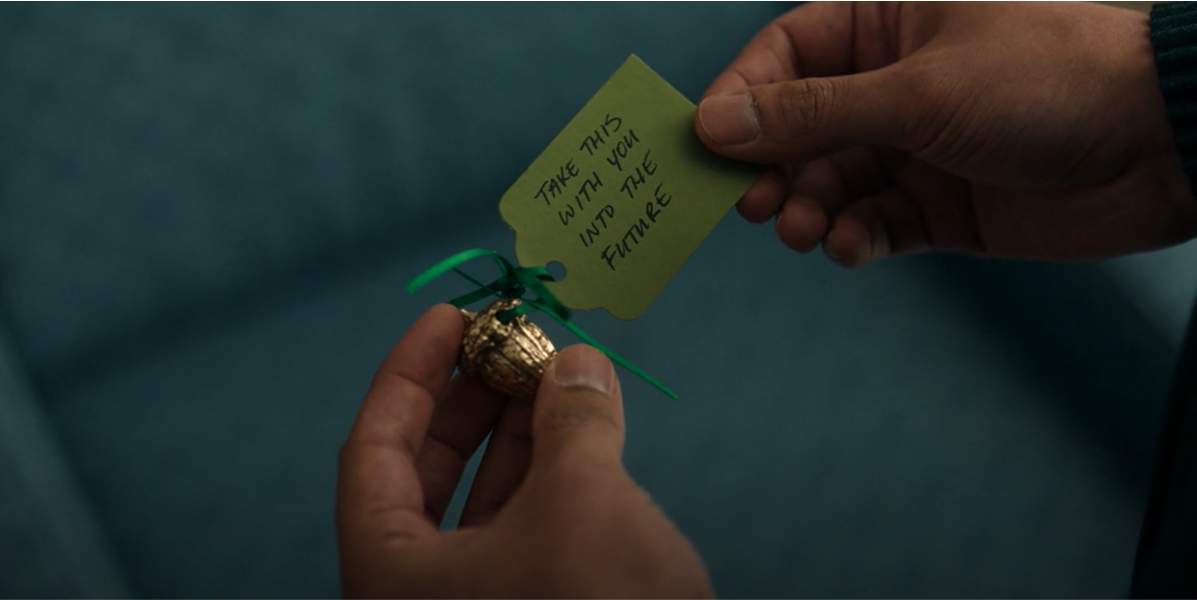
In the first place, the acorn is gifted to Thorn by Hera after he manages to survive a near-death injury. Thus, its primary function in the narrative is to symbolize the triumph of the human spirit over any and all forms of limitations. In Claire’s case, it becomes a symbol of her moving on from grief, and in the case of her son, David, the same acorn takes the shape of hope for the next generation. The fact that it passes through so many hands, pasts, and presents, but ultimately remains the same, makes it the perfect representation of humanity as a whole. By extension, it can also be interpreted as a primer to the movie’s take on agelessness, which is doubly significant as Claire’s research into the Neanderthal skeleton is key to inspiring her son to create Elixir in the first place.
What Happened to the Humans Back on Earth? Are They Dead?
With Coakley’s section of the story taking place at least several hundred years into the future, the timeframe between her life and Claire’s is never explicitly bridged. What we do know, however, is that humanity figured out how to slow ageing in the generation right after Claire’s through the work of her son, David. This new technology, dubbed Elixir, is capable of accelerating cell recovery and prolonging human life by several years. By the time we reach Coakley, it is implied that the tech has advanced long enough to make her practically immortal. However, the children she raises are specifically meant to have a human lifespan, which naturally leads to several questions. It is only when V makes her curiosity known to Coakley do we get what can be called a vague answer.
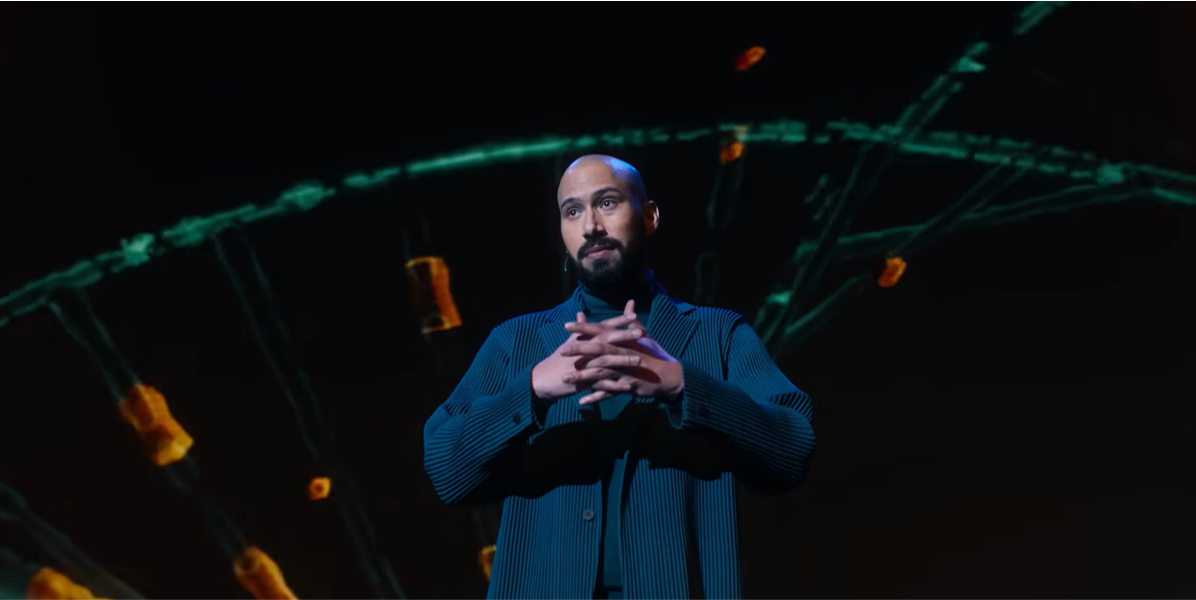
As per Coakley, humanity at one point figured out how to make ageing incredibly slow, to the point that everyone could live for centuries without getting much older in terms of appearance. However, for some unspecified reason, humanity decided to overturn this technological advancement and bring humans back to the regular age spectrum. The children raised by Coakley fall into the latter category, and it is likely that she is chosen for this space mission specifically because of functional immortality. Although we are never exactly told what humanity went through in the millennia after Claire, it is implied that a degradation of the planet, and possibly the extinguishing of its resources, is the chief reason why Coakley is tasked with looking for a new planet and populating it.
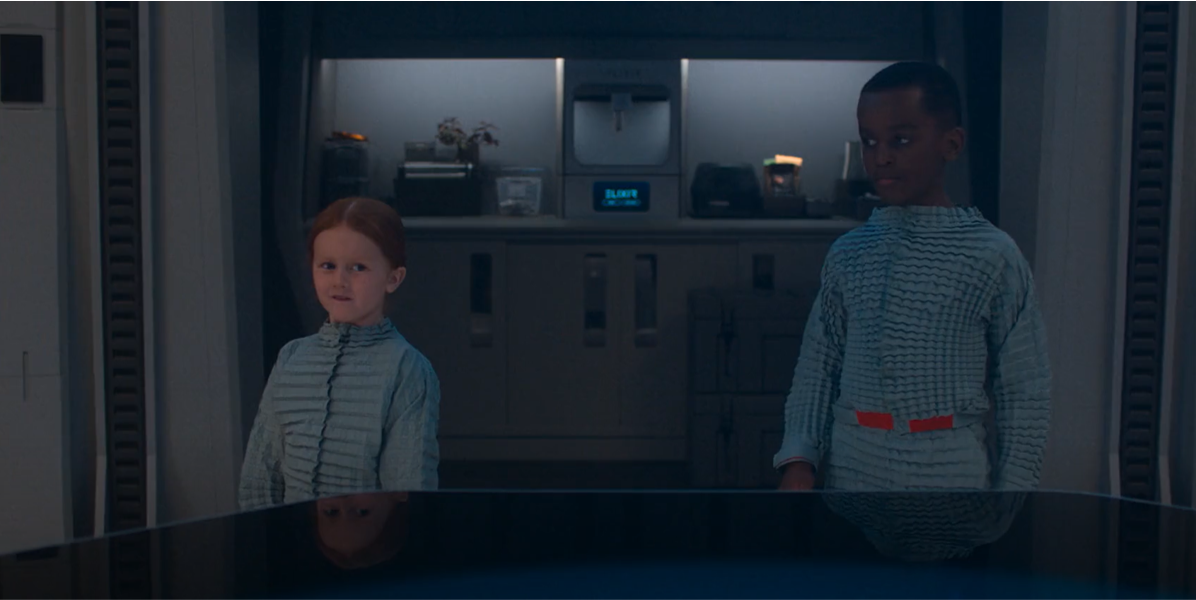
In one particular scene, Coakley mentions that she momentarily believed herself to be the last living human. This can mean one of three things. It can either be taken at a symbolic value, referencing the depths of her loneliness, or it can indicate that humanity has perished in the centuries she has spent travelling to a remote planet. Alternatively, it can also suggest that humanity was already nearing extinction by the time her space program was initiated. With the movie’s self-reflective storytelling in mind, the oxygen crisis in Coakley’s ship can be interpreted as a microcosmic version of how humanity, in its course to immortality, extinguished the globe’s resources, here represented by oxygen. However, the very final moments of the film reflect pure optimism in spite of it all, reverberating how life always finds a way.
Read More: The Swedish Connection: True Story of Gösta Engzell, Explained


You must be logged in to post a comment.