
 Diksha Sundriyal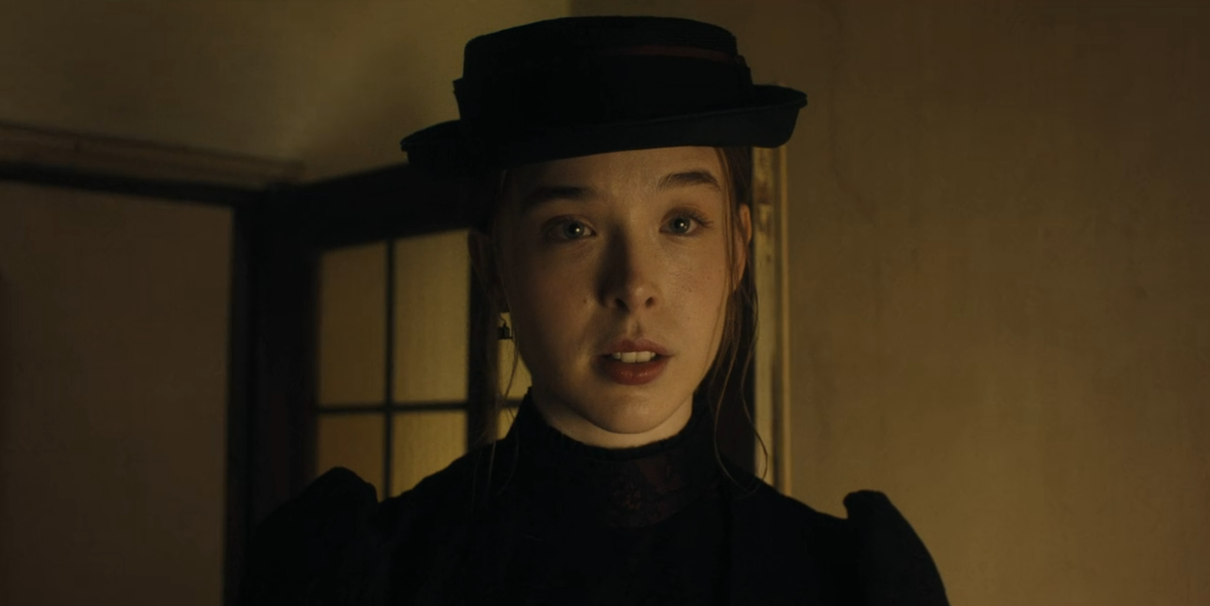
Netflix’s ‘Monster: The Lizzie Borden Story’ dives into a fictionalized version of Lizzie Borden’s life, specifically surrounding the deaths of her father and stepmother. Their brutal murders leave the whole world shocked, but when the cops question Lizzie, she maintains a calm demeanor. While her sister breaks down in tears, Lizzie sheds none, which strikes everyone, including the cops, as odd. This turns into suspicion, which eventually leads to her arrest. When she goes to trial, it looks like she will be found guilty, but in a shocking turn of events for the cops, the prosecution, and the public that had already accepted her guilt, the jury acquits her. To many, it looked like Lizzie had walked free of her crimes, but there was more to the trial than just the presentation of evidence. Gender stereotypes and classism also played an integral role in getting Lizzie her freedom. SPOILERS AHEAD.
The Circumstantial Nature of the Evidence Made for a Weak Case Against Lizzie
At first, it seemed that the cops had gathered all the evidence they needed to prove Lizzie Borden’s guilt. They had her inside the house when the murders occurred, the conflicting nature of her accounts, the testimony of a chemist who said she’d bought poison from him, and a woman who’d watched Lizzie burn her stained gown. Lizzie, on the other hand, had some of the best lawyers working to prove her innocence. And given how the trial unfolded, they probably didn’t even have to fight that hard because all the evidence was either circumstantial or inadmissible in court. To begin with, the first thing that ticked off the cops against Lizzie was her ever-changing, contradictory story about where she was in the house at the time of the murders.

At first, she said that she was downstairs when her father came home. But later, her account reflected that she was upstairs. This change, though minor, was crucial because Abby Borden had been found dead in the guest room upstairs. This means if Lizzie were also upstairs at the time, she would have been close enough to hear something while her stepmother was being murdered, or at least, she would have found her much earlier. Notably, Abby was killed around ninety minutes before Andrew, which meant there was ample time for her to be discovered in the house. In the same vein, the part about her location during the time of her father’s murder was also questionable.
Lizzie said she was in the barn searching for sinkers because she was going fishing later. But later, she said she was eating pears. No matter what she was doing in the barn, the cops found it odd that she would even be there in the first place due to the heat of the day. A few days after the murder, she was questioned at an inquest, which seemed to give solidity to the prosecution’s case, given her wavering accounts under oath. However, this testimony was ruled inadmissible on two counts. First, she didn’t have her lawyer present at the time. And second, she had been receiving morphine doses from her doctor, which explained her confusion about the events of the day. With the testimony out of the question, there was nothing left to poke holes in, since Lizzie never took the stand during the trial.
The Poison and the Dress Were Not Strong Enough to Prove Anything
Much like Lizzie’s testimony, the part about her buying poison was not considered credible enough. The testimony came from a local chemist called Eli Bence, who stated that Lizzie had bought prussic acid, aka cyanide, from him several days before the murders. However, the prosecution couldn’t build a case against the possibility that the acid could have been used for non-murderous actions. At the same time, the defense argued that the chemist was misidentifying Lizzie because there was no other witness to corroborate his account.

Then came the testimony of Alice Russell, who claimed she had seen Lizzie burning a dress in the kitchen stove. She said that the dress had stains that looked like they could have been caused by blood. This, she added, happened three days after the murder. Adding to this, the cops had found bloody rags when searching the cellar bathroom following the murders. However, Lizzie had said that these were her menstrual rags. Meanwhile, the defense claimed that Lizzie had already handed over her dress from the day of the murders to the cops two days later.
If Lizzie had killed her parents, the dress should have been blood-soaked. On it, there was just one spot of blood on the hem, but with no way to test whose it was, it was claimed to be Lizzie’s. Meanwhile, when Emma Borden took to the stand, she said that she was the one who asked her sister to burn the dress, which had nothing to do with the murders. Eventually, the defense argued that the prosecution had not presented a murder weapon either. The cops had retrieved two hatchets from the house’s cellar, which they believed to be the murder weapons. However, a chemist from Harvard University testified that no blood was found on either of them.
Lizzie’s Gender and Class Status Likely Played a Role in Her Acquittal
The lack of strong evidence may have been enough to unsteady the prosecution’s case. Still, it was likely the all-male jury’s own deep-seated stereotypical view of women that convinced them of the accused’s innocence. Lizzie Borden was a woman from a well-to-do family and an upstanding citizen of society. She was a member of the Central Congregational Church and worked as a Sunday school teacher. She was involved in the temperance union and was on the board of the Fall River Hospital. When she was arrested, several women’s groups, such as the Women’s Christian Temperance Union, rallied in her support, staging protests outside the court.

All of this created a huge question on why a well-bred woman of high society would resort to something so brutal and crass as murdering her parents. It would have been more believable for the jury if Lizzie were a man. With the number of strikes on Andrew and Abby’s head, face, and upper body, it would have taken a lot of strength on the part of the murderer to swing the hatchet. The narrative that someone like Lizzie was incapable of that physical strength swirled around, and she leaned into it fully with her appearance in court. She wore tight, corseted black dresses and showed up at court with flowers and a fan. She appeared effete and feeble, which was the entire opposite of the brute and brawn required to do to two people with the repeated blows of a hatchet.
Another Axe Murder May Have Swayed the Jury
At the end of the day, it seemed impossible to believe that Lizzie Borden had the physical or mental capability to commit a crime as atrocious as this. But then, if Lizzie didn’t do it, someone else killed Andrew and Abby. While the prosecution defended Lizzie, they didn’t point fingers elsewhere. However, they likely didn’t need to bring another suspect into the question, since it may already have been done. Several days before Lizzie’s trial was supposed to begin, Bertha Manchester was also killed by an axe in the kitchen of her house around the same time of day as the Bordens.

A Portuguese laborer had been arrested for the crime. His trial and conviction came later, but the jury members had likely already read about his arrest in the papers. So, when they pondered on Lizzie’s fragility, the idea of an immigrant laborer fitting the bill may have crossed their minds. All of these factors played a part in convincing the jury of Lizzie’s innocence, and within an hour, they’d declared her not guilty and acquitted her of the crime. Whether she “got away” with it remains contested, as the crime was never officially solved.
Read More: How Rich Was Andrew Borden When He Died? How Rich Was Lizzie Borden?


You must be logged in to post a comment.