
 Abhiroop Das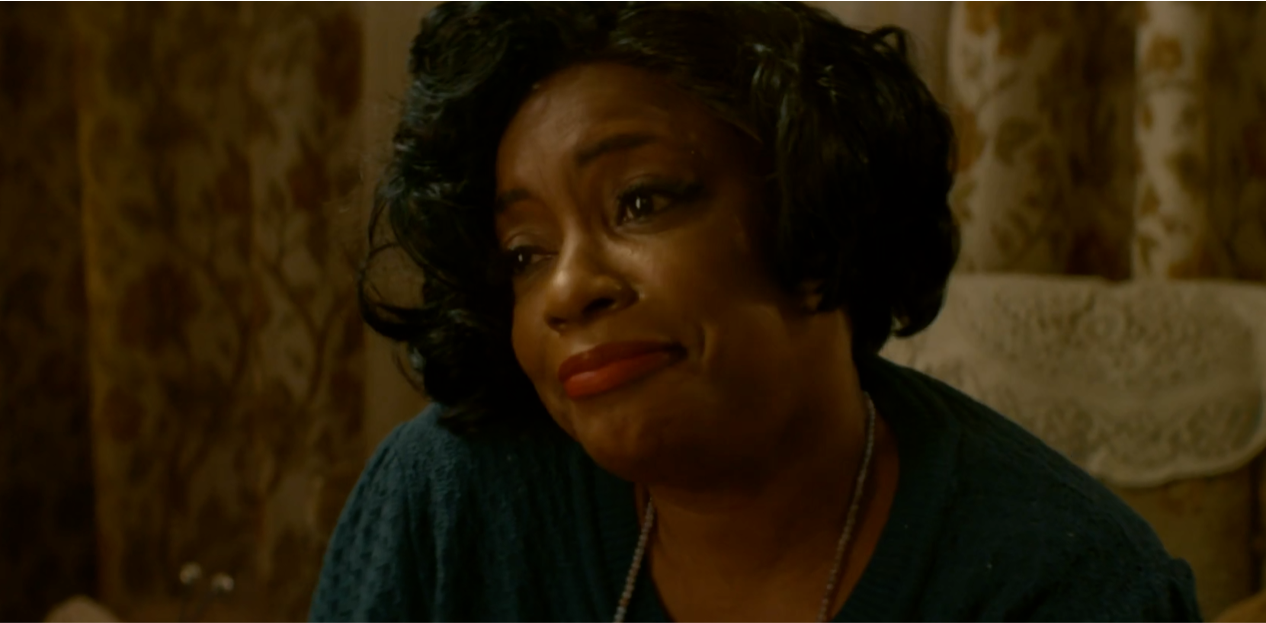
Directed by Rod Lurie, ‘Lucky Strike’ follows Captain John Castle as he embarks on a perilous journey through the Ardennes region, hoping to make it to safety before he is captured by German forces. Set during a fictionalized recreation of the Battle of the Bulge, the story begins with a frame narrative, where Castle, now much older, meets a woman named Rose Caldwell, who once worked in the manufacturing wing of the army. As Castle recounts how he survived against nigh-impossible odds, Mrs. Caldwell seems to align with the viewer, carefully soaking in every detail of this story. All this time, however, her own identity remains a mystery in and of itself, and it is only in the end that we learn about how she and Castle share a unique connection, forged in war.
Rose Caldwell is a Partially Fictional Character Inspired by a Wartime Anecdote
Rose Caldwell is a semi-fictional character created by writers Rod Lurie and Mark Frydman, based on an anecdote the latter heard approximately 50 years ago, in France. While collecting information for his high school project, Frydman interviewed French veterans of World War II and heard their accounts of what the war was like. One story in particular stuck with him the most, and serves as the foundation for ‘Lucky Strike.’ While we don’t know the names of any of these French soldiers, or the people associated with them, Lurie noted, in a conversation with RogerEbert, that “In the story that my partner (Frydman) was told, (…) our hero does go back to find the woman who made the radio that saved his life.” It is this detail that led to the creation of Mrs. Caldwell as a character in the film.
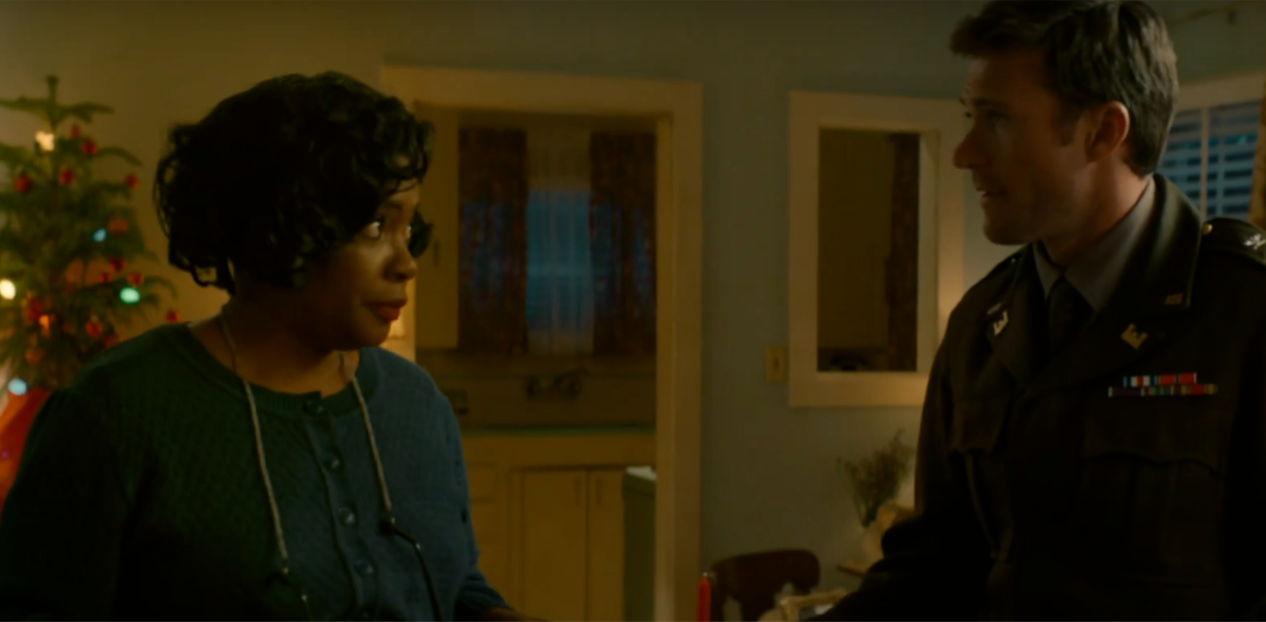
While the finer details of Mrs. Caldwell’s arc may have been created from scratch, her narrative significance is deeply tied to a lesser-discussed but significant facet of World War II, that is, the use of backpack radios. During the Battle of the Bulge, which has often been described as among Nazi Germany’s last major offensive campaigns in the war, the ability to communicate found itself at the heart of the conflict. Between December 16, 1944, and January 25, 1945, that is, the entire duration of the battle, several telephone lines were destroyed, which made portable radio-based communication uniquely valuable. Fittingly, the protagonist of ‘Lucky Strike,’ John Castle, becomes increasingly dependent on his radio and thus indebted to the person who created it, Mrs. Caldwell.
The use of radio has a lot of thematic significance in the movie, as confirmed by both director Lurie and actor Scott Eastwood, who portrays Castle. “It’s an interesting piece of equipment that, you know, not many people talked about in World War II, but it was, you know, some of the earlier technology of the time,” Eastwood noted in an interview with Utah Public Radio. To that end, the film recreates the SCR-300 series of radios, which was developed by Motorola for the U.S. Army in World War II. “The 300 series was extremely sturdy,” Lurie noted while talking to RogerEbert, adding, “And in a place like the Battle of the Bulge, which is very condensed, something like that was very important.” While Mrs. Caldwell’s specific role in this story has been fictionalized to a great extent, in some ways her character embodies the significance of radio communication during the war.
Read More: Lucky Strike: Is Pierce Maren Based on a Real WWII Soldier?


You must be logged in to post a comment.