
 Abhiroop Das
Helmed by Gabriel Ripstein, Netflix’s ‘Mexico 86’ retells the story of the legendary 1986 FIFA World Cup, which fueled decades and generations of love for football with its historic display of craft, athleticism, professional rivalries, and sportsmanship. However, as this sports dramedy movie proves over the course of its runtime, the story behind the event is as interesting as the tournament itself, as it involves a string of events that simply could not have happened without a combination of luck and wit.
When Mexico is presented with an opportunity to host the tournament for a second time, an ordinary employee at the Mexican Football Federation makes it his life’s mission to make that dream a reality. Partially based on the novel ‘El 86: El Año En Que México Cambió Al Mundo’ by Francisco Javier González, the movie shines a light on the events that defied fate and made the 1986 World Cup happen in Mexico.
Mexico 86 Dramatizes a Real Book Detailing the Backstory of the 1986 World Cup
‘Mexico 86’ is a fictionalized take on the real events that led to Mexico hosting the 1986 FIFA World Cup, after Colombia withdrew as host. The film is loosely an adaptation of the novel, ‘El 86: El Año En Que México Cambió Al Mundo,’ penned by sports journalist Francisco Javier González. In the book, González looks into the many social and political moving parts that led to Mexico becoming the base of the tournament. However, to recreate that effect for the screen, the movie takes on the perspective of Martín de la Torre, a semi-fictional character who starts out as a lower-level government employee and goes on to lead the Mexican Football Federation, also known as the Federación Mexicana de Fútbol, or simply FEMEXFUT.

While most of the movie’s dramatic and political maneuvers originate in the minds of writers Daniel Krauze and Gabriel Ripstein, the base layer of the story has loose connections to real life, with writers Francisco Javier González and Luis Reséndiz serving as story consultants. Actor Diego Luna, who plays Martín de la Torre in the film, talked about the film’s creative boundaries in an appearance on the podcast ‘Hablando De Cine Con.’ He explained that, while the main institutions of football, be it FIFA, FEMEXFUT, or Televisa, have all been named, the main character serves as a composite figure of the real people who made the 1986 World Cup happen.
In the 1980s, Mexico Emerged as the First Country to Host the World Cup Twice
At the heart of the movie lies a very specific period in football’s history, starting with 1974, when FIFA awarded the hosting rights for the 1986 World Cup to Colombia. While this news brought waves of hope and aspirations, in the following years, the Colombian government reportedly faced challenges in complying with the requirements of the FIFA Executive Committee. By October of 1982, Colombia decided to formally withdraw from hosting the tournament, mainly citing economic reasons, which left FIFA in an unprecedented situation with only four years to find a new host for the tournament.
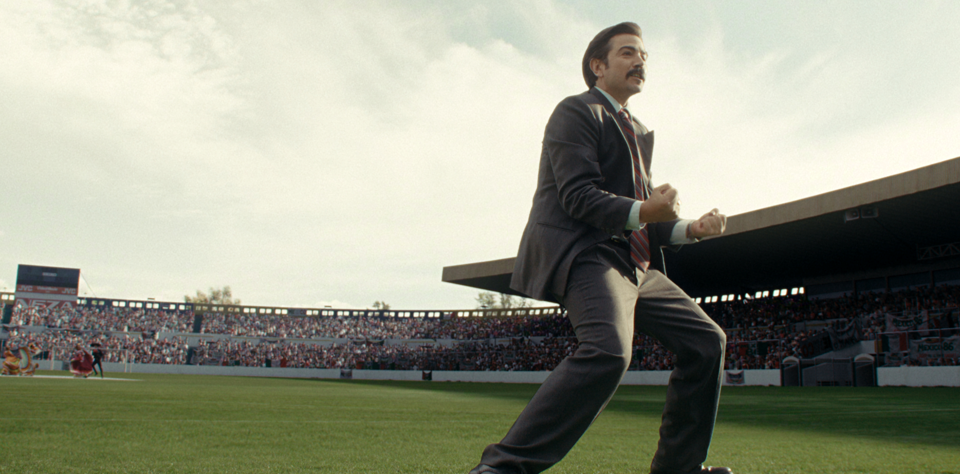
Reportedly, the USA, Canada, and Mexico emerged as the strongest candidates, with Mexico possessing a unique advantage: it had already staged the 1970 World Cup, which is often remembered as one of the most successful and culturally significant football tournaments ever held. Additionally, Mexico had retained most of the infrastructure and sports facilities from the 1970 World Cup, which added to its suitability to host the World Cup on short notice. The catch, however, was that no country had hosted the World Cup twice before this, which made the deliberation process more complicated. ‘Mexico 86’ dramatizes many of the diplomatic events that led to this point in history. On May 20, 1983, the FIFA Executive Committee convened in Stockholm and ultimately selected Mexico as the new host for the 1986 tournament.
Mexico Recovered From a Catastrophic Earthquake and Hosted an Iconic World Cup
Though the announcement was widely celebrated all throughout Mexico, the nation received a major setback on September 19, 1985, when an earthquake measuring 8.0 on the moment magnitude scale devastated Mexico City. It has been reported that the earthquake claimed more than 10,000 lives, with nearly 3,000 buildings being destroyed or severely damaged. Diego Luna, who plays Martín de la Torre in the movie, was 7 years old at the time of the disaster and opened up about his lived experiences in an interview with El País, recalling both the feeling of helplessness and the spirit of community during the rebuilding efforts.
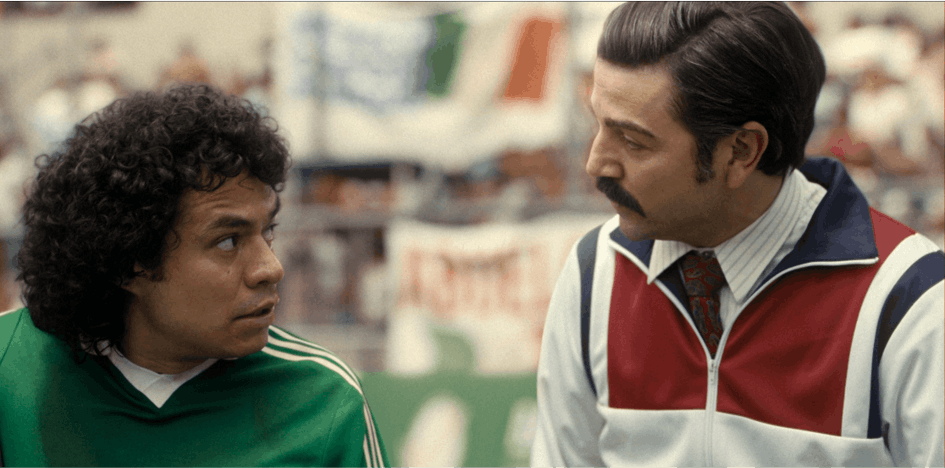
In the interview, Luna also noted that the earthquake had briefly dashed the nation’s hopes of hosting the World Cup. However, that didn’t remain the case for long, as the Mexican government soon began a series of restorative efforts to prepare for the tournament, which by that point was a mere nine months away. João Havelange, the then-president of FIFA, praised the Mexican World Cup Organizing Committee for their “massive courage and fortitude in this time of trial,” and reportedly remained confident in their ability to host the event.
The World Cup opened on May 31, 1986, and went on to become one of the most famous editions of the tournament. The Mexican team, comprising all-time great players such as Hugo Sánchez and Manuel Negrete, marched all the way to the quarter-finals, playing out a hard-fought game against West Germany. Though Mexico ultimately got eliminated in a penalty shootout, the team’s efforts are celebrated to this day. The 1986 World Cup is also renowned for producing Diego Maradona’s legendary “Goal of the Century” against England. Luna has fond memories of watching a football match between France and Italy at the Olympic Stadium, and it is likely that his perspective on the energy of the sport and that period informs much of the film’s story.
Read More: Dutton Ranch: Is Split Heart Bar Based on a Real Bar?


You must be logged in to post a comment.