
 Abhiroop Das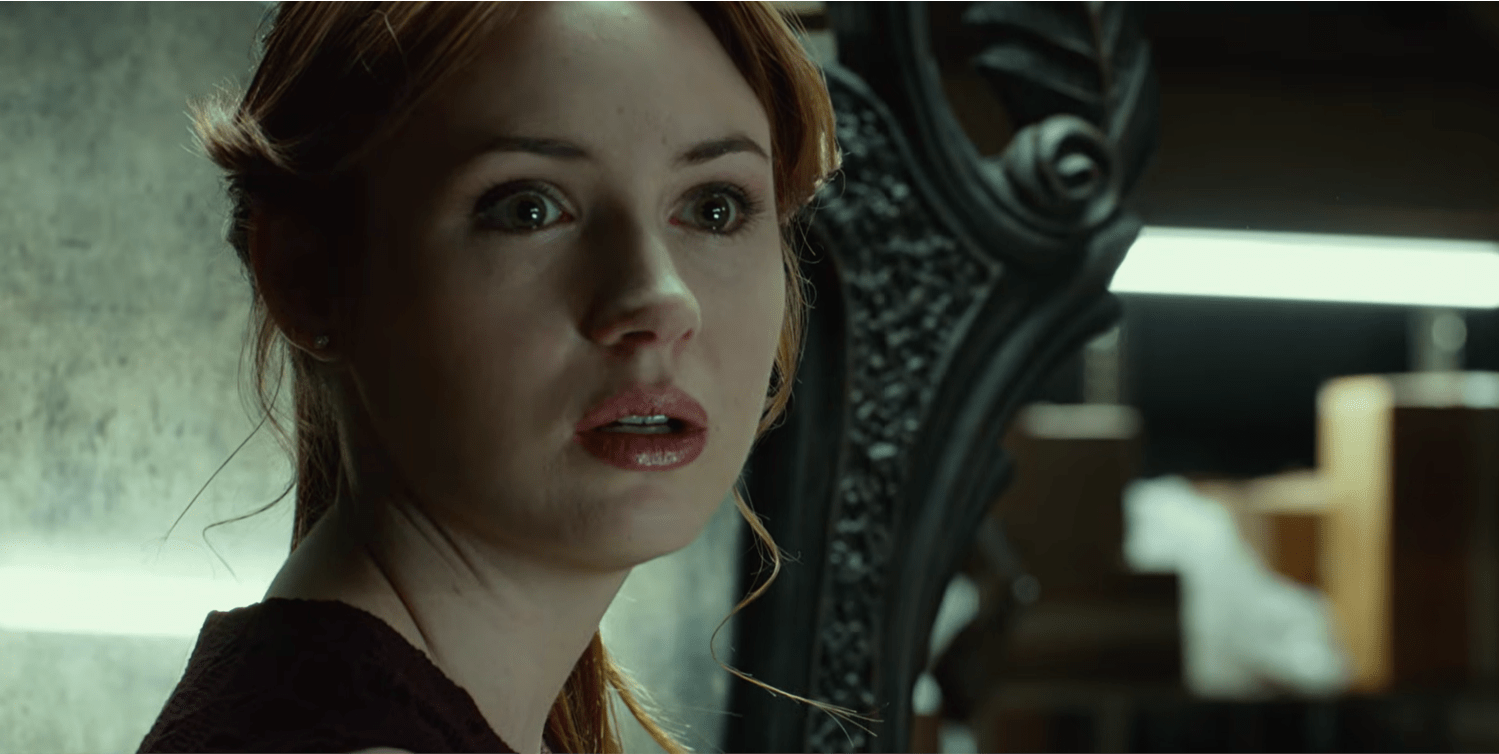
Directed by Mike Flanagan, ‘Oculus’ begins with Tim, who is recently released from a psychiatric facility where he was admitted 11 years ago for seemingly killing his father. However, his reunion with his sister Kaylie ends up shaking his whole world yet again. Kaylie claims that the murder was actually the work of a demonic mirror called the Lasser Glass, and Tim has repressed the truth of the event because of the horror and trauma. As she sets out to find proof and exonerate her brother, the said mirror joins in on the game. Soon, the duo begins to look for ways to destroy it, but the memories from 11 years ago encroach on their present, till their reality becomes indistinguishable from illusion. Based on Flanagan’s short film ‘Oculus: Chapter 3 – The Man with the Plan,’ the horror movie culminates in blood and violence, closing the siblings’ path to normalcy forever. SPOILERS AHEAD.
Oculus Plot Synopsis
‘Oculus’ begins with a young man named Tim Russell being released from a psychiatric facility. In his last session with his doctor, he recalls a dream of gunning down his father, and as it turns out, it’s not too removed from reality. 11 years ago, Tim killed his father, Alan, who had killed his wife, Marie, and had seemingly been abusing Tim and his sister, Kaylie. Currently, Kaylie works at an auction house that is selling an antique mirror known as the Lasser Glass. On the pretext of transporting it to the buyer’s location, Kaylie instead takes it to her own house, where Tim is set to return. Once back, he learns that his sister never quite let the tragedy go, as she believes that it wasn’t Tim who killed his father, but rather, the haunted mirror that once belonged to their family.

Though Tim doesn’t believe in any of this at first, slowly the memories he spent a decade repressing begin to come back. A series of flashbacks clues us into the lives of the Russell family, who have recently moved into the house and purchased the mysterious Lasser Glass. Soon after settling in, however, they begin to notice odd things, such as the sudden death of their plants and, later, their pet dog. Alan and Marie begin hallucinating independently, and this led to rifts in their relationship. Eventually, Alan begins to isolate himself in his office, while Marie becomes increasingly paranoid to the point of nearly killing her children. Alan then chains her to a room and begins acting dangerously, and the children become convinced that this is the work of the haunted mirror.
In the present, Kaylie has an elaborate setup built into the house, complete with timed cameras, thermal and charge-sensing devices, and a self-designed “kill switch,” that is, an anchor tied to the ceiling, designed to swing down and smash the mirror at the press of a button. Though Tim thinks that this is the wrong way to go, the supernatural effects of the mirror soon change his mind. However, from there the film soon descends into a series of hallucinatory visions that blur the line between reality and illusion. Parallely, the flashbacks reveal that Alan and Marie eventually get possessed and attack the children, before Alan shoots his wife dead and regains his senses briefly, killing himself. In the present, things seem to be taking an even more twisted form as Tim and Kaylie get separated, both in reality and in the world of illusions.
Oculus Ending Explained: Is Kaylie Dead? Does She Become a Ghost?
‘Oculus’ ends by repeating the tragedy this story began with, as Tim accidentally kills Kaylie in an attempt to destroy the Lasser Glass. As the police arrive at the scene and take him away, the movie moves back and forth between the present and the past, when Tim was separated from his sister. The difference this time, however, is that it’s Kaylie who has met her end and joined the other side. The story visualizes this by having her, or at least a version of her, stand alongside her parents as Tim watches from a distance. Despite his sister’s best efforts to exonerate him and bring back the good old days, the problem seems to have only backfired, leaving Tim more alone than ever.
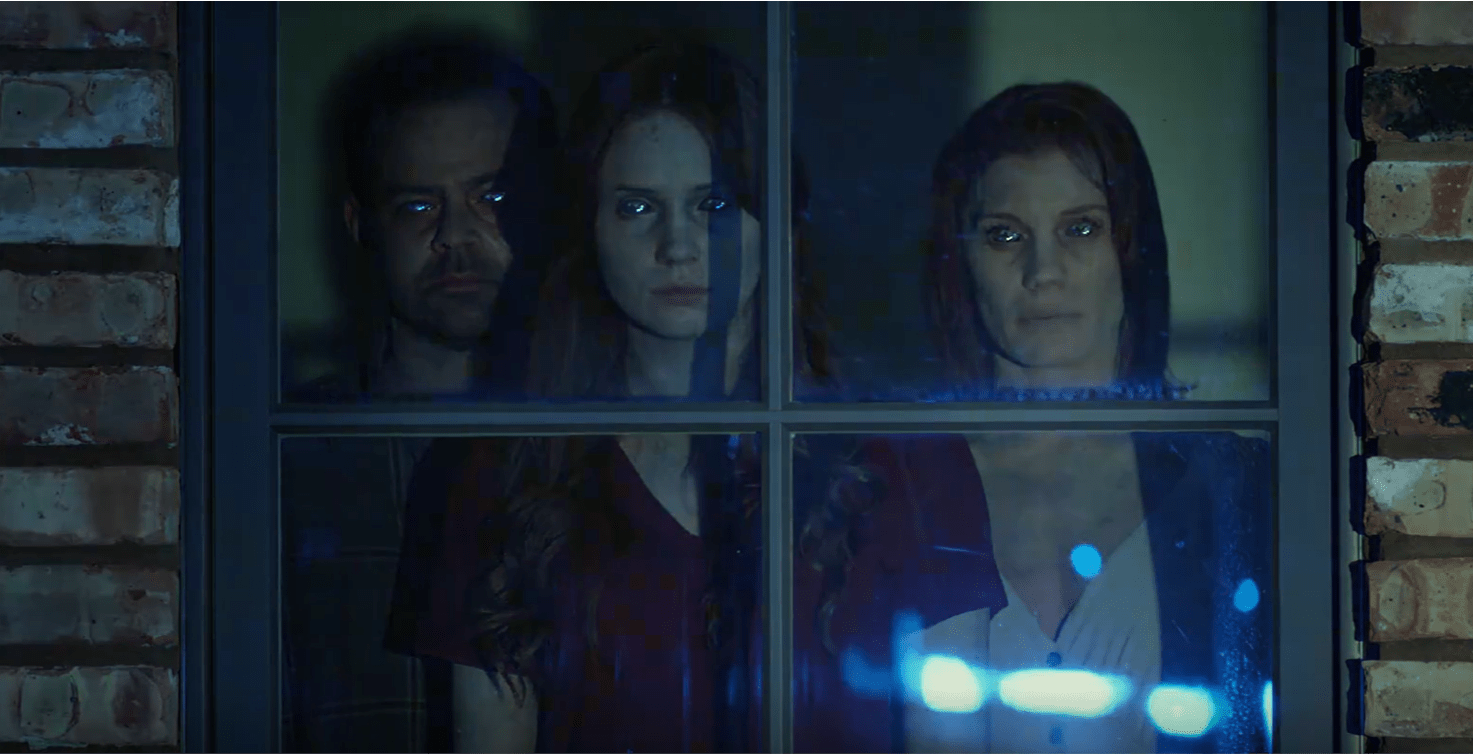
Though the entire film is built around Kaylie creating an elaborate plan to prove the mirror’s malice, the ending recontextualizes this plot as something that was never in her control to begin with. A case can be made for this entire storyline being a part of the Lasser Glass’ masterplan, as there was simply no way it would allow for people to plan out their own destruction. While Kaylie believes that the mirror can be hurt by non-human action, that is a fundamental misunderstanding on her part. The sole crack on the edge of the mirror came from Alan accidentally falling on it, and the element of chance is the key to it all. By pre-planning the entire mechanism, Kaylie still technically plays into the mirror’s hand, and thus it is able to protect itself with its usual warping of perspective.
Given that the movie doesn’t reveal the complete truth surrounding the mirror, it is still a mystery as to whether the entities we see are the spirits of the dead or simply the mirror’s constructs. Be it the woman that Kaylie and Tim see in their childhood, or the many entities that haunt the children during their attempt to break the mirror, or the hallucinations they experience as adults, all of them appear more to be replications of people created by the mirror, which is fitting considering that is loosely what mirrors do. The most definitive proof that they aren’t ghosts is the scene where Kaylie and Tim watch their own clones staring into the mirror, since these entities cannot be the spirits of characters who are still alive.
Why Does Kaylie Walk Toward the Mirror?
Kaylie’s death at the hands of her brother is largely made possible by her eventual submission to the mirror and its abilities, particularly when she decides to walk up to it. Instead of seeing her own reflection, she sees a vision of her mother, Marie, calling for an embrace, and it is this sight of false hope that tricks Kaylie into walking towards her own doom. The framing of this entire sequence has its own symbolic dimensions, and it calls back to that brief moment Marie regained her senses when attempting to kill her daughter. While Kaylie is traumatized by the memories of being choked to this day, a part of her also cannot let go of that small, positive memory of her mother from their last, nightmarish days together. All the Lasser Glass has to do is to exploit that weakness.
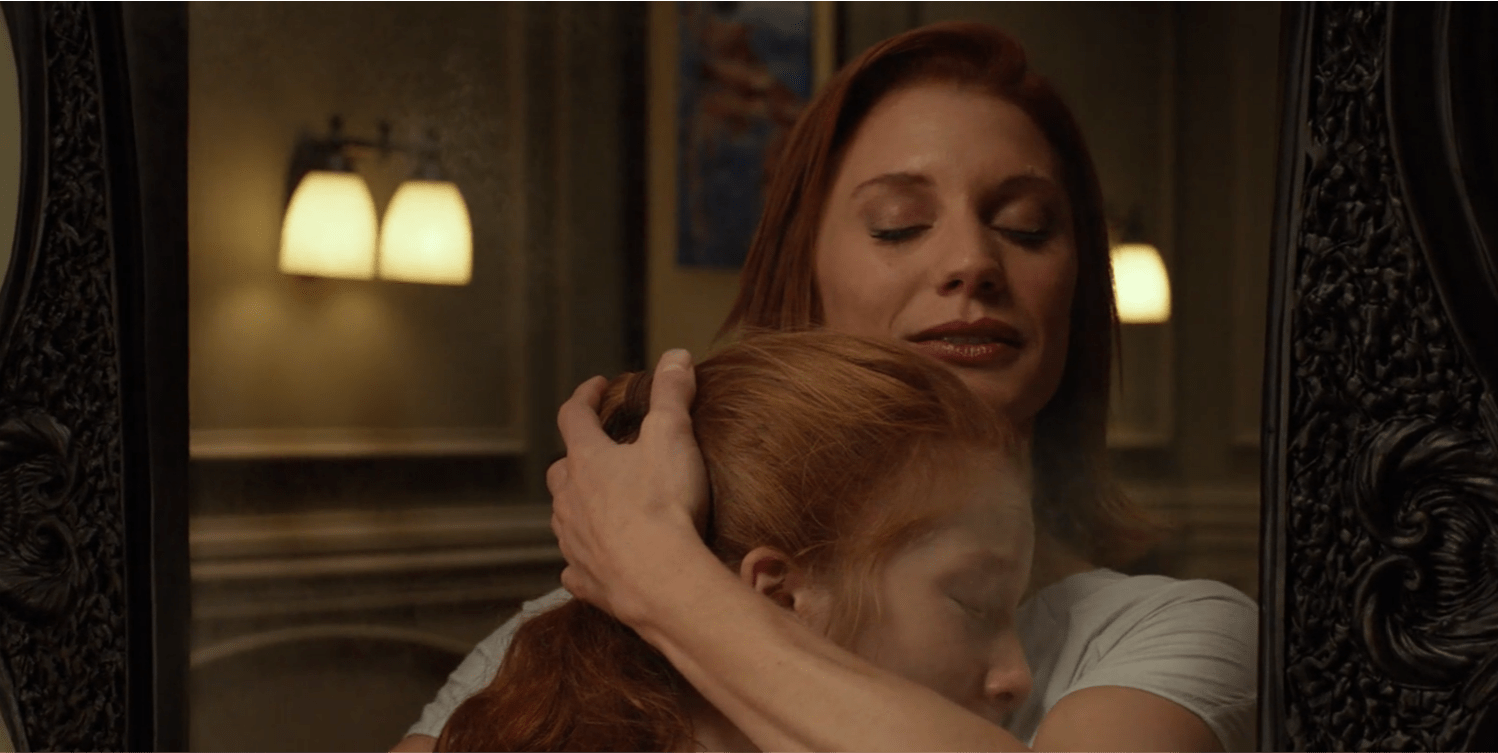
When gazing into the past from the perspective of Tim and Kaylie as children, we mostly see supernatural things happening without a clear sense of the psychological component of it all. Be it the siblings’ inability to damage the mirror, or their inability to process their parents’ abusive actions, all of it is perceived from a distance, and it isn’t until the siblings themselves become targets of the mirror that things clear up. If Kaylie and Tim’s perspectives are any reference to go by, it appears that the parents’ minds weren’t corrupted, nor were they possessed. Rather, the entire world around them was warped in a way that made them do absurd things. Something similar happens to Kaylie, as even in her last moments, she remains convinced that she’s doing the right thing by walking up to her mother, and unknowingly, to her death.
What Will Happen to Tim? Will He Go to Prison?
With Tim getting arrested and taken away by the police, there is a good chance that he will be sent to prison for killing Kaylie, regardless of whatever he says. Ironically, the same camera system that Kaylie put up to find proof of the Lasser Glass’ crimes now provided undeniable evidence of Tim’s actions. However, given that he was admitted to a mental health facility after his father’s death, there is already a precedent for him needing help from medical professionals. Thus, the more likely probability is that Tim will find himself inside a facility yet again, tormented by his family’s death and the memories of the haunted mirror.
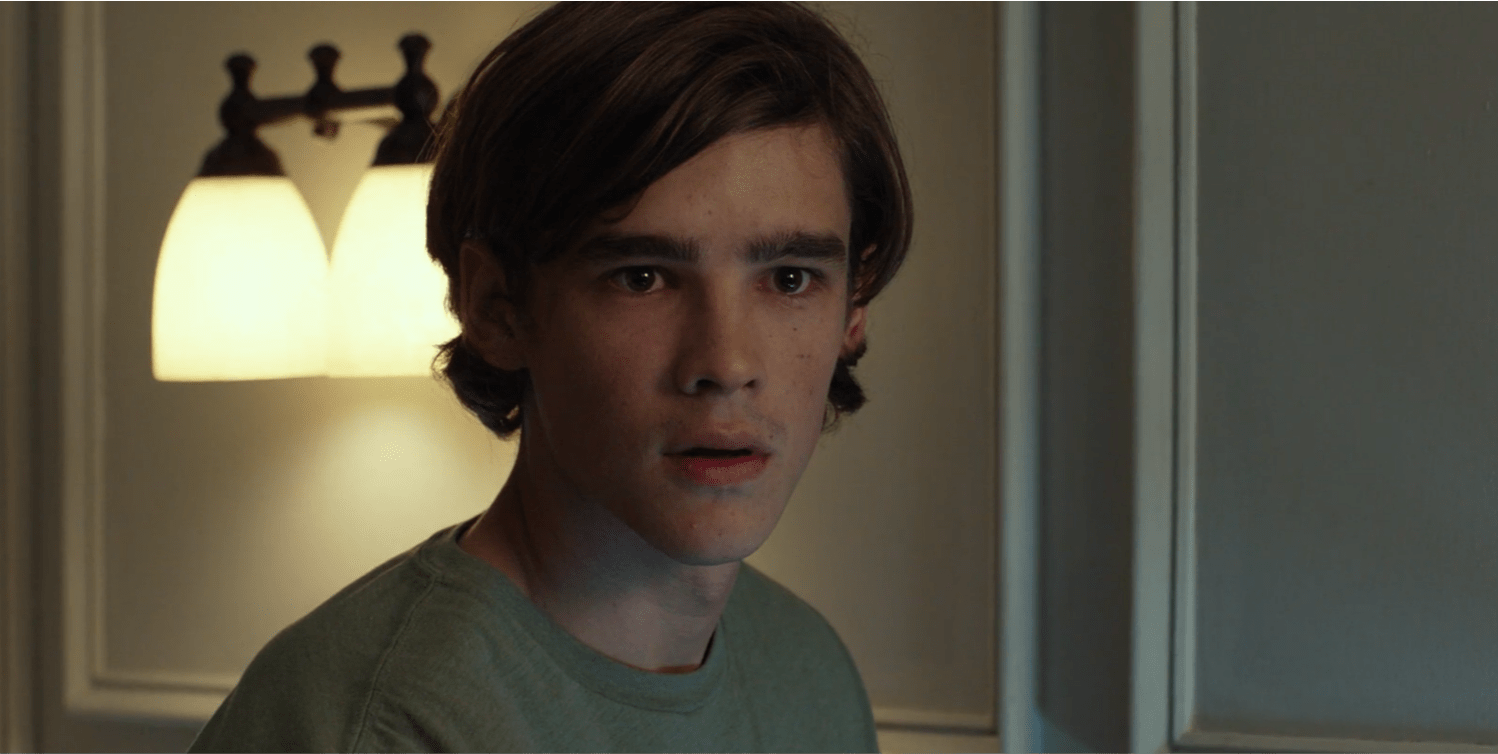
The reveal about how Tim and Kaylie’s father died also recontextualizes the opening sequence of the film, with Tim dreaming about his father’s final moments. For most of his time in the facility, he dreamt of his father as the one with the gun, but it was only after he imagined himself with the gun that the doctors found him fit for leaving the facility. Symbolically, this was interpreted as him taking accountability for his actions, but the film ultimately reveals that he simply repressed the truth, that it really was his father who pulled the trigger. It is very likely that this cycle will repeat with Tim, now that Kaylie is gone as well. While the Lasser Glass may not have claimed him as a victim, Tim remains the one most devastatingly affected by it.
Is the Lasser Glass Real or a Hallucination?
Though the movie pretty explicitly depicts the Lasser Glass as a supernatural entity, it is important to note that the entire story is told from the perspective of two traumatized characters. Apart from the conventional take on the mirror, there is also the interpretation that Tim and Kaylie hallucinated many things as children, owing to their abusive household. Later, while Tim tried to suppress these memories or seek help, Kaylie went on the opposite path, eventually dragging her brother into it as well, against the doctors’ warnings. Throughout the flashback sequences, we see many instances of Alan and Marie arguing pretty intensely, and though we are led to believe that this is the sinister effect of the mirror, it’s possible that the siblings imagined the horror aspect as a coping mechanism.
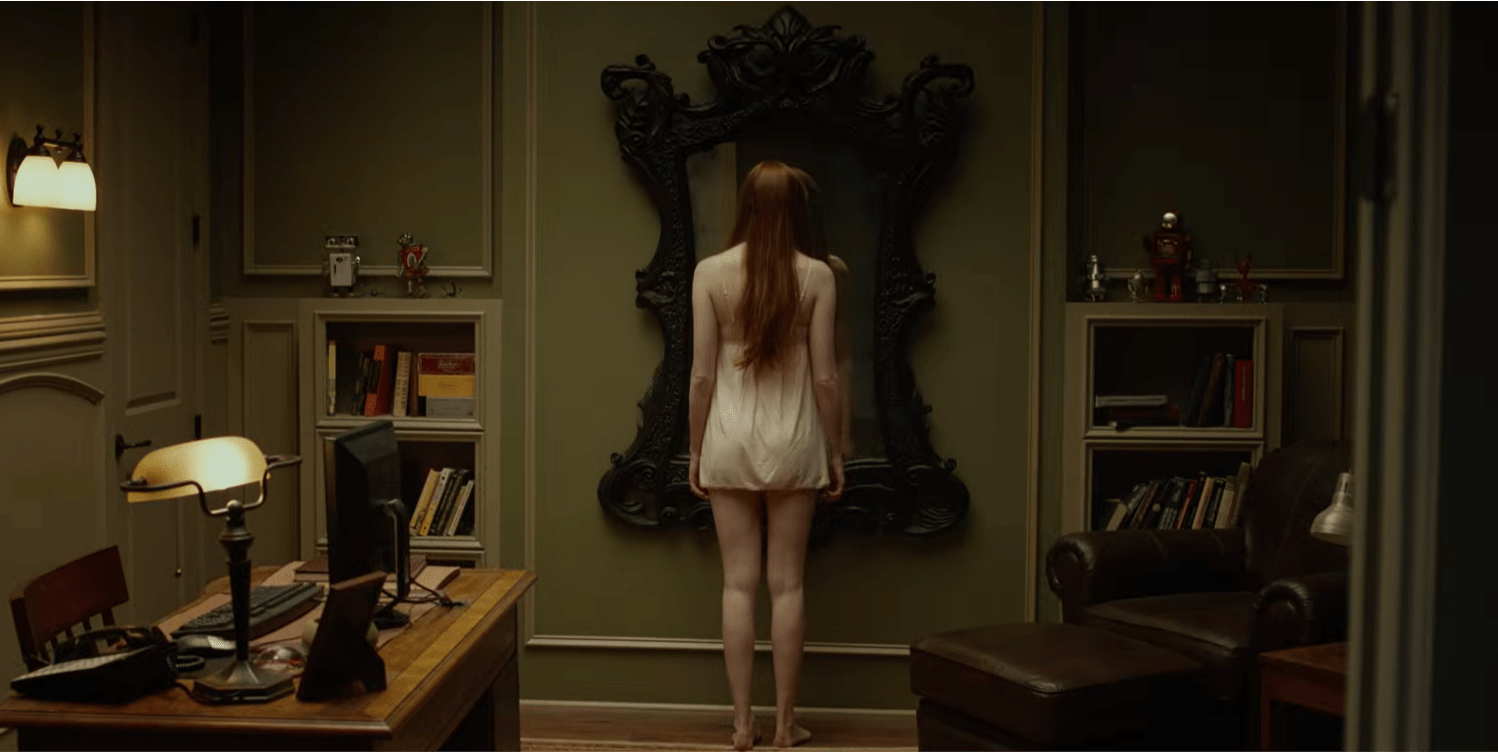
One instance that supports this theory is when Tim and Kaylie spot a woman caressing their father, only for him to deny that it ever happened. Though the Lasser Glass is supposed to be capable of making such constructs, one can also read the scene as the start of the Russells’ domestic troubles. From there, the scene where Alan chains Marie to her room and keeps the children locked away is recontextualized as not the actions of a father protecting his children, but a twisted man abusing his family. As adults, the siblings are still deeply affected by the incident, and their futile attempt to move on only makes things infinitely worse. However, this interpretation too can be said to be part of the Lasser Glass’ illusion, which leaves things ambiguous all the way to the very end.


You must be logged in to post a comment.