
 Aahana Swrup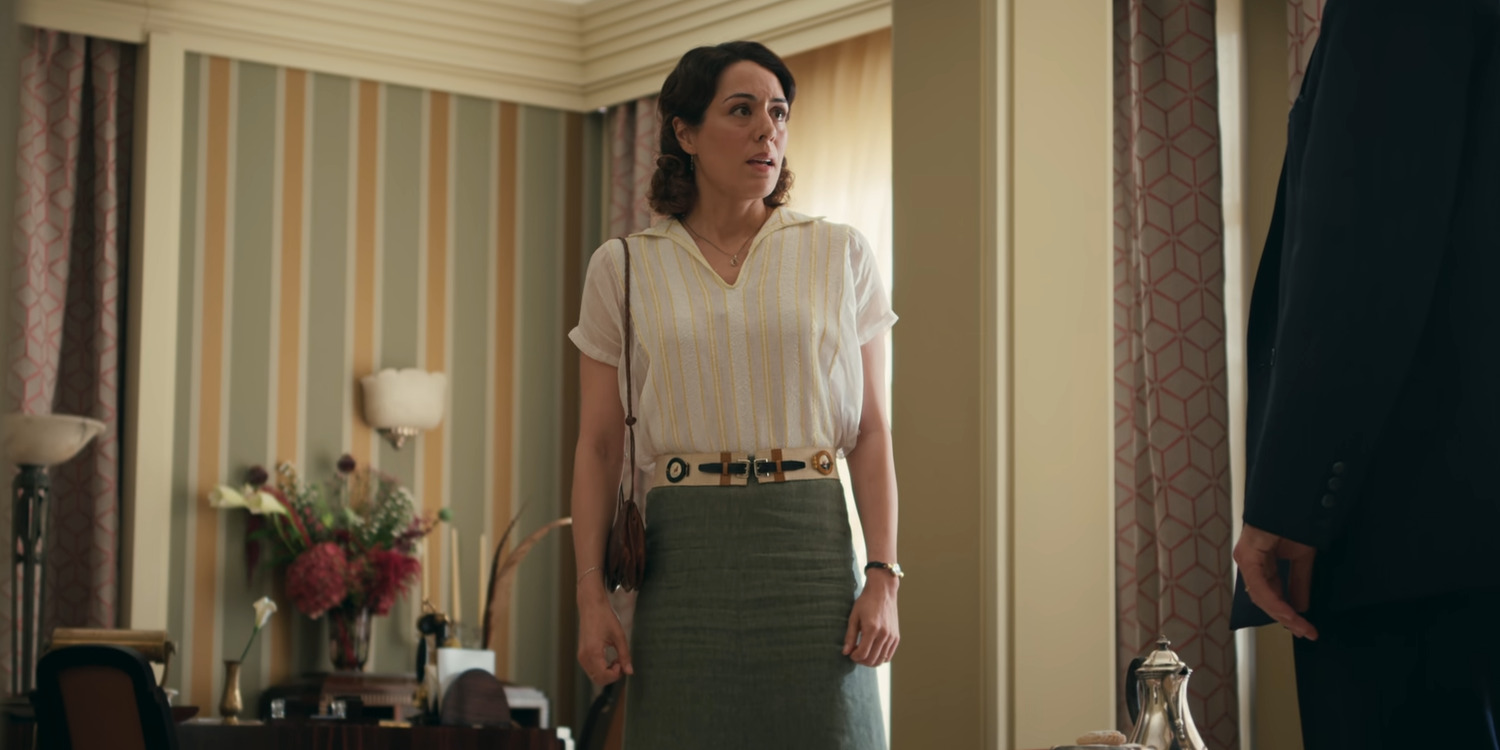
Created by Marie Deshaires and Catherine Touzet, ‘Summer ‘36’ is a French mystery thriller series that revolves around a murder where the victim has numerous enemies who have their reasons for praying for his downfall. The victim in question is Adrien Jacquart, whose death occurs inside a locked room in Hotel Riviera during the summer of 1936 in Nice, France. The prosecutor’s professional and personal affairs have both left him wildly unpopular with some people.
Many of these people, like Adrien’s lover Blanche, ex-fiance Eugenie, and convict destined for the gallows, Pierre, happen to be in the same city. Therefore, once Detective Raven and his aide, Leonie Morel, take on the case, they have their work cut out for them in the suspect department. Yet, even as each thread reveals some new mystery or secret, their investigation continues to entangle into greater knots on every turn. The period setting and the story’s thematic inheritance imbue the characters and their plights with a sense of realism and history.
Summer ’36 is a Fictional Hercule Poirot-Style Murder Mystery
‘Summer ‘36,’ originally titled ‘L’Été 36,’ is entirely a work of fiction. The story doesn’t take direct references or inspirations from any real-life murder or other criminal cases. Instead, it builds on the whodunit genre, exploring its conventions in exciting ways. The murder mystery, penned by Marie Deshaires and Catherine Touzet, operates within the genre-appropriate bounds. The city of Nice, and particularly the Riviera Hotel, offers a confined stage for the mystery to unravel. Adrien Jacquart is the intriguing victim, and a whole cast of suspects is introduced from the get-go. The nature of the tale compels Detective Raven, and subsequently the audience, to grow skeptical of each potential suspect who seems to have unique motives of their own.

This aspect of the puzzle may remind viewers of the murder mystery classic ‘Murder on the Orient Express.’ Although the story isn’t a direct or even indirect adaptation of the story, the components of the whodunnit conundrum are bound to remind viewers of the train-bound mystery that faces Hercule Poirot. In fact, the show makes an in-universe reference to the Agatha Christie novel, subtly paying homage to the work. This foundational understanding of the classical tales of the genre allows ‘Summer ‘36’ to craft a murder mystery that remains intriguing and interesting without becoming predictable. Thus, the storyline finds a sense of familiarity through conventional narrative structures and themes, without drawing on any real-life people or crimes.
Summer ’36 Explores the Social Environment of its Period Setting
Despite retaining no real-life inspirations, ‘Summer ‘36’ finds a tangible footing in reality through its historical setting in late 1930s France. Instead of simply setting the period as a backdrop, the series interweaves the social and political implications of the time into the narrative. The story begins with a heightened focus on socialist President André Léon Blum and how his election has granted workers their first paid summer vacation. This is exactly what brings an intriguing mix of characters to Nice, a beach city otherwise reserved in the vacationing months for the elite. Moreover, the central mystery at play mirrors themes of the same socio-political conflicts facing the country at the time. Adrien Jacquart is a wealthy prosecutor who ran in the opulent social circles of France.

Many of the suspects, like Blanche and her husband, emerge from a similar social background. On the other hand, individuals like Eugenie and Jean Berthier, representatives of the workers’ union, who are constantly at odds with the society’s rich, offer a different perspective. Likewise, the suspicions of their involvement in the murder also stem from a unique point of view. Then there’s a more obvious representation of the working class through the staff of the Hotel Riviera, Guilla, Felix, and Edgar, as well as Detective Raven and Leonie. All these characters, with their different backgrounds that remain influenced by their unique social standing, play a role in Adrien’s murder investigation. Thus, alongside maintaining visual historical relevance, ‘Summer ‘36’ also strives to achieve thematic realism through its setting.
Read More: Summer ‘36 Ending Explained: Who Killed Adrien Jacquart?


You must be logged in to post a comment.