
 Abhiroop Das
Created by Jonathan Glatzer, AMC’s ‘The Audacity’ takes a voyeuristic look into the heart of Silicon Valley, where the smartest and wealthiest people fraternize and turn on each other at the drop of a hat. Duncan Park is an uber-successful CEO on paper, but in reality, his data-mining company, Hypergnosis, is perpetually in a do-or-die state. After a big deal with Cupertino, the biggest company in the realm, falls through, Duncan is left staring at his own doom until he finds an unlikely ally in the form of JoAnne Felder, his not-so-honest therapist. By the end of season 1 of this dark comedy series, this soup of complicated dynamics, betrayals, and innovations reaches a climax, albeit at the cost of something far more fragile. SPOILERS AHEAD.
The Audacity Season 1 Plot Recap
‘Audacity’ season 1 begins at the heart of Silicon Valley with Duncan Park, a once sensational entrepreneur who is currently leading a new data mining company, Hypergnosis, while navigating personal demons. Though he has a seemingly trusty therapist in the form of JoAnne Felder, the most famous in town, progress seems slow. Inches away from a deal with the tech giant, Cupertino, Duncan gets outed as a press leaker, following which his popularity nosedives and the deal goes on hold. Anushka, Duncan’s long-time friend and contact inside Cupertino, also seems to be going through troubles of her own, and the fact that her husband, genius inventor Martin, seems more interested in his AI model than her doesn’t help.
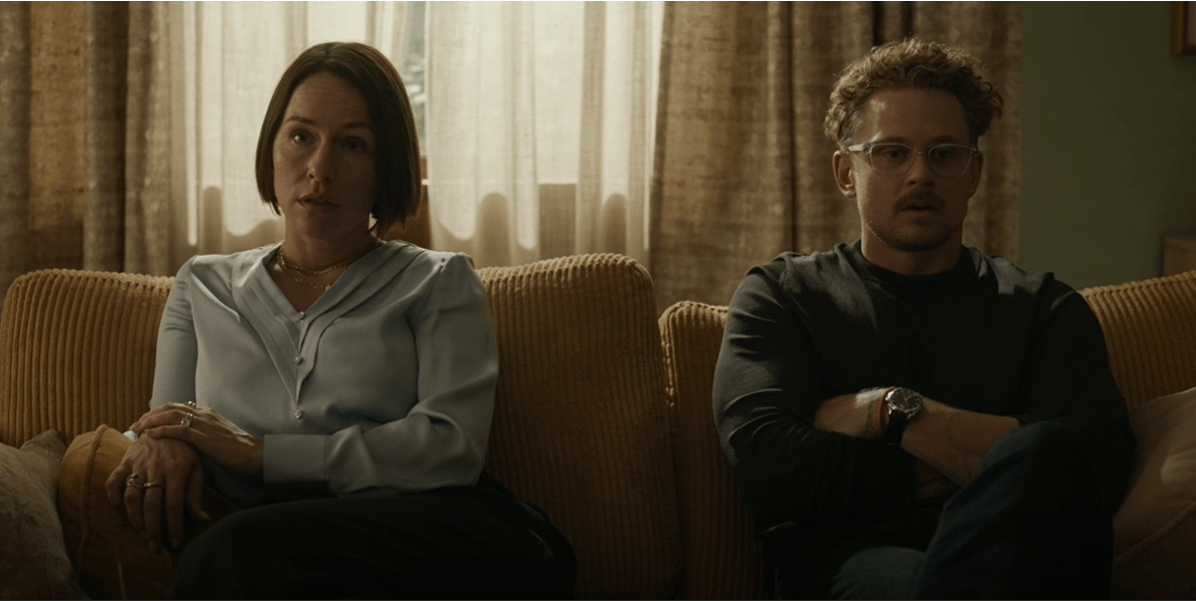
Tom Ruffage, a veteran and a complete outsider to the valley, wants a tech partner to digitize the Department of Veterans Affairs’ antiquated filing system, and potentially innovate something new for veterans’ care. However, after being rejected and often mocked out of these discussions, he makes a precarious deal with Hypergnosis. Meanwhile, Duncan discovers that JoAnne has been using her therapy sessions with influential clients to fish for market information, which she then uses for insider trading. Using that as a threat, Duncan hopes to turn her into his oracle for whom to invest, but JoAnne refuses to become a puppet. Instead, she pairs him up with her grumpiest client, billionaire Carl Bardolph, who is worn out and wants a fresh entry into the industry.
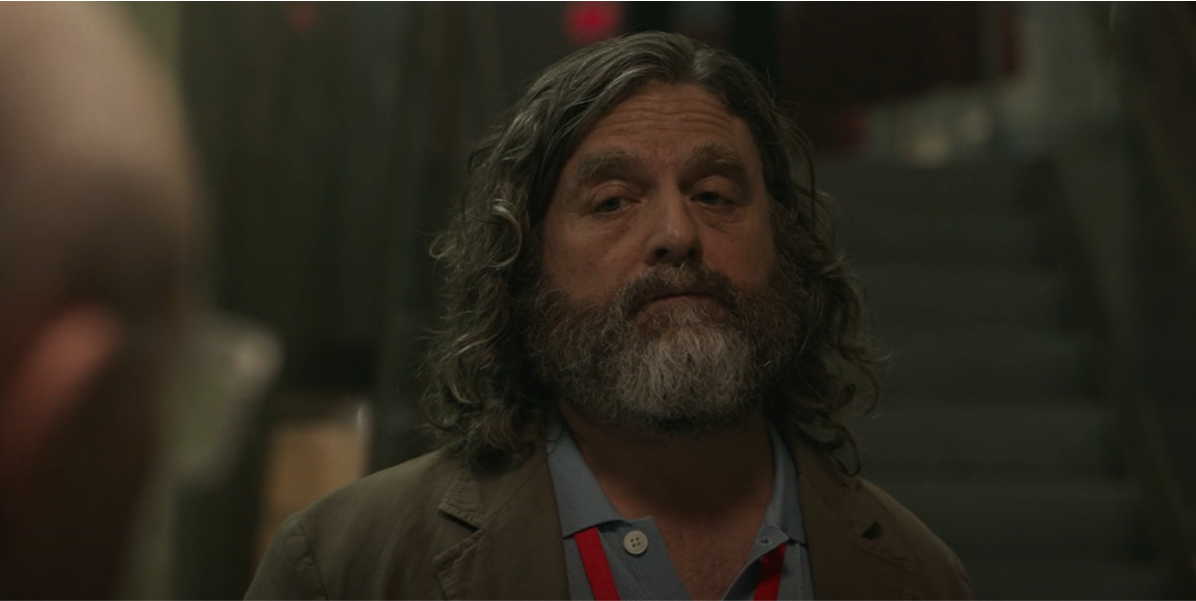
Duncan and Bardolph’s first meeting turns out to be less than fruitful, creating a messy three-way dynamic between them and JoAnne. Frustrated with Duncan, she resorts to buying a gun, which her son, Orston, later steals to impress his crush, Tess, who also happens to be Martin’s daughter. After quite a lot of strategic warfare, Duncan is ousted from Hypergnosis, with Bardolph taking control and appointing Anushka as the CEO. As part of her ethical campaign, she collaborates with Tom and tries to use her husband’s AI, Xander, to aid veterans. The plan almost works, only for Bardolph to sell Xander’s rights to the military at the last minute, using the veterans’ data to train the AI. Duncan, meanwhile, creates his own company, PINATA, and steals the show at a tech conference, bringing the fight to a stalemate, for now.
The Audacity Season 1 Ending: Why Does Tom Ruffage Kill Himself?
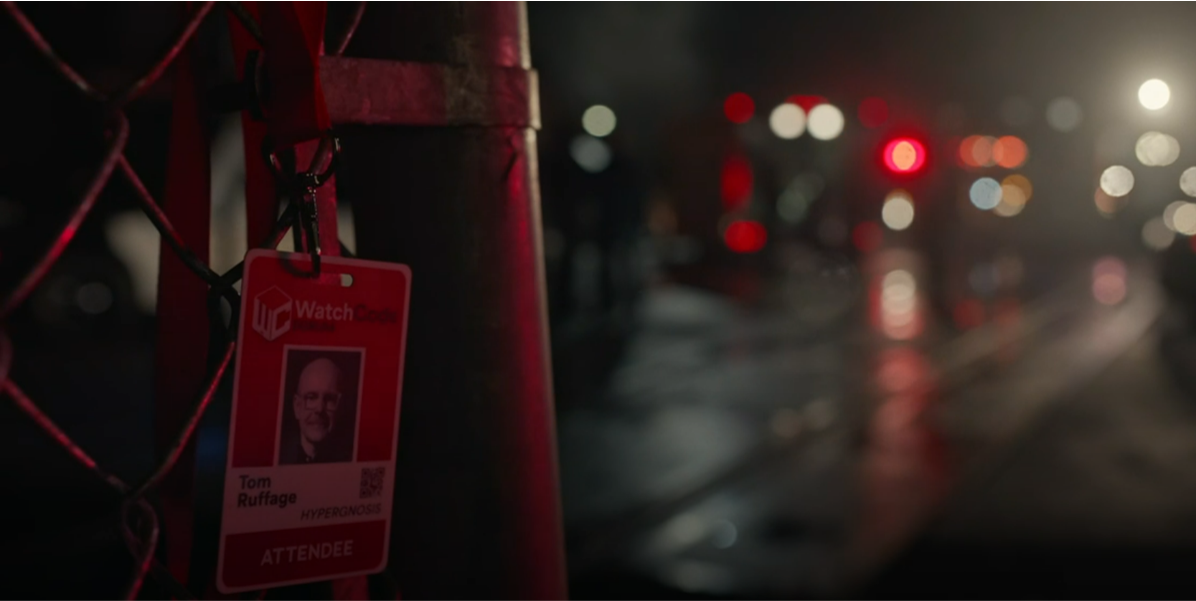
‘The Audacity’ season 1 ends its satirical voyage on a crushing note, with veteran Tom Ruffage stepping in front of a train and ending his own life. While most of the episode builds up to Jamison contemplating suicide, going as far as to stand at the train lines herself, the train seemingly stops a few meters ahead of her. It is only later that we learn that it’s Tom who took that final step, leaving nothing but his WatchCode badge as a form of silent protest. This decision comes after he realizes that no matter where he goes in Silicon Valley for help, he will get nothing except malice and selfishness in return. Just as the entire veterans’ catalog is digitized, and Tom’s dream of providing them with aid nears fruition, Bardolph snatches that hope away, instead using that data to create an AI-backed warfare system that is supposed to be “easier” on the soldiers’ consciousness.
Bardolph’s betrayal of the cause doesn’t actually come out of nowhere, as there is a precise moment in previous episodes where Tom gets a harsh reality check. Shortly after the Xander experiments end in triumph, Bardolph quite literally forces Tom into playing dress up and participating in a Western Front reenactment, complete with soldiers wearing gas masks and engaging in bombardment. Bardolph completely discards Tom’s PTSD in favor of the spectacle of being a soldier, and that is just about a perfect summary of the betrayal that soon follows. For Bardolph, who revels in aggression and has spent most of his adult life fantasizing about warfare, the psyches and lives of real soldiers and veterans mean little compared to the ability to play God, be it through his reenactments or by controlling their private data.
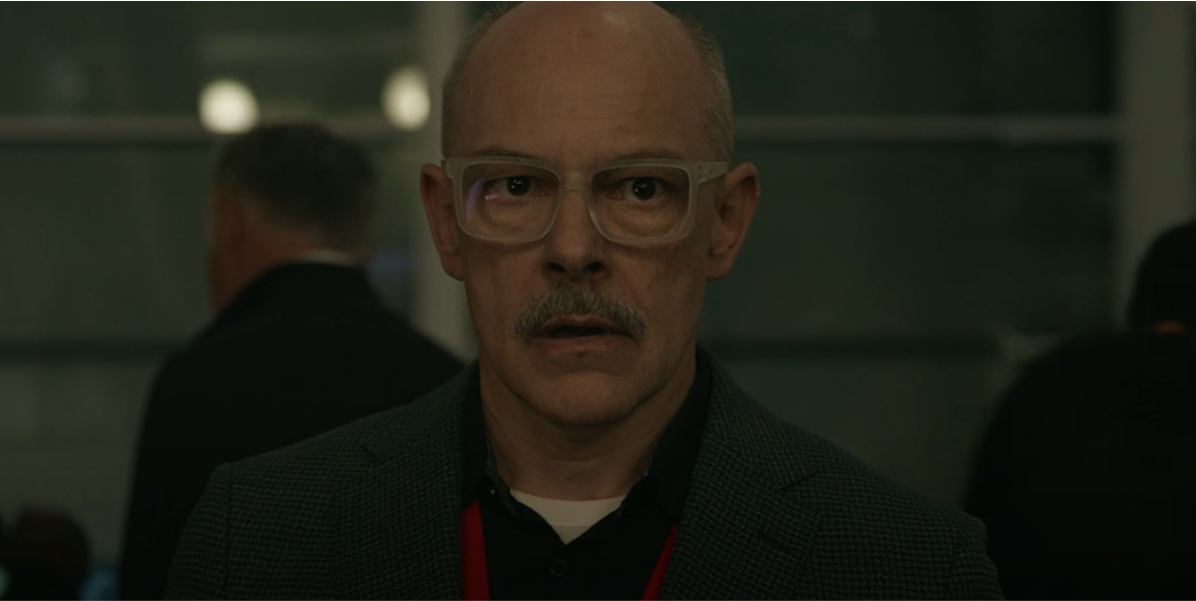
The real tragedy of Tom’s defeat, so to speak, is that there is a seemingly climactic moment where he confronts Bardolph about his armchair obsession with soldiers, and how, by romanticizing war, he is insulting people he doesn’t even know. In many ways, this really is a statement about Bardolph never connecting with his veteran father, and while this scene has all the setup for altering the story’s trajectory, that never happens. Instead, the story is subsumed by Bardolph’s greed, and the others involved in the business catch up soon enough. Minutes before his death, Ruffage watches as his voice gets turned into noise amidst the capitalist babble of his peers, and it is ultimately that hopelessness, woven within the narrative itself, that drives him to die by suicide.
Does Hypergnosis Acquire PINATA? What’s Next For Duncan and Anushka?
As the story has already established, the capitalist machinery of Silicon Valley keeps moving regardless of what intervenes, even if it’s Tom Ruffage’s death. Just as it appears that Bardolph is on the cusp of contemplating his actions, and perhaps course correcting them, Duncan reappears in his life with a new offer. It is a direct recreation of their first interaction, in which a disenchanted Bardolph stabbed Duncan’s hand with a fork. This time, however, the power dynamics are a lot more ambiguous, as in this moment Duncan is single-mindedly driven by a hunger, unlike Bardolph or anyone else. Having delivered a stellar presentation, he is the talk of the town, and everyone, including Cupertino, wants a piece of PINATA. Duncan, however, returns to the very company that kicked him out not so long ago, Hypergnosis.
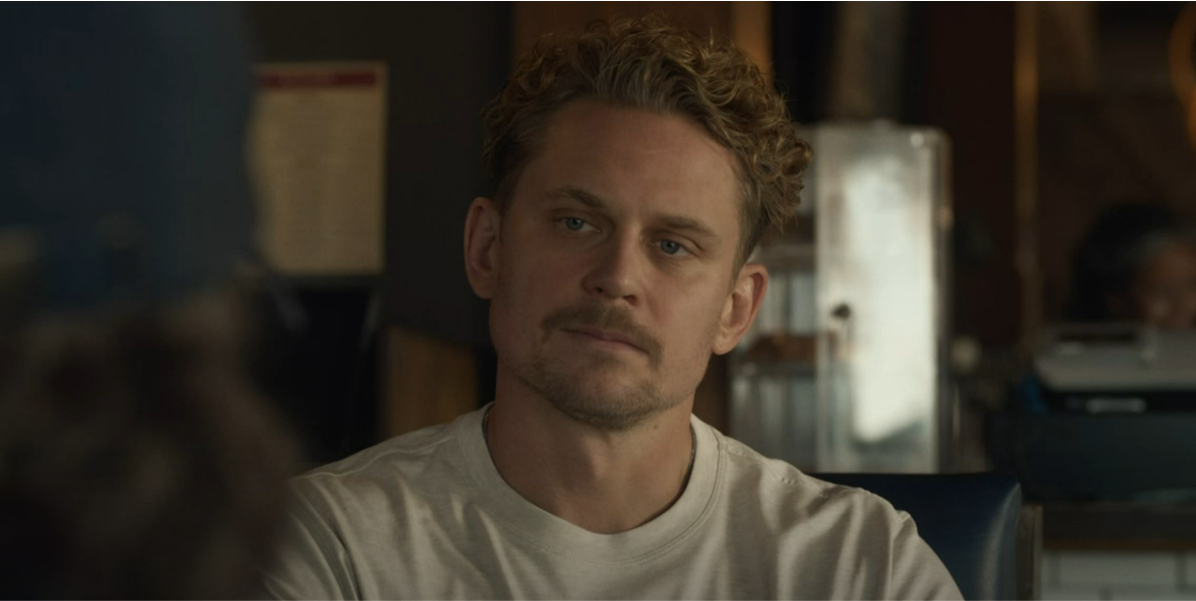
Though the ending doesn’t make it explicit, Bardolph ultimately agrees to acquire PINATA, plucking a 1 dollar bill out of the donation jar as he walks towards Duncan to complete the deal. In essence, Duncan is selling this company for free, but the real gains he is making with this transaction are a return to the status quo. If the deal goes through, and we are led to believe that it will, Duncan returns exactly to where he was at the start of the story, leading Hypergnosis through turbulent waters as the CEO. However, instead of seeking a powerful ally in the form of Cupertino, this time, Duncan is that ally, through PINATA. However, merely returning to Hypergnosis is not the end goal of his arc, nor that of Bardolph’s, as now a second battle awaits.
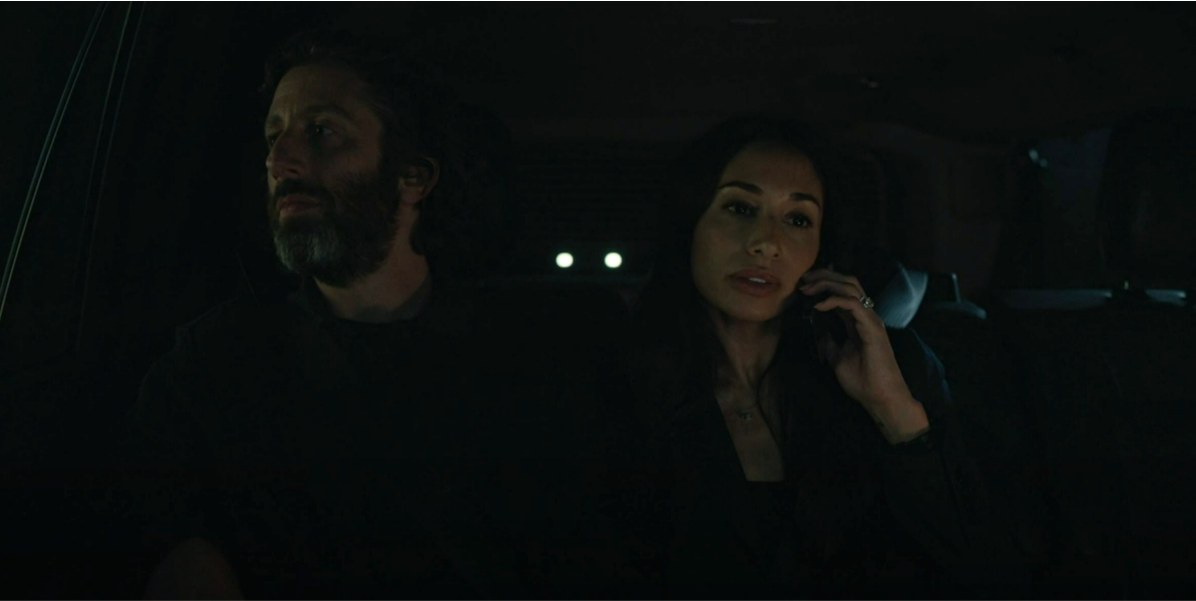
A detail that is easy to miss in this final interaction is that Bardolph doesn’t actually buy the company with his own money. Instead, he pointedly takes a bill that isn’t his. While this isn’t exactly grounds for a legal twist, at least yet, it does symbolically point to Bardolph not having his whole heart in the deal. It is entirely possible that this is a trap set up by him to betray Duncan at the last minute, just like last time. Anushka, on the other hand, is left in an even worse spot than before, as while her husband is now wealthier than ever, she is out of a job and has had all of her hopes about an ethical revolution duly squashed. While Duncan seems to have won the art for now, it is essentially by sitting on top of a live grenade, which can blow up and destroy friend and foe alike at any given moment.
Why is JoAnne Called by the FBI? What Happens to the Gun?
The final scene of the season takes the form of a rather amusing cliffhanger, with JoAnne getting a call from the FBI just as her stock profits soar. While the easiest guess, one that she likely makes herself, is that the bureau is onto her illegal trades, that’s likely not true. While insider trading typically does come under the domain of the FBI, JoAnne is more likely to get flagged for creating a shell company by surfing the internet. While she may be astute in several departments, creating a dummy company without any prior experience is bound to raise a lot of suspicion. However, given how important she is for the story going forward, it’s unlikely that she is being dragged into a conspiracy that will land her behind bars right away.
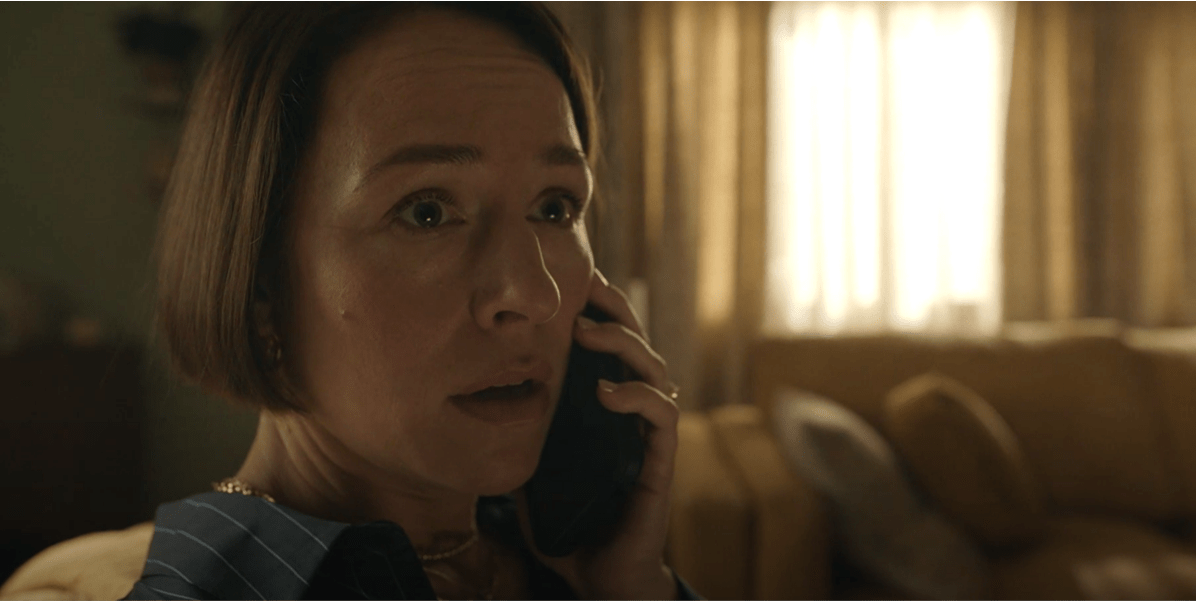
Now that Duncan is back on the Hypergnosis team, his so-called prophetic ability is likely to be tested soon, which means that JoAnne is strategically more important than ever. Without his “oracle,” Duncan will run out of ideas very quickly, and that means bad news for the larger narrative itself. That said, there can be more than one reason why the FBI might call JoAnne. Given the high profile and often controversial nature of her clients, it is entirely possible that she is being contacted for that reason, though that would once again skirt the boundaries of therapist-patient confidentiality. Ultimately, JoAnne’s scheme is bound to run its course, and as her twisted dynamic with Duncan takes root, the day of reckoning is coming sooner rather than later.
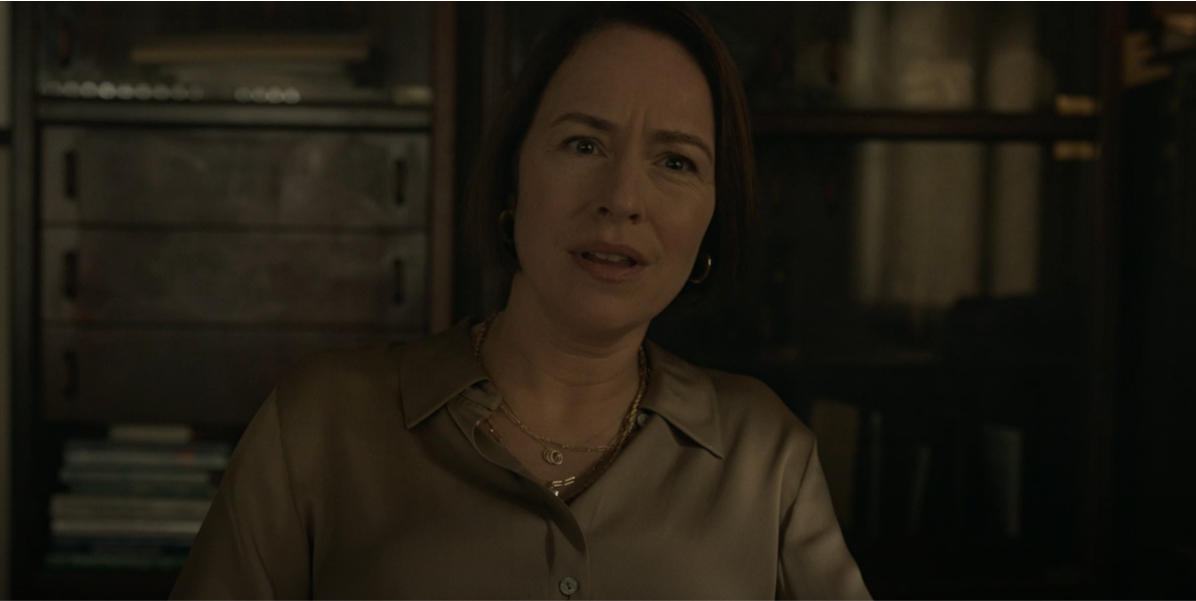
The FBI call is not the only mystery hovering around JoAnne’s shoulders, as while she doesn’t know it yet, her gun is currently at Las Altas. In one of the more humorous iterations of Chekov’s gun, JoAnne’s weapon goes unused all throughout the season, but is nonetheless a centerpiece to the narrative. For now, Orston and Felder seem to have come to an agreement about retrieving the gun from the school, but we have no idea how they plan to do it, and if they can at all. While all the blame is currently falling on Jamison, this can be her light at the end of the tunnel, albeit at Orston’s cost. JoAnne, completely oblivious to any of this, seems to have opened Pandora’s box on more than one front, with the contents having long escaped her grasp.
Read More: Is The Audacity Based on a True Story?


You must be logged in to post a comment.