
 Abhiroop Das
Created by Ryan Murphy and Matt Hodgson, FX’s ‘The Beauty’ takes place in a future where the definition of beauty dictates the global zeitgeist. When a bodily augmentation treatment known simply as the Beauty turns out to be sexually transmissible, the world is taken by storm. With just a single dosage, millions have a chance to become a more conventionally attractive version of themselves, and in the race for such transformations, a growing list of fatal side effects gets lost in the mix. Two FBI agents, Cooper Madsen and Jordan Bennett, take it upon themselves to unravel this conspiracy before it’s too late. The unique premise of the sci-fi body horror show lends itself to a wide range of socially relevant themes, particularly those concerning beauty, community, and ambition.
The Beauty is a Fictional Tale Based on an Acclaimed Comic Book Series
‘The Beauty’ is a fictional story based on the eponymous comic book series by Jeremy Haun and Jason A. Hurley. Initially, Haun was haunted by a single concept sentence, which he recalled in an Otakus and Geeks interview as “The Beauty—an STD that makes you beautiful.” He introduced this idea to Hurley during a 4-hour car ride, during which the single sentence bloomed into a much larger story, with an entire arc mapped out in their head. Above all, this confirms that the creative impetus for the comic book came entirely from the minds of the creators, with writers Matthew Hodgson and Ryan Murphy later adapting it for the screen. At its heart, the narrative is a wholly crafted, futuristic take on an entire spectrum of beauty standards and their overall relationship with society.
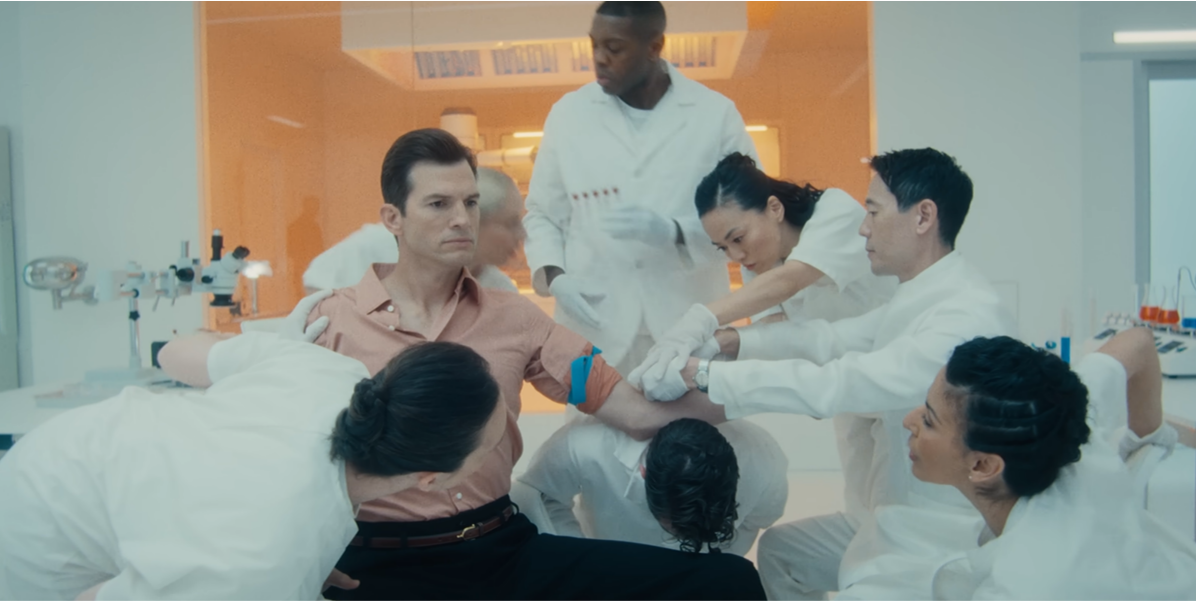
For Hurley, the story’s main hook is its ability to flip contradictions on their head. In the Otakus and Geeks interview, he explained, “The idea of a disease (…) like an STD, something that no one in their right mind should want, and making it the hottest fad ever creates a dichotomy that I find very appealing.” In bringing this idea to life, the writer duo drew inspiration from what they described as the “Hollywood Hot” aesthetic. In a conversation with Comics Beat, Hurley added that the in-narrative standards of beauty are an extension of real-life conceptions of beauty in the Hollywood industry, with methods such as burning fat, augmenting bone structure, toning muscles, and smoothening the skin, simply being pushed to their limits.
Ryan Murphy Connected the Dots Between The Beauty and One of His Shows
Haun and Hurley’s social commentary in ‘The Beauty’ goes far beyond its critique of unrealistic beauty standards, instead shining a light on what they described to Image Comics as humanity’s “ability to divide ourselves, and each other, into groups.” Such social stratification is explored in depth in the comic book series and its television adaptation, wherein people’s varying interpretations of beauty, both as a treatment and as a disease, give rise to several dramatic high points.

For co-writer Ryan Murphy, the show is also a means of tracking cultural evolution, especially when compared with his other show, ‘Nip/Tuck,’ about plastic surgeons. In a New York Comic Con panel discussion for ‘The Beauty,’ Murphy noted how the reception to certain procedures has changed, about two decades later. “I was amazed at how taboo it was to talk about it,” he said, in the context of ‘Nip/Tuck,’ before adding, “Now I think people sort of flaunt it more and are talking about it. It’s an evolution in some strange way.” It is likely that he channeled this transition through the FX show, using its sci-fi premise to expand his scope as a creator.
The Beauty is a Fictitious Treatment With Distant Parallels to a Real-Life Drug Combination
Given that the idea for ‘The Beauty’ came to the writing team from scratch, it makes sense that the drug itself is entirely fictional in nature. Its journey from being a government-approved drug treatment to an out-of-control STD does not have any exact real-life antecedents, which only furthers its status as an invented concept. While that may be the case, the Beauty’s timeline does parallel that of real-life drugs initially touted to be revolutionary within the industry, before being flagged for their health concerns. The most apparent example in this case is fen-phen, or fenfluramine and phentermine, a two-drug combination that was popular in the 1990s for its alleged weight-loss effects.
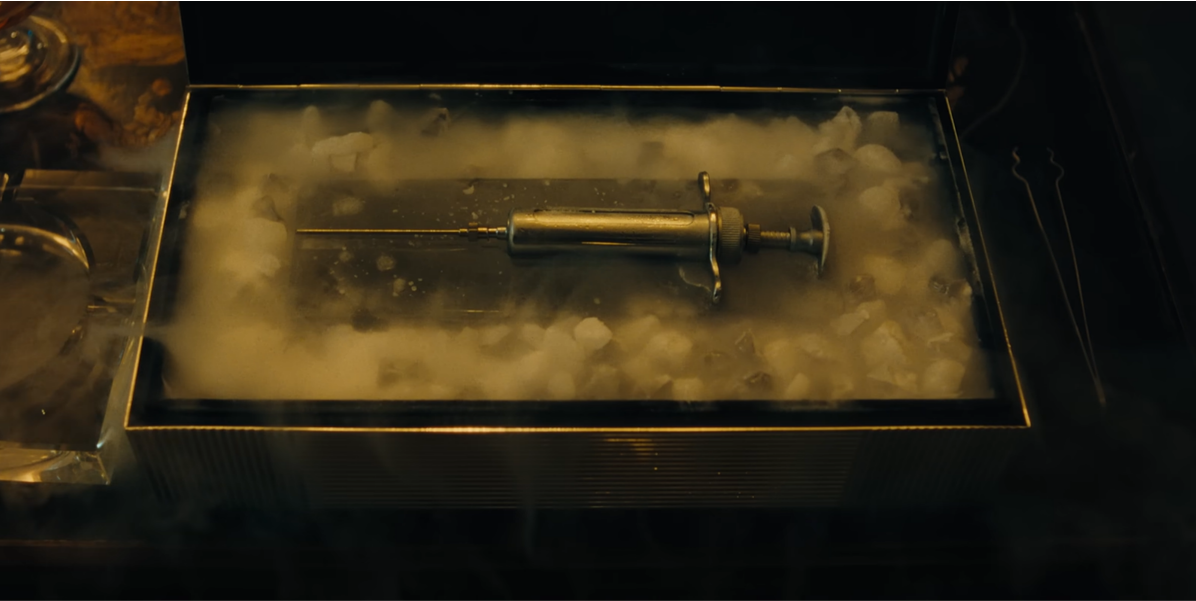
While fen-phen gained rapid popularity as a treatment method in a short span of time, studies soon showed that it had severe side effects, particularly those threatening heart and lung health. Some of the other side effects associated with this medication include sleep disorders, dizziness, restlessness, and general unease. As a result, the two drugs were withdrawn from the market in the late 90s, following which an estimated 50,000 product liability lawsuits were filed. Given that the creators have not confirmed any connection between fen-phen or similar drugs and the Beauty, such overlaps are most likely coincidental in nature and speak to the research that went into making the show as realistic as possible. Overall, ‘The Beauty’ seems to be a fictional take on the extent to which an obsession with beauty standards can alter reality, both physically and psychologically.
Read More: Is Man on Fire a True Story? Is John Creasy Based on a Real CIA Agent?


You must be logged in to post a comment.