
 Abhiroop Das

Created by Quinn Shephard, Netflix’s ‘The Body‘ slips back in time to the year 2004, following a twisted series of events at a small-town Catholic school that changes many lives forever. When members of an all-girls dance team engage in an unusual, if not outright dangerous, initiation ritual with their newest teammate, Grace Franklin, things soon go horribly wrong. With Grace’s fate up in the air, the girls begin to experience a profound sense of guilt, which then gives way to surreal, prophetic visions that simultaneously bring them together and scramble their minds. By the end of this coming-of-age psychological horror series, the question of Grace’s survival expands to something much larger, bordering on the supernatural. SPOILERS AHEAD.
The Body Plot Recap
‘The Body’ begins on the morning of Halloween, 2004, as St. Mark’s Catholic School’s dance team, the Lions, prepares for a big day. With a vacancy in their group and a major competition only a few weeks away, they desperately launch a tryout, and two newcomers sign up: Grace Franklin and Lisbeth Anderson. Following a mixed-bag audition, Grace gets the position, despite there being a disagreement among team leads and best friends Anya Butler and Elise Zakaria. That night, Grace is invited to an initiation party and decides to bring Lisbeth along. However, the mood begins to shift once drugs and alcohol are introduced, with Anya and Elise performing a satanic ritual to ensure that their team wins the championship.
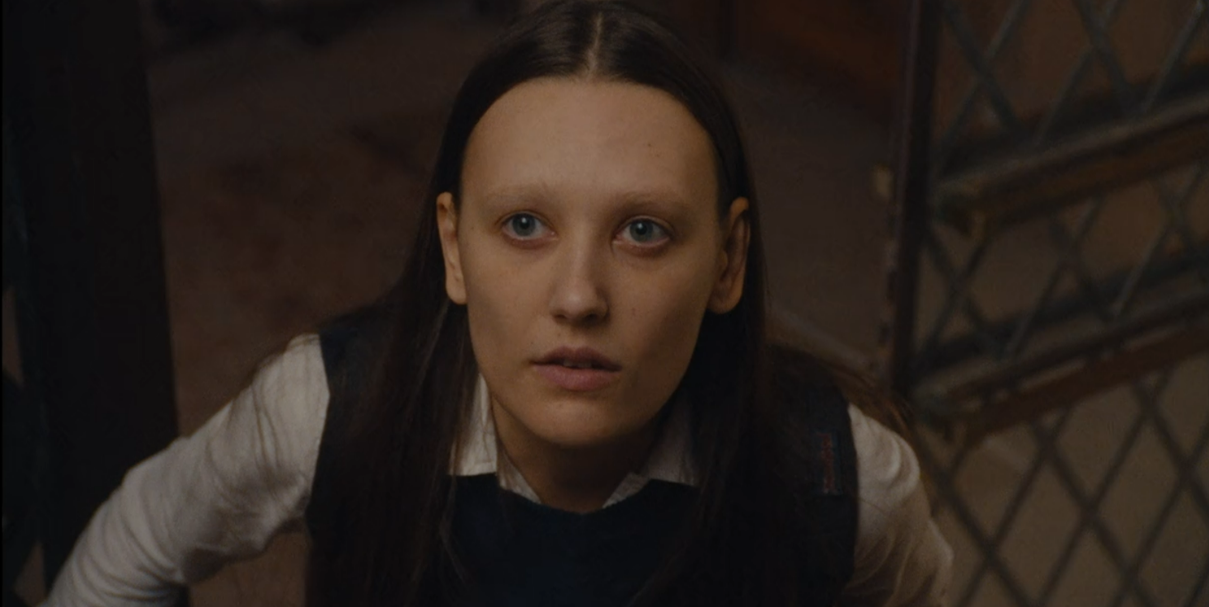
Not long after being coerced into taking ecstasy, Grace ends up fainting in the yard, causing a panicked Anya, along with Lisbeth, to drive her out in a car. While they start out hoping to reach a hospital, Grace seizes and stops breathing midway, leading Lisbeth to assume that she’s dead. Instead of telling anyone, the two head to Grace’s house and sneakily put her back on the bed, as if nothing happened. It is ultimately Leo, Lisbeth’s brother, who realizes something is amiss and alerts Grace’s family. To everyone’s surprise, she turns out to be alive, but comatose, leaving a mystery that only two people know the answers to. Lisbeth sees this as an opportunity for her to take over Grace’s position in the Lions, and she doesn’t hesitate to blackmail Anya to get the role.
As the news about Grace slowly reaches the entire town, everyone is left morbidly curious. The girls in the dance team, in particular, soon begin to have strange, scary dreams of Grace, starting with Anya, and Lisbeth eventually surmises that these are visions sent by the real Grace, asking the team to renounce their satanic roots. At the same time, Anya and Elise begin to develop feelings for each other and end up having a secret relationship, making Lisbeth jealous. As she slowly spreads the stories of Grace’s divinity, the people of the town also begin to believe, either completely or with some skepticism. In the meantime, one of the girls, Maddie, ends up confessing in the church that Grace had drugs, which leaves only a few pieces of the puzzle unresolved before the Anya and Lisbeth story gets confronted with the truth.
The Body Ending: Does Grace Wake Up? Why Does She Say She is God?
‘The Body’ ends with Grace waking from her coma just as the religious frenzy around her reaches its climax, resulting in a moment that can almost be mistaken for an apotheosis. After weeks of complete stillness, Grace makes an inexplicable, almost miraculous recovery, erasing whatever little doubts her father had about her being supernatural. Even more perplexing than that is how she says “I am God” when Michael asks her to confirm her identity, though that seems to be a misdirect. It is implied that Grace was going to say her own name, but ended up exclaiming the word God mid-sentence, likely due to pain or distress. Left unable to speak after this, she has no way to correct the narrative, and therein lies the irony of the final scene.
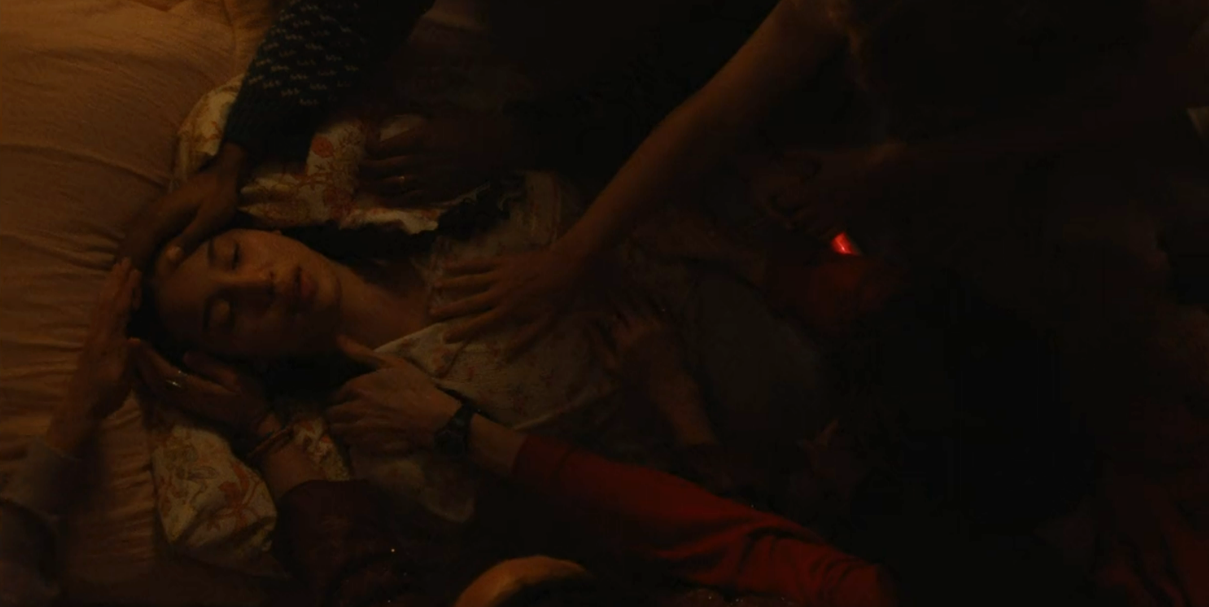
While the slow, eerie development of the whole mythology surrounding Grace may be a textbook case of confirmation bias, there are some nuances that cannot be explained as easily. Given that almost everyone in town is a person of faith, there seems to be a collective appetite for miracles, or in more direct terms, a sign from God. Lisbeth simply capitalizes on these vulnerabilities and creates a snowball effect, where every myth and legend about Grace’s out-of-body appearances spread like wildfire and inspire similar stories. This, in turn, creates an effect known as collective delusion, swaying everyone into this new social structure one way or another.
The creation of shared beliefs and delusions is only made possible because of a similar shared set of sociocultural anxieties, as well as other intense emotions. We see both a microscopic and macroscopic version of this in the show, through the Lions and the town, respectively. For the Lions, Grace’s ghost figure is largely the result of their collective guilty conscience, whereas the rest of the townsfolk interpret it in more diverse ways. While some think of these visions as a directive from God, others interpret them as a test of their faith. In the end, Grace is reduced to either being deified or being declared a witch, and both impositions strip her of personhood and agency. As such, despite her physical recovery being on the horizon, there seems to be a much greater struggle ahead, one where blind, toxic faith is the enemy.
Will Anya Go to Prison? Will She and Elise End Up Together?
After trying to hide and cover up the truth all season long, Anya gathers the courage to take responsibility for the overdose just as Grace comes to consciousness, creating a rather unpredictable playing field. Anya’s decision was entirely based on the mistaken belief that Grace is dead, but now that the truth is out in the open, there isn’t much she can do. Instead, the choice now lies with the adults in this story as to whether they involve the police, which is bound to get Anya arrested. Given that she’s still a minor, she is likely to get a lesser sentence, but the impact on her life trajectory is bound to be massive nonetheless. That said, there is one facet of this entire ordeal that can override all others, and that is the deification of Grace.

For Grace to become a divine figure who appears to people in visions and apparitions, her comatose state is a formative part of the mythology. As such, with so many people, including Grace’s father, buying into the myths of divinity, Anya’s role as the instigator might just be accepted as part of a larger narrative. However, that isn’t necessarily a good thing either, as in this case she will be labeled the satanic villain of the story, which is anything but good in a town full of Grace’s supporters. This forced antagonization, then, saves her from the law but might lead to a fate that is arguably much worse. Regardless of what direction Anya’s arc goes, if there is one thing that’s certain, it’s that Elise will be left with no one to trust.
Although Anya and Elise seem to be deeply in love by the second half of the show, the ending adds a devastating twist to the story. Grace’s overdose isn’t the only thing Anya opens up about, but also her queer identity, which is an incredibly brave thing to do in her conservative community. However, Anya sees her sexual orientation as a “sin,” and considers it to be part of a crisis that is to be contained. This, coupled with how terribly her last conversation with Elise went, essentially means that their love story might have already come to an end. However, a crucial part of both characters’ stories going forward will be about understanding their sexuality better, and more importantly, genuinely owning up to their actions and seeking a way forward without erasing the past.
Will Catherine Live or Die? What Happens to Lisbeth and Her Mother?
The first season of the show ends on a tragic note for Lisbeth’s mother, Catherine, who ingests snake venom in a desperate attempt to unite with God, in body and in spirit. While we don’t see the aftermath of this ingestion, it is strongly implied that Catherine will eventually die due to the poison, retracing the death of her husband, Lisbeth’s father. The main reason he died wasn’t the poison itself, but the fact that Catherine, and the entirety of the church, rejected modern-day medicine, instead judging a person’s survivability by how pure their faith is. Catherine, who firmly believes herself to be a true believer, takes the venom not just as an affirmation of her faith, but also as a test, as some part of her senses the inner turmoil and seeks a way out.
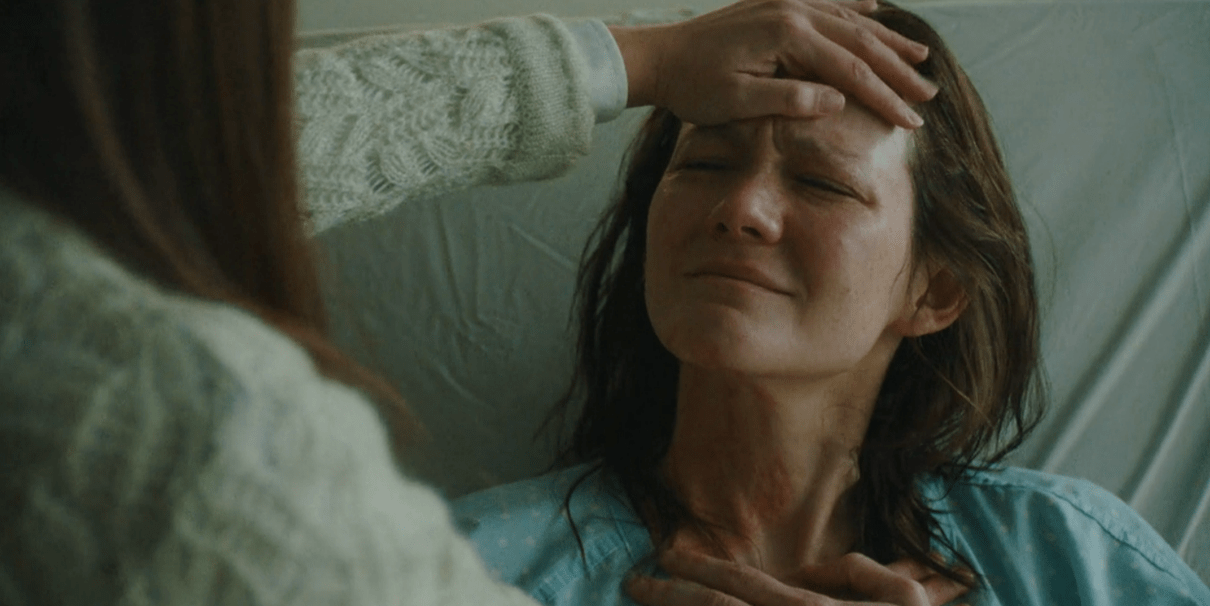
Catherine’s self-destructive tendencies, and the ripple effect they have on her children, are best understood as a result of the long history of the abuse she endured under her church, without even realizing it. While she may still strongly believe in its teachings, a part of her also feels guilty about letting her husband die, as well as creating a toxic environment for her children to grow up in. As such, her taking of the poison can also grimly be interpreted as a subconscious desire to end it all. That said, given the show’s repeated emphasis on the power of faith, as well as the thin line between miracles and coincidences, we might be looking at a twist in the making, where Catherine survives, or is rescued by Leo, only to have her faith put on the stand once again.
Unlike Catherine, Lisbeth seems to have carved open a path where there was none, once again by spreading one little story to the town. Initially planning to escape to Virginia with her family, Lisbeth gets caught between a rock and a hard place when Anya unknowingly spreads the rumor about Grace being dead. Not knowing what the truth is, Lisbeth essentially throws a Hail Mary, claiming that Grace did die in the car but was nursed back to life by Lisbeth’s efforts. In a way, this isn’t even much different from the truth, but the clever details lie in how she is able to spin the story in a way reminiscent of Christ returning from the dead, something fundamental to the town’s belief structure. By elevating the tale to that level, Lisbeth not only hedges her bets regarding Grace’s fate, but also secures her position as the key to this town’s new mythology, for better or for worse.
Read More: Where is Netflix’s The Body Filmed?


You must be logged in to post a comment.