
 Diksha Sundriyal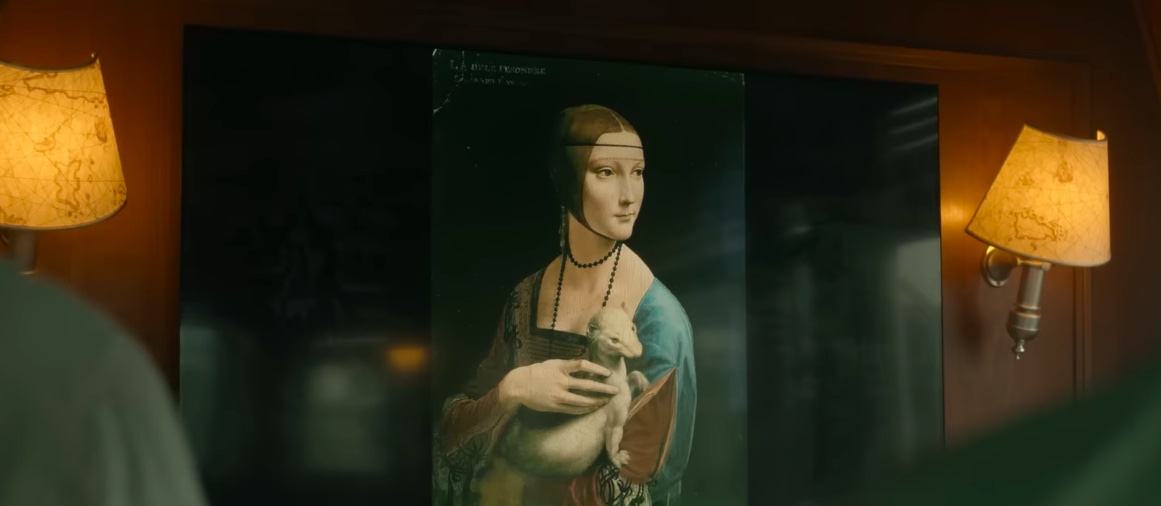
Netflix’s ‘Berlin and the Lady With an Ermine’ brings back the notorious thief from the world of ‘Money Heist.’ His last adventure took him to Paris, but now, he has returned to Spain to carry out an even more daring heist. The story begins with Berlin being hired, somewhat unwillingly, to steal a priceless painting for an aristocrat’s personal collection. Berlin has no choice but to accept the job, but he sets his eyes on more than one target. Over the course of eight episodes, we see him plan an elaborate heist to get the painting, Leonardo da Vinci’s The Lady With an Ermine, while his main plan continues in the background. By the end, the painting lands in a very interesting place, and the title card at the end reveals the information that makes things even more interesting, especially in terms of the painting’s current fate. SPOILERS AHEAD.
The Lady With an Ermine Has a Turbulent History
The Lady With an Ermine is one of the only four portraits by Leonardo da Vinci. The Renaissance painter painted it around the end of the fifteenth century, with Cecilia Gallerani, a mistress of the Duke of Milan, serving as the muse. The painting has a complicated history, having been moved around Europe several times. Currently, it is housed at the Czartoryski Museum in Kraków. It was previously owned by the Czartoryski family, who acquired it when Polish prince Adam Jerzy Czartoryski bought it around 1800. He gifted it to his mother, Izabela Czartoryska, who laid the foundation of the now-National Museum, which eventually absorbed the Czartoryski Museum.
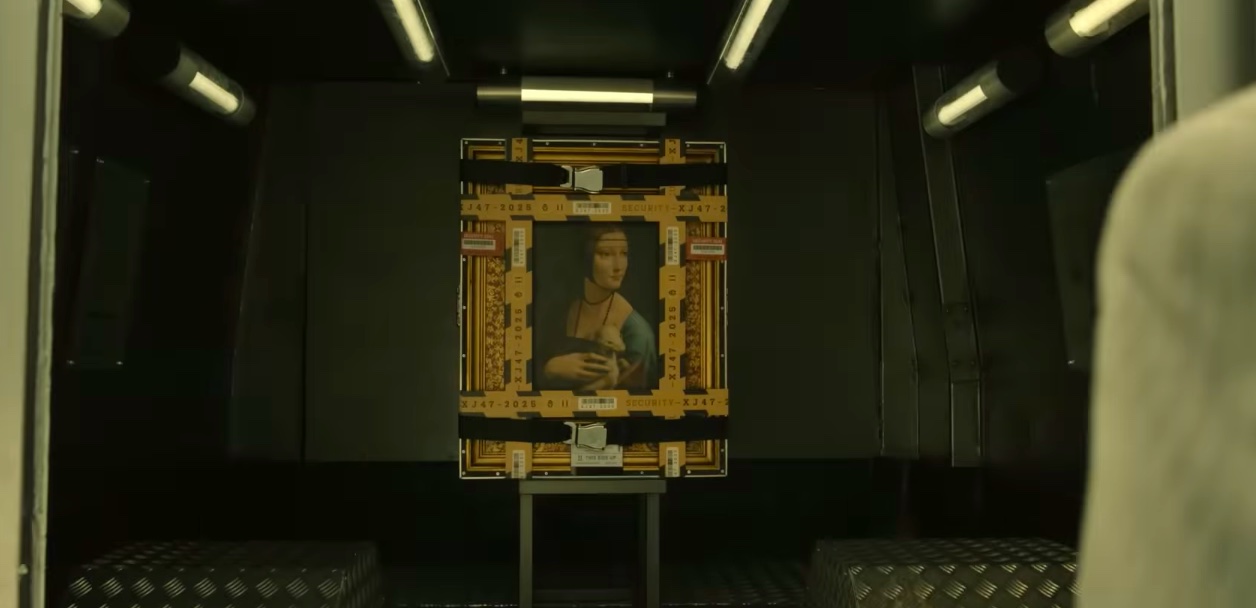
The Lady spent the next three decades in Poland. But in the early 1830s, Prince Czartoryski led the Polish Uprising against Russia and was exiled. He took the painting with him to Paris, where it was housed in his residence at Hôtel Lambert for the next couple of decades. In the 1870s, the Czartoryski family finally returned to Poland, and with them, the Lady With an Ermine. The family opened their private collection to the public, and the painting was exhibited. The next few decades kept the da Vinci in Poland, but things changed during the Second World War.
With the Nazi invasion of Poland, several works of art were looted from the family’s collection. The painting was taken to Berlin, where it had a brief stint at the Kaiser-Friedrich Museum. Following this, it spent some time at the office of Hans Frank, who worked closely with Hitler, at Wawel Castle in Kraków. The end of the war brought the painting back to the National Museum, and in the early 90s, the family regained ownership, along with several other objects that had been looted from their collection. While it spent more time at the museum, available for the public’s eye in Krakow, it wasn’t until 2011 that it was sent on a tour.
Before this, the painting was not allowed to be taken out because it was believed that transportation could cause it damage. But in 2011, it went from Poland to the Royal Palace in Madrid, where it stayed for about three months. Its next stop was the Bode Museum in Berlin, where it spent the next three months or so. The final leg of its journey took it to the National Gallery in London, where it spent the next three months. It is likely that the events of ‘Berlin and the Lady With an Ermine’ take place during this timeline, allowing the writers to weave the season’s storyline around a somewhat realistic chain of events.
Berlin Season 2 Gets a Key Fact Right About the Lady With an Ermine
While ‘Berlin and the Lady With an Ermine’ is an entirely fictional story, the show does touch upon some very real things about the painting. The trip to Madrid is used as the backdrop against which the heist takes place. In the finale episode, Berlin and his crew replace the real painting with a fake one (thanks to the Dutchman’s impeccable work). The real one is left in the Duke’s otherwise empty collection. This is the only painting he has, and clearly, he is not going to let it go under any circumstances, at least until someone decides to steal it from him. Meanwhile, the fake painting stays with the museum, but no news breaks about the theft.
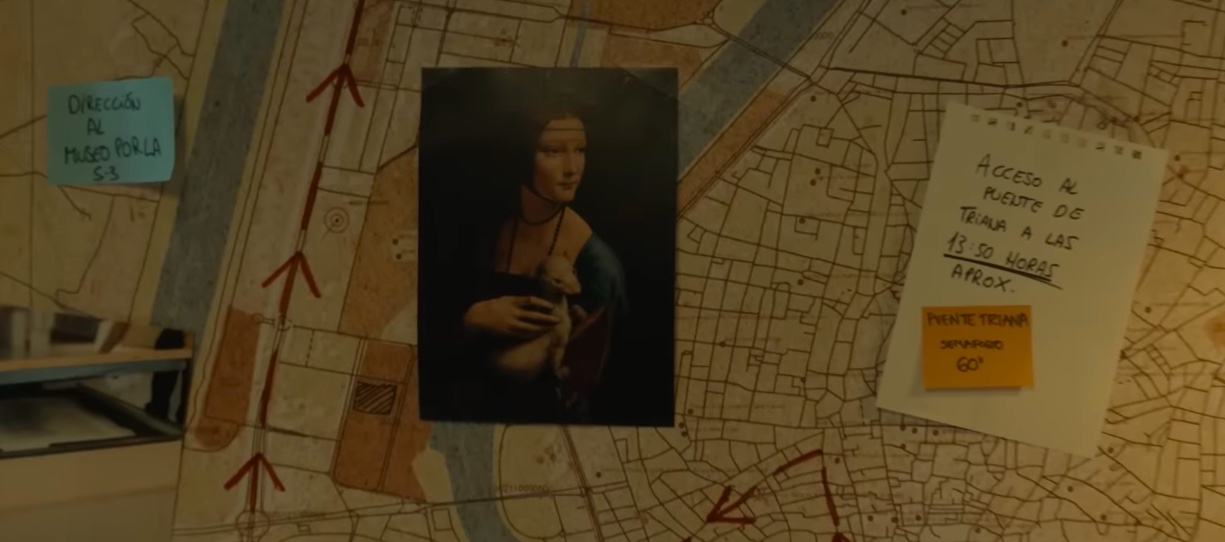
Later, Berlin predicts that the painting will be sold for a much lesser amount than it is worth. This makes sense because the real painting has been replaced by a fake, and no buyer would want to pay the sum for a forgery. Interestingly, in real life, too, when the sale of the painting actually took place, it was sold for a fraction of what it was worth. However, the reason behind it is drastically different from what’s portrayed in the show. It is true that the painting was priced at quite a huge amount. In fact, in 2011, when the painting went on its tour, it was reportedly insured for 300 million Euros.
However, in 2016, the painting was sold to Poland’s Culture Ministry, which only paid around 100 million euros ($105 million) for it. In truth, they got much more than painting for this amount. The sale was made by the Czartoryski Foundation, and it included 86,000 other objects from the family’s private collection. Apart from the Lady, the collection sold to the ministry included Rembrandt’s Landscape with the Good Samaritan, some works of Renoir, along with 250,000 or so manuscripts and additional items. In total, the whole collection was worth around 2 billion euros at the time. However, the family gave it away for barely a fraction of its true cost.
While no specific reason was given as to why the sale was made, the foundation’s representatives did mention that it was the family’s choice. Considering that the painting was originally bought and exhibited at the museum for the public, it makes sense that the family decided to permanently give it to the people of Poland. The acquisition of the entire collection was also considered a major step in the government’s push towards nationalizing the art and other things of cultural importance to the country. Thus, by giving away their collection, the Czartoryski Foundation did a service to the nation, giving a permanent home to the Lady.
Read More: Where is Berlin and the Lady With an Ermine Filmed?


You must be logged in to post a comment.