
 Abhiroop Das
Helmed by Thérèse Ahlbeck and Marcus Olsson, Netflix’s ‘The Swedish Connection,’ also known as ‘Den svenska länken,’ in the original, reimagines the true story of Gösta Engzell. At the height of World War II, Engzell comes to know that rumors about the Holocaust are indeed based on reality, and that he has a chance to potentially save thousands of Jewish people. The challenge, however, is a series of restrictions placed by his government under the fear of Nazi retaliation.
Forced to get creative, Engzell decides to bend the law, and his devoted staff joins him in these endeavors. Stina Johansson, the oldest member of his team, is due for retirement, but that hardly stops her from giving her all to the cause. In capturing this, the Swedish historical drama movie pulls the curtains on how many worked from within the system to initiate change when it was deemed impossible.
Stina Johansson is an Invented Character in the World of The Swedish Connection
Stina Johansson is a fictional character created by writers Thérèse Ahlbeck and Marcus Olsson specifically for ‘The Swedish Connection.’ While the story it tells is indeed based on real life, the creators have taken some creative liberties in bringing it to the screen, which involves the construction of characters from scratch. In an interview with Cineuropa, the writer duo revealed that, while the male characters in the movie are often dramatized versions of real people, the female characters are mostly fictional. This includes Stina Johansson, who is depicted as someone who worked right alongside Gösta Engzell to protect Jewish refugees from the Nazi regime by bringing them to Sweden.
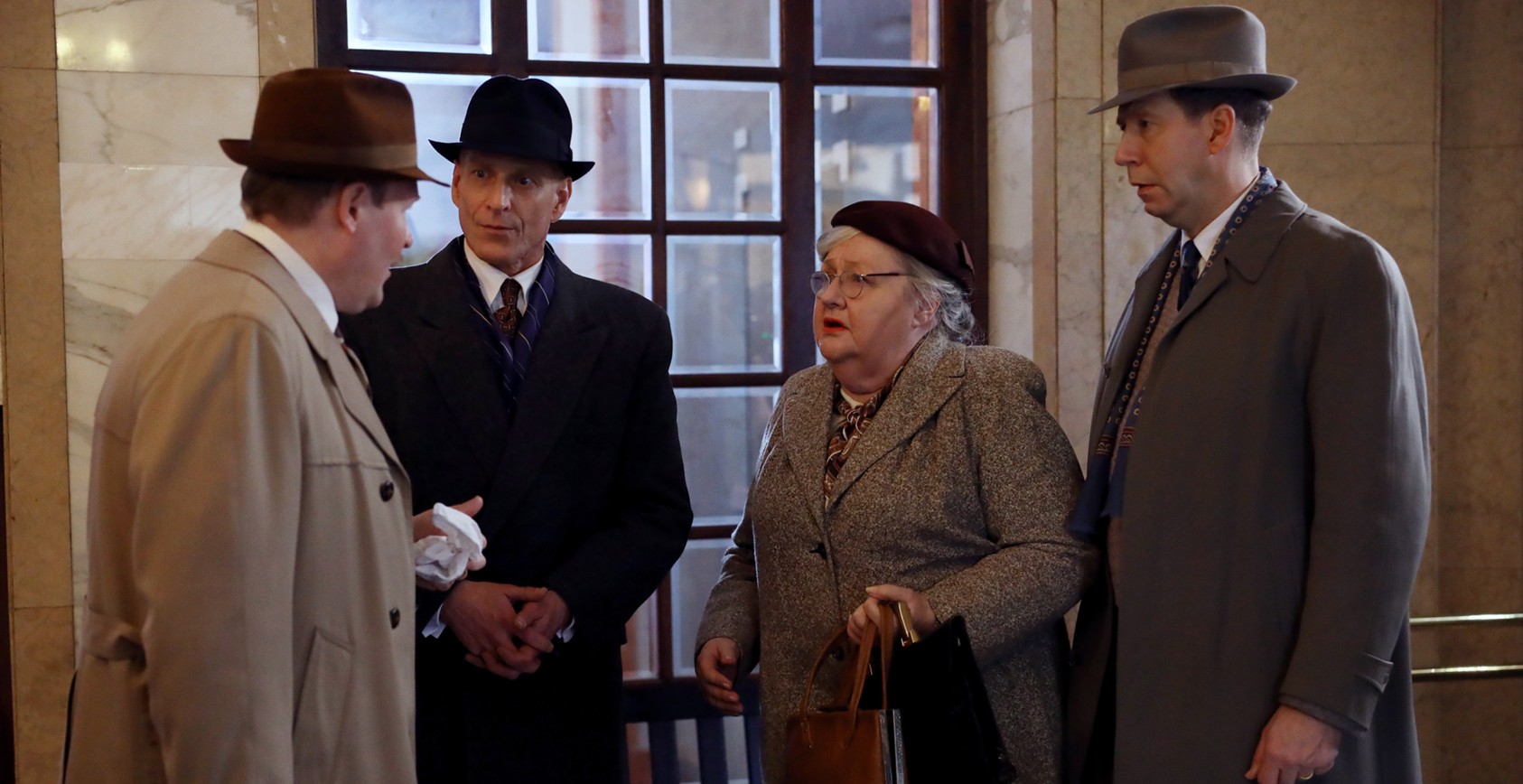
While Stina Johansson may be an invented presence in the movie, Ahlbeck and Olsson have opined that someone like her likely existed within the system, if not necessarily in Engzell’s team. In that vein, Stina is meant to reflect the social realities of her time, focusing specifically on the efforts made by the unsung heroes of the war. While Engzell’s work is recognized today, it is important to remember that he was never a one-man army and had the support and efforts of his entire staff. In the movie, this element is highlighted through Stina being among the first to take note of a spike in asylum requests for Jewish people in Nazi-occupied territories. In real life, the Swedish government was initially strict in the approval and rejection processes of these requests, but Engzell and his team went for a vastly different approach.
Stina Johansson’s Story Loosely Parallels the Work of a Legendary Dutch Resistance Fighter
Given that Engzell’s legal authorities primarily extended to Swedish citizens who were living abroad, he tried focusing on Jewish citizens who were Danish or Norwegian but had a Swedish connection. Typically, this involved people born in Sweden, as well as their entire families, and by loosely interpreting them as Swedish emigrants, Engzell was able to authorize their passports and visas. It is believed that Engzell and his team helped thousands of Jewish people reach Sweden and find relief, and while not much is known about his immediate staff, characters like Stina Johansson and Rut Vogel shine a light on their contributions, which helped pave the way towards a better future.

A key detail about Stina’s characterization is the fact that she is on course for retirement when news about the Holocaust reaches her. From there, we see her battle multiple illnesses in order to keep working alongside Engzell. While she does not have any real-life antecedents, her journey resembles that of Geertruida Wijsmuller-Meijer, a Dutch resistance fighter who worked closely with authorities and foreign ministries to negotiate exit visas for thousands of Jewish children. In 1938, she reportedly secured permission from Adolf Eichmann’s office to allow 600 Jewish children to leave Vienna for Britain, in what is known today as one of the most heroic rescues in World War II history. While Stina exists in a completely different context from Wijsmuller-Meijer, both stories speak to the sheer courage humanity is capable of showing.
Read More: Is Rut Vogel Based on a Real Member of Gösta Engzell’s Team?


You must be logged in to post a comment.