
 Abhiroop Das
Helmed by Thérèse Ahlbeck and Marcus Olsson, Netflix’s ‘The Swedish Connection,’ or ‘Den svenska länken,’ dives into the complex realities of World War II in Sweden, where Gösta Engzell, a foreign ministry official, comes to learn of the horrifying tragedy taking place in Nazi Germany. With millions of Jewish people’s lives at risk, Engzell decides to use everything within his power to set up a legal channel for their rescue. However, with Sweden being positioned as a neutral country, its hands are tied when it comes to policy reformative measures. Instead, Engzell and his small team of like-minded people get creative, trying every possible way to save as many people as possible, one visa application at a time. Through this Swedish historical drama movie, we get a perspective into one of the subtler, but defiantly heroic ways humanity can stand up to injustices.
The Swedish Connection is a Fictionalized Take on Gösta Engzell’s Rescue of Jewish People During the Holocaust
‘The Swedish Connection’ presents a dramatized account of the real Gösta Engzell, who helped with the rescue and relief of thousands of Jewish people at the height of the Nazi regime. Born on February 14, 1897, in the Swedish city of Halmstad, Engzell was a bright student and received his law degree from Stockholm University College in 1919. After working in district court service for a few years, he became an assessor at the Göta Court of Appeal in 1926, and then climbed up the ranks of Sweden’s courts and state administration. In 1938, he became the director-general and Head of the Legal Department of the Ministry for Foreign Affairs, specializing in visa and immigration issues. With the beginning of World War II in 1939, Engzell found himself more closely involved with the question of Jewish refugees, but it wasn’t until 1942 that his approach saw a sharp change.
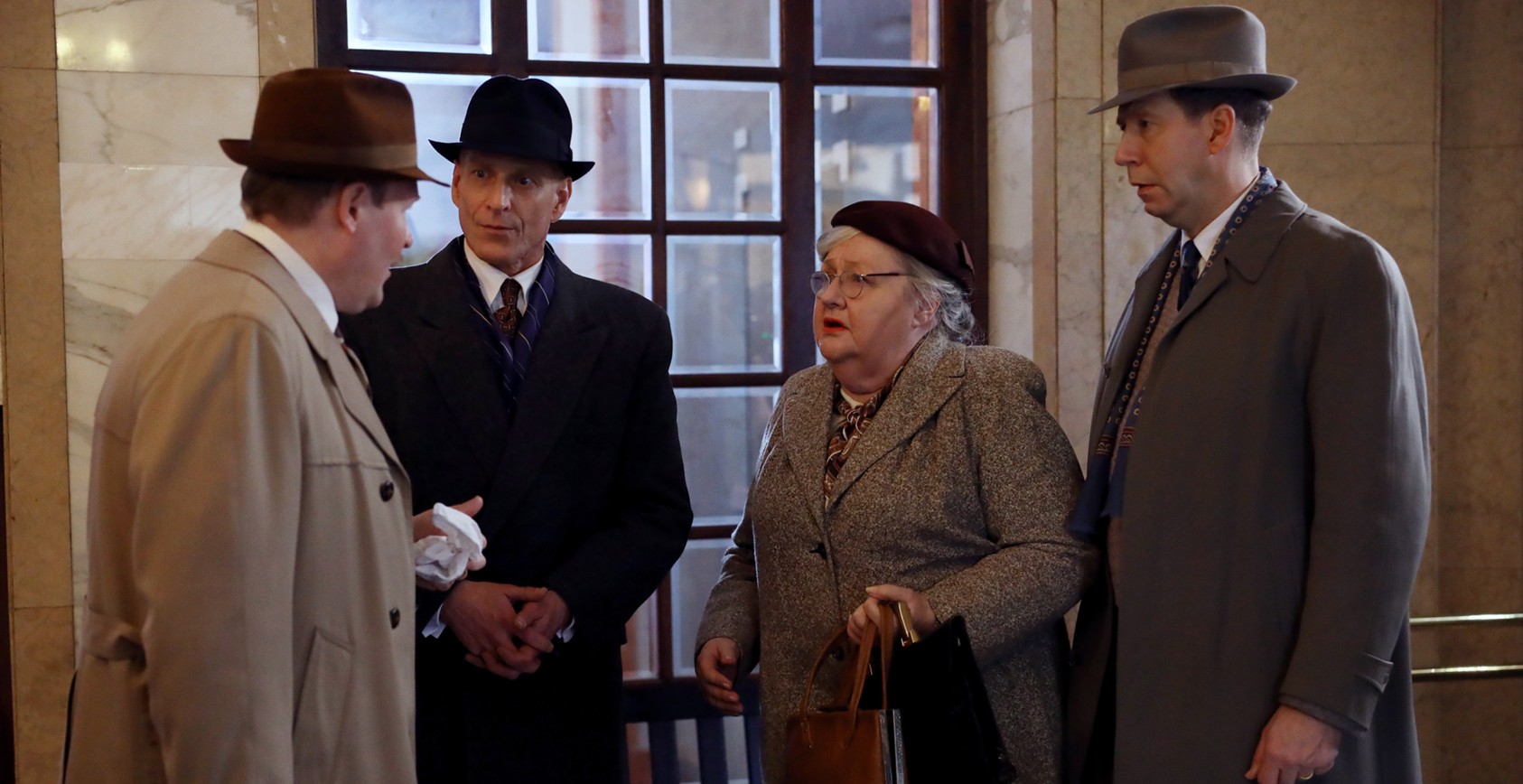
On September 7, 1942, Engzell met Gillel Storch, a Latvian refugee who informed him of the escalating peril faced by Jewish people under German occupation. This exchange reportedly marked a turning point in Engzell’s approach to the humanitarian crisis, and over the next few years, he began actively pushing for measures to save Jewish populations from genocide. During that period, Sweden had adopted a position of neutrality, but was still considered to be under constant threat of German occupation. This meant that Engzell and his team had a particularly hard time navigating legal systems to get the message across. Eventually, he came to use the law involving the return of Swedish citizens, including Jewish people, from Germany to their homeland.
Gösta Engzell Issued Swedish Passports For Norwegian and Danish People in Real Life
Initially, Engzell focused on bringing back Jewish people with a connection to Sweden, relying on a flexible interpretation of the law to ease their visa application process. This even involved the authorization of Swedish passports to Danish Jewish people born in Sweden, and to their families. Even on the occasions that Engzell faced stiff resistance, he refused to let up and kept clearing the path for Jewish people who could enter Sweden via any technicality possible. Engzell also initiated similar attempts to rescue Jewish people in Norway, where versions of similar tactics were already being employed. While the movie, penned by Thérèse Ahlbeck and Marcus Olsson, presents a fictionalized account of Engzell’s endeavors, it retains most of the facts that constitute the context behind his actions.

As per reports, Engzell also joined hands with two Swedish diplomats, Carl Ivan Danielsson and Per Anger, who were at that time stationed in Budapest, Hungary. Together, they made constant enquiries into the state of the Jewish people and demanded their return to Sweden. The biggest turning point, however, came in late 1943, when the Nazi government announced its plan to deport around 8000 Danish Jewish people to concentration camps. While the majority of the country’s Jewish population was reportedly in hiding, this development essentially put thousands of lives into danger. That is, until October 2, 1943, when the Swedish government made an official announcement that they were willing to receive all Danish Jewish people.
Gösta Engzell and His Team Were Among the Many Unsung Heroes of World War II
News about Sweden opening its borders to Danish Jewish migrants spread far and wide through various news channels, and before long, thousands of Jewish people began making their escape, most often by sea. As per reports, Swedish fishermen became one of the few go-to channels between these two countries, with as many as 7200 Jewish people being ferried from Denmark to Sweden via the Øresund Strait. Engzell’s initial push for saving Jewish lives was instrumental to the government’s later policies, and, following the mass exodus, he continued raising awareness for the Jewish population still trapped in Nazi-occupied territories.

As per a report by the Institute for the Study of Rescue and Altruism in the Holocaust, Engzell and his staff directly and indirectly contributed to the rescue of 30000 to 40000 Jewish people. They emerged as a source of inspiration and moral strength in the years following World War II, with more and more people learning about their contribution. In 1947, Engzell became a Swedish envoy and served in Poland from 1949 to 1951. For the next three years, he held the same position in Finland before becoming the ambassador of Sweden in 1954. Engzell died on March 7, 1997, at the age of 100, and is recognized as one of the silent heroes of the war. He, along with his courageous staff, fought for the rights of Jewish people from within the system and helped usher in a positive shift in society that can be felt to this day.
Read More: Is Lifetime’s Murder and Mayhem at Mardi Gras Based on a True Story?


You must be logged in to post a comment.