
 Kriti Mehrotra
Directed by Christine Conradt, Lifetime’s ‘Where Pretty Girls Die’ is a chilling thriller that revolves around a student as she finds herself in a deadly situation while investigating a cold case. At the center of it is Sienna Niland, who never thought her passion for the field of criminology and desire to one day serve as a profiler at Quantico would turn her whole world upside down. The young woman had joined a true crime club to garner some amateur experience, but the 4-year cold case disappearance of 22-year-old Lexi Palmer grips her in an unexpected manner.
Sienna and fellow student Tyler Lee soon decide to look into the matter themselves, which takes them to the rural town of Parker, Georgia, to dig through old grudges, misgivings, and secrets. However, their inquiries become much more personal as their vehicle is tampered with, only for the scholar to then suddenly have to fight for her life because Lexi’s perpetrator is still nearby. She actually ends up face-to-face with the assailant, just for Lexi’s mother to save the day by turning the deadly situation away from the woman striving to provide justice to her little girl.
Where Pretty Girls Die is a Fictional Thriller With Realistic Themes
Lifetime’s ‘Where Pretty Girls Die’ has always been billed as a fictional thriller not inspired by any specific real-life, true event, and there is no evidence to indicate otherwise. However, it comes across that way because of its three-dimensionality and the use of some highly realistic elements often seen in true-crime documentaries/shows. Writer Margaret Cole has been careful in how she has incorporated these aspects – a cold-case disappearance, amateur sleuths, a small-town setting, and a hidden predator – to ensure that they seem familiar while also remaining original.
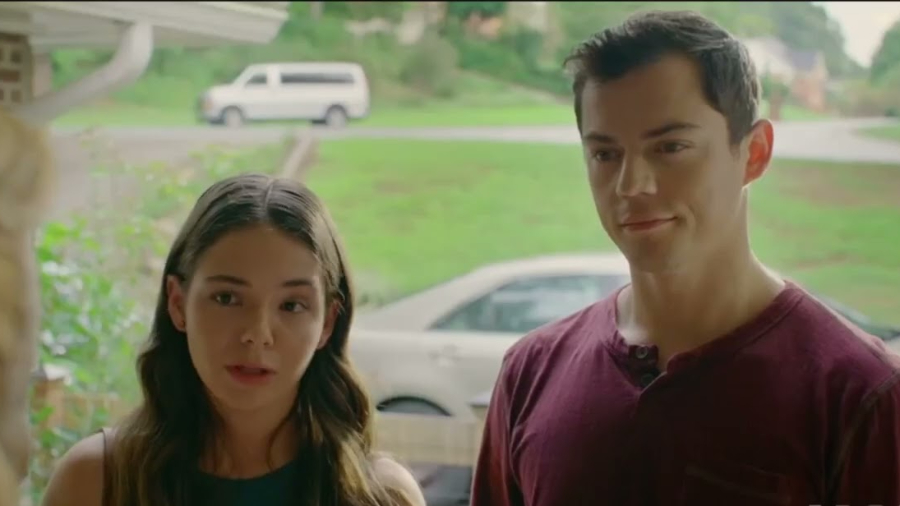
The fact that Sienna’s character focuses on the psychology of serial killers in her studies before she begins investigating Lexi’s case also makes the narrative more realistically engaging. That’s because many with such an academic background have gone on to become law enforcement investigators, forensic analysts, and authors, who are often interviewed on true-crime series. The audience’s minds thus immediately connect the dots, making it seem as though her journey is a natural progression, despite her not being a professional investigator but a young amateur sleuth.
Where Pretty Girls Die Underscores How Sometimes a Criminal is Closer Than Anyone Expects
Although the principal storyline, characters, and murder mystery of ‘Where Pretty Girls Die’ are entirely fictional, there are more than a few real-life cases that constitute similar elements. Therefore, even though the film does not dramatize any particular identifiable matter, it appears to draw more broadly from true-crime stories that have been reported on for years. One such example is the case of 18-year-old Jessica Currin, who disappeared in her small town of Mayfield, Kentucky, in 2000 before her badly decomposed remains were found behind Mayfield Middle School. A local homemaker named Susan Galbreath gradually became so intrigued by the matter that she couldn’t help but investigate it.
Susan spent over 6 years dedicating herself to searching for answers, and it was her amateur sleuthing as well as documentation that ultimately helped law enforcement officials apprehend Jessica’s killer. Another case is that of Abraham Shakespeare, who went missing in 2009, 3 years after winning a $30 million Florida Lottery jackpot – he received a sum of $17 million. His case was so unusual that it drew the attention of countless amateurs on the Websleuth forum, who began examining all available information to figure out precisely what happened to him and why.
The 43-year-old was eventually found buried under a concrete slab at a property tied to an acquaintance named Dee Dee Moore in January 2010, who was later convicted of his murder. Dee Dee was one of the participants in the online discussions, but she tried to maintain that Abraham was still alive and had gone off-grid on his own accord. In the end, her claims and the Websleuths’ work are what helped investigators bring the matter to a satisfactory close. A former detective even publicly credited them, telling ABC News, “The Websleuths were very instrumental in helping us in the case. Some of the stuff they uncovered was extremely helpful to us.”
Read More: Is Lifetime’s The Copycat Killer Based on a True Story?


You must be logged in to post a comment.