
 Abhiroop Das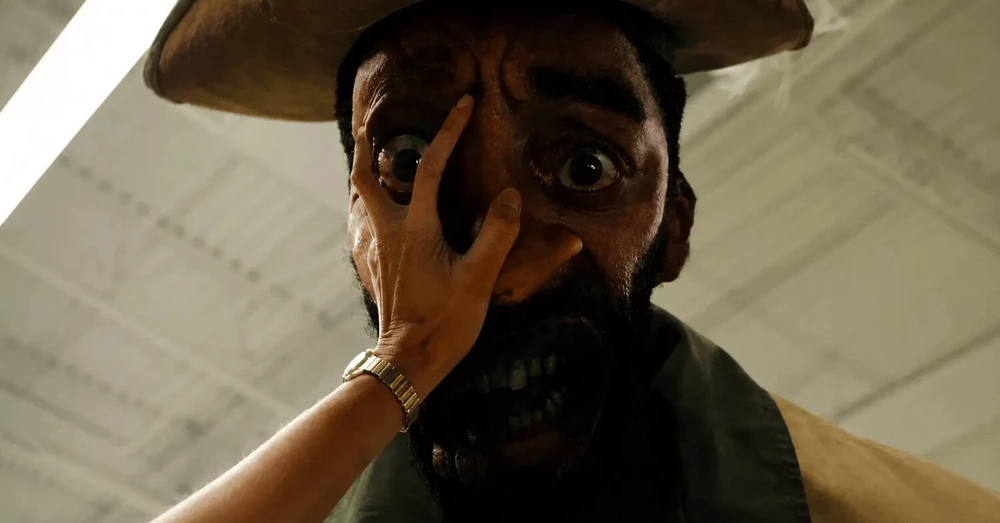
A24’s ‘Backrooms‘ is director Kane Parsons’ feature expansion of his YouTube series of the same name, as well as the new spin on the urban legend that the whole saga is modeled after. While the familiar, nigh-infinite yellow walls and humming ceiling lights make a comeback, this science fiction horror film also adds some new phenomena to the catalog. At the top of the list are the mysterious Still Lifes, which slip in and out of this expanse while Clark and his crew hopelessly try to make sense of what they see. However, things really turn up a notch when we come face to face with Captain Clark, a gigantic, monstrous entity that looks eerily similar to Clark’s mascot for his failing Ottoman-themed furniture store. More than just a reference, however, this entity holds the thematic key to Clark’s journey, and the movie as a whole. SPOILERS AHEAD.
Captain Clark Might Be the Most Advanced Still Life to Date
In ‘Backrooms,’ Captain Clark serves as the imperfect Still Life recreation of Clark, created sometime before he discovers the doorway to the Backrooms in his furniture store. The connection between these two realms seems to be mostly randomized, with the Backrooms treating Cap’n Clark’s Ottoman Empire as merely one of its many energy sources. However, in observing the furniture store and the people inside, the rooms begin to remember and recreate distorted versions of reality. With Clark spending the most amount of time at the store, his corresponding Still Life is naturally the most well-realized of them all, but the more we learn about it, the less explicable things get.
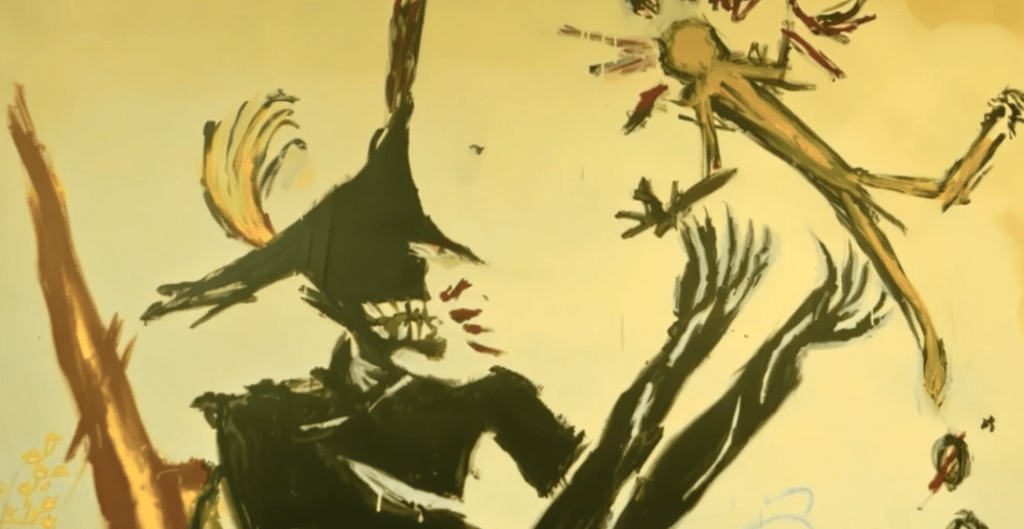
While Captain Clark is almost certainly the Backrooms’ attempt at “remembering” Clark, it also feels distinct from all the other Still Lifes in the movie. Unlike them, Captain Clark is taller, stronger, and capable of feeling pain and, possibly, other emotions. Its natural aggression also creates a sort of hierarchy in the Backrooms, where all the Still Lifes, especially the redheaded woman, seem to be particularly fearful of it. Another crucial difference is the fact that it is the only Still Life that is confirmed to consume human flesh, and potentially even other Still Lifes. Clark may have developed his tendency to eat the Still Lifes by observing Captain Clark, which creates an ouroboros-esque narrative of the inspired becoming the inspiration.
The reason Captain Clark is so unique compared to his counterparts might simply be a matter of exposure, in that the Backrooms have simply spent more time observing Clark and manifesting his internal characteristics. However, with that line of reasoning, Captain Clark almost serves as a concave mirror into Clark’s psychology, bringing things out clearer than Mary’s therapy sessions could. Much like the real Clark, Captain Clark is unrelenting in his aggression and desire for more, but perhaps the most important parallels only come into play in the final sequence.
Captain Clark Eats Clark After Identifying Him as the Root of All Their Troubles
At the end of ‘Backrooms, ‘ Captain Clark kills and partially devours his human counterpart, shattering our notions of them sharing a bond. However, this curious move begs the question of why the Still Life didn’t eat the real Clark any sooner. Based on his words, the two of them seem to have engaged with each other on numerous instances before, without any of the meetings taking a violent turn. The game-changing difference in this scene, however, is not the addition of Mary, but what her words represent. Prior to Captain Clark’s arrival, Clark reaches a moment of pseudo-catharsis, where he at last acknowledges that his antagonization of the world has always been a fruitless endeavor. Instead, he embraces his supposed “dark” side as simply a part of his honest, unfilitered self.
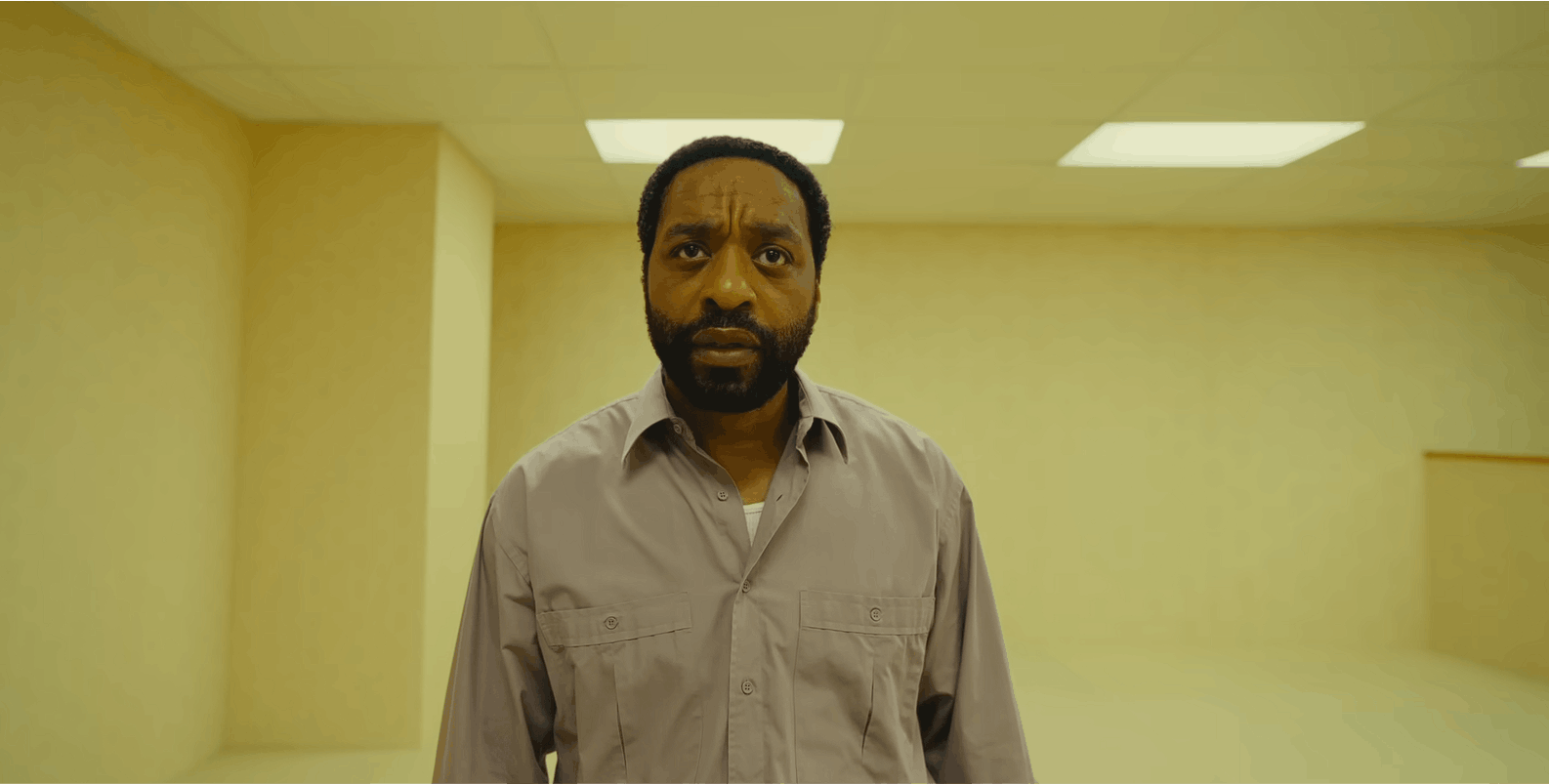
While Clark recognizes the toxic side of his self to be a root cause of his social dilemma, he believes that the Backrooms can provide him with an alternate, free world, where he can exhibit his worst characteristics unhindered. However, this development doesn’t exactly translate well to Captain Clark, who has likely been envisioned with a very different worldview. The version of Clark that his Still Life is based on firmly believed that it was the world that had wronged him at every juncture in life. As such, Captain Clark can be interpreted as a violent response to those worldly elements, be they systemic or individual. However, when Clark identifies himself as the one responsible for most of his sufferings, Captain Clark’s target shifts, but his goal of eliminating threats doesn’t.
At its core, Captain Clark has always been an entity more interested in self-preservation than in any emotional bonds. The fact that Clark believes they are one and the same is a human-imposed worldview on a life that essentially transcends logic. This is why their final exchange is initially disguised as a would-be hug, akin to a parent embracing their child. However, the reversal of that image quickly gives way to an altogether different visual reference, that of Francisco Goya’s ‘Saturn Devouring His Son.’ In that moment, Captain Clark likely doesn’t see Clark as any different from its other prey, reminding us of how inhuman and alogical the Backrooms can be.


You must be logged in to post a comment.