
 Abhiroop Das
Helmed by Christopher Shawn Shaw, ‘Church People’ follows a youth pastor named Guy Sides, who, along with Sand Hills Neighborhood Church, is famous for his viral marketing campaigns that break generation divides. However, over time, the Church’s commercialization process begins to haunt him, as all the values he originally stood for shift in the minds of the believers. Just when he ponders stepping down, the senior pastor, Skip Finney, introduces his wildest stunt yet, a real-life crucifixion on stage during Good Friday.
Alarmed, Guy realizes the extreme forms his promotional ideas have taken and takes it upon himself to put a stop to things before they go past the point of no return. For this, he assembles a team of like-minded believers, prepared to make every necessary sacrifice to restore his institution to its original state. This Christian comedy film blends humor with social commentary, capturing the subtler ways in which expressions of faith evolve over time.
An Anecdote Birthed the Fictional Premise of Church People
While ‘Church People’ is a fictional story penned by writers Thor Ramsey, Bob Sáenz, and Wes Halula, its origins can be traced back to a story Ramsey heard in real life. Reportedly, he was first motivated by the success of cult classic film, ‘Swingers,’ and, wanting to create a Christian movie in a similar vein, began drafting ‘Church People’ sometime around 1996. Around that time, a conversation with one of his friends also gave shape to the movie’s iconic premise. While speaking with The Christian Post, Ramsey recalled his friend telling him about a megachurch that performed an actual crucifixion as part of its Good Friday commemoration. The former was skeptical of this information.
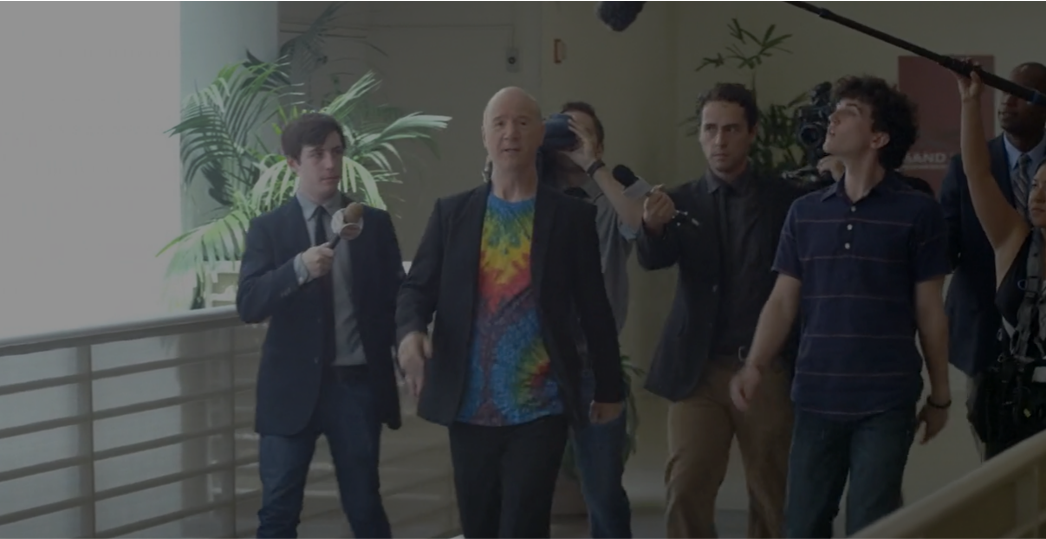
While it turned out to be false—the megachurch had actually organized a Passion play—the idea of churches employing spectacle stuck with him, in turn contributing to the invention of the film. Ramsey’s research into various Evangelical subcultures helped him gain a better understanding of what the movie’s central themes should be. “The main idea (behind the movie) is,” he told The Christian Post, “we want to reach people with the gospel (…) and we want to do things to grab their attention, but sometimes (…) we overshadow the gospel itself.”
The writing team’s use of humor and satire to touch on these complex subjects is what makes the story impactful. Ramsey further emphasized that the movie’s intention is not to be hateful towards any belief system, but instead to foster Christian thought using comedy as a narrative engine. He stated, “You can only satirize something you love, and we love the Church,” before adding that the movie is a light-hearted critique of marketing-driven and commercialised church activities.
A Real-Life Tradition in the Philippines Vaguely Parallels Church People
While Guy’s proposed crucifixion in ‘Church People’ is a fictional story beat, there are real-life instances of crucifixion reenactments, such as in the Philippines. Reportedly, the cities of San Fernando and San Juan observe an annual tradition of devotees voluntarily being mounted on the cross. On some occasions, participants even dress up as Roman centurions tasked with the crucifixion, further adding a creative touch to the event. These reenactments have been a part of the local cultures for decades and attract thousands of devotees and spectators. According to reports, the devotees, who are called Magdarame in the original Filipino language, have expressed a myriad of reasons for participating in these traditional practices.
According to reports, the motivations behind these practices range from a desire for atonement and fulfilling vows to seeking blessings and spiritual guidance. Notably, these events are not encouraged by the Catholic Church in the Philippines nor the Philippine health department due to the apparent risk of physical injuries. Although the movie’s creators have not confirmed any connection between ‘Church People’ and real-life traditions of crucifixion reenactments, it is possible that the latter served as vague reference points to add a layer of realism.
Still, the film’s take on its version of events takes on an entirely invented trajectory, where a megachurch exploits such recreations instead of treating them with dignity. Thus, the film presents a wholly original story that tackles questions of faith, identity, and meaning, primarily through the characters of Guy and Skip, who are both pastors at the same church yet have wildly different perspectives on how the Gospel should be communicated. As such, the creative team’s balanced approach to this dynamic helps bring its thematic commentary to life.
Guy Sides is a Fictional Youth Pastor Who Redefines Himself in Church People
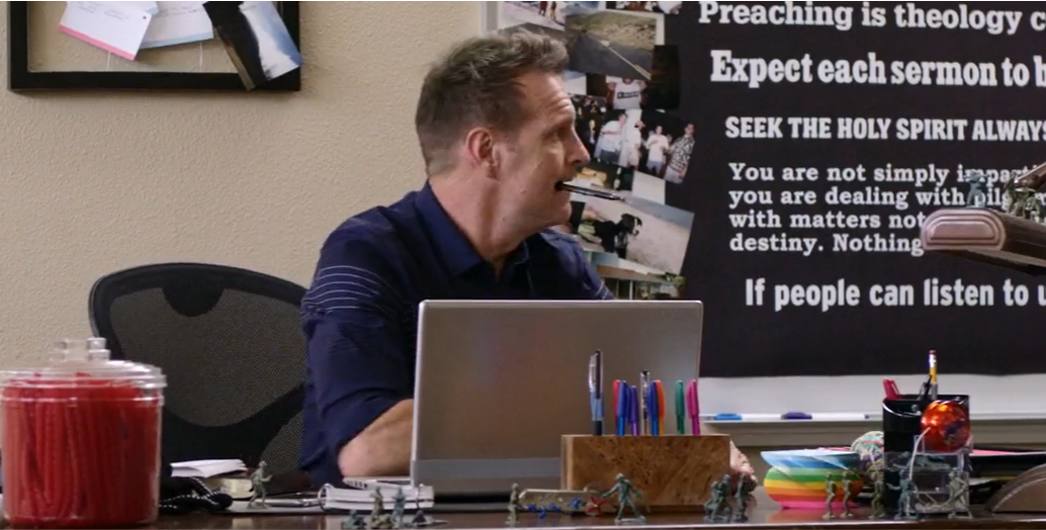
Just as ‘Church People’ is a crafted story, its protagonist, Guy Sides, is also a fictional character penned by the writing team. Described as the “American Youth Pastor,” he channels many of the viral marketing techniques, or “gimmicks” as he calls them, which make his church famous. While there are no direct real-life antecedents to Guy, some may be reminded of well-known contemporary youth pastors. However, there is no evidence that the filmmakers based Guy on any real person. Given that Guy’s arc in the story was developed entirely from scratch, his similarities to any popular pastor in real life are superficial.

Accordingly, while the writing team might have referenced real pastors and church practices, Guy remains an original presence throughout the narrative. Reportedly, the original drafts of the movie entailed a different plotline for ‘Church People,’ and by extension, Guy. While the movie was initially intended to be a love story featuring Guy and Skip Finney’s daughter, the anecdote about a real-life crucifixion ultimately transformed much of the storyline. This, in turn, expands on Guy’s malleability as a character and how he serves, in large part, as a vessel for the story’s broader set of themes and concerns.
Given that Ramsey is both a co-writer and the lead actor in the movie, his own experiences, including the misreported megachurch story, played a significant role in shaping Guy as a person. In an interview with Dove, Ramsey, who is also a renowned standup comedian, encapsulated his thoughts on this blend, stating, “As my career grew up as a standup, I still felt called to ministry but someone told Chris the other day that I should just be doing stand-up. I don’t think they are mutually exclusive. To be called to ministry, do standup, write a screenplay… you can do it all.” Ramsey further emphasized the importance of having fun while composing the narrative, which is evident in how it seamlessly mixes humor with a serious conversation on faith.
Read More: Is Sand Hills Neighborhood Church Based on a Real Mega Church? Is Don’t Follow Me a Real Book?


You must be logged in to post a comment.