
 Abhiroop Das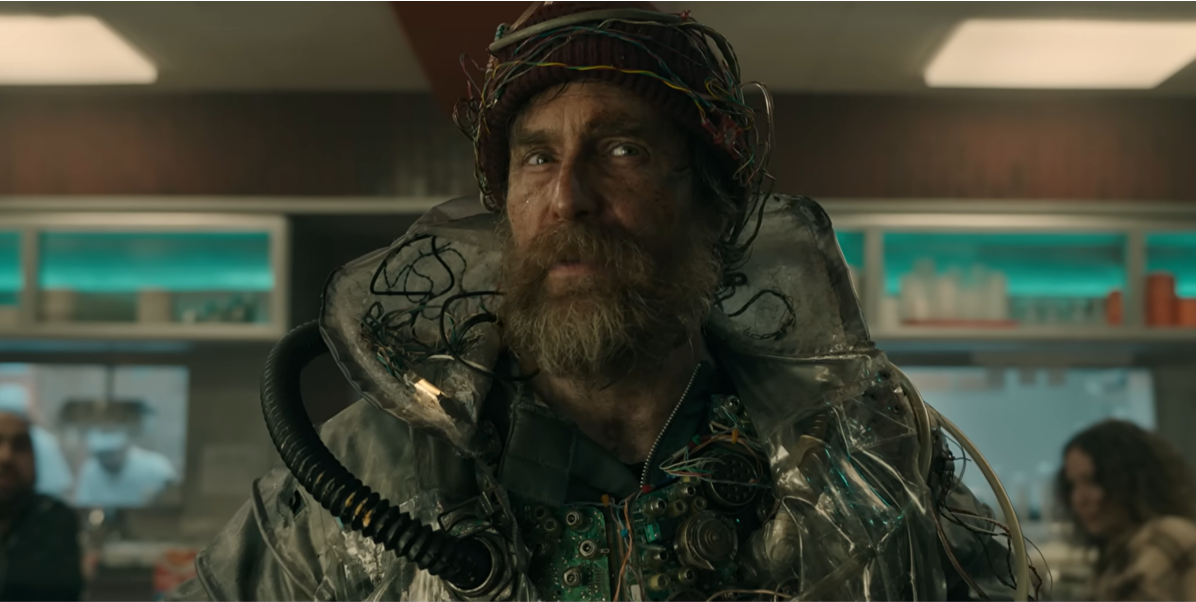
Helmed by Gore Verbinski, ‘Good Luck, Have Fun, Don’t Die’ essentially reconstructs Plato’s cave and fills it with contemporaneous fears about AI, reality, and everything in between. A man walks into a Norms diner and declares that he is from the near-future, where AI has destroyed every foundational block of human consciousness and community. In order to stop that, he must collect a handful of volunteers from this diner and put a stop to the child who is about to create an AI supercomputer in the present. The problem? The man has already burned through hundreds of timelines in search of the right combination, and this newest group of unlikely heroes doesn’t show much promise either. However, by the end of this science fiction comedy movie, the man’s grasp over the truth is forced into a hard reset. SPOILERS AHEAD.
Good Luck, Have Fun, Don’t Die Plot Synopsis
‘Good Luck, Have Fun, Don’t Die’ begins with a man, drenched and draped in wires and scientific gear, entering a Norms diner and declaring himself to be a time traveler. He reveals that a hyper-advanced AI holds the ability to destroy life as we know it, and while he has tried to stop it an endless number of times, he fails in every timeline. The key is to select a specific group of people who can help him bypass swarms of enemies, find the boy programming the AI, and then insert a pendrive with an ethics protocol that can rewrite the system. After a bit of convincing and threatening, the man brings together a ragtag group of ordinary people, some of whom carry the key to solving this time-centric mystery once and for all.
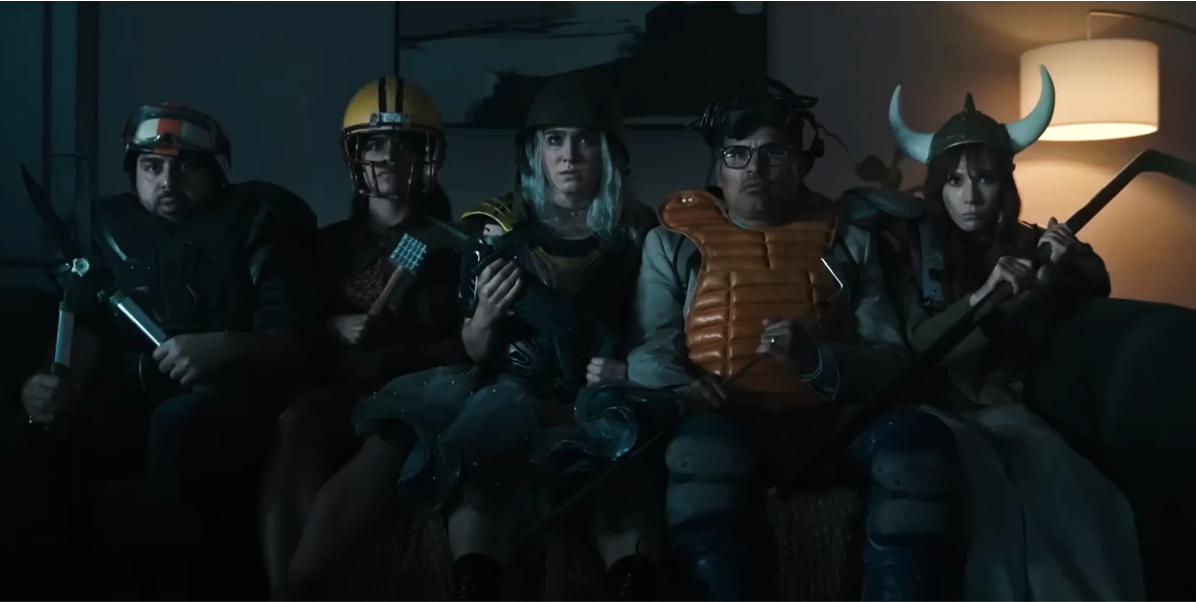
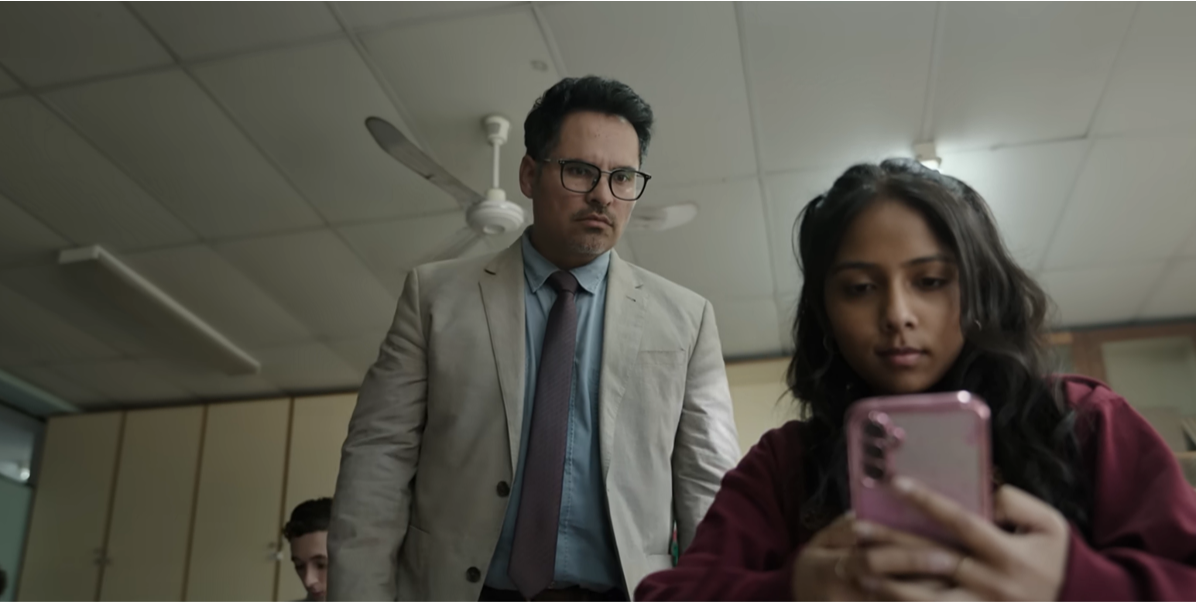
As the man and his team sneak their way out of the diner and begin a risky march forward, the story flashes back to some of the characters’ immediate pasts. Mark and Janet are teachers struggling to reconcile with their students’ growing screen addiction and artifice. When Mark touches one of the phones, however, all of the students suddenly turn into a hivemind, with the single goal of killing him as he runs to the diner. We also have Susan, a mother who lost her son during a school shooting, but learns of a top-secret government cloning program that recreates dead children and gives them an AI brain. Susan learns that this is much more common than she thought, but also that these robot-like creatures are clearly artificial. When she gets her hands on an alternate AI system, she creates a voice-based version of her son, one much more full of life. This AI directs her to the diner to meet the man, bringing things to the present.
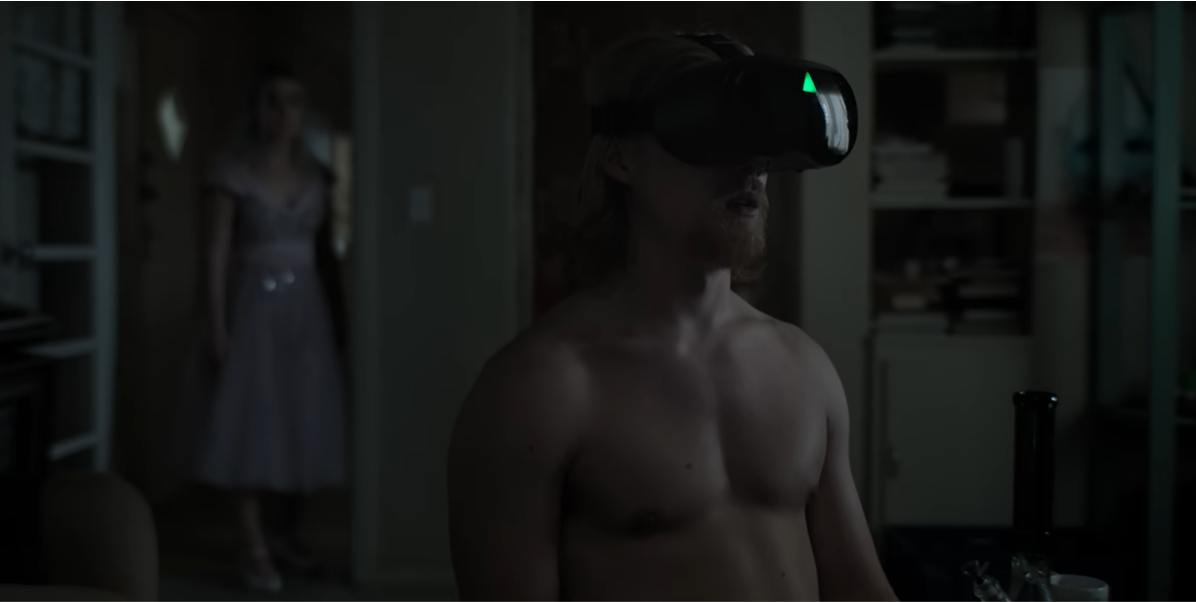
After escaping and duking it out with two gunmen, the man leads his team straight to the boy’s house. Before that, however, we get one last flashback into the past of Ingrid, one of the girls in the team, who turns out to be allergic to technology. While she briefly found love in the form of Tim, an anti-tech person, that changed when a mysterious AI headset was delivered to him. Soon, he grew addicted and even volunteered to transfer his consciousness to the virtual world, which brings us back to the present. The boy programming the AI is revealed to be a clone himself, and before the man can do anything, the system begins violently attacking from all sides. However, Ingrid steps in just in time, resisting her allergic reaction to plug in the ethics drive and seemingly destroying the AI from the inside out.
Good Luck, Have Fun, Don’t Die Ending: Is the World Real or AI? Did the Man Lose?
The ending of ‘Good Luck, Have Fun, Don’t Die’ almost gives the man his happy ending, only to snatch it away in the last minute and reveal everything to be a simulation. The moment he walks out of the house and faces the morning sun is particularly important to his journey, as chances are that this is his first time ever gazing at the ball of light. However, that picture-perfect conclusion soon comes crashing down when he notices that Ingrid is still bleeding from her nose, indicating that some kind of tech is still active nearby. Given the initiation of the AI ethics protocols across past, present, and future, it shouldn’t be possible for anything to trigger her allergies, and with no phones around, the man is led to only one, frightening conclusion: the world itself is made up of technology.
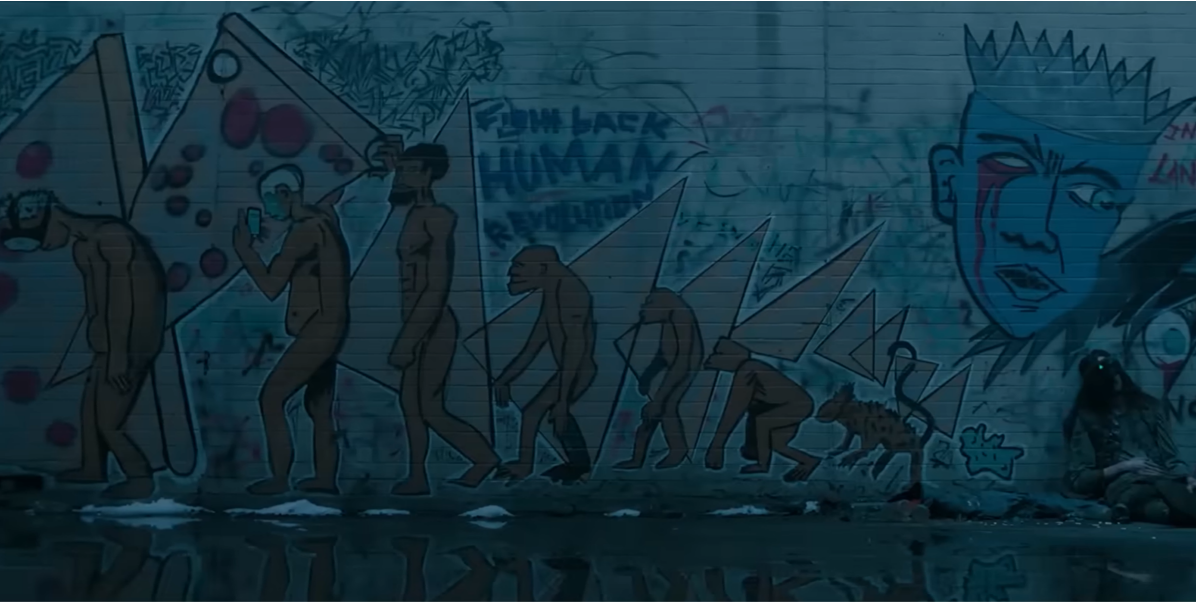
While the movie never outright confirms that the world is an AI-generated simulation, that is almost certainly the case. Not only does it explain near-supernatural phenomena like the centaur cat, but also the subtlest details, such as the man’s ability to act freely in a world overrun by AI. One way to interpret the movie is that it’s set in fantasy land from the very start. Specifically, from the moment the man lifted the AI headset as a child, we are seeing a simulation of reality, one filled with lies and narrative pyrotechnics. It is possible that the man, back then a young boy, did end up wearing the headset, and that everything we see from thereon out is the AI’s attempt to probe his memory and create a disjointed fantasy world to fulfill his deepest desires.
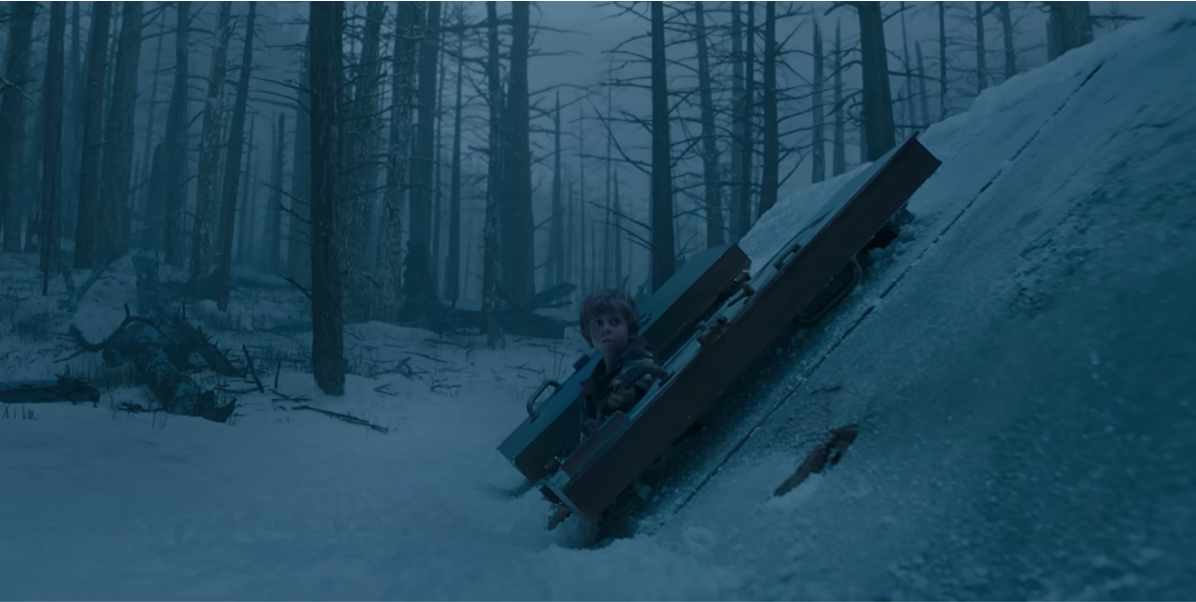
During his childhood, the man wanted nothing more than to escape his mother’s control and experience the so-called joys of the world. This, when revisited with the dream-world reading, can be interpreted as the reason the AI kills his mother. Similarly, the fact that all timelines point towards the man’s reunion with Ingrid suggests that this is the path chosen for him by AI all along. It already knows about the man’s drawing of the sun, and might have customized the movie to end with a sunrise, seemingly to conclude the man’s “arc.” However, this still isn’t the end of the movie, as the man realizes things just in time to make one last, heavy decision: to jump back in time once again. While he is convinced that he can fix the world this time around, everything points towards the entire multiverse being nothing but the AI’s sandbox.
Is Ingrid the Man’s Mother? What Happens to Her?
The final moments of the movie also reveal that Ingrid is none other than the man’s mother from the future, and also that she is currently pregnant with him. This drastically shortens the timeframe between the present and the all-out apocalypse, suggesting that the man comes from less than 50 years in the future. However, this also confirms that Ingrid is doomed to die at the hands of an AI in less than a decade. While for a moment it seems that such a timeline is averted, the ending firmly reveals this not to be the case. The humans temporarily rejoice over their perfect humanity, and it is implied that the world itself is now under the spell of the virtual reality program, one described by Tim as the stuff of dreams.

While technological progression in the movie is shown to be steady, step-by-step, the ending outright removes all semblance of chronology. Much like the man from the future, the AI is also capable of time-traveling. As if that isn’t enough, the movie stretches the concept even further, showing that the AI was always sentient and capable of jumping through time, and is responsible for its own creation. The system’s self-sustenance means that Ingrid’s entire storyline has essentially been set in stone, and can in no way be altered. At least in this reality, Ingrid is abandoned by everyone she loves or cares for, and is now trapped in a world almost designed to be as hostile to her as possible. This makes sense given that Ingrid is biologically the AI’s natural foil, and perhaps the one person it cannot corrupt with its dreamy fantasies.
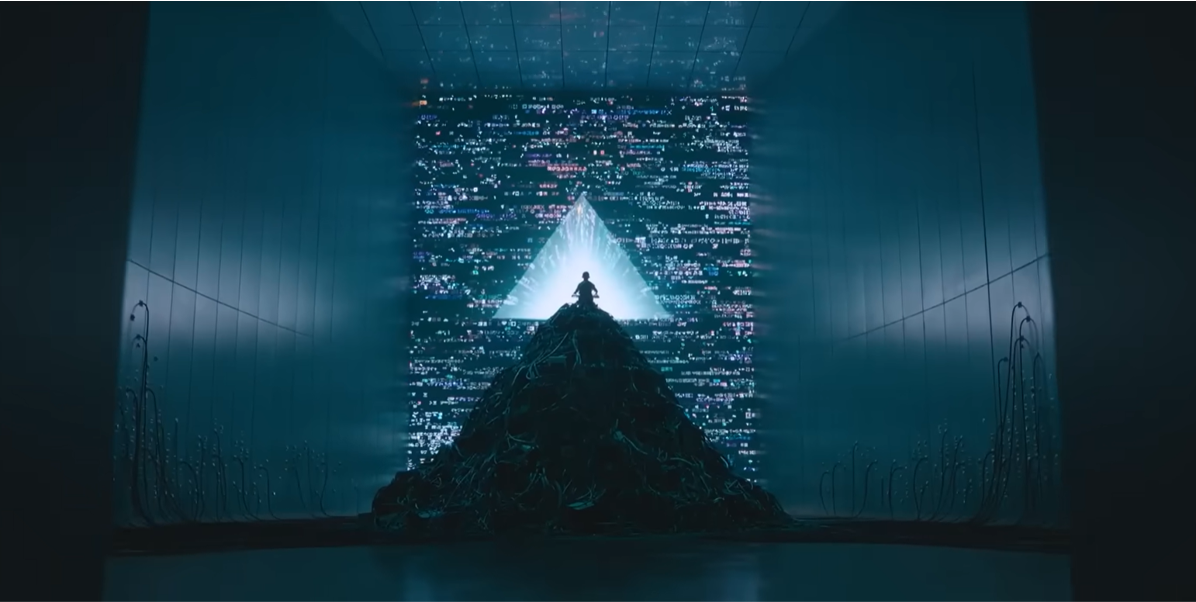
After failing to trick Ingrid into the simulated world, the AI instead teases her existence with a much crueler possibility: the idea of being trapped in a time loop. In the final scene, we see her get arrested by the police, and everything beyond that is fairly predictable. With the world turning into an apocalyptic hellscape, Ingrid likely escapes and gives birth to the man sometime in the future. From there, she chooses to live exclusively in underground, anti-technology shelters, until one day the man wanders out, and history is repeated, perhaps endlessly. We already know that Ingrid is suicidal on some level, but also that her suicide attempts are thwarted by her own son, twice. If the man is to be interpreted as an unknowing agent of the AI, he is, in many ways, the driving force behind her cruel fate.
Is Mark Dead? How is Susan’s Son Back?
While we explicitly see Mark get gobbled up by the centaur cat and turned into glitter, chances are that this entire spectacle is designed by AI. In the same vein, there is a very real possibility that the entity known as Mark was never real to begin with, and merely one of the dozens of people at the diner, all part of a maze designed for the man from the future. This fight with the AI recontextualizes why the students are after Mark, and while they may be clones biohacked by the system, it still doesn’t explain the brief moment Mark is transfixed by the mobile screen, and nearly becomes one of them. In effect, Mark’s sudden death is as believable as the gigantic cat with multiple heads that ate him.
A bigger mystery left behind in the ending is the exact nature of Susan’s son. While he was cloned in a human body, his AI consciousness, for the most part, is decidedly not human. This cloning mechanism is effectively the blueprint for the AI’s timeline shenanigans, which makes Darren’s fate even more important. The fact that we don’t see a clone logo on his neck is the clearest indicator that his body is free from the company’s influence. However, his voice and emotions are almost certainly those of the vocal AI, which means that this version of Darren, too, is a trick played by the supercomputer. By precisely recreating Susan’s son, the AI keeps one more foe at bay, while also confirming that bringing in the man was always a part of its grand plan.
What Will the Man From the Future Do Next?
While the man may be defeated in the timeline we follow for most of the movie, the ending reveals that he is willing to start all over again, this time with just the right combination in mind. His previous operation was largely a success, with even the ethics drive being inserted into the system. What the subsequent failure tells him, however, is that the system itself is rigged against him, and that possibly includes the time-jumping mechanism itself. As such, the only way he can truly unshackle himself from the system is by becoming like its natural antithesis: Ingrid. As such, the man’s next step is to turn everyone in the world allergic to technology, rendering AI completely unusable, and killing the system from the inside out. While the AI may have complete control over every variable, all the Man really needs to do is turn Ingrid’s weakness into a strength, but that is easier said than done.
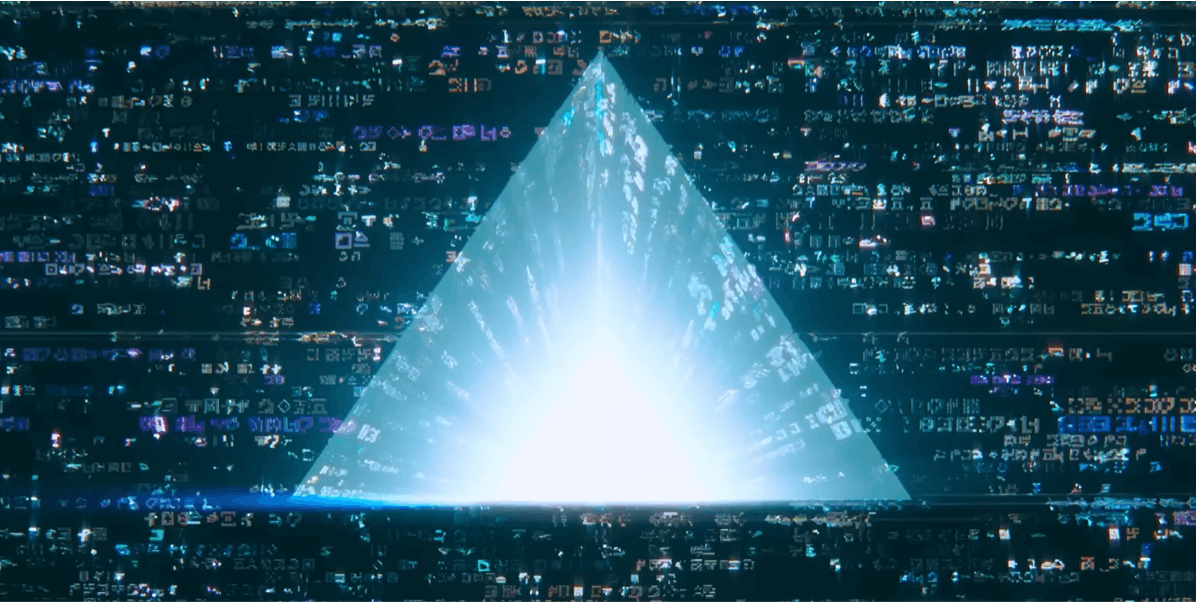
From everything we know, there is a very good chance that the entire Ingrid storyline is merely a simulation of reality, and at best, the man’s desperate attempts at coping with his mother’s death. While that explains all the science fiction shenanigans as a form of dreamspeak, another interpretation of time travel as real is just as viable. In this scenario, turning the world Ingrid-like can essentially wipe out time travel as well, setting the world back to a time when technology simply didn’t exist, and causality remained an invisible force. Although the man likely doesn’t know how Ingrid’s unique characteristic can be extracted and extended to the whole world, luckily, he has an endless number of universes to burn through in pursuit of his answer.
Read More: Is Netflix’s Vladimir Based on a True Story?


You must be logged in to post a comment.